Lloyd Evans

Lloyd Evans

Lloyd Evans is The Spectator's sketch-writer and theatre critic

Keir Starmer will never have it so good at PMQs

From our UK edition

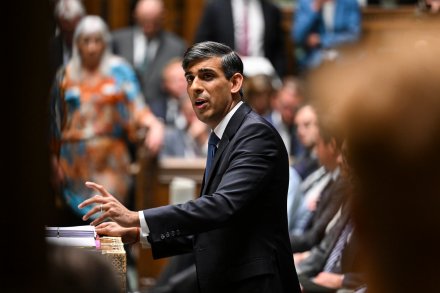
Are we going to war? The first PMQs since the election was like a military briefing between the Tory chief and the new prime minister. Rishi Sunak, now opposition leader, began with a few standard noises about Ukraine’s need for more weapons. He urged Sir Keir Starmer to ask the Germans to send ‘long-range missiles’ in addition to those already pledged by the Americans and by us. To strike where, exactly? The rest of the session was a doddle for Sir Keir Sunak then mentioned a fancy new jet-fighter and parroted a phrase from the armourer’s brochure. ‘A crucial sovereign jet capability,’ he called it. He added that Saudi Arabia ‘has a desire to join the programme.’ Labour politicians are usually shy of arming the Saudis but Sir Keir showed no signs of bashfulness.
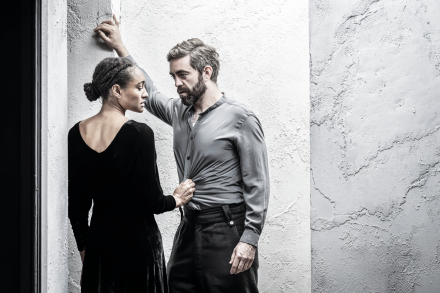
Vapid and pretentious: Visit From An Unknown Woman, at Hampstead Theatre, reviewed

From our UK edition

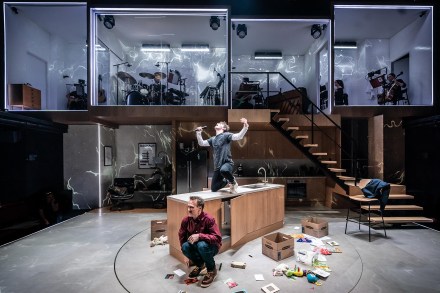
Visit From An Unknown Woman, adapted by Christopher Hampton from a short story by Stefan Zweig, opens like an episode of Seinfeld. A playboy writer enjoys a fling with a black-clad beauty – but when he kisses her goodbye, he can’t remember her name. It feels like a set-up for a gag, but the script is very short of jokes. A year passes and the mysterious beauty, named Marianne, returns to the playboy’s pad and delivers a series of astonishing revelations. At this point, the show turns into a memory play as Marianne starts to yammer about her childhood, her family struggles and a mass of other details which sound like an over-emotional shopping list. Not everyone found this show vapid and pretentious.

Next time, I’m swimming to Calais

From our UK edition

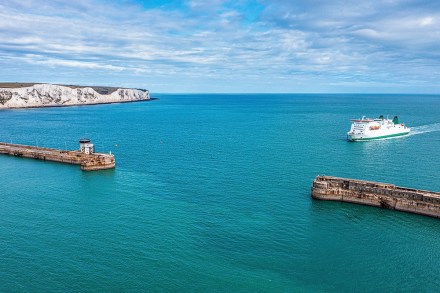
Friends in Calais invited me to their baby’s birthday party. He’s a year old. They suggested an overnight stay and I planned to reach France by about mid-afternoon and have a stroll, visit the sights, buy a bit of tat for the nipper and a litre of plonk for the proud parents. Clouds of sweet diesel vapour enveloped me. My pulse quickened. In the 1970s, it all smelt like this The morning express sped me south and I was entertained on board by the Bing-Bong Pixie who referred to the train as ‘this 10.02 service from London Victoria to Dover Priory’. She recited the name of every stop on the line and repeated it twice each time we reached a new station. Her chirpy tone concealed a rather malevolent side.

Unmissable – for professors of gender studies: Alma Mater, at the Almeida Theatre, reviewed

From our UK edition

Alma Mater is a topical melodrama set on a university campus. The new principal, Jo, (amusingly played by Justine Mitchell) is a radical feminist who recalls the bitter struggles of the 1980s when she strove to put women on an equal footing with men. Her task now is to address the college’s reputation for ‘binge-drinking, partying and casual sex’. To ingratiate herself with the students she makes a speech full of swear words which greatly impresses the first years, apparently. Then a nightmare unfolds. A naive Welsh fresher, Paige, attends a fancy dress party where she’s sexually assaulted by a handsome older student. Drink was involved. Paige admits that she blacked out during the incident and the accused has no recollection of what happened.

Morally repugnant: Boys From the Blackstuff, at the Garrick Theatre, reviewed

From our UK edition

Yosser Hughes is regarded as a national treasure. He first appeared in 1982 in Alan Bleasdale’s TV drama, Boys from the Blackstuff, which followed a crew of Liverpool workers who lay tarmac (‘black stuff’) for a living. When their contract expires the lads are left shocked and helpless even though job security is not a perk of their profession. The atmosphere of the show, adapted by James Graham, may come as a surprise to those who know Yosser by reputation only. Far from being a worker’s champion, Yosser is a crook, a hypocrite and a class-traitor. He and his friends moonlight for cash while claiming state benefits, which are, of course, levied on the wages of honest workers. And they pilfer from Liverpool docks which increases the prices paid by customers who aren’t cheats.

‘Punishingly dull – but the crowd loved it’: Next to Normal, at Wyndham’s Theatre, reviewed

From our UK edition

The Constituent is a larky show about violence against female politicians. A strange subject for a comedy. Anna Maxwell Martin plays a vapid but well-meaning MP, Monica, who receives unwelcome attention from a sinister dropout, named Alec (played by James Corden). Alec’s backstory is quite a puzzle. He used to work as an MI6 spymaster in Afghanistan, where he persuaded senior Taliban commanders to operate as double agents. While off-duty he seduced an NHS ward sister who happened to be nursing soldiers on the battlefield in Kandahar. If you want a celebration of spineless masculinity, look no further That, at least, is the story he gives Monica. Alec says he married the nurse but they split up after having kids. Then he started job-hunting.

Riveting and exhilarating: Miss Julie, at Park90, reviewed

From our UK edition

Some Demon by Laura Waldren is a gem of a play that examines the techniques of manipulation and bullying practised by shrinks on anorexics. The setting is an NHS referral unit where Sam, an 18-year-old philosophy student, arrives with a minor eating disorder. Like every patient, Sam is told that her personality is immersed in a civil war and that two implacable forces – the ‘diseased self’ and the ‘whole self’ – are fighting for control of her destiny. It’s a brilliantly simple trick that any bully can learn in a few minutes. If the patient says something unwelcome, the shrink ascribes the statement to the ‘diseased self’ and adds: ‘I don’t negotiate with the disease.

Hard to get to grips with: Marie Curie: The Musical reviewed

From our UK edition

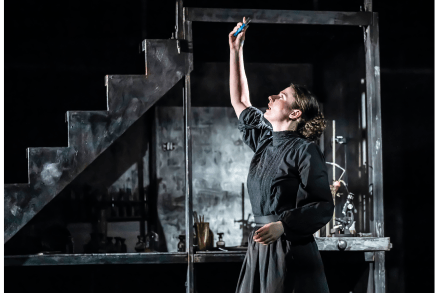
Marie Curie: The Musical is a history lesson combined with a chemistry seminar and it’s aimed at indignant feminists who want to agonise afresh over the wrongs of yesteryear. We meet the young Marie, wearing her signature widow’s frock, as she speeds towards Paris on a train from Poland. The essential materials of this musical are hard to get to grips with; the characters stiff, the tunes so-so This opening scene is positively trembling with significant detail. Her fellow passenger, Sarah, is an impoverished Pole who has rejected the advances of a wealthy swineherd and decided to take a job at a Parisian glassworks. Her plan is to save all her wages and buy land in Poland which she will farm herself while sinking the profits into a theatre that specialises in cabaret. Wow.

Sorry Sunak can’t muster much of a fight in BBC interview

From our UK edition

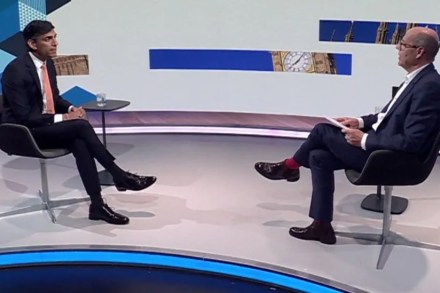
A clash of the razor-blades. That’s how it started. Nick Robinson’s grey jowls were dotted with stubble as he sat down to quiz the PM on BBC One. Rishi Sunak had shaved. Robinson hadn’t bothered. And that mismatch set the tone for their bad-tempered interview. Robinson played the irritable major-general going over the blunders of an incompetent subaltern. The worst error Rishi had committed, said Robinson, was ‘bunking off D-Day.’ Rishi grovelled abjectly, yet again. His upper lip quivered nervously. ‘I hope that people can find it in their hearts to forgive me,’ he said. Crikey. Anyone would think that he’d crashed a chopper into a column of veterans on Omaha beach.

Eddie Izzard’s one-man Hamlet deserves top marks

From our UK edition

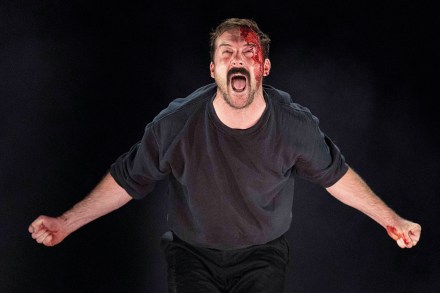
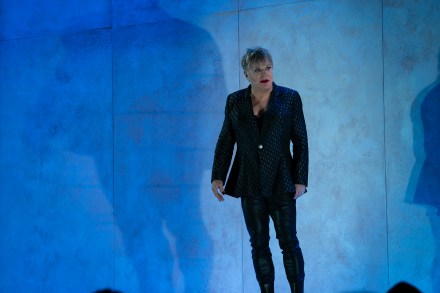
Every Hamlet is a failure. It always feels that way because playgoers tend to compare what they’re seeing with a superior version that exists only in their heads. And since disappointment is inevitable, it’s worth celebrating the successful novelties in Eddie Izzard’s solo version. He makes some valuable breakthroughs, especially in the comedic sections. Izzard makes some valuable breakthroughs. His Gravedigger is funny. Actually funny. That’s rare His Gravedigger is funny. Actually funny. That’s pretty rare. He plays Rosencrantz and Guildenstern as sock-puppets whose robotic yapping he imitates with his hands. Brilliant stuff. Well worth copying. His Osric is a greasy, cocktail-party flatterer with a faint Mexican accent. Osric, the Hispanic immigrant. That works too.

Amazingly sloppy: Romeo & Juliet, at Duke of York’s Theatre, reviewed

From our UK edition

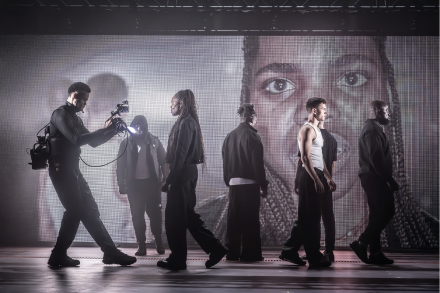
Romeo & Juliet is Shakespeare with power cuts. The lighting in Jamie Lloyd’s cheerless production keeps shutting down, perhaps deliberately. The show stars Tom Holland (also known as Spider-Man) whose home in Verona resembles a sound studio that’s just been burgled. There’s nothing in it apart from a few microphones on metal stands. He and his mates, all dressed in hoodies and black jeans, deliver their lines without feeling or energy as if recording the text for an audiobook. Some of them appear to misunderstand the verse. Shakespeare’s most thrilling romance has been turned into a sexless bore When not muttering their lines they stare accusingly into the middle distance, like catwalk models. Then a power cut strikes.

Headed for the canon: Withnail and I, at the Birmingham Rep, reviewed

From our UK edition

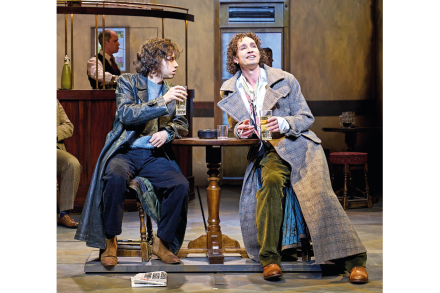
After nearly 40 years, Withnail has arrived on stage. Sean Foley directs Bruce Robinson’s adaptation, which starts with a live rock-band thumping out a few 1960s hits. The musicians take cameo roles as maids and coppers. The show needs a larger cast especially for the tea-room scene – ‘We want the finest wines available to humanity’ – which calls for a big crowd of crumbling old crocks. Never mind. The production would have thrilled diehard fans. As for newcomers, they would probably have been better to start with the film. This production of Withnail would have thrilled diehard fans – newcomers less so Robert Sheehan delivers a glitzy, karaoke version of Withnail which is all surface and very little inner torment.

Admit it – Italian food is rubbish

From our UK edition

Every year I’m summoned to a gathering which I strive to avoid. My first cousin, who loves a boozy party, assembles the extended clan in an Italian restaurant for a convivial lunch. I fear that my list of excuses – ‘back pain’, ‘gout’, ‘baptism in Scotland’, ‘last-minute undercover journalism assignment’ – is wearing a bit thin and I’ll have to show up this year. No sane human could feel fondness for a cuisine whose leading dish, pizza, can’t be eaten with a spoon It’s not my relatives that I dislike. It’s the stuff on the plates. No sane human could feel any fondness for a cuisine whose leading dish, pizza, can’t be eaten with a spoon.

PMQs: we saw a glimpse of Labour in power

From our UK edition

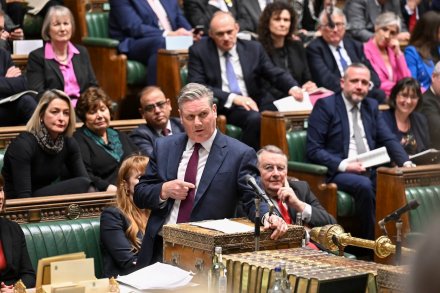
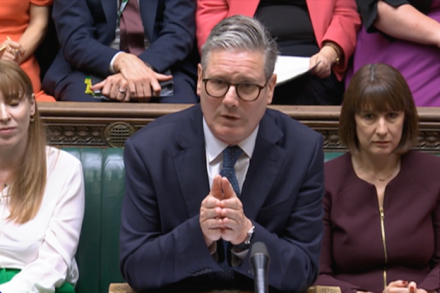
The party leaders conformed to type at PMQs. Rishi Sunak declared that Britain is experiencing an economic boom. ‘Inflation is back to normal,’ he announced about six times. It felt like about 60. Sir Keir Starmer reminded us that he used to run the CPS which is one of his favourite boasts. But it was odd to hear it wedged into a formal statement about the infected blood scandal – an astonishing piece of forensic acrobatics. Worthy of an award.  That was the end of the gloomy bit. Then came the note of joy. ‘This country is waiting for a Labour government to bring down NHS waiting-lists’ Sir Ed Davey banged the drum for his favourite group of victims, Britain’s hard-pressed carers.

Fawlty Towers – The Play is the best museum piece you’ll ever see

From our UK edition

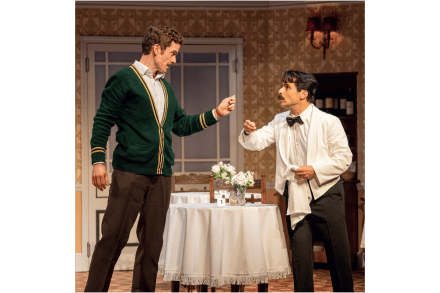
Fawlty Towers at the Apollo may be the best museum piece you’ll ever see. A full-length play has been carved out of three episodes: ‘The Hotel Inspectors’, ‘The Germans’, and ‘Communication Problems’ in which the deaf guest, Mrs Richards, made a nuisance of herself by refusing to switch on her hearing aid in case the batteries ran out. For anyone who saw the sitcom in the 1970s, this is a pleasantly weird show. It’s like returning to a seaside funfair after half a century and finding all the rides unchanged and the staff more or less as you remember them. If Beckett had written family comedies he might have created something as amusing as this Paul Nicholas makes an even better Major than the Major. And his rich, fruity voice is an unexpected treat.

There really is no hope for Rishi Sunak

From our UK edition

Bad news for Rishi Sunak at PMQs. Caught out by Sir Keir Starmer, he handed Labour a wonderful soundbite for the next election: Rishi, the crimewave king.  Sir Keir opened by calling Rishi a ‘jumped-up milk-monitor.’ He mocked his ‘seventh relaunch in 18 months’ and called it a war against ‘that gravest of threats, colourful lanyards.’  Sir Keir mentioned a cost-cutting scheme to liberate criminals before their sentences are complete. ‘What criminals? Where are they?’ he asked. He sought an assurance that none were ‘high risk.’  Rishi, on the defensive, referred to the scheme’s ‘strict eligibility criteria,’ as it were the membership rules for a polo club.

The Arts Council wastes money – and is bad news for art

From our UK edition

‘You’re gay.’ That was the first tip I got from a friend who writes applications for Arts Council grants. He was helping me bid for £15,000 to fund my new play on the London fringe. ‘I’m not gay,’ I said. ‘So what?’ he told me. ‘The Arts Council wants you gay. So be gay.’  My dealings with the Arts Council introduced me to the crazy world of bureaucratic salesmanship and I was amazed by what I learned. My friend charges £250 a day to help people like me snaffle free dosh. And he’s not unique. Thousands of freelancers like him are busy angling for a slice of the £116.8 million given out annually to fund one-off arts projects (‘open access grants,’ as they call them).

Minority Report is superficial pap – why on earth stage it?

From our UK edition

Minority Report is a plodding bit of sci-fi based on a Steven Spielberg movie made more than two decades ago. The setting is London, 2050, and every citizen has been implanted with an undetectably tiny neuroscanner which informs the cops about crimes before they’ve been committed. However, as the first scene reveals, the undetectably tiny neuroscanner can be removed from the flesh with a corkscrew. The character who gouges out her tag is a computer geek, Julia, who invented the surveillance method in the first place. She stands accused of planning a murder and she goes on the run to clear her name. The actors appear to be trapped inside a tangerine lunchbox Sound familiar?

Keir Starmer is ashamed of his party

From our UK edition

Questions from backbenchers dominated PMQs. Sir Edward Leigh is keen to end unfettered immigration and he announced a way to stop the boats that might actually stop the boats. ‘Detain all those who land illegally on our shores and offshore them immediately,’ he said. His specific goal was to prevent children from being shoved onto leaky inflatables crewed by emaciated refugees who paddle across channel at the dead of night. ‘End this callous trade,’ he said, citing the risks to innocent kids. No one could quibble with that. The PM agreed.  Sir Keir Starmer has quietly rebranded the Labour movement as ‘the changed Labour party’ ‘He’s right,’ said Rishi. He then announced a different stop the boats policy that will never stop the boats.

Is John Cleese right that the ‘literal minded’ have killed comedy?

From our UK edition

John Cleese appeared in the West End this week. ‘I’ve got vertigo,’ he said as he walked on stage at the Apollo, Shaftesbury Avenue. ‘I cannot get rid of it. So I’m behaving as if I’m 184 not 84.’ He was hosting a press conference for Fawlty Towers: The Play which opens this Saturday night. The press event began with three scenes from the show followed by a Q&A involving Cleese and the leading actors. The character of Basil Fawlty was drawn from Cleese’s family background The first questioner asked about the practical challenges of turning 12 sitcom episodes into a two-hour comedy. ‘It’s what I call carpentry, do you see what I mean?’ said Cleese in his faintly testy manner, like an impatient classics master.