Lisa Haseldine

Lisa Haseldine

Lisa Haseldine is The Spectator's online commissioning editor - foreign affairs.

Does Europe still have an ally in America?

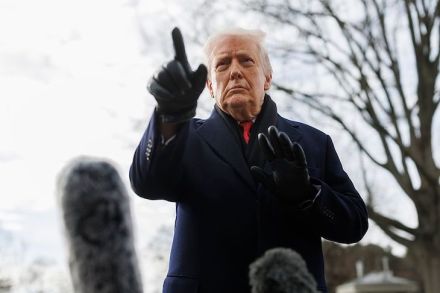
European politicians had little rest this weekend after Donald Trump’s announcement on Saturday that he would be imposing punitive tariffs on the eight countries that had sent troops to Greenland last week. From 1 February, 10 per cent tariffs will be slapped on goods entering the United States from Britain, Denmark, Norway, Sweden, France, Germany, the Netherlands and Finland. They had, Trump said, ‘journeyed to Greenland for purposes unknown’ and he accused them of playing a ‘very dangerous game’. Denmark has stated that Greenland is not for sale; Trump is unlikely to back down By sending troops to Greenland on Thursday, those eight countries had only done what Trump implied he had expected of them.

Will a military boost be enough to stop Trump grabbing Greenland?

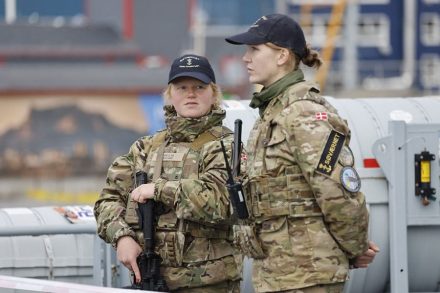
When Donald Trump sets his sights on something, it’s hard to prevent him getting what he wants. That hasn’t, however, stopped Greenland and Denmark from trying. The Danish army has announced that, from today, it is boosting its presence on Greenland. It will be backed up by a cohort of European troops, arriving over the coming days as part of an effort to prove to the US that Copenhagen can secure the island’s defences. Earlier today, France confirmed that 15 troops had arrived on the island. In the coming hours they will be joined by 13 soldiers from Germany, two from Norway, one from Britain, one from the Netherlands and an undisclosed number from Sweden and Estonia. Further waves of troops are expected.

Justin Marozzi, Lisa Haseldine, William Atkinson & Toby Young

From our UK edition

32 min listen

On this week’s Spectator Out Loud: Justin Marozzi analyses what Trump’s coup in Venezuela means for Iran; Lisa Haseldine asks why Britain isn’t expanding its military capabilities, as European allies do so; William Atkinson argues that the MET’s attack on freemasonry is unjustified; and, Toby Young explains why the chickenpox vaccine is a positive health measure. Produced and presented by Patrick Gibbons.

European countries are expanding their militaries. Why aren’t we?

From our UK edition

Following America’s extraordinary raid on Venezuela last week, Donald Trump has pointed to Greenland, which belongs to the Kingdom of Denmark, as the territory he plans to turn his attention to next, staking a claim he has made repeatedly since his return to the White House. Trump said this week that America needs Greenland ‘for national security. Right now’. He told reporters he is ‘very serious’ in his intent. The US President might be claiming Greenland in the name of peace and stability, but there is every chance his neo-imperial attempts to see off the threat from China and Russia will backfire. Will his actions herald the return to a land-grabbing, power--flaunting global order like that of the 19th century?

Dominic Cummings’s warning to broken Britain on migrant crime

From our UK edition

Britain should prepare for more rape cases involving illegal migrants, Dominic Cummings has warned. Speaking on The Spectator’s Quite right! podcast, the former advisor to Boris Johnson referenced the case of two young Afghan asylum seekers who were jailed earlier this month for the rape of a 15-year-old girl in Leamington Spa. Places like Leamington ‘better get used to it’, Cummings said, ‘because there’s going to be a lot more of it.’ Criticising the lack of information Warwickshire police were initially willing to share about the identities of the Leamington perpetrators, Jan Jahanzeb and Israr Niazal, following their arrest in May, Cummings told Michael Gove and Madeline Grant: The odd thing is, the country knows it's all fake.

Does Putin truly believe he’s the victim of his own war?

From our UK edition

Ukraine – not Russia – is ‘refusing to end this conflict using peaceful means’, Vladimir Putin claimed this morning. The Russian President chose to open his traditional end-of-year press conference in Moscow with the subject of Ukraine, rehashing lines Kremlin-watchers have heard many times since he launched his full-scale invasion almost four years ago. The strength of feeling with which he answered prompts the question of whether Putin truly believes what he is saying?Asked by NBC – one of the few foreign outlets granted a question during the marathon press conference – if he would feel responsible for more deaths if he didn’t agree to a peace plan, Putin replied: ‘We do not consider ourselves responsible for the loss of life because we did not start this war.

Keir Starmer’s Russia problem is here to stay

From our UK edition

Keir Starmer will travel to Berlin this afternoon to join European leaders for a ‘mini-summit’ in support of Ukraine following two days of talks between president Volodymyr Zelensky and American officials. Zelensky has been in the German capital since yesterday, locked in talks with US special envoy Steve Witkoff and Donald Trump’s son-in-law Jared Kushner to hammer out the terms of a peace deal on the war in Ukraine that can then be presented to Russia. US representatives have also been invited to this afternoon's mini-summit – due to kick off shortly after 5.30 p.m. UK time. Overnight, Witkoff declared that ‘significant progress’ had been made with Zelensky.

Putin ‘morally responsible’ for Salisbury novichok poisoning

From our UK edition

Vladimir Putin is ‘morally responsible’ for the death of Dawn Sturgess, a public inquiry today has concluded. The mother of three died in Salisbury in June 2018 after unknowingly spraying herself with the nerve agent novichok, which had been discarded three months earlier by two Kremlin agents sent to kill the former spy Sergei Skripal. The operation was so sensitive that it ‘must have been authorised at the highest level by President Putin’ as a ‘demonstration of Russian power’, the inquiry’s chair Lord Hughes said. Keir Starmer condemned the Kremlin’s ‘disregard for innocent lives’ Lord Hughes said that disguising the novichok in a perfume bottle ‘dramatically magnified’ the risk of unintended casualties, and called it ‘an astonishingly reckless act’.

We are no closer to peace in Ukraine

From our UK edition

Steve Witkoff’s sixth visit of the year to Moscow seems to have ended again with very little to show for it. The US special envoy was in the Russian capital with Jared Kushner, Donald Trump’s son-in-law, to meet President Vladimir Putin and present the latest version of a peace plan to end the war in Ukraine. Little is currently known about the contents of the peace plan itself. Witkoff and Kushner spent five hours with Putin in the Kremlin. Speaking after the meeting, Russian presidential aide Yuri Ushakov called the summit ‘very useful, constructive and substantive’ but said that ‘a compromise hasn’t been found yet’. Asked whether peace was closer or further away after the talks, Ushakov’s answer was an unpromising ‘definitely not further’.

The Ukraine peace proposal raises more questions than it answers

From our UK edition

Volodymyr Zelensky is meeting US officials today for the first time since the news of a US-Russia peace plan for Ukraine emerged yesterday. The Ukrainian president, fresh from a trip to Turkey, is due to meet with the American army chiefs Dan Driscoll and General Randy George – the most senior Pentagon representatives to visit Ukraine since Donald Trump’s return to the White House – who are in the country on a ‘fact-finding’ mission. The purpose of the meeting is for Trump’s representatives to discuss ‘efforts to end the war’. While the agenda has not been made public, it is highly likely the trio will discuss the new 28-point peace plan, details of which have continued to emerge overnight.

Is Trump trying to strike a fresh deal on Ukraine?

From our UK edition

With fresh wind in his sails after his success brokering a somewhat fragile peace in Gaza, Donald Trump has once again turned his attention back to Ukraine. According to reports, the US President’s team has secretly been working on drafting a new plan to end the war. Concerningly, though, once again that confidential plan is being hashed out with Russia – without any input from Ukraine or its European allies. Details of the plan are, as yet, scant – although a report by Axios suggests that it will be made up of 28 points falling under four rough headings: peace in Ukraine, security guarantees for the country, security in Europe and a roadmap for future relations between Russia, Ukraine and America.

Is Germany ready for military service?

It’s finally crunch time for Boris Pistorius’s plan to reintroduce military service in Germany. Following a delay of several months thanks to the country’s snap federal election campaign at the start of the year, the defence minister’s new ‘Modernisation of Military Service’ draft law is currently being debated in Berlin. Under Pistorius’s proposals, all 18-year-olds will be asked to complete a questionnaire that will gauge their willingness and ability to carry out military service. For men, the quiz will be compulsory; for ‘other genders’ – including women – it will be optional.

Tim Shipman, Ian Williams, Theo Hobson, Lara Prendergast & Lisa Haseldine

From our UK edition

34 min listen

On this week’s Spectator Out Loud: Tim Shipman says that the real war for the right is yet to come; Ian Williams examines the farce over the collapses China espionage case; Theo Hobson argues that the Church of England is muddled over sex and marriage; Lara Prendergast reads her letter from America; and, Lisa Haseldine goes on manoeuvres with the German army, the Bundeswehr. Produced and presented by Patrick Gibbons.
How Germany is preparing for war

From our UK edition

Hamburg What would happen if Russia was planning an attack on Estonia, Lithuania or Latvia – and the threat was sufficiently great that Nato felt the need to send troops east across Europe to face off against Moscow? This was the scenario the German Bundeswehr spent several days rehearsing last month, working out how the army would transport its soldiers towards Nato’s eastern flank in the event of conflict in the Baltics. For three days, the port city of Hamburg played host to the exercise Red Storm Bravo: 500 soldiers, along with roughly 300 members of the emergency services and other civilian organisations, took part – the largest military exercise in the city since the end of the Cold War.

The AfD’s mission to seduce West Germany is paying off

From our UK edition

The Alternative für Deutschland (AfD) party continued its westward march in popularity across Germany yesterday, securing third place in the local elections in the western state of North Rhine-Westphalia. Preliminary results show that, alongside the outcomes of mayoralty and district administrator elections which took place in the state, the far-right party won 14.5 per cent of the vote across the 396 municipalities which went to the polls. The liberal SPD party came in second with 22.1 per cent, while the CDU – the governing party in Berlin – secured a third of the vote, with 33.3 per cent. The German Chancellor, Friedrich Merz, will be breathing a small sigh of relief at the results this morning.

Will Germany really send troops to Ukraine?

From our UK edition

As Donald Trump presses on with his breathless efforts to secure an end to the war in Ukraine, the leaders of Europe face a task of their own. In the event of a peace deal with Russia, how will they – in place of an America that can’t be trusted as a reliable ally – provide Kyiv with the security guarantees against Russian aggression that it craves? And even if they are willing, are they capable of delivering them?

Will Zelensky’s dash to see Trump pay off?

From our UK edition

Volodymyr Zelensky is in Washington today to debrief with Donald Trump following the US President’s meeting with Vladimir Putin in Alaska on Friday. The purpose of today’s meeting at the White House will be to discuss the parameters of a potential peace deal in Ukraine. The last time Zelensky came to Washington was in February, when Trump and his vice president J.D. Vance berated the war-time leader for not being sufficiently ‘grateful’ for America’s support in the conflict with Russia. Once again, there is every possibility today’s summit will turn out as tense as it did six months ago.  Zelensky and his allies have a tall task ahead of them today Trump reportedly wants to discuss the territorial concessions demanded by Putin during Friday’s tete-a-tete.

The Alaska summit doesn’t look good for Ukraine

From our UK edition

And just like that, the highly-anticipated summit between Donald Trump and Vladimir Putin in Alaska has been and gone, seemingly without very much at all to show for it. The two presidents met in Anchorage yesterday for what Trump had touted as a ‘feel-out’ meeting to lay the groundwork for negotiations to discuss an end to the war in Ukraine. But despite Trump rating the tête-à-tête a ten out of ten – ‘in the sense that we got along great’ – on substance, the American president has come away with little to prove that Putin is any closer to stopping his invasion. The signs for Ukraine don’t look promising.

Border lands, 200 years of British railways & who are the GOATs?

From our UK edition

38 min listen

First: how Merkel killed the European dream ‘Ten years ago,’ Lisa Haseldine says, ‘Angela Merkel told the German press what she was going to do about the swell of Syrian refugees heading to Europe’: ‘Wir schaffen das’ – we can handle it. With these words, ‘she ushered in a new era of uncontrolled mass migration’. ‘In retrospect,’ explains one senior British diplomat, ‘it was pretty much the most disastrous government policy of this century anywhere in Europe.’ The surge of immigrants helped swing Brexit, ‘emboldened’ people-traffickers and ‘destabilised politics’ across Europe. Ten years on, a third of the EU’s member states within the Schengen area have now imposed border controls. Can freedom of movement survive in its current form?

Europe is giving up on free movement

From our UK edition

Ten years ago on 31 August 2015, Angela Merkel told the German press what she was going to do about the swell of Syrian refugees heading to Europe. With the three fateful words ‘Wir schaffen das’ – ‘We can handle it’ – she ushered in a new era of uncontrolled mass migration, not just for Germany but for the rest of the European Union too. The then chancellor, so often described by her supporters in the press as the ‘queen of Europe’, was adamant that Germany was a ‘strong country’, which had the resources to support the sudden influx of migrants. ‘We will provide protection to all those fleeing to us from wars,’ she insisted. Whether or not other European leaders shared her confidence was immaterial.