Lee Langley

Lee Langley is the author of ten novels and has written several film scripts and screenplays.

A dying fall: The Last Movement, by Robert Seethaler, reviewed

From our UK edition

Robert Seethaler is known for celebrating the unsung: commonplace characters – peasants, labourers or shop assistants – who draw us into their quiet lives. But the protagonist in The Last Movement is a celebrated historical figure: Gustav Mahler. For those in search of biographical information, as W.H. Auden put it, a shilling life will give you all the facts. Today we’d go online. How will Seethaler, a distinguished miniaturist, deal with an icon? We meet the composer in 1911 aboard the SS Amerika on his final journey across the Atlantic, homebound and dying. A respectful ship’s boy brings him a tray of tea as he sits on the sundeck, wrapped in a blanket, contemplating the ocean and his turbulent life.

A sinister strangeness: City Like Water, by Dorothy Tse, reviewed

From our UK edition

In Dorothy Tse’s City Like Water the location is never named. Anonymous, mutable, it slips from normal into nightmare, strangeness signalled from the opening lines: ‘In the place I used to live, my rusty top bunk rocked like a boat. Night after night, it carried me off towards a secret crevice.’ This is a novel written out of sorrow and anger: the pain of recalling sweeter times. It’s not the boy narrator who is unreliable; it’s the city itself. When, in Invisible Cities, Italo Calvinodescribed Marco Polo’s travels, he named 55 settings – each delineating an aspect of Venice. Tse has acknowledged Calvino as a major influence, and the locus of City Like Water, in all its bewildering manifestations, its beauty and squalor, can only be her own city – Hong Kong.

Time for a reckoning: Vigil, by George Saunders, reviewed

From our UK edition

George Saunders is at his most lively in the company of the dead. At ease with ghosts. In the 2022 Booker-winning Lincoln in the Bardo, Abraham Lincoln mourns his young son in a graveyard surrounded by a clamorous crowd of the newly deceased trying to be helpful. Grief, handled with sweet humour. But Saunders has not always been so gentle. His acclaimed first collection of stories, CivilWarLand in Bad Decline (1997), featured a landscape of grotesque theme parks populated by corpses, enslaved humans and ghosts. Even then, compassion edged in, rubbing shoulders with absurdist humour.  Saunders is a cradle Catholic, and the liturgy frequently surfaces in his stories; but his Catholicism has a humanist face, a vein of kindness running through his work. He is now a student of Buddhism.

Alice in Nightmareland: The Matchbox Girl, by Alice Jolly, reviewed

From our UK edition

Vienna, 25 July 1934 is a significant date in Austria’s history. But in The Matchbox Girl, the big events happen offstage, the world seen entirely through the eyes of its youthful narrator. We focus not on the assassination of Chancellor Dollfuss and a failed Nazi coup, but the children’s hospital, where 12-year-old Adelheid Brunner is waiting to be assessed for admission because she’s mute – designated ‘special’. Or, as her grandmother puts it, hopeless, ‘an idiot’. In the tall, shabby hospital, the young inmates are a protected community, closely observed by a team of specialist doctors, among them young Hans Asperger, later to find fame with his syndrome. Sister Victorine, a patient, saintly nun, oversees the gaggle of unruly, sometimes frenzied children.

A literary Russian doll: The Tower, by Thea Lenarduzzi, reviewed

From our UK edition

A girl in a tower. The words trigger instant curiosity. Who is she? Who locked her away, and why? Was it punishment, or sequestration to keep her safe? Thea Lenarduzzi’s The Tower is a literary Russian doll, one story concealed within another, blurring identities, blocking memory. A far from reliable narrator – ‘let’s call her T’ – steers us between fiction and real life while the author herself occasionally amends the telling. Clues are offered as we turn the pages, but we may have misread some of them, or been misled, and the conclusion upends expectations. If this is all beginning to sound rather too Fernando Pessoa, breathe easy. Lenarduzzi’s book is a compelling read, elegant and artful, intertwining myth, fairy tale and reality. Is it a novel or a memoir?

A road trip like no other – crossing America by Greyhound bus

From our UK edition

There were years when, like many others, I dreamed of crossing America coast to coast, riding the Greyhound bus. It was the thing to do – a rite of passage. For those who never made it, all is not lost: Joanna Pocock has done it for us. Twice.  In 2006, fending off depression after her third miscarriage and the death of her sister, Pocock took the Greyhound from Detroit to Los Angeles, ‘running away from loss’. Seventeen years later she has gone back, looking for the motels, diners, cities, suburbs and truck stops encountered on that first trip, and she is stunned by what she finds – stations closed or pared back, with nowhere to wash, rest or buy food.

Consorting with the enemy: The Propagandist, by Cécile Desprairies, reviewed

From our UK edition

As a young child in the mid-1960s, Cécile Desprairies listened hour after hour to her mother Lucie dreamily recalling the 1940s, dwelling on a past peopled by undefined heroes and ‘the bastards’ who murdered them. Names were rarely mentioned or hastily passed over. In the fashionable Paris apartment there were daily gatherings – her mother, aunt, cousin and grandmother twittering like birds, obsessed with fashion and cosmetics. Between trying on clothes, there was endless looking back at a lost golden age and lamenting the disasters that followed. Lucie was always in charge, her second husband Charles, Cécile’s father, casually excluded. There was gossip about acquaintances, women with Jewish names described as ‘wealthy’, all apparently orphaned.

Adrift in strange lands: The Accidentals, by Guadalupe Nettel, reviewed

From our UK edition

Borders have always played an important part in Mexican literature. Not only geographical/political frontiers but the more porous boundaries between past and present, the living and the dead. Between what is real and what is not. Carlos Fuentes, Octavio Paz and Juan Rulfo were all drawn to this shifting, unreliable territory. Time moves on and new talents emerge. Guadalupe Nettel is widely regarded as a leading writer of her generation, and in various ways her four novels and three short story collections continue to seek out the fantastic that lurks in the interstices of everyday life.

Hope springs eternal: The Café with No Name, by Robert Seethaler, reviewed

From our UK edition

Call it a mosaic. Here it all is – the pathos of a botched first date, a birth, a death, a feud, a stumble into love. The Café With No Name deals with the small dramas of everyday life.  The setting is Vienna – not the elegant city of Schönbrunn but the Karmelitermarkt, one of the poorest districts, debris from Allied bombs still filling the basements in 1966. Robert Simon has worked in the market for seven years, shifting crates of swedes, restacking firewood, cleaning the floor at the fishmonger. He enjoys his work, but he’s 31 and restless. He finds himself casting a speculative eye at the café on the corner, shabby and abandoned, ivy climbing up the wall. His landlady, a war widow, encourages him: ‘You always need a bit more hope than worries.

Rumpelstiltskin retold: Alive in the Merciful Country, by A.L. Kennedy, reviewed

From our UK edition

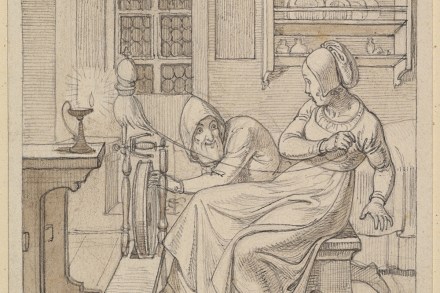
For Anna, wickedness istypified by the villain ofa fairy tale –Rumpelstiltskin The narrator of Alive in the Merciful Country is a woman weighed down by past trauma ‘like a bag full of broken kaleidoscopes’. Anna is a teacher steering her nine-year-old pupils through the 2020 lockdown while coping with life as the single mother of a troubled teenage boy, trying to rebuild trust after a shattering betrayal: ‘I didn’t ask to be in a spy scenario, or an action scenario, or a political thriller, but I recurringly have been.’ Damaged by life, she has learned to question misuse of power, personal and political: quis custodiet ipsos custodes indeed. Fans of A.L. Kennedy will love this book.

Panning for music gold: The Catchers, by Xan Brooks, reviewed

From our UK edition

They were known as song catchers: New York-based chancers with recording equipment packed in the back of the van, heading south in search of hill country music that could make the record company (and, relatively, the recorder) rich. The singer would get a flat fee of $30. Among themselves, over a beer, the catchers called it panning for gold, diving for pearls, trapping fireflies in a jar. Their territory was the far beyond, where ‘people played banjos and fiddles, washboards and dulcimers… Songs poured through the hills like migrating salmon.

Mysteries and misogyny: The Empusium, by Olga Tokarczuk, reviewed

From our UK edition

Nothing is ever quite as it seems in the world of Olga Tokarczuk. Her latest novel starts with an epigraph taken from Fernando Pessoa: ‘The visible world goes on as usual in the broad daylight. Otherness watches us from the shadows.’ Wild deer were murder suspects in her surreal and beautiful 2018 novel Drive Your Plow Over the Bones of the Dead. This time nature itself plays a significant role. A daily glass or three of schwarmerei restores good cheer, sometimes generating hallucinogenic euphoria Though the novel describes itself as ‘a horror story’, it’s more a salutation to the power of the natural world and a celebration of difference.

Runaway lovers: The Heart in Winter, by Kevin Barry, reviewed

From our UK edition

Watching Kevin Barry’s progress over the years has been a pleasure. His first novel, City of Bohane, flamboyant with tribal vernacular and savagery, was followed by Beatlebone, a beguiling surreal odyssey, and then Night Boat to Tangier, where two tired old crims wait and talk their way through the dark hours. Escaping Beckett’s long shadow, the vigil had a hint of redemption. Never has the lawless life been depicted with such wry sweetness.  What Barry celebrates above all is language, swooping from desolation to deadpan mirth in a phrase. Pain that lies too deep for tears can be assuaged by laughter. The award-winning novels were interspersed with collections of short stories, prize-winners resonant with the hidden music of the old country.

The skull beneath the skin: Ghost Pains, by Jessi Jezewska Stevens, reviewed

From our UK edition

Hell, according to Jean-Paul Sartre, is other people. Jessi Jezewska Stevens would nominate parties. Social catastrophe can stem from the invitation: ‘Email!’ she laments. ‘The way all modern tragedies begin.’ She homes in on the space between what a woman thinks and says and does. Her anti-heroines can be relied on to make wrong decisions – men, marriage, nipple-piercing and, of course, parties. The choice invariably ends in failure. Ghost Pains is a collection of 11 stories, sardonic and elegant, imbued with a sense of isolation and self-awareness. Stevens’s women throw spectacularly disastrous parties. And attend them.

Dangerous secrets: Verdigris, by Michele Mari, reviewed

From our UK edition

In everyday life – on a garden path, flowerpot or lettuce – I back rapidly away from slugs. I didn’t expect to confront them in literature, but in Michele Mari’s Verdigris they are present in abundance, from the first line: Bisected by a precise blow of the spade, the slug writhed a moment longer: then it moved no more... slimy shame transformed into splendid silvery iridescence.  So, not a novel for one who shrinks from gastropod molluscs, you would think. Yet I quickly found myself drawn into a remote corner of rural north Italy in 1969 where a lonely, bookish boy, Michelino, spends long summers with his emotionally unreachable grandparents.

Heart of Darkness revisited: The Dimensions of a Cave, by Greg Jackson, reviewed

From our UK edition

When Joseph Conrad sent his narrator into the heart of darkness, Africa was unknown territory. Revisiting the scene now, Greg Jackson dispatches his explorer to an even stranger destination: an algorithmic universe.  Jackson, a Granta Best of Young American Novelists in 2017, won prizes with his story collection Prodigals. His debut novel, The Dimensions of a Cave, could hardly be better timed. New fears about AI give it disquieting relevance. Conspiracy theories mingle with deep state corruption. Gradually it grows into a Chandleresque adventure: down these mean cyber streets a man must go. Dropped into the thick of it, the reader might get the feeling of arriving late at a party where everyone else has already been introduced.

Anonymous caller: This Plague of Souls, by Mike McCormack, reviewed

From our UK edition

Mike McCormack is much garlanded. He won the Rooney Prize for Irish Literature with his first collection of stories; the Goldsmith’s Prize followed in 2016, along with the Irish Book of the Year Award and the International Dublin Literary Award, for his novel Solar Bones. A book-length, single- sentence analysis of a man’s life, that story sprang off the page with the force of a blow.  This Plague of Souls, his fifth novel, is more distanced. Not a story with a beginning, middle and end, it circles in widening gyres, swooping now and then on to a tightly focused moment as its ambiguous hero tries to make sense of an impossible situation. The basic carpentry is simple.

A cabinet of curiosities: You, Bleeding Childhood, by Michele Mari

From our UK edition

Michele Mari is one of Italy’s most eminent writers. A prize-winning novelist, poet, translator and academic, he is hardly known to anglophone readers, but that is about to change. You, Bleeding Childhood, a collection of 13 stories written over a period of 30 years, offers a portal into Mari’s surreal, unsettling world: a place of childhood memories, obsessions and a passion for literature and science fiction.         Mari inhabits Borges’s labyrinthine territory. His prose style shares the gleaming formality of Nabokov, but he’s his own man, nonchalantly mixing high and low culture: the literary canon and classic comic books, Dante and pulp.

The trials of a Tokyo housewife: Mild Vertigo, by Mieko Kanai, reviewed

From our UK edition

Natsumi lives in a modern flat in Tokyo with her husband and two young sons, her life comfortable but circumscribed by the tedium of household chores. Washing dishes in the sink, she finds herself transfixed, gazing at the ‘rope of water’ falling from the tap, twisting like a snake: ‘There was something Sisyphean in the nature of the roster of simple domestic tasks... never an end in sight.’ Things are at once too easy and too much for her; the kitchen is so perfect she hesitates to spoil its pristine condition and ends up buying ready-cooked meals, her life shrunk to what seems stifling captivity.   She memorises the layout of the super-market and makes notes: ‘Fish Day specials: tuna or red snapper or yellow-tail or octopus sashimi.

Inside Warhol’s Factory: Nothing Special, by Nicole Flattery, reviewed

From our UK edition

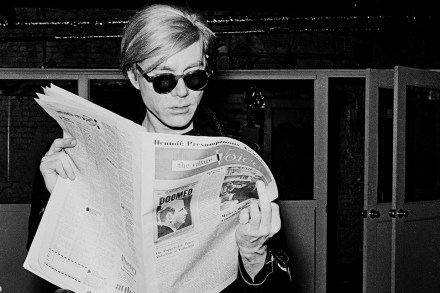
In 1965 Andy Warhol set out to record 24 one-hour audio cassettes focused on one of his ‘superstars’, the actor known as Ondine. The recordings later became a, A Novel, a Joycean distillation of a day in the life. Four typists, two of them teenagers, transcribed the cassettes verbatim – everything they heard on their headphones, every word, cough, gurgle, screech of chair or clink of glass. In his memoir POPism, Warhol mentions ‘two little high school girls’ who typed up his recordings. ‘The typists’ mistakes are all part of the process... that’s what makes it real.’ This is the inspiration for Nicole Flattery’s blade-sharp coming-of-age debut novel, Nothing Special.