Laura Freeman

Laura Freeman

Everything is illuminated

From our UK edition

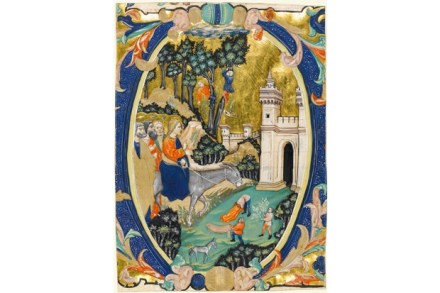
One could honour God with prayer, of course, and build cathedrals, amass treasuries, turn choirs into stained-glass jewel boxes, carve portals with saints and sinners. But for the medieval monks bent over vellum in chilly scriptoria colour, too, was devotion: offertories of lapis lazuli, azurite, cinnabar, silver and gold, gold and more gold. Silver tarnished on the page, but gold remained exquisite, inviolable, and monks and scholars found a dragonish greed for it. War, weather, revolution, Henry VIII, Oliver Cromwell, acquisitive magpies, trophy-hunters and time have stripped gold and pigment from sculptures and ivories.

Ice cream

From our UK edition

It was a mistake to tell us about the gelati-to-sightseeing ratio. This was the formula my father, his younger sister and brother came up with when being dragged round Italian churches as children. The ideal was 3:1, that is: three ice creams for each dreary chiesa. My grandparents thought it should be the other way around: three improving historic sights for every one ice cream. Of course, once my brother and I knew about the gelati ratio — and what an astonishing thought it was that our father had once been young and had sat mutinous on the steps of the Parthenon — we knew not to be fobbed off with one lousy scoop of choc chip. We wanted a 1:1 ratio or bust. In England, slopping around the Lost Gardens of Heligan in wellies and waterproofs, we settled for hot chocolates.

Robots will not take over the world

From our UK edition

We have watched too many-movies. To our cinema-flamed imaginations the robots of the future are silken-voiced and pliant like Scarlett Johansson in Her, or wisecracking humanoids like Star Wars’ C-3PO, or-otherwise the murderous-Transformer toys of so many Arnold Schwarzenegger films. What they are not, not in our imaginations and not on screen, are exceptionally-clever algorithms. They may lack Scarlett’s fembot charm, but such algorithms will transform the way we fight wars, combat extremism, respond to acts of terrorism and natural-disasters, how we manage our homes, protect our banks and manage surveillance and espionage.

Holy visions and dustbins

From our UK edition

Woolworth’s spectacles. Pudding-basin haircut, rather sparse. Norfolk jacket. Pyjama cuffs below trouser legs and sleeves. Paints and brushes in an old black perambulator. And a sign propped up on a gravestone: ‘As he is anxious to complete his painting of the churchyard Mr Stanley Spencer would be grateful if visitors would kindly avoid distracting his attention from the work.’ This was Spencer in his Cookham dotage, a picture of wilful eccentricity, painting the church, cottages, meadows and Thames banks he had known since childhood. An odd little fellow, with the emphasis on little. He was 5ft 2in, by his family’s estimation, and better suited to the ambulance service than he was to the infantry when he volunteered in 1915.

The happiness police

From our UK edition

On a recent sodden weekend walk, I tried to cheer myself up by thinking: it’s not so bad. Not the slugs or the sky or the rain making its way down a gap between neck and waterproof. But I couldn’t do it. Losing heart, I turned back. Glump, glump, glump through the puddles. It rained through breakfast, lunch, tea and dinner. Same the next day. And the day after. I wore grey and sighed at the window. But I am aberrant. Melancholy is against the rules nowadays. I should have put on my yellow wellies, twirled my spotty umbrella, photographed myself in the garden and put it online with the hashtag #singingintherain. That’s what everyone else seems to be doing. If, like me, you are a natural Cassandra, then the present Pollyanna tendency is a trial.

Twists, turns and good red herrings

From our UK edition

Jessie Burton’s first novel, The Miniaturist, set in 17th-century Amsterdam, read like a lantern-slide show. Her churches were by Pieter Saenredam, her town-houses those of Vermeer and Gerard ter Borch. Her kitchens and corridors and eaves-dropping maids came from Nicolaes Maes. She proved herself a painterly writer with an eye for the telling detail. The Miniaturist was inspired by a real work of art: Petronella Oortman’s dollshouse in the Rijksmuseum. Burton’s fictional Nella becomes the owner of a dollshouse filled with miniature furniture and family whose movements begin eerily to anticipate — perhaps exert malign influence over — events in the real house. Burton has pulled off a similar trick in her second novel, The Muse.

An ode to Honour and Fleming’s World History of Art

From our UK edition

The heaviest book on my shelves is Hugh Honour & John Fleming’s A World History of Art. I have just put its 960 pages on the kitchen scales: 8lbs 4oz – the weight of a bonny newborn. If I cradle my copy tenderly today it is because Hugh Honour died last Friday 20 May at the age of 88. A World History of Art is the most famous, certainly the biggest, of his many books. At sixteen, after GCSE exams, my sixth-form history of art teacher sent me away with a copy.  I was not to come back in September unless I’d read it. The book is the scaffolding around which I have built everything I have learnt since of art history. A World History of Art is not like Ernst Gombrich’s Story of Art.

Close encounters | 19 May 2016

From our UK edition

A story John Piper liked to tell — and the one most told about him — is of a morning at Windsor presenting his watercolours of the castle to King George VI and the Queen. She admired his storm-tossed battlements; the King did not. ‘You seem to have had very bad luck with your weather, Mr Piper.’ If this was a criticism of the artist’s gloomy and gothic tendency, it was an unfair one. Mr Piper was very unlucky with his weather. In Caernarvonshire in 1945, on a sketching trip with two small children in tow, it never stopped drizzling.

The cult of clean

From our UK edition

How clean are you? I ask not as a mother confessor. I’m not interested in the state of your soul. What I want to know is: how clean is your sock drawer? Your fridge? Your gut? These are the pressing questions of the new cult of clean. Its apostles urge us to divest ourselves of worldly possessions, to renounce ‘dirty’ food and alcohol and to dress in monkish grey or bleached white. Our sins are these: we have bought too much tat, eaten to filthy excess and stuffed our wardrobes with cheap, disposable rubbish. The clean cultist says no more. Everything must go. The most high and holy of the clean cultists is Marie Kondo, Japanese author of The Life-changing Magic of Tidying.

Sound and fury | 7 April 2016

From our UK edition

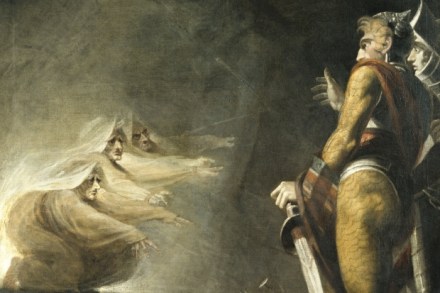
There was a genteel brouhaha last year — leaders in the Times, letters to the Telegraph, tutting in the galleries — about the British Museum’s decision to play Pan-pipe music into its exhibition Celts: Art and Identity. Did the gold torcs and coin hoards sparkle the more for the looped song of Pan-pipes? Not really, and it didn’t half annoy visitors. Not put off by the British Museum’s Pan-pipe complaints, Compton Verney in Warwickshire has been at the jukebox for its Shakespeare in Art: Tempests, Tyrants and Tragedy.

The London Library

From our UK edition

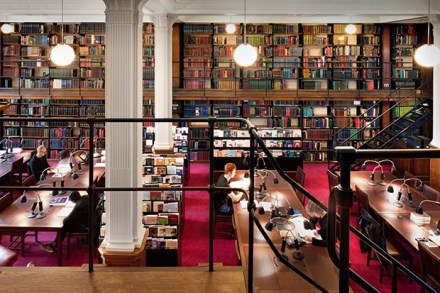
Some rogue has been writing in my bedside book. A fastidious hand has crossed out misspelled words and written neat pencil corrections in the margin. ‘Dennis’ has become ‘Denis’, quotations have been reattributed and dates amended. More than one book scribbler has been at it. At times, the pedantic pencil becomes a biro, thrilled to have spotted mistakes the first reader missed. The book is The Golden Echo, memoirs of the Bloomsbury novelist David ‘Bunny’ Garnett, a scattershot speller and fact-checker. I say it is my bedside book. Really, Garnett belongs to the London Library. But for the two months that a London Library book is allowed to me, I am possessively attached to it, and aggrieved when it is due for return.

When the slop had to stop

From our UK edition

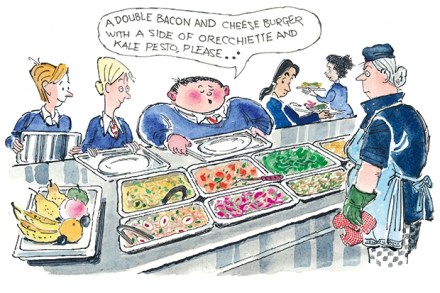
A spirited debate is under way at the Year One lunch table. This class of five-year-old Hackney epicures are discussing the merits of olives. ‘Olives are too disgusting and greeny,’ says Marley, prodding at the offending olive. ‘Olives are too yucky,’ joins in Eduardo, who is carefully hiding them under his knife. But Asar, a boy who obviously has a more developed palate, declares them ‘yummy’ and devours the lot. Olives are just one of the unfamiliar ingredients on plates at Gayhurst Community School on the edge of London Fields in north-east London. There are sticky pork ribs, a tabouleh made with mograbiah (giant couscous), parsley and tomatoes, sweetcorn fritters, wholemeal flatbreads, and lemony new potatoes with green olives.

Topsy-turvy

From our UK edition

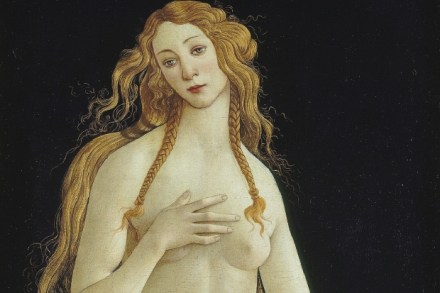
When Tom Birkin, hero of J.L. Carr’s novel A Month in the Country, wakes from sleeping in the sun, it is to a vision: the vicar’s wife Alice Keach in a wide-brimmed straw hat, a rose tucked into the ribbon. ‘Her neck was uncovered to the bosom and, immediately, I was reminded of Botticelli — not his Venus — the Primavera. It was partly her wonderfully oval face and partly the easy way she stood. I’d seen enough paintings to know beauty when I saw it and, in this out of the way place, here it was before me.

Sweet and sour | 25 February 2016

From our UK edition

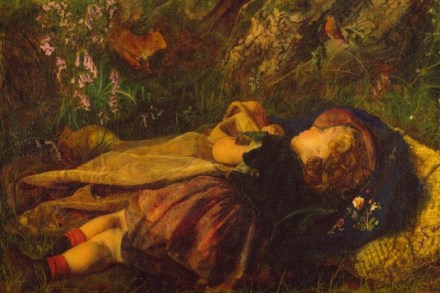
Dear, good, kind, sacrificing Little Nell. Here she is kneeling by a wayside pond, bonnet pushed back, shoes and stockings off, while she rests her blistered feet. She scoops a palm of water with cupped hands and tenderly washes those of her grandfather: her feckless, gambling, on-the-lam grandfather. It is an old Oscar Wilde chestnut, but one would have to have a heart of stone to look at William Holman Hunt’s portrait of Charles Dickens’s saintly ‘Little Nell and her Grandfather’ (1845) without laughing. Likewise Arthur Hughes’s ‘The Woodman’s Child’ (1860), a portrait of a tousle-haired country mite sleeping in the woods, attended by a squirrel and robin, their red coat and breast so sweetly matching her own little ruby socks.

A New Year’s resolution worth keeping: support bookshops instead of Amazon

From our UK edition

Every day in the run up to Christmas, sometimes several times a day, the front doorbell rang with a parcel for one of my five sets of neighbours. Each time, I ran down six flights of stairs to scribble a hieroglyph for the man from the Royal Mail. It has not been a season of ding-dongs-merrily-on-high, but of the ping of text messages – ‘A delivery coming today. Could you bear to…?’ – and the insistent buzz of the door. I regret revealing at the last residents’ meeting that I worked from home. None of the parcels were for me. This time last year, I made a New Year’s resolution to give up my appalling Amazon habit. What with one-click ordering it had become fantasy shopping, clicking on Penguins as if they were penny sweets.

Christmas lists

From our UK edition

William Brown had the right idea about Christmas lists. Under the heading ‘Things I Want for Christmas’, he requests: a bicycle, a gramophone, a pony, a snake, a monkey, a bugal, a trumpit, a red Injun uniform, a lot of sweets, a lot of books. The Christmas list, as William so ably demonstrates, is a rare opportunity to be shamelessly greedy. I don’t hold with the Tiny Tim business of ‘God Bless Us Every One’. God Shower Us With Goodies, I say. When my brother and I were young we were fascinated by ‘Santa Baby’, that hymn to consumerism performed first by Eartha Kitt and later by every popette from Kylie Minogue to Taylor Swift. ‘What’s a yacht?’ we asked. ‘What’s Tiffany’s? What’s a sable?

Once upon a time… history lessons weren’t so fragmented

From our UK edition

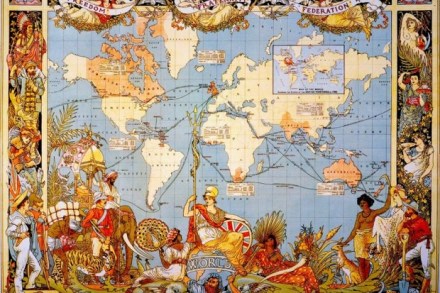
What might a bright working-class boy from south London have learnt in his school history lessons a hundred years ago? We know something of his curriculum from notes made by the poet and painter David Jones about his own Edwardian education – paternalist, imperialist, chauvinist – at Brockley Road School, a state-funded secondary from 1906-1909.

Look beyond ‘Girl with a Pearl Earring’ in The Hague

From our UK edition

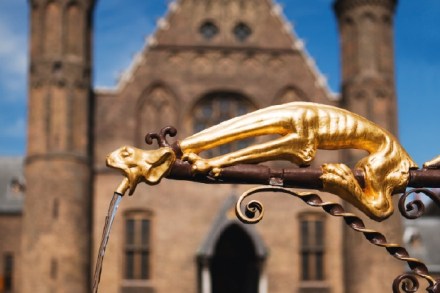
What a fate it is to be hung next to the most famous painting in a gallery. To be overlooked, a framing device, just out of shot of every selfie taken in front of ‘The Ambassadors’ or ‘Mona Lisa’. The painting immediately to the left of Johannes Vermeer’s ‘Girl with a Pearl Earring’ in the Mauritshuis is Gerard ter Borch’s ‘Combing for Lice’. The weary mother in this close interior has none of the pouty lusciousness of Vermeer’s pin-up, but no Madonna ever cradled her bambino with as much maternal tenderness as this Dutch huisvrouw inspects her son’s blond head.

Autumn

From our UK edition

Each year when I see the first conker of the autumn I think: fire up the ancestral ovens! This incendiary thought comes from the Ronald Searle cartoon in Nigel Molesworth’s How to be Topp of a sooty retainer sliding a tray of the young master’s conkers into a brick oven. School cads, Molesworth tells us, ‘are inclined to cheat at conkers having baked them for 300 years in the ancestral ovens. These conkers belong to the National Trust they are so tough and if you strike one your new conker fly into 100000000000 bits.’ What do prep school boys do with their conkers today? Bake them in the ancestral Aga? Autumn: season of mists and mellow pumpkin soups.

Animal magic | 17 September 2015

From our UK edition

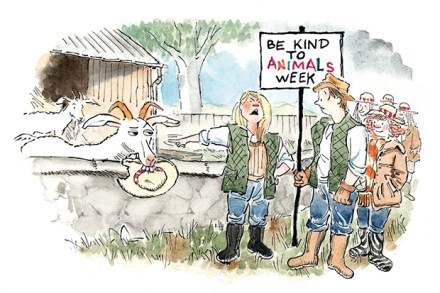
‘Yee-ha!’ is the triumphant shout from a riding school in south London, where Hamza, a teenage boy, has just completed a gymkhana exercise in a faultless rising trot. He takes a hand off the reins and makes lassoing motions in the air to emphasise his point. Hamza is wearing his school shirt and jumper (tie neatly rolled in a cubby hole in the tack room) above tracksuit trousers and borrowed riding boots. The sand-covered riding school has been built between the tower blocks of the Barrington Road estate and the railway line between Brixton and Loughborough Junction. Lambeth is one of the poorest boroughs in London: 32 per cent of pupils qualify for free school meals, against a national average of 16.3 per cent. The borough has 103 schools and not a lot of space to spare.