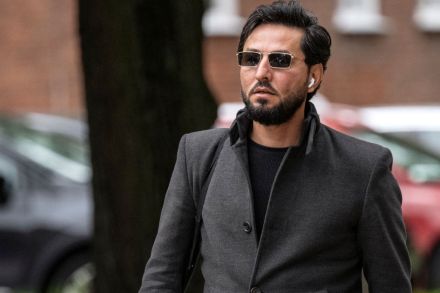
Kunwar Khuldune Shahid

Kunwar Khuldune Shahid is a Pakistan-based correspondent for The Diplomat

The India-Pakistan ceasefire is a triumph for Trump

From our UK edition

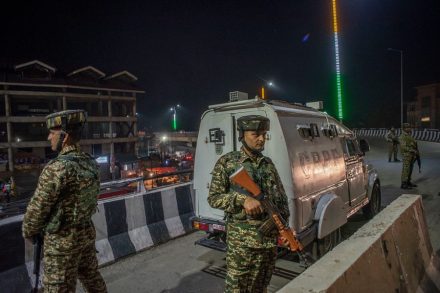
After more than four days of clashes since the early hours of Wednesday morning, India and Pakistan have agreed to a full ceasefire. President Donald Trump announced it on his Truth Social Platform, confirming that the ceasefire had come 'after a long night of talks mediated by the United States'. The announcement was made hours after Pakistan launched Operation Banyan al-Marsous with both Islamabad and New Delhi claiming to have struck each other’s military bases with heavy missiles. Pakistan’s strikes were a response to India’s Operation Sindoor that had been aimed at jihadist sites in Pakistan, following the April 22 militant attack in Indian-administered Kashmir.
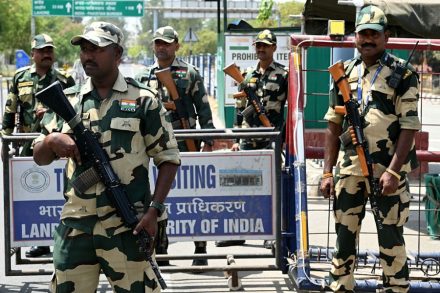
Pakistan and India are on the brink

From our UK edition

During the early hours of Wednesday, India launched airstrikes targeting nine sites in Pakistan and Pakistan-administered Kashmir, killing at least eight people, with Islamabad claiming as many as 26 may have died. In a press release issued overnight, the Indian government said the strikes were aimed at ‘terrorist infrastructure’ in response to the April 22 terrorist attack in Pahalgam town of Indian administered Kashmir. New Delhi has blamed Pakistan for the terrorist attack, while Islamabad denies being involved. In a press briefing, officials from the Indian defence and external affairs ministries said last night’s strikes  targeted camps and hideouts affiliated with Pakistan based jihadist outfits Lashkar-e-Taiba and Jaish-e-Muhammed.
Why Kashmir’s jihadists are targeting tourists

From our UK edition

At least 26 tourists were killed in a militant attack on the town of Pahalgam in Indian-administered Kashmir on Tuesday. Responsibility for the massacre at the popular tourist destination has been claimed on social media by a militant group called the Resistance Front (TRF), reportedly as a response to 'Indian settlement' in the region. According to eyewitnesses, the militants verified the religion of their victims, before eliminating non-Muslims. The massacre was a throwback to the jihadist violence of the 1990s that saw the cleansing of Kashmir's local Hindu population from the Muslim-majority region. The attack has overlapped with US vice president J.D. Vance’s trip to New Delhi, and Indian prime minister Narendra Modi’s visit to Saudi Arabia.

Why the Jaffar Express was hijacked in Pakistan

From our UK edition

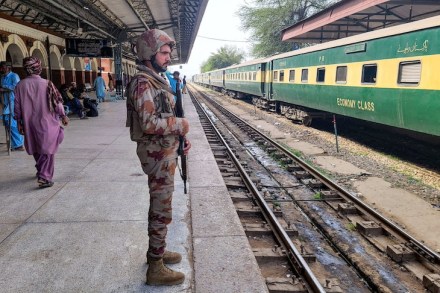
The Jaffar Express, a train with over 400 people on board, was hijacked in Pakistan’s Balochistan province on Tuesday, leaving at least 21 passengers and 33 attackers dead. The separatist militia, the Baloch Liberation Army (BLA), claimed responsibility. BLA militants bombed the railway track and then hurled rockets and opened gunfire on the train before getting on board and holding the passengers hostage at a remote and isolated junction. The group's immediate demand was for its members to be released from prison, but Pakistan's security forces launched an operation early on Wednesday, and ended the hijacking by the end of the day. The military claims all of the civilian casualties took place before the launch of its operation, which cannot be independently verified.

Who shot the world’s first openly gay imam?

From our UK edition

Muhsin Hendricks, the world’s ‘first openly gay imam’, was shot dead in Bethelsdorp, South Africa, on Saturday. While the police are still probing the murder, Imam Hendricks had repeatedly cited death threats – including in the 2022 documentary The Radical – owing to radical Muslims finding his preaching, and officiating of same-sex marriages, as an affront to Islam. According to reports, he had recently performed the ceremony of a lesbian couple, and was on his way to officiating the wedding of a Muslim woman with a non-Muslim man, which too is deemed against Islamic teachings. In addition to sanctioning unorthodox marriages, Hendricks’s Al-Ghurbaah Foundation provided support to those marginalised on the basis of sexual orientation, and gender identity.

Who killed Salwan Momika, the Iraqi who burned a Quran?

From our UK edition

Salwan Momika, the Iraqi man who spearheaded the Quran burning protest in Sweden, was shot dead today. Five men have been arrested for the murder, which was committed in front of an online audience, with the victim livestreaming on TikTok at the time of his killing. While police in Stockholm haven’t formally announced the motive for the crime, Momika isn’t the first critic of Islam to have been brutally murdered in Europe – and I expect he won’t be the last. Momika had repeatedly received threats, from radical Muslims and Islamic countries alike, following the 2023 Quran burning demonstration, during which he had been attacked.

How Pakistan’s rape culture led to the UK grooming gangs

From our UK edition

Lahore, Pakistan Pakistani-origin men are up to four times more likely to be reported to the police for child sex grooming offences than the general population in England and Wales, the first national police scheme data appeared to suggest last week.  The perpetrators of three of the most gruesome child abuse scandals in modern British history, in Rochdale, Rotherham, and Telford, were overwhelmingly of Pakistani origin. While sexual abuse takes place across demographics, not enough attention has been paid to the way these grooming gangs have been inspired by the anti-women customs of Pakistan.

Christian churches are under attack in Pakistan

From our UK edition

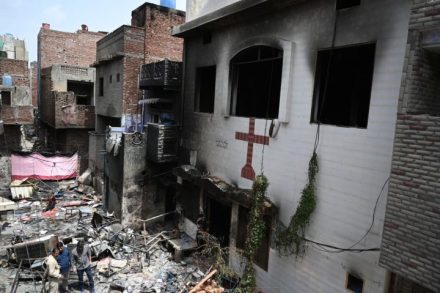
On Wednesday, 19 churches and more than 80 Christian homes in Pakistan were ransacked after the inhabitants of the city of Jaranwala were accused of blasphemy against Islam. Perhaps the most unacknowledged aspect of the violence was just how expected it was.  Nationwide, non-Muslim places of worship, especially churches, have been on high alert for the past month following burnings of the Quran carried out in Sweden by anti-Islam protesters. All the Islamic clergy and groups in Pakistan needed was an excuse to ignite the tinderbox.

Nigeria’s Christians are relentlessly under attack

From our UK edition

Dozens of Christian worshippers, including several children, were killed in a gun raid on a church in Nigeria’s Owo town on Sunday. Initial estimates place the death toll at around least 70 parishioners but that number is set to rise, given that the church in question, St Francis Catholic Church, has one of the largest parishes in the southwestern state of Ondo. Nigeria is experiencing an epidemic of terror attacks. Over the last six months, gunmen have killed 48 in the northwestern Zamfara state, massacred over 100 villagers in Plateau state, and raided trains and buses leaving dozens dead and hundreds missing. At least 3,000 Nigerians were killed and 1,500 abducted in the first quarter of 2022 alone, according to the Nigeria Security Tracker.

Why terror groups are targeting Chinese nationals in Pakistan

From our UK edition

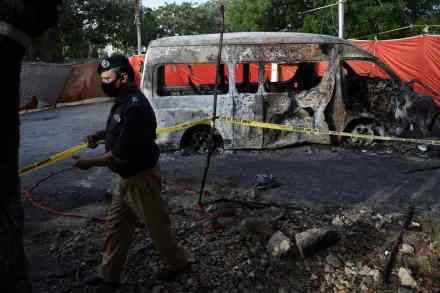
A female suicide bomber killed three Chinese teachers and a local driver at Karachi University in Pakistan this week. The separatist militant group, the Baloch Liberation Army (BLA), claimed responsibility for the attack which targeted a Chinese language centre at the university. The Confucius Institute, the BLA said in a statement, was a ‘symbol of Chinese economic, cultural and political expansionism.’ The suicide bomber was a 31-year-old schoolteacher with a master’s degree who read Arundhati Roy and Richard Dawkins. This isn’t Pakistan’s first anti-China attack. The BLA has recently targeted the Chinese consulate, a five-star hotel, and the stock exchange.

What next for Imran Khan, Pakistan’s ousted leader?

From our UK edition

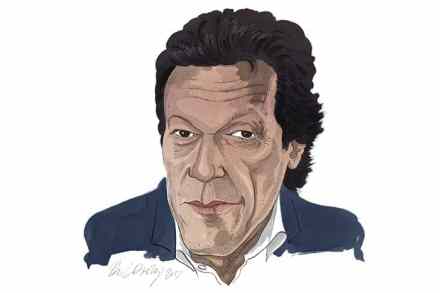
On Sunday, Imran Khan became the first prime minister in Pakistan’s history to be ousted by a no-confidence vote. Followers of Khan’s Pakistan Tehreek-e-Insaf party naturally took to the streets; much of their anger has been directed at the generals who engineered their leader’s downfall. It was a clash with the all-powerful military that, like so many of his predecessors, finally ended Khan’s prime ministership. The former cricketer had attempted to oust one of the country’s all-powerful spy chiefs, a move that finally ended the uneasy relationship between the PM and the military. Attempting to save his own politician skin, Khan tried to block a no-confidence vote by dissolving the assembly last week but this was deemed illegal by the Supreme Court.

Is this the end of Imran Khan?

From our UK edition

Imran Khan’s innings as the Pakistani Prime Minister may be coming to an end. The Muttahida Qaumi Movement, one of his coalition partners, has split from the government. Khan has now lost his majority in the National Assembly, which is set to meet for a no-confidence vote on Sunday. And while all this falls perfectly in line with parliamentary norms, in the context of the country’s tumultuous political history, Khan’s premature exit would be another blow to democracy. Not a single Pakistani prime minister has completed their five-year term in the country’s 75-year history, almost half of which has seen direct military rule.

Pakistan’s Christians are living in terror

From our UK edition

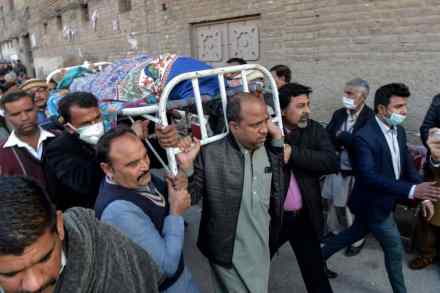
A Christian priest was shot dead by gunmen in Pakistan’s Peshawar town on Sunday. Pastor William Siraj was gunned down as he headed home from mass with two fellow priests, one of whom, Naeem Patrick, was also wounded. While no one has officially claimed responsibility for the attack, the killing – carried out by two men on motorbikes – comes amidst a rise in jihadist attacks in Pakistan. Most of the recent spate in jihadist violence is claimed by the Tehrik-e-Taliban Pakistan (TTP), which last month orchestrated a gun raid at a check-post in Islamabad, the country’s capital. The Pakistani Taliban, and their affiliates, have been encouraged by the triumph of their Afghan counterparts in Kabul.

Islamonomics: how Erdogan crashed the Turkish economy

From our UK edition

The Turkish lira sank to an all-time low against the dollar last week. The lira shed 30 per cent of its value in November alone, having lost nearly half its value since the start of the year. Inflation in the country is out of control — reaching over 21 per cent last month. Traditional economics tells you to raise interest rates to counter inflation. Higher rates make borrowing more expensive and saving more attractive — in theory reducing the amount of spending on goods and services. Indeed the Bank of England, facing inflation at just over 4 per cent, is hinting that it will raise them in the new year. The Turkish central bank, meanwhile, is busy cutting interest rates — by 4 per cent since the start of September.

The Council of Europe was right to pull its hijab campaign

From our UK edition

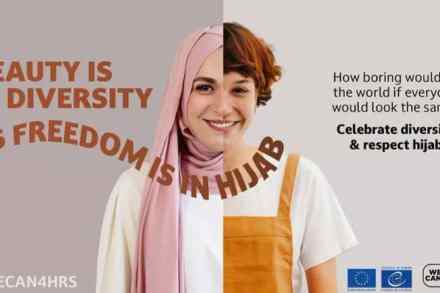
This week, the Council of Europe was forced to pull an advertising campaign promoting the hijab following a backlash from the French. As part of a campaign to promote respect for Muslim women, the European body released a number of campaign posters, one of which read ‘Beauty is in diversity as freedom is in hijab’. Shortly afterwards there was an outcry from French politicians, who called for the campaign to be dropped. Sarah El Haïry, France’s youth minister who is of Moroccan descent, said she was vocally ‘shocked’ by the campaign. The posters were also condemned by many Muslim heritage women and secular activists around the world. Some of the campaign’s messages, such as ‘my headscarf my choice’, are pretty uncontroversial.

It’s not cricket: should we ban Afghanistan from playing?

From our UK edition

The Taliban takeover in Kabul left the west flailing. But when it comes to cricket, the new ruling regime in Afghanistan is being shown little mercy.  Cricket Australia has announced that it will almost certainly cancel the historic Test match with Afghanistan, which was scheduled to start in November. The reason? The Taliban’s mooted ban on women’s cricket. Australia’s Test captain Tim Paine said it is 'hard to see' Afghanistan being a part of next month’s T20 World Cup, implying that the ICC should ban the country and that teams should pull out from facing them in the tournament.

Pakistan is relishing its role as kingmaker in Afghanistan

From our UK edition

The details of engagements involving the head of MI6 are, unsurprisingly, usually kept secret. But not so Richard Moore's meeting with the head of the Pakistani army, General Qamar Javed Bajwa. Officers from Britain's intelligence service are also said to have met the Taliban, both in Kabul and Qatar. How do we know? Because hours after Moore met Bajwa, the news was plastered all over Pakistani media, much to the dismay and horror of British officials. Pakistani leaders have spent much of the past fortnight basking in the Taliban’s triumph. Imran Khan lauded the Taliban for breaking the ‘shackles of slavery’.

Pakistan’s masochistic support for the Taliban

From our UK edition

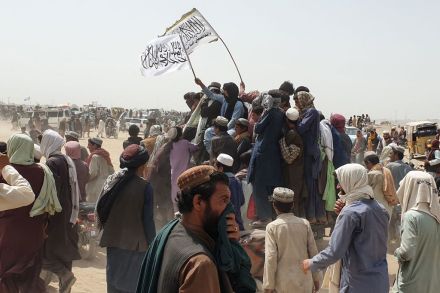
Taliban flags are already flying in Islamabad. Among those hoisting the white flag of the group is the women’s madrassa Jamia Hafsa, affiliated with the adjoining Lal Masjid (Red Mosque), which has also released a song celebrating the Taliban as ‘the symbol of Islam’. Lal Masjid, a few miles from Pakistan’s military headquarters and parliament, has been an emblem of terror and factory of jihad in Pakistan since its formation in the 1960s. The Lal Masjid cleric Abdul Aziz has in the past pledged allegiance to Isis and appeared to defend the 2014 Peshawar school attack which killed 141, mostly schoolchildren. When the army moved against Lal Masjid in 2007 it led to a nationwide explosion of terror attacks.

The Taliban’s win will unleash the next wave of global jihad

From our UK edition

The Taliban retaking Kabul has been inevitable for almost the entirety of the 20 year war, and certainly since Barack Obama announced the US troop withdrawal from Afghanistan in 2011. And yet the manner in which Kabul has fallen, with images of despair and the Taliban’s unopposed march to the presidential palace, heralds a global tectonic shift. For Islamist militia, regardless of their orientation, it signifies jihad’s biggest win of the decade. Jihadist outfits from Africa to the Middle East and South Asia, including groups that have been facing off against the Taliban in Afghanistan, will bask in the ‘triumph of Islam’.

Pakistan’s profane blasphemy laws

From our UK edition

An eight-year-old Hindu boy is currently in custody in the southern Punjab. He is the youngest person in Pakistan to be charged with blasphemy. The boy, accused of urinating in a local madrassa, was released last week on bail — in retaliation, a Muslim mob vandalised a local Hindu temple. Meanwhile, on Thursday, a day after the temple attack, a transgender person was arrested on blasphemy charges in Abbottabad, around 100 miles north of the capital Islamabad, for allegedly burning the Quran. These are but the latest in an unrelenting spree of blasphemy cases, a victimless crime that carries the death penalty in Pakistan.