Kristina Murkett

Kristina Murkett is an English teacher, private tutor and journalist

The UK’s phone signal is infuriatingly poor

From our UK edition

As I have been driving across England’s green and pleasant land visiting friends and family this summer, I discovered that the UK’s phone signal is really, really terrible. I expected poor connectivity on coastal paths in Cornwall, but everywhere I went I experienced problems: network dropouts as I tried to navigate the M1, recurrent outages as I tried to work remotely from Sussex, endless loading and buffering screens (even though my phone promised me 4G) regardless of whether I was in London or the Lake District. The signal in a friend’s home in south east London is so terrible you would think we were trying to beam through the Great Pyramid of Giza. I have had more reliable phone service on safari in Tanzania than I have on Great Western Rail.

The problem with compulsory GCSE resits

From our UK edition

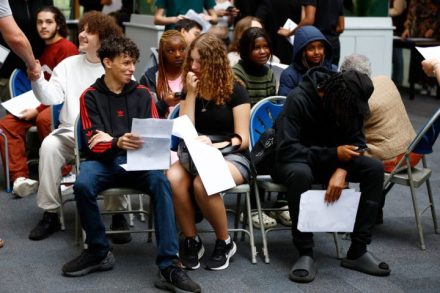
This morning, students up and down across the country will anxiously open up their GCSE results, with local papers publishing photos of glowing over-achievers and other heartwarming success stories. The national media will, in all likelihood, focus on the number of top grades, and how this fits into recent trends concerning grade inflation as exam boards try to re-stabilise results post-Covid.  Yet this hyper-fixation on the number of 7s, 8s and 9s (the equivalent to an old-style A or A*) means we tend to overlook something much more important: the long tail of underachievement in England.

Male violence does not take place in a vacuum

From our UK edition

There have been lots of reasons to be optimistic this summer: the glorious spectacle of the Olympics; the (relatively) good weather; the Bank of England finally cutting interest rates amid falling inflation. Yet this summer has also seen a pernicious epidemic of violence, hate and prejudice. I’m not talking about the right-wing riots, but the numerous acts of violence against women and girls. Over the last month or so, we have witnessed too many chilling reminders that we have a problem with men who hate women, and that politicians have no idea what to do about this.  It started in July: Carol Hunt and her daughters Hannah and Louise were brutally murdered in their home, execution-style with a crossbow.

Can we really teach children to spot fake news?

From our UK edition

As part of the ongoing review into the primary and secondary school curriculum, Education Secretary Bridget Phillipson has announced that children in England will be taught how to spot misinformation and extremist content online, so that students can arm themselves against ‘putrid conspiracy theories’. In the wake of weeks of rioting, with children as young as 12 and 13 now in court for their involvement, this announcement seems like a sensible idea, but it is not necessarily a straightforward one. You simply cannot embed critical thinking without establishing a firm foundation of factual understanding first Children and teenagers are excellent targets for fake news, but they are notoriously bad at spotting it.

Labour’s private school VAT raid will stunt social mobility

From our UK edition

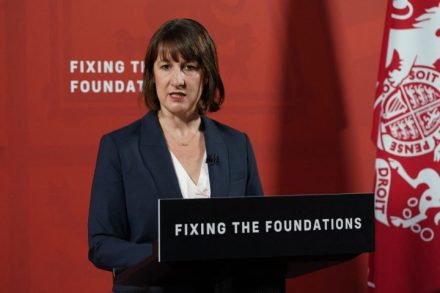
Following the announcement of Rachel Reeves' spending cuts on Monday, the Treasury confirmed that VAT will be applied to private school fees from January 2025. Although the debate on whether to charge this tax on private schools has raged for months, this is still earlier than most of the sector expected. ‘Anti-forestalling’ measures will be introduced so that any advance payments for the January term are, from this week, also taxed. This means parents can no longer avoid the extra 20 per cent by paying fees upfront. Perhaps most importantly, Treasury documents have also confirmed that ministers expect the new tax to drive some private school parents to the state sector: the first time Labour has acknowledged this in writing.

Don’t let Netflix ruin Lost

From our UK edition

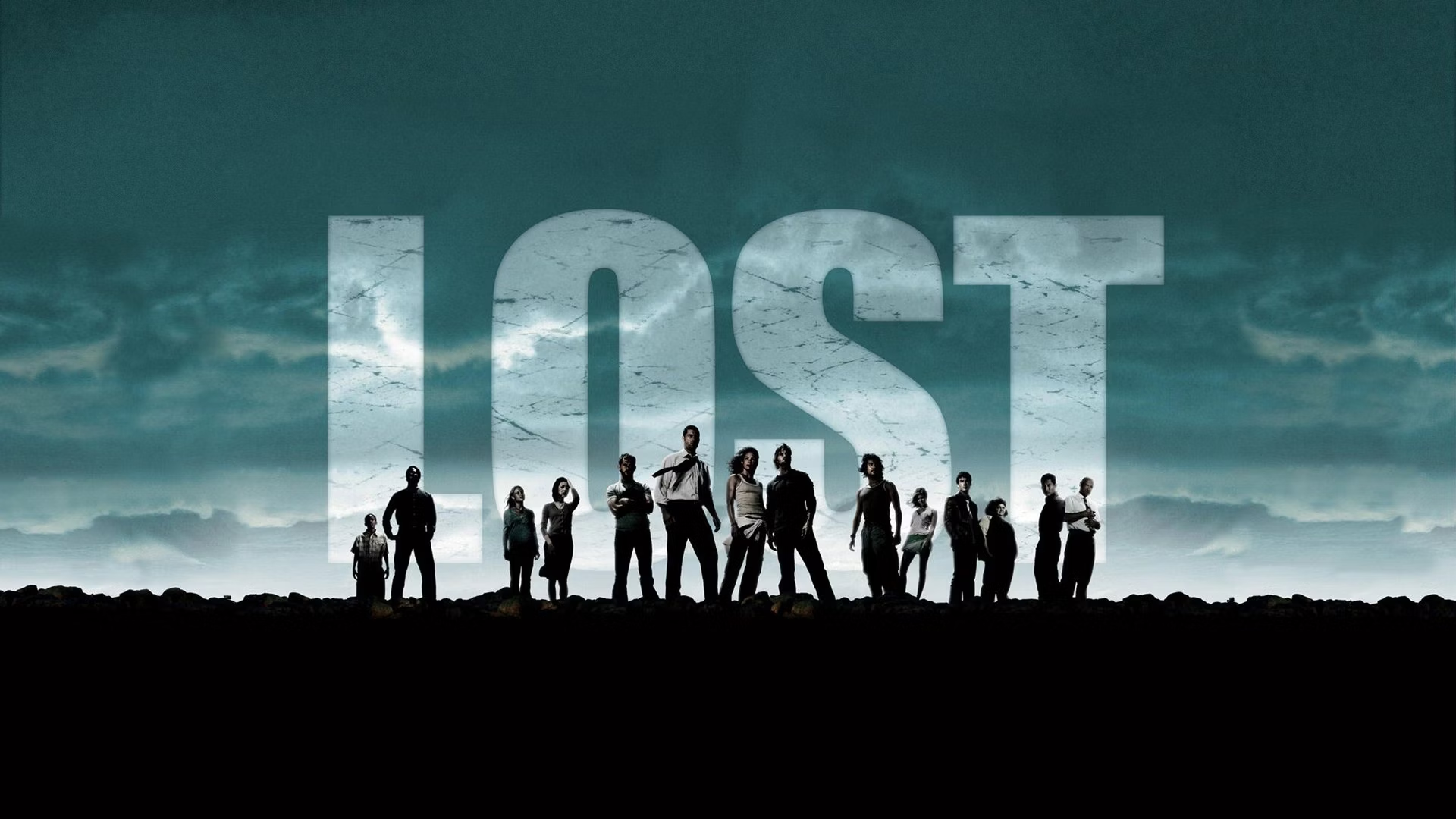
It’s July 2024, and Netflix has decided we have to go back. In honour of the 20th anniversary of the pilot, all six series of Lost have been uploaded to Netflix in the US, and now younger audiences get to experience one of the biggest pop culture obsessions of the noughties for the first time. This character-driven, mythologically-rich, Emmy-winning existential island adventure was once so popular (it averaged between 11 and 18 million viewers a series) that the White House pledged not to disrupt the final season’s premiere with President Barack Obama’s State of the Union address. I even loved the notoriously divisive finale, which didn’t necessarily resolve many of the metaphysical mysteries I am, and always have been, a Lost super-fan.

There’s a reason Eton is cracking down on smartphones

From our UK edition

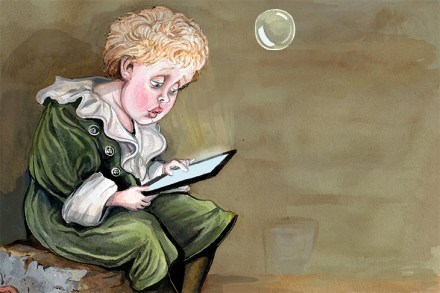
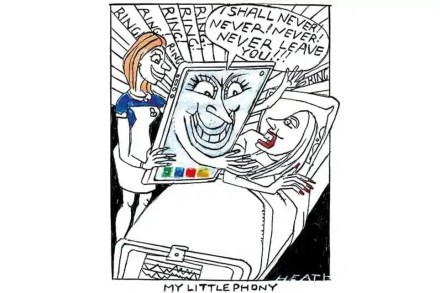
Eton College has just announced that it will ban new pupils from bringing smartphones to school from September, and will give them a basic, school-issued Nokia handset instead that can only make calls and send texts. Currently Eton does not allow pupils to have phones on them during the day, and all pupils up until Sixth Form must hand in all devices at night. Many other private schools are pursuing similar policies: from September, year seven pupils at Brighton College will not be allowed to have internet-enabled phones on site, and all offline devices will still have to be locked away during the school day. The deputy head at Alleyn’s in Dulwich has written to parents of incoming year sevens urging them to only buy ‘dumbphones’ for their children.

The case against the hunk

From our UK edition

It is no longer normal to see Hollywood men looking normal anymore. From the empty cheeks of Ozempic face to the puffed-out Brotox foreheads to the eerily-uniform veneers of Turkey teeth, no one seems to be aging, but no one seems to also be quite so attractive. Even Ryan Gosling, once my favourite heart-throb, has overdone the filler, and now looks like he is smuggling a pair of snooker-balls in his cheeks. Boys and young men are being sold a lie The same is true for male bodies; masculinity means muscularity. In our superhero-saturated age, audiences are inundated with images of male physical perfection: torsos like upside down triangles, shoulders that look like boulders, thighs that have their own gravitational pull, abs so shredded that they could grate cheese.

The internet is getting worse

From our UK edition

In Gerald Weiner’s book The Secrets of Consulting, there is a case study in which a bright MBA graduate tells a giant multinational burger chain to eliminate just three sesame seeds from each bun to save the company $126,000 a year, under the assumption that none of the customers will notice. This works, so the next year they remove five sesame seeds, and, each year or two, they remove some more, until the bun is barely recognisable. Suddenly, nobody buys their burgers anymore. I get the sense that nothing on the internet really works – or at least no longer works for us I would suggest that the same thing has happened to the internet.

The truth about the ‘ban’ on sex education

From our UK edition

Increasingly, it feels like the Tories want to distract from their looming defeat by doing everything they can to keep everyone in a constant state of outrage. Their latest target: sex education. There has been much talk over the past couple of days about the government’s plan to ‘ban’ sex education for under nine-year-olds, as well as teaching about gender identity, in an attempt to stop students from being ‘exposed to disturbing content’. Talk of a 'ban' is misplaced. Firstly, the government isn’t actually banning anything; it is merely issuing new ‘guidance’. Secondly, any new guidance is completely unnecessary because, well, there isn’t actually any sex education on the curriculum currently for under-nines.

We know smartphones are harming girls – so why don’t we act?

From our UK edition

This week a report by the Policy Exchange think tank found that children at secondary schools with a full phone ban in place achieved GCSE results that are one or two grades higher compared with children at schools with less strict policies. This is despite the fact that the schools with complete bans typically tend to have a higher proportion of pupils eligible for free school meals than schools with less restrictive policies.  We now have dozens and dozens of studies that have proven the correlation between smartphone use and every negative behaviour change possible This is interesting, but hardly surprising, and I highly doubt it will lead to substantial change.

Britain is being too slow to ban smartphones

From our UK edition

A few years ago, calling for a ban on smartphones for under-16s would have seemed alarmist – a minority viewpoint from pessimistic Luddites and sceptical old fogeys. Now, the idea is not so much a moral panic but a moral consensus: 83 per cent of parents with at least one child between ages 4 and 18 believe that smartphones are harmful to children. Around 58 per cent back a smartphone ban for under-16s, while for primary school parents, support is at 77 per cent. The MP Miriam Cates has called for a total ban on young people having smartphones and social media to help combat a rise in ‘children addicted to pornography.

Why shortening the school summer holidays helps no one

From our UK edition

A new report, funded by the Nuffield Foundation, has recommended that the six-week school summer holiday should be reduced to four weeks, and the two weeks redistributed so that schools have a two-week half-term in October and February. Lee Major, professor of social mobility at the University of Exeter, said that spreading out the holidays more equally throughout the year would ‘improve the wellbeing of pupils and the working lives of teachers, balance out childcare costs for parents, and potentially boost academic results for many children’. I’m not convinced shortening the summer holidays would actually do any of those things.

Hollywood, please stop the biopics

From our UK edition

Having just watched the overwhelmingly underwhelming Bob Marley: One Love, I have decided that Hollywood’s obsession with biopics must be stopped. Biopics have become so ubiquitous, so pervasive, so unoriginal, that Kingsley Ben-Adir, who plays Marley in the film, has already starred in two other biopics: The Comey Rule as Barack Obama and One Night in Miami as Malcolm X.  A biopic can feel like little more than a Wikipedia page Real-life stories have become so popular that this year we will be treated to not one, but two dramatisations of Prince Andrew’s disastrous BBC Newsnight interview.

Why banning phones in schools won’t work

From our UK edition

Breaking news: schools have finally been given guidance on stopping kids from using mobile phones during the school day, three years after the government first called for a ban on phones in schools. The guidance is about as groundbreaking as announcing that loudspeakers should be banned in libraries. Less than 1 per cent of schools currently allow unrestricted phone use, and around two thirds already have rules which mean that teachers should never see students using phones. This is a non-policy for a non-problem, and yet another example of a government with no serious ideas trying to look busy. As I say to my students: activity is not the same as purpose.

Can we blame universities for cashing in on foreign students?

From our UK edition

As an English teacher and sixth form tutor, I spend a lot of my time at the moment celebrating and comforting students as they hear about their UCAS offers. I try to reassure them when they are disappointed – which many of them were last week in particular, when Cambridge offers came out – that the system is flawed and far from always fair. Many of them this weekend will have realised just how unfair it can be, as a Sunday Times investigation revealed that British universities are paying tens of millions of pounds a year to recruit lucrative overseas students with far lower grades than those required of UK applicants.

Parents should share blame for plummeting school attendance

From our UK edition

Is school optional nowadays? In summer 2022, 140,000 children were classed as ‘severely absent’ from the classroom, a rise of 134 per cent on before the pandemic. Some 1.5 million pupils – one in five children – are ‘persistently absent’, which means they miss more than 10 per cent of lessons. The problem is getting worse: for secondary students, absence rates in the first half of the 2023 autumn term were higher than in the same period a year before. Education Secretary Gillian Keegan has vowed to make ‘tackling attendance’ her ‘number one priority’. Today, the government has announced £15 million of investment to expand its ‘attendance hubs’ programme to over 2,000 schools.

Teenage teachers won’t fix Britain’s classroom troubles

From our UK edition

Teaching in the UK is in trouble. Less than half the number of secondary school teachers required this year, a record low, have been recruited, according to government figures released last week. STEM (science, engineering, technology and maths) subjects are particularly struggling: we only have 17 per cent of our target number of physics teachers and 63 per cent of maths teachers (down from 88 per cent last year). Yet this is a problem across the curriculum: the only subjects where the government met its targets were classics, PE and history. Teach First, the largest teacher training programme in the UK, announced this weekend that in order to tackle this recruitment crisis it will consider being part of a new apprenticeship scheme for trainees as young as 18.

The lost world of MSN Messenger

From our UK edition

Despite only being 30, the students at the school at which I work often make me feel old. They love nothing more than testing my knowledge of their Gen-Z slang: no, I don’t know what you mean when you say Romeo is a ‘simp’ or whether Macbeth’s behaviour is ‘sus’. My average 12-year-old student is far better at IT than I am and yet they’ve never seen an iPod before. The other day, a student asked me where txt speak came from, because they didn’t realise that SMS messages had a character limit. And despite their love of Y2K music and fashion, most of my students have never heard of the millennial rite of passage that was MSN Messenger.

At last, Hollywood mocks cancel culture

From our UK edition

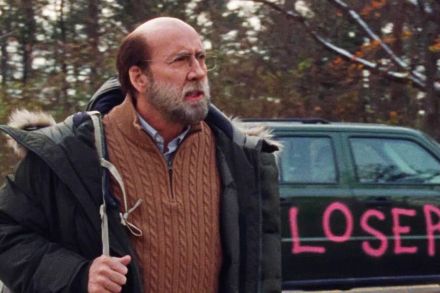
Dream Scenario is a film about modern celebrity culture and the terror of losing yourself to the internet’s virtual mob. It’s the story of evolutionary biology professor Paul Matthews, a balding, befuddled, bespectacled everyman who is the walking embodiment of anonymity – played by Nicholas Cage, the face that launched a thousand memes. At the start of the film, he gives a lecture on how zebras have adapted to avoid the mortal danger of standing out from the herd. Suddenly, in a supernatural, psychopathological epidemic, anorak-clad Paul finds himself appearing in everyone’s dreams. At first, he is just a benign bystander; in one dream, he stands there admiring a mushroom while his student is stabbed by a serial killer.