Katy Balls

Katy Balls

Katy Balls is The Spectator’s former political editor.

The political advantages of the UK-Australia trade deal

From our UK edition

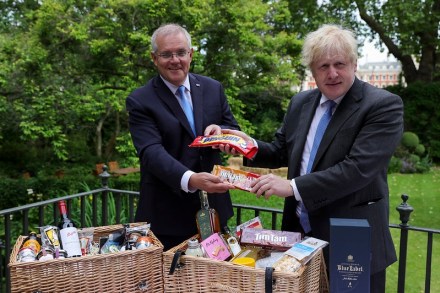
The UK government has agreed its first bespoke trade deal since leaving the EU. After Boris Johnson met with Australian Prime Minister Scott Morrison on Monday night, a deal has been agreed between the two sides. The deal on the table offers tariff free trade for all British goods, enhanced access for British tech companies and ought to make it easer for Britons under the age of 35 to travel and work in Australia. As for the Cabinet row over whether an influx of Australian meat could threaten the livelihoods of UK farmers, a 15-year cap on tariff-free imports has been agreed – though the specifics are yet to be published. The deal shows that free marketeers in government are still being heard So, what does this mean for the country?
How long will political and public patience last?

From our UK edition

11 min listen

It seems Freedom Day is no longer June 21st. The writing was clearly on the wall this morning, but now the Prime Minister has officially told the public, it is likely to be another four weeks of restrictions. 'Conservative MPs are getting really agitated by this moving of the goal posts' - Isabel HardmanBut after so many backtracks how much credibility does Boris have left?  'I think the real problem with him and the public though, will come if this July 19th date is not met' - James Forsyth Katy Balls is joined by James Forsyth and Isabel Hardman to discuss.

Boris Johnson delays the end of lockdown

From our UK edition

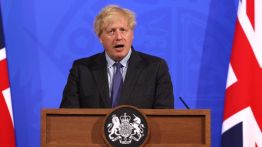
Boris Johnson has this evening confirmed that he will delay the lifting of all Covid restrictions by four weeks to 19 July. Announcing the decision in a press conference, Johnson said the Indian variant – also known as the Delta variant – has changed the picture and meant the government was no longer able to proceed with the full unlocking plan they had first hoped.  The Prime Minister said two jabs were very effective against the new variant. The problem? 'There are still millions of younger adults who have not been vaccinated and sadly a proportion of the elderly and vulnerable may still succumb even if they have had two jabs,' Johnson said.

What Tory MPs fear most about a lockdown delay

From our UK edition

As Boris Johnson prepares to announce a four-week delay to the final stage out of lockdown, he faces a mixed reaction. Labour plans to back the delay but make clear that it was avoidable and is down to bad leadership. The public is seen to be more forgiving — with a Times/YouGov poll over the weekend finding that 53 per cent think that restrictions should remain beyond 21 June, compared with 34 per cent who say they should end. Many Tory MPs, meanwhile, are opposed to the delay on the grounds that they are losing faith all restrictions will be lifted this year.

How can Boris justify delay?

From our UK edition

18 min listen

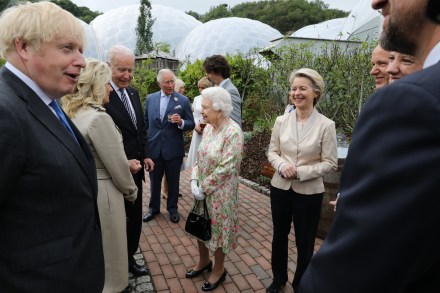
Boris Johnson is expected to announce a delay to reopening later today. How will the Prime Minister make his case, and will his backbenchers support him? Cindy Yu speaks to Katy Balls and James Forsyth.On the podcast, Katy says uneasy Conservatives may give him the benefit of the doubt this time: 'There are some Tory MPs who are happy to have a slightly more cautious approach, but are really growing very worried about this idea of never ending delays.'James says the government needs to be clear with the country about exactly why delay is necessary: 'This is one of the big questions: what is the point of this delay? If it is just to get people double vaccinated, then I think that is acceptable.'Separately, world leaders bumped elbows over the weekend at the G7 summit in Cornwall.

Should we delay 21 June?

From our UK edition

29 min listen

On Monday, the Prime Minister will announce whether the 21 June unlocking is to go ahead. Because of the increased transmissibility of the Delta Covid variant, cases in the UK are continuing to rise. Does it make sense to wait for data to confirm that the link between cases, hospitalisations and deaths has been broken, or should we confidently reopen? Fraser Nelson, Katy Balls, Kate Andrews and Cindy Yu discuss.

Will lockdown be extended by a month?

From our UK edition

As Boris Johnson wines and dines world leaders and their partners in Cornwall, ministers are increasingly pessimistic over the pace of the government roadmap out of lockdown. The Prime Minister isn't due to make a final decision on whether the June 21 unlocking will proceed until Sunday with an announcement due on Monday. Yet in Whitehall, reports are circulating that a delay is near inevitable and that rather than the two week delay floated in the papers last week it could actually be for a month. Government aides are gloomy over the chances of any substantial reopening – pointing to rising case numbers as reason for caution.

Can the G7 beat Russia and China’s vaccine diplomacy?

From our UK edition

8 min listen

As the G7 rolls on and the world leaders learn where their peers stand on certain issues post Covid...  'There's still a chance the Northern Ireland protocol could come up at the G7 and cause some problems...' - Katy Balls ...the wealthy western nations need to decide how best to help vaccinate the world's poorer countries without risking their own rollouts at home.  'It's a very unusual leader who's going to take risks sending vaccines abroad until they've done their own population...' - James ForsythCindy Yu talks to Katy Balls and James Forsyth.

The Polly Morgan Edition

From our UK edition

34 min listen

Polly Morgan is an artist whose trade is taxidermy. She recently won the First Plinth Award, and in her time has sold to celebrity clients including Kate Moss and Courtney Love. On the podcast, she tells Katy about her unusual childhood growing up on a farm with ostriches, goats and llamas; why she got fired by Prue Leith; and the ins and outs of taxidermy.

Could Brexit scupper the G7?

From our UK edition

14 min listen

The long-anticipated G7 meeting in Cornwall has got off to a rocky start today, as it transpired that the US had lodged a 'demarché' - a diplomatic ultimatum - with David Frost, earlier in the week, over the UK's position on the Northern Ireland Protocol. Could tensions spill over? James Forsyth points out that the US side clearly did not want this to become public knowledge: 'In the reaction from the US side this morning, they are clearly trying to walk this to a more moderate position.' On the podcast, we also discuss Matt Hancock's evidence to MPs today, and the ramifications of the Dominic Cummings hearing from a few weeks ago.

Boris’s three unlocking options for 21 June

From our UK edition

What will Boris Johnson announce on Monday? The Prime Minister is due to update the nation on whether the final stage of the roadmap out of lockdown can proceed on 21 June as planned. However, with cases on the rise and the Indian variant spreading, various government advisers have spent the past few weeks taking to the airwaves to warn of calamity ahead should Johnson lift all restrictions. There is also a push from some in the Cabinet to either delay the roadmap or opt for a more limited easing. In truth, no final decision will be made until Sunday. The Prime Minister is currently busy in Cornwall attempting to woo world leaders (and avoid a diplomatic row with the US over the Northern Ireland protocol).

Are Brexit talks back to the bad old days?

From our UK edition

10 min listen

Today, talks between David Frost and the EU's negotiator Maroš Šefčovič ended with little agreement about how to move forward on the Northern Ireland Protocol. As James Forsyth says on the podcast: 'it didn't end with either man walking out of the meeting, but you probably can't say much more for it than that.' This is partly down to Lord Frost's negotiating style. Katy Balls points out that he's learning from the lessons of the Brexit talks of recent years: 'David Frost, who gets a lot of criticism for being very confrontational in his methods, looks back at the Brexit negotiations which he led on the UK side, and thinks that "Well it worked then, it might work now". And therefore, all these people saying his approach is wrong...

The ‘sausage war’ escalates between the UK and EU

From our UK edition

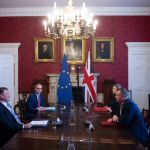
Any hope that a solution to the Northern Ireland protocol could be found ahead of the G7 summit have been dashed. This morning, David Frost – the minister in charge of Brexit relations – met with European Commission vice president Maroš Šefčovič at Admiralty House on Whitehall to discuss the current impasse over Irish Sea border checks. The row? After the UK unilaterally extended grace periods on several checks, the EU has threatened to retaliate if the UK tries to extend these on imports of chilled meat products to Northern Ireland from Great Britain. This has led to talk of a ‘sausage war’ which threatens to cast a shadow over Boris Johnson’s attempt to woo world leaders, including Joe Biden in Cornwall on Thursday.

Boris Johnson’s growing backbench problem

From our UK edition

When will Boris Johnson reshuffle his Cabinet? It's a question that’s asked every couple of weeks in Westminster with frequent briefings about who is up (Liz Truss, if recent ConservativeHome polls are anything to go by) and who is down (Gavin Williamson is the most recent minister to be tipped for the axe). Yet despite the talk, so far the Prime Minister has proven reluctant to refresh his top team. A hint of why can be found in the events of this week. A series of Tory rebellions are bubbling up. As Johnson considers whether to green-light the June 21 unlocking, members of the Covid Recovery Group are once again going public with their concerns. More troubling for the government, however, is the unease behind the scenes.

Is the foreign aid row a sign of things to come?

From our UK edition

13 min listen

Though the amendment on foreign aid was not selected by the Speaker yesterday, the row over the budget cut is not over yet. Today MPs will have an emergency debate about the policy, and Lindsey Hoyle has advised that the government should bring the matter in front of the House in the future. This is just one of a number of things bothering Tory MPs at the moment - so what's going on?  James Forsyth sums it up as: 'There's a pattern about money, essentially.' With the worst of the pandemic over the Treasury is looking to tighten its pursestrings.

Boris Johnson avoids a Commons vote on foreign aid

From our UK edition

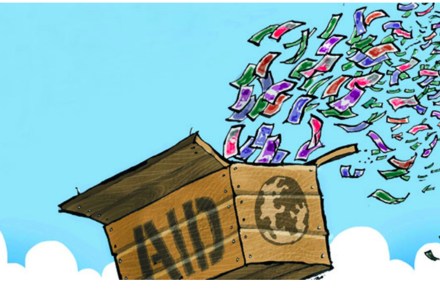
Update: Commons speaker Lindsay Hoyle has announced that a vote on the aid spending amendment has not been selected. Hoyle says the amendment is out of the scope of the current bill, meaning Boris Johnson will avoid a potentially difficult vote on the issue – for now. Hoyle suggested the government should give MPs an opportunity for a vote at a later date on restoring the foreign aid pledge to 0.7 per cent of gross national income. As preparations get underway in Downing Street for this week's G7 summit, trouble is brewing in the House of Commons. The government is facing a potential defeat on a vote it didn't want to have: the cut to the foreign aid budget.

Can Rishi Sunak get the G7 on side?

From our UK edition

13 min listen

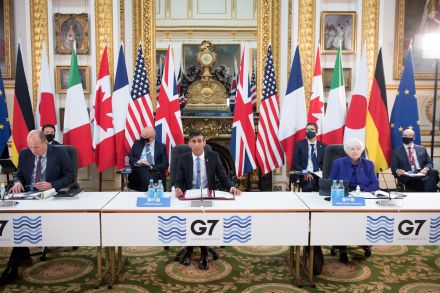
With the G7 looming the range of subjects on the agenda is vast. One of the first items up is the proposal of a global corporate tax rate which President Joe Biden has already endorsed. The potential issue with this that James pointed out on the pod was:"For this to work, this global corporate minimum tax, you need all the major players in the world economy signed up to it."But how will the first meeting of Boris and Biden go and is possible the G7 could become the G10?"For Boris Johnson, not to over stress it, but it is about making personal connections, that haven't been possible because of the pandemic" - Katy Balls Katy Balls and James Forsyth discuss with Cindy Yu their thoughts on what to expect.

Boris clamps down on foreign travel over Covid variant fears

From our UK edition

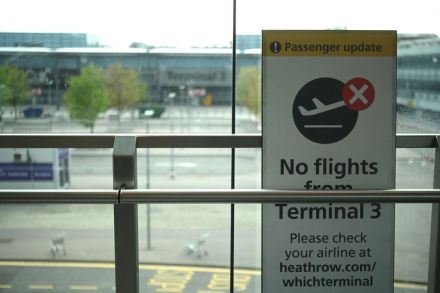
Those hoping for a holiday abroad this summer were dealt a blow this afternoon with the announcement of the government's travel list update. A few weeks ago, there had been talk that this would be the moment that more tourist-friendly countries would be added to the green list which allows for quarantine-free travel. Instead, the opposite has happened. Not a single country was added to the green list, while Portugal – one of the few countries on the list accepting UK tourists – was moved to amber. This means Brits travelling back from Portugal from 4am on Tuesday face quarantine on return.  Meanwhile, seven countries were added to the red list, resulting in hotel quarantine for 11 nights.

Could travel this summer be stricter than last?

From our UK edition

10 min listen

It's been a stressful day for those who've booked foreign holidays, as the government updated the latest countries on its various coloured travel lists. No new countries were added to the green list, but some were moved to amber. On the podcast, James Forsyth explains how this decision is down to a desire to prioritise domestic reopening to liberalisation of our borders: 'I think Boris Johnson doesn't like closing borders instinctively, but if that's what it takes to get rid of the one-metre rule, I suspect that might be a trade-off he would make.' But Cindy Yu asks - if this is the guiding philosophy, when will Britain really open up, given the patchiness of vaccination in the rest of the world?

Education catch-up chief quits amid spending row

From our UK edition

The government's ambition to close the learning gap that has occurred as a result of the pandemic hit a stumbling block today. After the Department for Education announced plans for a £1.4bn programme in schools to help children catch up, ministers were criticised for not going further in their proposals. Now the government’s education catch-up chief has resigned. This evening, Sir Kevan Collins wrote to the Prime Minister to offer his resignation as education recovery commissioner. Collins cited the 'huge disruption to the lives of England's children' that the pandemic has caused, arguing that only a 'comprehensive and urgent' response would do.