Katy Balls

Katy Balls

Katy Balls is The Spectator’s former political editor.

What happens next?

From our UK edition

Parliament is in deadlock over Brexit. So what can we expect in the coming days and weeks after the vote? These are the scenarios currently being war-gamed. May’s deal passes A political shock: Theresa May squeaks over the line after convincing Brexiteers that it was her deal or no Brexit — and Remainers that it was her deal or a no-deal Brexit. The DUP then rains on May’s parade. Seething over the backstop, it declares that the confidence and supply agreement is over for good. This scenario could involve delaying the initial vote in the hope this gives MPs time to come around. It passes on a second vote Theresa May’s deal fails to pass first time round by 50 votes.

What did May mean to say with her Commons speech?

From our UK edition

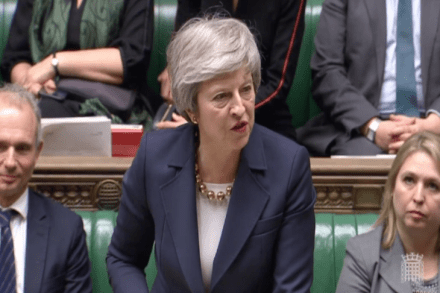
After Theresa May's government made history on Tuesday with three successive Commons defeats – including the first contempt of Parliament defeat since the 1970s – ministers were given no respite with a Brexit debate that ran on until 1am. The Prime Minister's address to start that session was overshadowed somewhat by the various Commons clashes along with the news of Dominic Grieve's Brexit amendment passing (see Isabel for what it means for the government's plans here).  But the statement is important to note as it appeared to mark a change in tone. May adopted a frank manner – and told MPs of the difficulties and sacrifices she had made to get to this point: 'I have spent nearly two years negotiating this deal. I have lost valued colleagues along the way.

What the latest government defeat means for May’s premiership

From our UK edition

After numerous last ditch efforts to dig themselves out of this hole, the government has found itself in contempt of Parliament over its refusal to publish the Attorney General's legal advice in full. The DUP joined forces with Labour, the Lib Dems and the SNP to vote for a motion which finds ministers in contempt over the government's refusal to share the legal advice in full – at 311 to 293. The government has now said it will publish the legal verdict (expect some horrors). If they fail to comply, then a minister could face suspension . However, the part of this whole debacle that should worry No.10 the most is not the impending publication of legal advice.

Government in a pickle over contempt proceedings

From our UK edition

It's just another day in office for Theresa May's shaky government. Today MPs will enjoy the first of many days of debate over the seemingly doomed EU withdrawal agreement but before they get to that ministers must try and avoid being found in contempt of Parliament. After the government refused to publish the full legal advice on May's Brexit deal (following an Opposition Day debate calling for it), Attorney General Geoffrey Cox appeared in the Chamber in a bid to satisfy MPs by answering questions on the agreement. Although Cox did manage to charm a number of attendees his attendance was not enough to silence Opposition demands. This lunchtime MPs will now hold an emergency debate on whether ministers are in contempt of parliament for refusing to release the advice.

Finally, a minister treats us like adults on Brexit

From our UK edition

What does it take to boost Tory morale these days? Oddly enough, the answer appears to be an hour-long session on troubling legal advice. With an Opposition Day debate leading to a demand for Theresa May to publish the EU withdrawal bill legal advice in full, the Prime Minister attempted to satisfy angry MPs by sending her Attorney General Geoffrey Cox to answer questions on the legal implications of the proposed Brexit deal. The Brexiteer – who drew comparisons to the Lion King's Mufasa with his barnstorming conference speech – told MPs that while the government was disinclined to publish the advice in full, his presence ought to go some way to satisfying them given that an attorney general has only appeared in this way in Parliament a handful of times in the last 50 years.

What Sam Gyimah’s Brexit resignation means for May

From our UK edition

Here we go again. After a relatively quiet week on the resignation front for Theresa May’s shaky government, Sam Gyimah has announced that he has left his role as Universities and Science Minister. Gymiah puts his decision down to concluding that he could not vote for the EU Withdrawal agreement. He tells the Telegraph: ‘Britain will end up worse off, transformed from rule makers into rule takers. It is a democratic deficit and a loss of sovereignty the public will rightly never accept.’ Notably Gyimah does not rule out supporting a ‘People’s Vote’ on the final deal: ‘We shouldn’t dismiss out of hand the idea of asking the people again what future they want, as we all now have a better understanding of the potential paths before us.

Is the May-Corbyn television debate pointless?

From our UK edition

Theresa May has two weeks to sell her deal to MPs ahead of the meaningful vote on Tuesday 11 December. The fact that Philip Hammond used an interview this morning meant for selling the deal to state that at present there was no consensus in favour of it tells you everything you need to know about how that is going. There are gloomy estimates that the government could lose the vote by as much as 200 – that seems steep but a defeat around the 100 mark is beginning to seem likely. So, how does No.10 plan to turn things around? There's a special Brexit grid which will see a topic focus for each day – economy, security, trade – in the build up. Perhaps the most striking part of the Downing Street campaign is the mooted TV debate. No.

Watch: Theresa May apologises for queue-jumping comment

From our UK edition

When Theresa May stood up at the CBI conference earlier this month and declared that under the new Brexit immigration system, EU nationals would no longer be able to 'jump the queue', she met a hostile reaction. The rhetoric led to fellow leaders, MPs and voters going on the offensive over the comments. Today Theresa May took the opportunity to apologise for that comment. Asked in the Chamber by the SNP’s Philippa Whitford whether she wished to apologise for insulting EU nationals like Whitford's husband, a German national and a doctor, who have contributed to society and made a home here, May said she should not have used that phrase: 'I should not have used that language in that speech'.

What happens next? Five Brexit scenarios

From our UK edition

Theresa May's deal has been approved by the EU27 but now the difficult part begins. No.10 must work out a way to get the EU withdrawal agreement through the Commons. Given that the number of Tory MPs who have said they won't support it is past the 80 mark (see the full list here), that looks no easy task. A vote is mooted for Tuesday 11th December. So, given that Plan A looks rather optimistic, what are the alternatives? No-one – not even those at No.10 – are entirely certain what would happen if the deal is voted down. However, here are the main scenarios to expect come the vote: MPs back May's deal on first vote At present, this seems an unlikely option. However, if No.

Dominic Raab is just saying what a lot of Leave MPs are thinking

From our UK edition

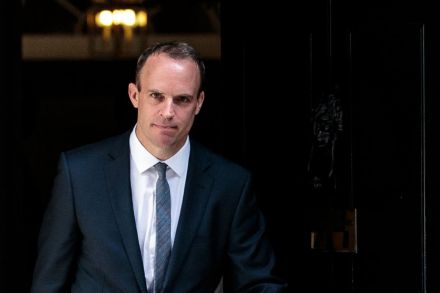
After resigning as Brexit Secretary over Theresa May’s proposed deal, Dominic Raab has restyled himself as one of the more loyal of the Brexiteer rebels. He used an appearance on the Andrew Marr show over the weekend to say that although he would note vote for the deal as it currently stands, he still backed Theresa May as Prime Minister and would vote for her in any confidence vote. This morning he is upped the ante, however, with an interview on the Today programme. Discussing both the withdrawal agreement and the future framework (which was set out on Thursday), Raab was frank in his assessment. The Tory Brexiteer said he would prefer EU membership to what’s currently on the table.

Did Amber Rudd’s Today interview actually help No. 10?

From our UK edition

In her first interview since returning to the cabinet, Amber Rudd has set the cat among the pigeons. Speaking on the Today programme this morning, the new Work and Pensions Secretary appeared to go off script as she talked about the prospect of a 'no deal' Brexit. The former Remain campaigner said that Parliament 'will stop No Deal' if the deal is voted down as there 'isn’t a majority in the House of Commons to allow that to take place'. 'I don't think we are looking at another referendum. I think what will happen is that people will take a careful look over the abyss and despite what people say the EU withdrawal agreement will get through.' On the surface at least, it doesn't appear to be a particularly helpful intervention.

Tories try out life as a minority government

From our UK edition

MPs and ministers who had settled down in Parliament on Tuesday evening for a late night of votes on the finance bill were given an early reprieve – all votes were off. However, rather than an early Christmas present from No.10, the shelving of votes on the finance bill was down to a reason out of Theresa May's control: no working majority. With the DUP abstaining for a second day over grievances with the EU withdrawal text, the government decided to concede all amendments to the bill – including one from the SNP. It's not clear they would have lost on every single amendment but after the antics of Monday (when the DUP voted with Labour but not enough Labour MPs turned up to secure victory), all opposition MPs were on standby to try and inflict a defeat on the government.

DUP abstain on finance bill – what it means

From our UK edition

Although Theresa May looks set to avoid a confidence vote for the time being, tonight's Finance Bill votes could serve to undermine her authority further. Government whips have spent the day frantically trying to persuade swing MPs to vote with the government against a series of amendments. Those efforts have been rather fruitless in some respects – with the government already forced to concede on the Jo Johnson backed amendment calling for the Treasury to publish a comparison of the impact of the Brexit deal with the impact of Britain’s existing terms with the EU. Adding to May's woes is the fact the DUP have abstained on most of the votes.

Tory Brexiteers divided over how to kill off May’s deal

From our UK edition

Will Theresa May face a vote of no confidence? Graham Brady has been touring the studios over the weekend making it clear that the full 48 letters required to trigger such a vote are yet to be received. That's not to say it won't happen in the near future – there's plenty that could happen in the next week to irk MPs further – though European Research Group members seem a little down-hearted by the slow pace to proceedings. The problem is Tory Brexiteers are not united when it comes to a response to May's EU withdrawal agreement. There are a small number of Tory Leave MPs who actually support it – Andrew Percy, Steve Barclay, Kwasi Kwarteng among them.

Theresa May warns plotters: Oust me and Brexit won’t get any easier

From our UK edition

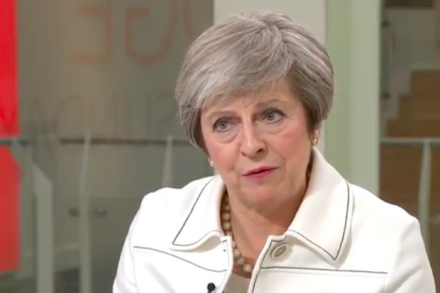
Theresa May's problems have not let up over the weekend. With speculation mounting about an impending confidence vote, the Sunday papers are filled with reports of leadership rivals sounding out colleagues while Dominic Raab – the former Brexit Secretary – has used an interview to tell May to stand up to Brussels' bullies (though he has since told Andrew Marr he will still back the PM in any confidence vote). Appearing on Ridge on Sunday this morning, May tried to make the case for both her Brexit deal and her premiership continuing. She said that as far as she knew the 48 letters required for a confidence vote were not in.

No. 10 manage to find a Brexiteer for Brexit Secretary

From our UK edition

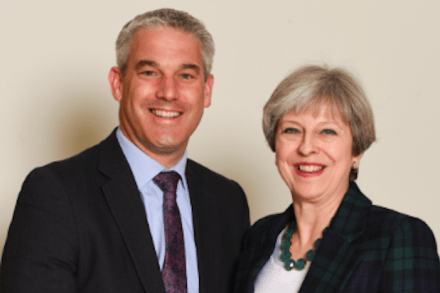
Thirty-two hours after Dominic Raab resigned as Brexit Secretary, Theresa May has managed to find a Brexiteer who is willing to take on the troubled brief. Steve Barclay – the MP for North East Cambridgeshire – is the new Brexit Secretary. He has been promoted from minister of state at the Department of Health and Social Care. It's certainly quite a leap and Barclay is the most low profile MP to take on the brief yet. However, the scope of the job has also been reduced. Barclay's role is to concentrate on domestic preparedness rather than the final stages of the EU negotiation. The expectation is that that part of the negotiations will be led by Theresa May with the help of her top sherpa Olly Robbins.

Amber Rudd makes swift return to cabinet as May tries to steady nerves

From our UK edition

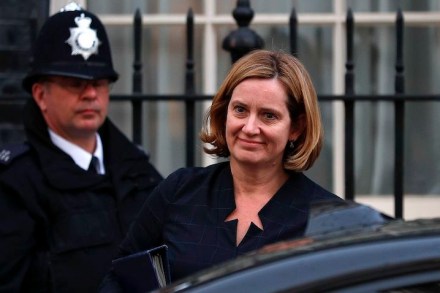
Amber Rudd has returned to cabinet as Work and Pensions Secretary. The former home secretary has been appointed to the brief after Esther McVey resigned on Thursday over the Prime Minister's proposed Brexit deal. Rudd's appointment should help to calm nerves and steady the ship as No.10 try and find some calm following Thursday's turmoil. Rudd is well liked across the party – and when she resigned over the Windrush scandal in April, many of her colleagues – including figures in No.10 – urged her to rethink her decision and stay on. It's good timing for Rudd's return as earlier this month an inquiry into the events leading up to her resignation concluded that she was let down by her own officials.

Jacob Rees-Mogg says Theresa May on course to face a confidence vote

From our UK edition

Theresa May is on course to face a confidence vote according to the Conservative party's arch-Brexiteers. Senior members of the European Research Group today publicly called for her departure. After Dominic Raab’s resignation this morning, members of the group of Eurosceptic backbenchers gathered in the committee room corridor to discuss their options. Brexiteers were seen raising their hands in what appeared to be a vote. While not everyone present agreed a vote was the answer, a significant number said they had sent their letter to 1922 committee chair Graham Brady. That includes Simon Clarke - the Tory MP who previously publicly retracted his - and Jacob Rees-Mogg who has helpfully tweeted his out.

Can Theresa May’s critics unite around an alternative plan?

From our UK edition

Ahead of the crunch Cabinet meeting No. 10 aides privately admitted that the one minister they could not afford to lose was Dominic Raab. It wasn't just that losing a second Brexit Secretary would send a very bad signal about the government's Brexit policy. More importantly, Raab is regarded as a pragmatic Brexiteer and there was a fear that his resignation would have a domino effect. Those fears were correct. So far today we have seen a second Cabinet minister resign as well as a number of junior ministers. What's more, there is a very good chance more will come. So, where does May go from here? Not only does her Brexit deal look dead on arrival, May's premiership is at maximum danger point. There is an expectation that there will be a confidence vote within days.

PMQs: MPs give Theresa May a taste of things to come

From our UK edition

Today's PMQs ought to have been the calm before the storm. With Theresa May unable to reveal details of the proposed Brexit deal to MPs until her Cabinet signs it off – with a crunch meeting at 2pm – the specifics are not known. However, thanks to a series of leaks from the Brussels side and the European Research Group quickly seeing red it proved to be rather tense affair. As ever, Jeremy Corbyn failed to land a killer blow on the Prime Minister despite the rather wide goal posts. The SNP's Westminster leader Ian Blackford had one of his more effective outings – using one question to ask why Scotland won't get the same benefits as Northern Ireland when it comes to single market access.