Katy Balls

Katy Balls

Katy Balls is The Spectator’s former political editor.

How should the Tories handle Nicola Sturgeon’s Covid devolution?

From our UK edition

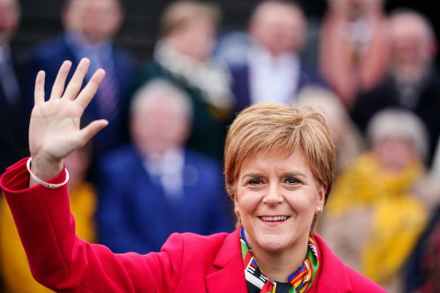
This week was meant to mark the moment the whole of the United Kingdom began to ease lockdown. Instead, it's England that has become an outlier – moving to the slogan 'Stay Alert' while Scotland, Wales and Northern Ireland stick with 'Stay Home'. With the devolved governments adopting different approaches to easing lockdown, Downing Street is facing a communication battle – and it’s the First Minister of Scotland who is leading the charge. Before Boris Johnson even got to his desk on Sunday night to make his address to the nation on the roadmap out of lockdown, Sturgeon had taken to social media and the airwaves to criticise the Government’s new slogan.
Is the Roche antibody test a gamechanger?

From our UK edition

11 min listen

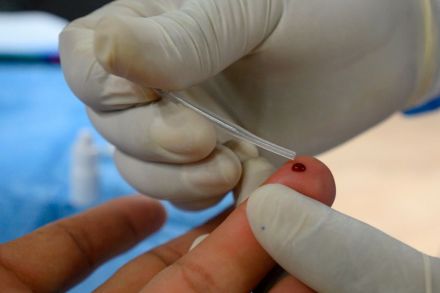
Public Health England has approved its first mass antibody test. Roche, the supplier behind it, says that the test has an 100 per cent accuracy. So how much of a game changer is this development?

Boris Johnson says businesses need to become ‘Covid-secure’

From our UK edition

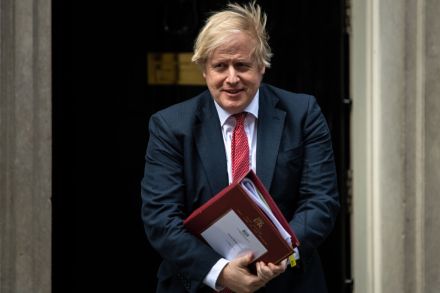
After Boris Johnson was accused by opposition leaders of providing mixed messages over his roadmap for easing lockdown, the Prime Minister attempted for the third time in 24 hours to explain what the new government guidelines mean in practice. Johnson used the daily press conference – alongside chief medical officer Chris Whitty and chief scientific officer Patrick Vallance – to take questions from members of the public. After confusion this morning over how many people from a different household an individual can meet outside, Johnson confirmed that it could only be one member of another household at any one time.

Keir Starmer’s canny coronavirus critique

From our UK edition

13 min listen

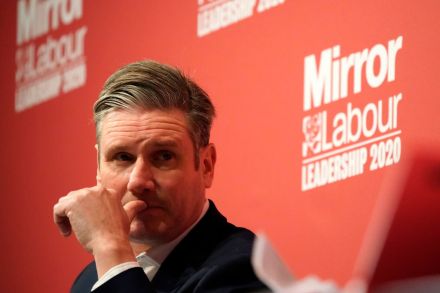
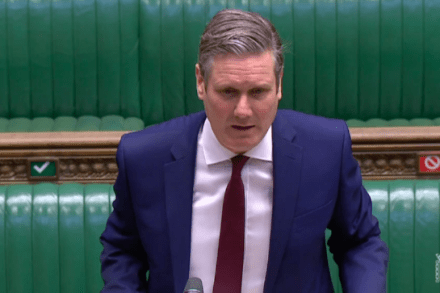
Following 24 hours of confusion over the government's advice on the next phase of lockdown, Keir Starmer is making his debut as Labour leader with a statement to be broadcast on the BBC. On the podcast, Katy Balls and James Forsyth analyse his approach of constructive criticism.

Boris sets out the shape of an exit strategy

From our UK edition

18 min listen

It's been six weeks since the Prime Minister first sat down to give the statement to the British public that began lockdown. Today, as James Forsyth first reported in The Spectator two weeks ago, Boris Johnson announced that the lockdown isn't over yet. From Wednesday onwards, the one form of exercise a day rule will be removed so that, social distancing provided, people will be able to spend time outside even when they are not exercising or shopping. But not much else has changed, and in his statement, Boris Johnson sets out why. The 'R' number simply isn't sufficiently low enough. A new metric for judging the risk to the population with five levels has been devised, and we are somewhere between levels 3 and 4 (with 5 being the risk at its peak).

Boris Johnson sets out coronavirus roadmap for easing lockdown

From our UK edition

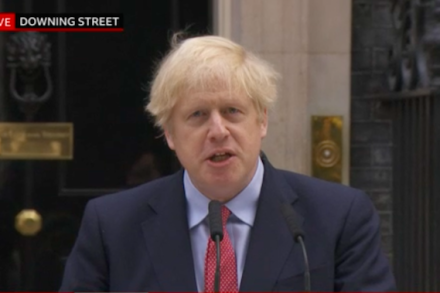
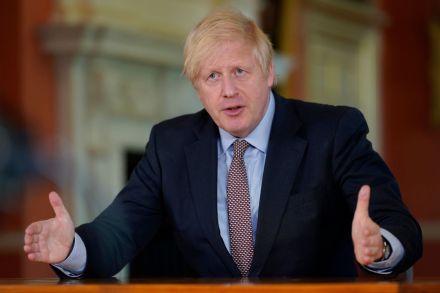
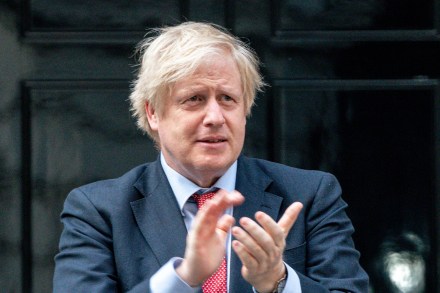
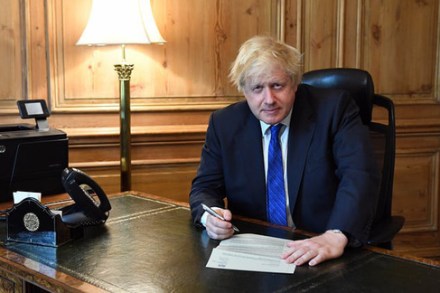
Boris Johnson used his address to the nation on Sunday night to confirm that there will be no immediate end to lockdown. The Prime Minister described coronavirus as the 'most vicious threat this country has faced' in his lifetime and praised the public for adhering to social distancing – describing such measures as the only way to defeat the virus. However, he said there was still a long way to go and that a significant relaxation of lockdown was not yet possible as it would risk a second peak of infections. Instead, Johnson presented a roadmap to an eventual return of some form of normality. He reiterated his government's five tests for easing lockdown and suggested that on the fourth point of sufficient supply of PPE there was some way to go.

Tory nerves ahead of the Prime Minister’s lockdown address

From our UK edition

When Boris Johnson addresses the nation on Sunday night to unveil his roadmap for easing lockdown in the coming weeks and months, it isn't just the public he needs to bring with him – he also needs to convince his parliamentary party. Over the past week there has been a shift in mood in the Tory Party with a rising number of MPs growing anxious over what they perceive as the slow pace of lockdown easing. As one MP puts it: 'People have started to get skittish.

The government’s black-box approach to lockdown

From our UK edition

17 min listen

What is Boris Johnson going to say in his speech on Sunday? Wales's first minister Mark Drakeford gave us a clue this morning when he announced that the Welsh lockdown will continue for at least another three weeks. Meanwhile, No. 10 has been trying to dampen speculation that the PM will announce substantial relaxations to the lockdown. Katy Balls, Fraser Nelson and John Connolly discuss the growing concern among Tory backbenchers over the government's handling of the exit strategy.

Time to start saving – how to make the best of uncertainty

From our UK edition

32 min listen

The economic impact of coronavirus is already felt keenly by many people. A large chunk of the population is having to dig into its savings to cover for lost income. But what if you don't have much in the piggy bank in the first place? Often, the discipline to save gets overtaken by events. With two-fifths of adults having less than £500 in savings, what can be done to encourage people to think about their life savings more?With Mims Davies, Minister for Employment; Lord David Willetts, President of the Resolution Foundation; and Emma Watkins, Annuities Director at Scottish Widows. This episode is sponsored by Lloyds Banking Group.

Why is the ‘R’ number going back up?

From our UK edition

11 min listen

In his evidence given to MPs today, Professor John Edmonds, one of the government's scientists on Sage, said he thought that the 'R' number had gone up in recent days. So why has this happened, despite the last three weeks of lockdown?

Keir Starmer made life difficult for Boris Johnson at PMQs

From our UK edition

17 min listen

It's the first head to head between Boris Johnson and the new Leader of the Opposition. Unlike more normal times, Boris couldn't rely on a large parliamentary presence of Tory MPs to booster him from the green benches. Instead, as James Forsyth explains on the podcast with Katy Balls and John Connolly, Keir Starmer actually made life a little difficult for Boris Johnson.

Is it ‘speculation’ to say the UK has the most deaths in Europe?

From our UK edition

It's a grim news week for the government with Dominic Raab announcing in Tuesday's press conference that the UK coronavirus death toll is now at 29,427 (ONS figures suggest the number of deaths is as high as 32,313). This means that according to official figures from each country, the UK has overtaken Italy in fatalities and currently has the highest death toll in Europe.

Why Neil Ferguson’s position was untenable

From our UK edition

16 min listen

The leading epidemiologist from Imperial College London, who has been influential in the government's decision to impose a lockdown, has resigned. The Telegraph broke the story on Tuesday evening that Neil Ferguson had been visited at least twice by his lover. On the podcast, Cindy Yu discusses with James Forsyth and Katy Balls whether he had to go.

How the government plans to respond to ‘vaccine nationalism’

From our UK edition

Is the only route back to normality through a coronavirus vaccine? That's what the Prime Minister will suggest today when he addresses the virtual Coronavirus Global Response International Pledging Conference. With the conference aimed at driving forward a collective global effort for a vaccine, Boris Johnson will say only a mass-produced vaccine will truly defeat the virus:  'To win this battle, we must work together to build an impregnable shield around all our people and that can only be achieved by developing and mass producing a vaccine.' A vaccine is viewed as the simplest route out of the pandemic. As a result, every country is interested in finding one – with larger, richer countries throwing resources at their own national effort.

Could a return to normality come before a vaccine?

From our UK edition

18 min listen

The Prime Minister will say today that 'the route back to full normality requires a vaccine'. But given that most estimates put this at a year or two away (if possible at all), does that mean we will be under lockdown until then?