Katy Balls

Katy Balls

Katy Balls is The Spectator’s former political editor.

Is Labour’s investment summit back on track?

From our UK edition

13 min listen

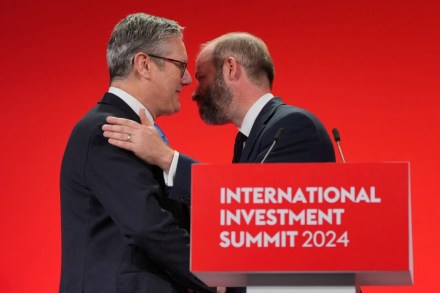
This morning is the government's big investment summit. They pledged to have the summit within their first 100 days in an attempt to hit the ground running and show the UK as a sensible place to do business. The timing – two weeks before the budget – is interesting, and so is the U-turn from P&O, who will attend the summit despite comments last week by Transport Secretary Louise Haigh (she described the ferry company as a ‘rogue operator’). P&O's reported £1 billion worth of investment is back up for grabs. Is it time to invest in Britain? What is Labour's big pitch to business? Also on the podcast, over the weekend we had the sad news that former First Minister of Scotland Alex Salmond passed away. What will be his legacy?
100 Days of Starmer: the verdict

From our UK edition

25 min listen

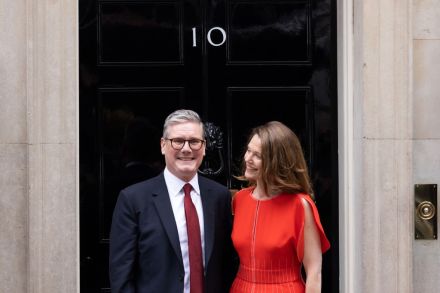
Today marks Labour’s 100th day in office. But they are unlikely to be popping champagne corks in Downing Street – even if Lord Alli offered to pay for the Dom Pérignon. This has been a disheartening time for the government and those who wished it well. The promise of dramatic change has been overshadowed by a series of errors, misjudgments and scandals that one would associate more with an administration in its dying days than a government enjoying a fresh mandate, a massive majority and an absent opposition. Former shadow culture secretary Thangam Debbonaire and former deputy prime minister Thérèse Coffey join The Spectator's Katy Balls to discuss what went wrong and – if we think hard enough – what went right?  Produced by Natasha Feroze and Oscar Edmondson.

Starmer investment summit thrown into disarray

From our UK edition

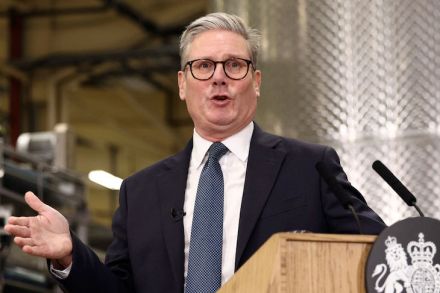
This weekend, Sir Keir Starmer marks his first 100 days in 10 Downing Street – with the hope of better days to come. The Prime Minister is trying to put a rough first three months behind him with a shake-up of his Downing Street team and a series of events aimed at showing the government is focussed on its mission. One such event is the government’s investment summit which is due to take place on Monday. Labour promised to hold an investment summit in their first 100 days during the election campaign. The idea was that they could pitch the UK as a port of stability for investment, riding on a post-election high. However, the mood music is rather more downbeat than they had hoped.

Is Keir Starmer the new Harold Wilson?

From our UK edition

19 min listen

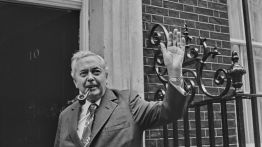
It's another busy few days for the Prime Minister as he chairs the inaugural meeting of the Council of Nations and Regions today, marks 100 days in office, and hosts an investment summit on Monday. With the absence of Sue Gray looming large, James Heale unpicks the politics behind these milestones with Katy Balls and the Financial Times's Stephen Bush. They share some lessons from history and the welcome, or perhaps unwelcome, comparison with former Labour Prime Minister Harold Wilson. Also on the podcast, they discuss the merits and pitfalls of potential Conservative Party rule changes. Could their era of rapid defenestration soon come to an end? Produced by Patrick Gibbons.

The likelihood of a Boris Johnson comeback

From our UK edition

There's been plenty of drama in Westminster this week with Keir Starmer reshuffling his No. 10 team and the Tories' game-playing in the party's leadership contest. But away from parliament, the other big story in domestic politics has been the return of Boris Johnson. The former prime minister has been on a publicity trail to promote his memoir Unleashed (as reviewed by Michael Gove in this week's magazine). Johnson has given multiple interviews in his quest for book sales. The top lines so far include his regret that he apologised over partygate and his defence of his decision to give his aide Charlotte Owen a peerage (thereby making her the youngest member of the House of Lords).

The Tracy-Ann Oberman Edition

From our UK edition

31 min listen

Actress and writer Tracy-Ann Oberman is well known for her roles across theatre, radio and television, including Dr Who, Friday Night Dinner, It’s a Sin and, of course, EastEnders. Most recently, she has taken on one of the most famous, and problematic, Shakespearean roles: as Shylock in The Merchant of Venice. Inspired by her great-grandmother, she has reimagined the role as a Jewish matriarch, and the play returns to London’s West End this December.On the podcast, Katy Balls talks to Tracy about her obsession with the Roman Empire, what it was like spending a term in Moscow towards the end of perestroika, and her  career from soap to Shakespeare, hero to villain.

Labour’s China pivot, Yvette Cooper’s extremism crackdown & the ladies who punch

From our UK edition

48 min listen

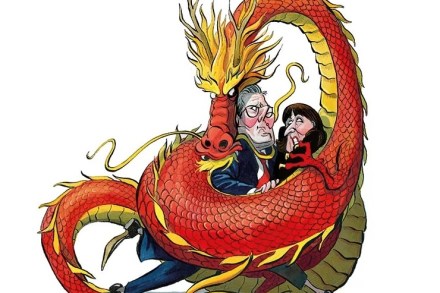
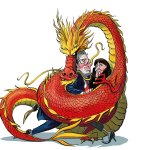
Successive governments have struggled with how to deal with China, balancing them as a geopolitical rival yet necessary trade partner. Recent moves from Labour have sent mixed signals, from the free speech act to the return of the Chagos Islands. Further decisions loom on the horizon. As Rachel Reeves seeks some economic wiggle room, can Labour resist the lure of the Chinese market? The Spectator’s Katy Balls, and visiting fellow at the European Council on Foreign Relations (ECFR) James Crabtree, join the podcast to discuss further (02:05). Plus: as the first issue under The Spectator’s new editor Michael Gove, what are his reflections as he succeeds Fraser Nelson? He reads an excerpt from his diary (19:05).

The ‘Green Budget’ could leave Rachel Reeves red-faced

From our UK edition

16 min listen

The Institute for Fiscal Studies has published its yearly Green Budget, weeks ahead of Chancellor Rachel Reeves’s first fiscal event. It’s grim reading, for both the government and the public. For Labour to make good on its promise to avoid ‘austerity’, taxes are going to need to go up significantly: by £25 billion, the IFS’s reports, and that’s just to ‘keep spending rising with national income.’ Can Reeves square the circle?  James Heale speaks to Katy Balls and Kate Andrews.  Produced by Oscar Edmondson.

Labour’s new approach to China 

From our UK edition

The Foreign Secretary David Lammy will touch down in Beijing next week to pay his respects. Next year, Rachel Reeves, the Chancellor, is expected to do the same. We haven’t seen this level of deference to the Chinese Communist party since 2019. Back then, Philip Hammond heaped praise on his hosts. He endorsed their Belt and Road initiative – of Chinese-funded infrastructure spanning the globe – and promised British co-operation ‘as we harness the “Golden Era” of UK-China relations’. The calls from Tory China hawks to label Xi’s empire ‘a systemic threat’ hold little sway with the new regime That was the high-water mark of Anglo-Chinese collaboration. George Osborne and David Cameron had courted the Chinese hard.

Tory leadership: what on earth just happened?

From our UK edition

13 min listen

Westminster is reeling from the shock result that James Cleverly has been knocked out of the Conservative Party leadership race, only a day after coming first in the previous round. Kemi Badenoch topped the poll, with Robert Jenrick second and only one vote behind her; Cleverly lost two votes. What on earth happened? To try and make sense of it all, Cindy Yu is joined by Katy Balls and new Spectator editor Michael Gove. Having worked with them all, what's his assessment of the candidates? Produced by Patrick Gibbons and Megan McElroy.

James Cleverly knocked out of Tory leadership race in shock result

From our UK edition

What is going on in the Tory leadership contest? On Tuesday evening, it looked as though James Cleverly was on the up. Following an impressive outing at Conservative party conference, the former foreign secretary had become the bookies' favourite and in Tuesday's knockout round secured the highest number of MP backers at 39 votes. However, in a move that has led to shock in the Tory party, he has just been knocked out of the race. In the final knock-out round of the contest, Cleverly only managed 37 votes to Kemi Badenoch on 42 votes and Robert Jenrick on 41. It's worth noting that the vote is anonymous It means that Jenrick and Badenoch will be the two candidates to go to the membership vote.

The battle between Badenoch and Jenrick

From our UK edition

It's crunch day in the Tory leadership contest. This afternoon, Tory MPs will vote in the final knock-out round of the contest. It means one of James Cleverly, Kemi Badenoch and Robert Jenrick will be eliminated and the final two will be voted on by the Conservative membership, with a result announced in early November. The result is due at 3.30 p.m. and it’s fair to say that few in the party are certain who will make the final two. After James Cleverly stormed ahead with 39 votes on Tuesday, his place looks likely, barring a big upset. Cleverly – who is viewed as being in the centre of the party – is should be well placed to take votes from Tom Tugendhat's base, after he was eliminated. On the right, the competition today is between Robert Jenrick and Kemi Badenoch.

Will Starmer’s No.10 reset work?

From our UK edition

2 min listen

Who’s in charge in Downing Street? Until recently, the answer to that question would tend to reveal whether you were a Sue Gray or Morgan McSweeney supporter. Keir Starmer’s two most senior aides were viewed to be in a power struggle over the direction of the government. But with Gray's resignation this weekend, it is McSweeney who is running the show. What direction will he take No.10?   James Heale speaks to Katy Balls and John McTernan, former political secretary to Tony Blair.  Produced by Oscar Edmondson.

Will Keir Starmer’s No. 10 reset work?

From our UK edition

Who's in charge in Downing Street? Until recently, the answer to that question would tend to reveal whether you were a Sue Gray or Morgan McSweeney supporter. Keir Starmer's two most senior aides were viewed to be in a power struggle over the direction of the government. As Chief of Staff, Gray was ultimately in charge of the day-to-day running of government, yet it was McSweeney who was meant to set the political direction. There were complaints that the operation was not sufficiently joined up and that it lacked a clear political direction. ‘There is no narrative,’ complains a party figure. ‘It’s all quite disjointed.

Sue Gray out, Morgan McSweeney in

From our UK edition

11 min listen

Keir Starmer has not yet reached the 100 day mark but already he has lost his Chief of Staff. This afternoon, Downing Street has confirmed that Sue Gray is leaving her No. 10 role. Instead, she will be taking on an ‘advisory’ role as the Prime Minister’s envoy for nations and regions. In a statement announcing her departure, Gray referenced the media attention she had received as one of the reasons behind her decision to quit. Morgan McSweeney will take over from Gray in a move will be popular with parts of the Labour party and brings to a close the Gray vs McSweeney psychodrama. Will this steady the Labour ship?  Katy Balls and Isabel Hardman discuss.  Produced by Oscar Edmondson.

What Sue Gray’s departure means for Starmer

From our UK edition

Keir Starmer has not yet reached the 100 day mark but already he has lost his Chief of Staff. This afternoon, Downing Street has confirmed that Sue Gray is leaving her No. 10 role. Instead, she will be taking on an ‘advisory’ role as the Prime Minister's envoy for nations and regions. In a statement announcing her departure, Gray referenced the media attention she had received as one of the reasons behind her decision to quit: It has been an honour to take on the role of Chief of Staff, and to play my part in the delivery of a Labour government. Throughout my career my first interest has always been public service. However, in recent weeks it has become clear to me that intense commentary around my position risked becoming a distraction to the government's vital work of change.

MPs to be given historic vote on assisted dying

From our UK edition

Keir Starmer is pressing ahead with his promise to give MPs a free vote on assisted dying laws. This evening, the Labour MP Kim Leadbeater has said she will use her private member’s bill this month to give terminally ill adults a choice at the end of life to shorten their pain and suffering. The bill will be considered later this month, on 16 October, by MPs. The development comes after Downing Street refused to get drawn into reports last month that a vote could be fast-tracked through the Commons and take place before Christmas. It follows that there was always likely to be a vote on this issue in the next five years. However, the speed at which Starmer is progressing has taken some MPs – including some senior Labour politicians – by surprise.

Keir Starmer’s dysfunctional Downing Street 

From our UK edition

By rights, the Conservative party conference in Birmingham ought to have been a funereal affair. It was the first time the party had gathered after its worst-ever election defeat and the number of former MPs rivalled the number of current ones. And yet the mood was surprisingly upbeat. ‘Opposition is so freeing,’ said one MP at the bar in the early hours. ‘It’s like being drunk at the wake after the funeral,’ remarked one Tory strategist. It’s not that the party conference revealed a breakout star in the leadership contest (‘We’ll be doing this again in two years,’ predicts one unimpressed MP). Instead, Tories are looking at Labour’s misfortunes.

The winners (and losers) from Tory conference

From our UK edition

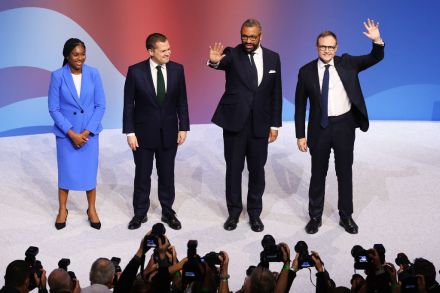
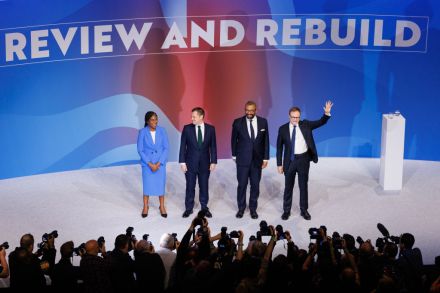
Who was the winner from today’s Tory leadership speeches? The final day of the party conference saw all four candidates take to the stage in a bid to have a David Cameron moment. Back in 2005, Cameron managed to gain momentum at the party conference with an assured speech (no notes) and get one over on his main rival – the then frontrunner – David Davis. So, has anyone managed a similar feat in Birmingham? It was Tom Tugendhat who was up first to speak. The leadership hopeful – viewed to be on the left of the party – spoke about restoring trust and the path back to power. He talked about the NHS, national security and growing the economy. However, it was the candidate who followed him who managed to grab the audience’s attention. Step forward James Cleverly.

Who was the winner from today’s Tory leadership speeches?

From our UK edition

17 min listen

The final day of the party conference saw all four candidates take to the stage in a bid to have a David Cameron moment. Back in 2005, Cameron managed to gain momentum at the party conference with an assured speech (no notes) and get one over on his main rival – the then frontrunner – David Davis. So, did anyone managed a similar feat in Birmingham? James Heale speaks to Katy Balls and Isabel Hardman.  Produced by Oscar Edmondson.