Kate Chisholm

Lives captured in transit

From our UK edition

It’s such a simple idea. Take a tape recorder. Hang around at the entrance to a railway station or in the departure lounge of an airport. Look for an intriguing face, an unusual couple, a dashing outfit. Rush up to them (having remembered to switch on the recorder) and ask, ‘Where are you going?’ As Catherine Carr said at the beginning of her programme for the Freedom 2014 series on the BBC World Service at the weekend, ‘Every interrupted journey is a portal into somebody’s life.’ Of course, in Where are you going? (produced by Jo Coombs) we only got to hear from the travellers who had something interesting to tell us, but even so this was an hour of pure radio, with so many vivid snapshots, such compelling stories.

The sound of growing rhubarb

From our UK edition

When the BBC proposed to do away with 6 Music a few years ago, the media-savvy fans of the station created such a fuss on Twitter and Facebook that the Corporation caved in. Threat of closure was exactly what the station needed to grow its listener-base, now almost as big as Radio 3, and growing (up to 1.96 million per week in the latest Rajar figures, as opposed to Radio 3’s 1.99 million). The Asian Network, too, has flourished after suggestions that it would also have to be shut down if the BBC was to survive financially in the new digital age. But what’s good for them has now spelt doom for BBC3 (at least as a ‘linear’ channel) and further cuts are forecast. Which station will face the chop next time?

Listening to genocide – and what came next

From our UK edition

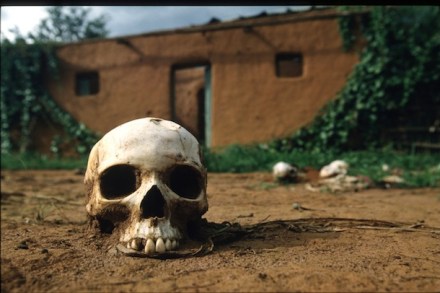
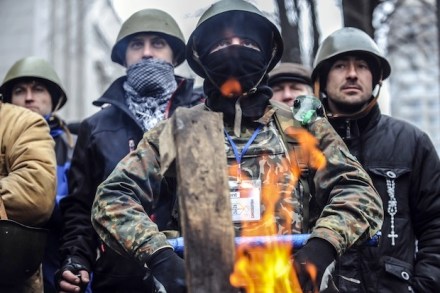
It doesn’t take long for an international event of historic importance to fall off the news agenda. Ukraine is still there, making headlines, but soon it will be forgotten as the political drama in Kiev, Sebastopol, the Crimea is overtaken by an unfolding crisis elsewhere. We who live beyond and outwith the situation are encouraged to move on, gawping instead at another horrifying outpouring of human cruelty and misery. But for those forced to stay on and endure it’s not so easy. For them the terror will linger on long after our sympathies have been translated to another scene, another situation.

The Today programme’s ‘Phwoof!’ moment

From our UK edition

‘Phwhoof!’ exclaimed Evan at 8.27, before reluctantly turning us over to the sport report on Saturday morning’s Today (Radio 4). His intense connection with what he had just listened to in the studio (and we had heard at home while slowly waking up to the day) as Gavin Hewitt and Duncan Crawford reported from the centre of Kiev was palpable. Things were happening in Ukraine. The situation was changing fast. What we had been told at 7 a.m. — that anti-government demonstrators were continuing to occupy their protest camp in Independence Square — had become, in fewer than 90 minutes, very much old news. Evan Davies was signalling to us in very audible expression that we were witnessing a moment in history, and he was live on air trying to make sense of it.

When a Chinese and a Japanese visit Tokyo’s Yasukuni war shrine

From our UK edition

What does freedom mean to you? That’s the question the BBC World Service has been asking of us through its season of programmes Freedom 2014. The Canadian astronaut Chris Hadfield (whose daily blog from space went viral) gave us a vivid and unusual image of what freedom, or rather the lack of freedom, looks like to him. While circling the earth in the international space station, he noticed that each time he went past the lights of Berlin were two different colours. After a while he realised this was ‘a poignant reminder’ of the city’s history; of its former lack of freedom; of how it had been divided by a wall for decades. The wall has been taken down, but the lights tell a different story.

Ali risked his life to escape Afghanistan — and now teaches Britons how to survive there

From our UK edition

‘Brown is very good — no Cameron. David Cameron no good,’ he said. Just in case we weren’t sure what he meant, he repeated, ‘Brown I like. Labour government I like. I like the Brown. I like the Tony Blairs. David Cameron no good.’ It was such an odd thing, to hear praise for Gordon Brown, and doubly so because it came from an asylum-seeker who had never been to the UK. He was talking to Michael Goldfarb in Calais, while trying to find a way to get across the Channel. It’s almost four years since Brown left office. His tenure as PM is rarely, if ever, talked about in the UK. Yet here he was on a pedestal, above even Tony Blair, and put there by a refugee from the Afghan wars who could hardly speak English.

Some things are better heard on radio, than seen

From our UK edition

A double dose of BBC1 drama at the weekend (Silent Witness, Casualty) left me wondering whether there’s a link between the falling crime figures announced last week and the levels of blood and bestiality now showing nightly on TV. With so much violence available at the switch of a button, who needs to create their own? (Bear with me, the connection with radio will soon become apparent.) What surprised me was not just the amount of violence but also the lack of any real motivation. It was all completely unbelievable (in spite of the best efforts of the make-up department) and meaningless, and as a consequence mind-numbingly dull.

Radio 3 needs to stay relevant, and world music is just the ticket

From our UK edition

When my colleague Charles Moore first began accusing Radio 3 of becoming ‘babyish’, and talking down to us as if we’re too ignorant to understand anything complicated, I had to agree. The constant twittering between items, the gimmicky brainteasers and Classical Top Ten are irritating. Those emails and texts from clever-clogs listeners determined to show off what they know, or have performed themselves, or seen on stage are as annoying and pointless as Christmas round-robin letters. But these are all merely sideshows, not the main performance. The real test for the station is whether our musical palates are still being tested, educated, stretched.

Two women, ages 94 and 83, completely own The Archers

From our UK edition

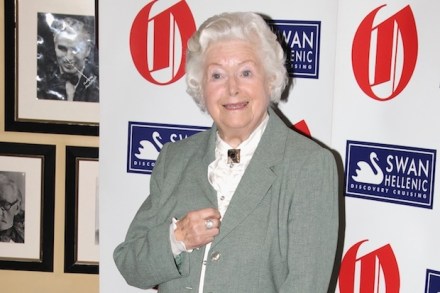
You might think the main storyline in The Archers is all about Helen’s affair with dastardly Rob. (What does she see in him? It’s so obvious he’s a mean-spirited control freak.) Or the new ‘voice’ for Tony, as David Troughton takes over from Colin Skipp, who has played the part for more than 40 years. But actually the real drama in the past fortnight has been swept along by the 94-year-old actress who plays Peggy Woolley and by her younger sidekick Jill Archer played by the 83-year-old Patricia Greene. Together they’ve provided a masterclass on how to act on air, with their distinctive voices, precisely calibrated characters and ability to make us believe in them.

When did you last hear a news report you could trust completely? 

From our UK edition

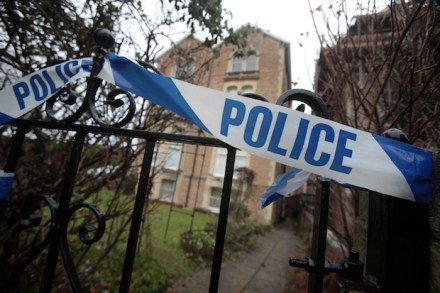
‘It put a lot upon us,’ said Christopher Jefferies’s aunt. ‘The ripples went on and did not stop for a long time.’ She was talking about the after-effects of the media witchhunt that skewered her nephew after his arrest in connection with the death of the Bristol landscape architect Joanna Yeates in December 2011. Jefferies was depicted as being almost certainly guilty because of his long, hippie-like hair, his bachelordom, his love of poetry and ‘culture’, his brusque refusal to speak to the press. Yet his only link with the crime was that he owned the flat in Clifton where Yeates lived. Saturday night’s Archive on 4 (Radio 4) reminded us of what happened to Jefferies and his family, and of some uncomfortable truths.

Bye-bye Bric, hello Mint — are Mexico, Indonesia, Nigeria and Turkey really the new boom economies?  

From our UK edition

New year new ideas as we woke up on Monday morning to find ourselves in Lagos with Evan Davies trying to convince us that Nigeria really is undergoing an economic earthquake. It’s part of a week-long campaign by Radio 4 to make us believe that the next economic leaders among world nations will be Mexico, Indonesia, Nigeria, Turkey. These new Mint countries are destined, we are told, to take over from the Bric countries, now deemed passé after just a decade in the limelight generated by the economist fashionistas. It’s stimulating stuff for this hibernating time of year.

How radio — and the digital age — help us to remember the first world war

From our UK edition

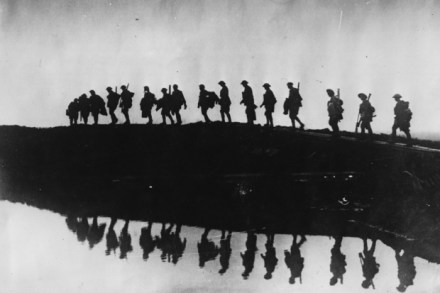
Perhaps the most moving programme of all amid the huge range that will mark the coming centenary of the Great War will be on 28 June, the day when in 1914 Gavrilo Princip shot dead the Archduke Franz Ferdinand and his wife Sophie while they were on a state visit to Sarajevo. On that night, Radio 3, along with other members of the European Broadcasting Union, will transmit live from Sarajevo a concert by the Vienna Philharmonic Orchestra, marking that first step on the road to war. But the evening will also inevitably reflect on how the aftermath of 1914–18 led ultimately to another war, this time in Bosnia, and to the three-year siege of Sarajevo (the longest siege of a capital city in modern times).

Just imagine what BBC schedules might look like in Christmas Future

From our UK edition

Is it time to scrap the licence fee? That’s a question we’re going to hear more and more about in the next couple of years. Why should the BBC retain its archaic monopoly over the airwaves? Why not abolish the royal charter that grants the BBC the right to collect the fee (worth £3.6 billion a year) when it comes up for renewal in 2017? A change is long overdue, throwing open the broadcasting market, giving the independent production companies more opportunities to succeed and enabling the new digital online stations to expand, build audiences, create more original audio experiences. Or is it? Just imagine what would happen to radio in the UK if the BBC could no longer guarantee its funding.

The man who looks out for Obama’s soul

From our UK edition

Just in time for Advent, that season of preparation, of getting ready, of making sure we are in the right mind to weather the excitements of Christmas, the World Service gave us a short programme designed to get us in the mood. In Heart and Soul on Sunday, Jane Little talked to Joshua Dubois who since 2008 has been sending daily ‘devotional’ messages to President Obama. Dubois began writing his emails during that first toughly fought election campaign. He was working for the Obama team in an outreach office, not close to the then senator but close enough to realise how tense and difficult the process of getting elected had become.

Why didn’t financial journalists blow the whistle on Paul Flowers? Robert Peston can’t tell you

From our UK edition

As I listened to Robert Peston early last Friday fluffing on about the Revd Paul Flowers and the possible effect of his indiscretions on the future of the Co-operative Bank, I couldn’t help wondering why none of the financial journalists smelt a rat when Flowers took over as chairman of the once-dependable, now-fragile bank. The former Methodist minister, it is now emerging, has made a career out of duping those who employ him. He’s evidently a conman of considerable talent, but even so it’s incredible that none of the BBC’s keen-eyed investigators into the City and matters financial thought it worthwhile to check out Flowers once it was known that the bank was so surprisingly and shockingly in trouble.

What Jackie did after JFK was assassinated

From our UK edition

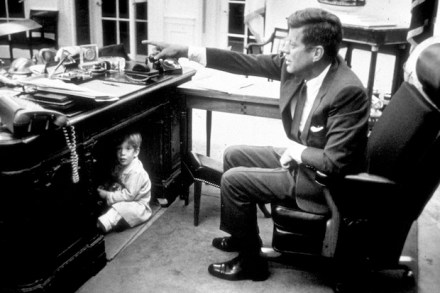
A surfeit of anniversaries this week reminded us that on the day of President Kennedy’s assassination, C.S. Lewis (born 1898) and Aldous Huxley (born 1894) also died. Three such different figures are hard to imagine — Kennedy, the wily politician, Lewis, the tortured academic, Huxley the cool intellectual. Lewis is the one whose image and personality don’t fit; a man who appears cast from a different age from Kennedy and also from Huxley, who you can well imagine wielding an iPod and Twitter account. Yet it’s the pipe-smoking, tweed-suited Lewis who has been given the celebrity treatment this week, while the coolly cynical Huxley has been silenced, with not a feature or reading to be heard.

Radio 4’s All In The Mind is a perfect example of why we still need the licence fee

From our UK edition

Best line of the week came on Monday from the composer John Tavener, and was given added poignancy by the announcement the following day that Tavener had died. He told us, ‘Life is a creeping tragedy; that’s why I must be cheerful.’ It’s a sankalpa, or inner resolution, he held on to especially in his last years as he endured an illness that stopped his heart four times and once kept him in intensive care for six months. For a while the experience of near-death shut down his creativity completely. He had, he told us, ‘no sense of that other life which until then had enriched him’. Tavener was talking on Start the Week, which on Monday welcomed back Andrew Marr after his remarkable recovery from catastrophic illness.

You lost Aled Jones and Catherine Bott, Radio Three — but all is forgiven

From our UK edition

It’s hard to stay cross with Radio 3 for long. Just when I thought the network had stretched my loyalty too far by not only allowing Aled Jones to decamp to Classic FM but also saying goodbye to the great Catherine Bott, I had a comeback conversion. I’ll explain how that happened later. First, we should bewail the loss of Bott, who made The Early Music Show her own, with her enthusiasm, her practised authority, her ability to convey insights without being ponderous. She drew us in to share her passion for music and composers we’d never even heard of, let alone felt any desire to hear.

Your life is not like a Detroit assembly line — it’s worse

From our UK edition

This year’s Free Thinking festival at the Sage in Gateshead has been asking the question,  Who’s in Control?. Oddly, or perhaps presciently, as soon as I typed that last word ‘control’, the power went off in the midst of Monday’s storm. No word processor, no internet connection, no phone line, almost no radio (since the only battery-operated radio I now possess is in the bathroom). A weekend of debates and talks about who’s really in charge of our health, our imagination, our privacy soon becomes a lot of hot air in the face of hurricane-force winds.

Grayson Perry is an inspired choice for the Reith Lectures

From our UK edition

You’ve probably already read or heard somewhere that the inspiration for Grayson Perry’s current series of Reith Lectures on Radio 4 was none other than Lynda Snell. (I wonder if she knows.) What a coup for the establishment network, the home service, the epitome of right thinking and professional excellence. Here’s a cross-dressing potter from Essex, who revels in outrageous outfits and shockingly frank, message-ridden pots and tapestries about sex abuse and class warfare, daring to admit not just that he listens to The Archers but that he also takes his cue from Lynda’s determination to have someone (or something) from Ambridge installed on the Fourth Plinth in Trafalgar Square.