Kate Chisholm

Ambridge recovers its sense of humour — finally

From our UK edition

‘Isn’t that charming!’ Carol declares at the height of the great Home Farm cocktail party, after being subjected to Jennifer’s somewhat over-enthusiastic description of her wine storage unit. Just three words but such a lot of meaning. Carol Tregorran’s resurrection in Ambridge after decades of silence is a stroke of genius by The Archers team (led by Sean O’Connor), and almost, but not quite, makes up for the absurdity of the Elizabeth/Roy storyline, still not resolved and likely to linger on for weeks yet, Elizabeth struggling to put Roy back where he belongs, Roy transformed from a cheery family man into a lovelost shadow of his former self.
Why is Radio 3 still leaderless?

From our UK edition

It’s happened almost by stealth but the number of listeners to 6 Music has now overtaken Radio 3, creeping up to 1.89 million per week (just .05 million more than the classical-music station). Actually the margin between them is probably greater because 6 Music has no analogue signal and can only be heard digitally. Whereas 6 Music sounds cool and with its digital playlist capability and big-star DJs is just so on-trend, 3 is being left behind. Even more disturbing, there was no controller available to defend the station and remind us that the listening figures will bounce back in the next quarter because of the Proms effect — two months of nightly concerts, live on air, available online, and heard (and perhaps more importantly admired) throughout the world.

Two lessons in listening

From our UK edition

Our hearing is the first of our senses to develop while we are in the womb. It’s the first connection we make to the life around us, and to other people. In a new series of The Listeners on Radio 4 (Tuesday) we heard from ‘professional’ listeners, whose lives depend on their highly developed use of this first and most crucial sense. We might hear, but do we always listen? ‘For me,’ says the barrister Helena Kennedy, ‘listening is the activity of hearing combined with the search for meaning, or the hidden meaning.’ When she cross-examines in court she has to work out on the spot whether someone is telling the truth. ‘To do that,’ says Kennedy, ‘you have to employ other senses.

Home Front: Radio 4’s first world war drama will fight out the full four years

From our UK edition

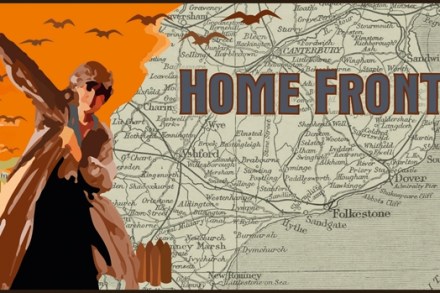
In a studio in Birmingham, there’s an air of excitement. Jessica Dromgoole and her team are recording new scenes for Home Front, Radio 4’s specially commissioned drama commemorating the first world war. They know that they’re about to launch on to the airwaves the boldest, most creative and enterprising venture yet heard on the station. The years of planning, of making endless decisions about how to do it, what to focus on, where to set it, which real stories to fictionalise, which to abandon, have paid off. A random scene between a volunteer at a makeshift hospital and a wounded soldier is being recorded. There’s no preamble, no explanation, just two people having a conversation.

Glasgow and the Commonwealth go back a long way; Radio 4 explores a murky past

From our UK edition

What’s been missing from the schedules during the Commonwealth Games has been a straightforward reminder about who makes up the roster of nations and why. When, for instance, did it suddenly become OK to talk about the Commonwealth without that frisson of embarrassment about its origins in empire? How come there are now 53 independent member states (although for some strange reason the Glasgow Games are boasting athletes from 71 nations and territories)? Surely there were never that many colonies flying the British flag? It’s a bit of a missed opportunity because this could be the good news story we’ve all been looking for in these weeks of relentlessly bad and worsening news.

Does Radio 3 need a new controller?

From our UK edition

Where next for Radio 3? Last Friday was the First Night of this year’s Proms season but it was the last night at the Proms for Roger Wright, who for 15 years has masterminded the station and for seven of those 15 the summer concert programme as well. Rather surprisingly, and you might think ominously, no successor has so far been named to steer this most elegant yet vulnerable station into the digital challenges of 2015 and beyond. Could this be anything to do with the fact that earlier in the year a new post — Head of BBC Music — was created? Will Wright’s tenure be the last time the station has a dedicated Controller, looking exclusively after the BBC’s classical music (and jazz) output?

The two men who walked barefoot to the capitals of the four nuclear powers on a peace pilgrimage

From our UK edition

You might (if you’re over a certain age) still think it pretty amazing that TV not only allows you to watch Mario Götze put in that amazing goal, live, as it happened, in Rio de Janeiro’s Estádio Maracanã, but also that you can witness so immediately and tangibly the passion, the drama of that moment — you on your sofa in twilit Surrey, Somerset or deepest Sutherland watching those emotions fleeting across the individual faces of traumatised Argentinians as they come to terms with bitter defeat.

The next new presenter of Woman’s Hour should be a man

From our UK edition

It seems incredible now but when the BBC’s youth station, Radio 1, was launched in 1967 there were no female presenters. That’s right. Not a single woman’s voice to leaven the mix of Fluff, Blackburn and co. One-half of the young people the Corporation was hoping would stay tuned beyond Listen with Mother and Children’s Hour were burning their bras and demanding the pill. Yet the world presented to them by Auntie was strictly male-only. It took three years before Annie Nightingale was allowed behind the mike, and several more before she had company.

Why I’m switching to Danish radio

From our UK edition

Out there in the great ether there’s a whole new world of radio beyond the stations of the BBC and the FM dial. This week I found myself listening to a programme in Danish. I know. It sounds mad. But there I was glued to my computer screen reading the English subtitles while I listened to Stig and his helpers chatting away in Danish as they fitted him with a new set of teeth. Stig’s Teeth (produced by Kim Hansen and Rikke Houd) was a runner-up in this year’s Sheffield Doc/Fest, which for the first time had an audio category. Doc/Fest was set up to celebrate the art of making documentaries, of telling stories, but only in film. At last, though, the organisers have recognised that (of course) ‘sound tells the best stories’.

The gardener-soldiers of the First World War

From our UK edition

First, a confession. Even an ardent radio addict can enjoy a fortnight away from the airwaves, disconnected, switched off, unlistening. On return even the programmes that are usually ignored because they’ve become so familiar catch your attention. I grew up with Gardeners’ Question Time as a regular weekly slot on Sunday afternoons, snooze time for my overworked Dad, but stopped listening after the great schism of 1994, when the entire panel abandoned the BBC and moved over to the new Classic FM station because they didn’t like the way the BBC was handing over its production to an independent company. The illusion that the programme was a bit otherworldly, not part of the hard-bitten news and current affairs schedules or the argy-bargy of commerce, was shattered.

What’s happened to children’s radio?

From our UK edition

Much praise has been lavished on Radio 2’s 500 Words short-story competition, the winners to be announced on Friday’s Chris Evans show, live from the Hay Festival. Quite right, too. It’s a brilliant way to encourage children aged 13 and under to explore their potential by inviting them to write stories. But you’d think that since it’s a competition organised by a radio station the prizes might have something to do with listening, the making of programmes, the sheer magic of radio. Not so. The winners will receive a huge pile of books for themselves, and another pile for their school library. But there’s nothing to celebrate the connection between radio and the imagination; nothing to encourage children to take up the radio habit.

When Virginia Woolf’s husband ruled Sri Lanka’s jungles

From our UK edition

Tucked away in the schedules, just before midday, just after midweek (on Thursday), just four lines in the Radio Times, was one of those radio gems. Nothing remarkable on the surface, but every so often sparkling with insight, or a different way of seeing. Woolf in the Jungle (produced by Dan Shepherd) took us to Sri Lanka (or rather Ceylon) in 1904 when a young Leonard Woolf arrived on the teardrop island, with his wire-haired terrier Charles, 70 volumes of Voltaire, and absolutely no political, business or legal experience. He had been sent out to work as an officer in the Ceylon Civil Service, and very soon was posted to Hambantota in the south-east of the island, which he governed, single-handedly, for three years before returning to England.

The best blues singer you’ve never heard of

From our UK edition

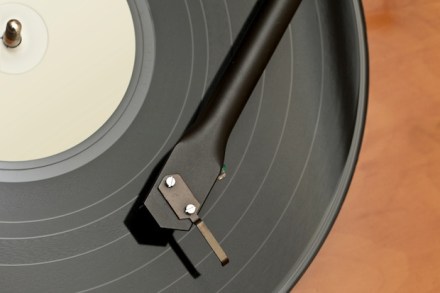
A rustle of paper as the sleeve is removed. A clunk and click as the needle arm is swung across. The needle hits the vinyl, bringing it to life. At first there’s a lot of crackling in the ether. Then at last the music begins. A sultry saxophone. A few notes on the guitar, slow, low and relaxed. At last the voice enters. It’s not at all what you would expect from that swingband opening. The voice is strong, unmelodic, harsh almost, but so passionate you’re drawn in straight away. We’re told it’s Little Miss Cornshucks. She’s singing a version of ‘Try a little tenderness’ that sounds just as good, if not better, than Otis Redding’s amazing version from 1966. Who is she? You might well ask.

Nothing beats Book at Bedtime

From our UK edition

There I was trapped in the bathroom at 10.55 p.m., unable to leave for fear of missing anything. The time it would have taken me to get to the bedroom, touch the screen of the digital radio, encouraging it to dawdle its way into life, was just too long, too risky. Vital information in the story might have been lost. The tension, created by that single voice holding me on a thread, would have been dissipated. It came as a surprise. Book at Bedtime (Radio 4, Monday to Friday evenings) is often such a disappointment these days that the radio gets switched off at 10.51 (after six minutes you know for sure that whatever is being read is not going to get any better).

The Archers hit a new low by letting Tom dump Kirsty at the altar

From our UK edition

Did you hear those bloodcurdling screams from Kirsty? Those long-drawn-out wails that echoed horrifically through the ancient walls of St Stephen’s Church last Thursday — in a strange, unwelcome echo of Nigel’s unfortunate descent from the roof of Lower Loxley in 2011? They were enough to make every woman’s blood run cold. Kirsty, the bride-to-be, was not just dumped by Tom on her way to the altar but also left dangling in all her finery at the church gate while Tom (what a waster of an Archer) sobbed his heart out in the vestry. Did you see it coming? (I didn’t.

Dolly Parton’s secret for surviving decades of celebrity

From our UK edition

It’s a shame Dolly Parton has never gone into politics. She’s someone who’s lived her life very much in the public eye and yet has never lost sight of who she is, of her claim to fame as a country singer. You can tell by the way she sings, even now after more than 50 years in the business, that it’s straight from the heart, nothing synthesised, nothing stage-managed. Her voice just ripples out, tripping lightly through those lyrics of broken hearts, feckless men, without ever sounding bored, trite, as if she didn’t really care.

BBC radio gets Easter right

From our UK edition

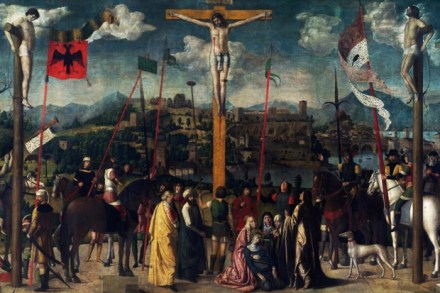
Given the decline of Christian belief in the UK, it’s surprising to discover there’s quite so much about the Easter story on the airwaves this week. You might have assumed that no space would have been found in the schedules for a retelling of the central but yet most difficult Christian narrative. Christmas is easy to sell and to dwell on, with its baby, its joyous arrival, its exotic gifts, but Easter? Who hasn’t as a child in a Christian household bewailed the gloom and doom of Good Friday? Who hasn’t at some point given up on attempting to understand the great paradox of the Passion as it takes us from the triumphant glory of Palm Sunday when Jesus entered Jerusalem to the horrific events of Good Friday fewer than seven days later?

Police and miners clash again over Orgreave on Radio 4’s The Reunion

From our UK edition

Four could have been dubbed the Frank Radio network this week as the sharp skills of Sue MacGregor, Alan Dein and Fi Glover teased out some stark opinions and revelations. MacGregor was back on Sunday morning with a new series of The Reunion, daring to bring together round the same table in an enclosed studio five people who were closely involved in the miners’ strike of 1984–5. And not just any five people, but five people who at the time were on fiercely opposing sides of the crisis: a Tory cabinet minister, a policeman, a union official who later became a Labour minister, and a white-collar member of the NUM. Thirty years later the gulf between the politicians and the workers, with the police playing piggy in the middle, was as deep and tetchy and irreconcilable as ever.

Radio that makes you feel the wind on your cheek

From our UK edition

After a walk in Richmond Park beset by rush-hour traffic, the Heathrow flight path and a strange swarm of flying ants (strange because so early in the year), it was unsettling to come back in and switch on and listen to Kirsty Gunn’s spring walk for this week’s The Essay on Radio 3 (which I heard as a preview but you can now catch on iPlayer). Gunn lives in Sutherland in the far north of Scotland close to the River Brora, and has a view from her back windows that stretches for 500 square miles with no other house or sign of human life in sight. ‘There’s nothing out there,’ Gunn told us, ‘except space and emptiness, light and land — and the weather.

How Radio 5 Live transformed the airwaves

From our UK edition

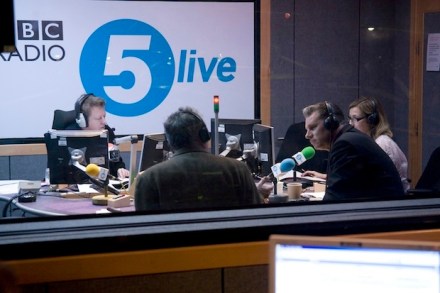
It’s amazing to think that it’s 20 years since the launch of Radio 5 Live. But it was bright and early on the morning of 28 March 1994 (long before Princess Diana’s death, 9/11, the Iraq war, the London bombs, the Asian tsunami, the ‘Arab spring’) that Jane Garvey announced, ‘Welcome to a new network.’ Not an impersonal statement, ‘This is Radio 5 Live’, as you might have expected from the BBC. But an inviting ‘Welcome’. Come in. Join us. We want to hear from you, just as much as you are going to hear from us. Interaction was what gave the station its USP, its distinctive character. Yet this was more than a decade before Twitter, Tumblr, Buzzfeed really took off.