Kate Andrews

Kate Andrews

Kate Andrews is deputy editor of The Spectator’s World edition.

Liz Truss resurrects her pro-growth agenda

From our UK edition

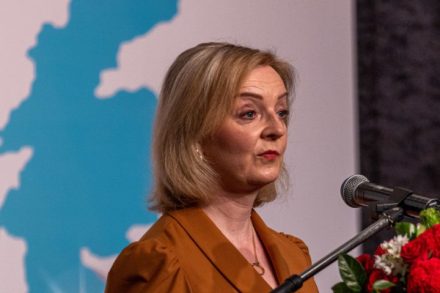
What will Liz Truss’s legacy be? The obvious answer is her 49-day stint in Downing Street. But she is determined not to settle for that. Today in Westminster, she oversaw the formal launch of her new project, The Growth Commission, dedicated to spreading the message she tried to convey as prime minister: the importance of growing the size of the economy. Truss can take some credit for shifting the national conversation towards a more pro-growth agenda Today’s launch was attended by Truss, who is stressed to have convened the commission but holds no formal role within it.
Who’s to blame for rising mortgage costs?

From our UK edition

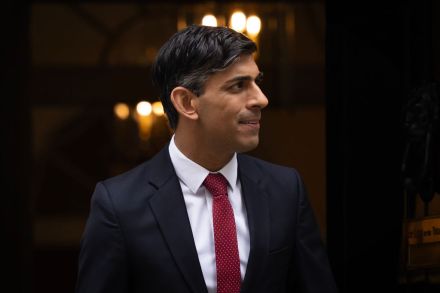
Mortgage costs have reached a 15-year high today, with the average two-year fixed deal hitting 6.66 per cent – the highest level since the summer of the 2008 financial crash. But today’s mortgage news is being pegged to far more recent history, as average deals just topped their peak from last autumn, when Liz Truss’s mini-Budget sent interest rate expectations soaring, and mortgage offers along with them. Truss’s premiership came to an end because so many numbers were spiralling upward, including the cost of government borrowing, mortgage repayments, and the number of Tory MPs who – amid all the chaos – were simply not going to take instructions from her government. Rishi Sunak’s promise when entering No.

Wages are up – but the Bank won’t be happy about it

From our UK edition

The labour market continues to show signs of becoming less tight – but this won’t be fast enough for the Bank of England’s liking. The UK unemployment rate rose to 4 per cent – up 0.2 per cent on the quarter. But this relatively small change is indicative of more people moving off the economic inactivity list, which fell by 0.4 per cent between March and May: a change that the Office for National Statistics largely attributes to men in this latest update.  Meanwhile the number of job vacancies in Britain fell for the twelfth time in a row: down 85,000, but still sitting at 1,034,000. Vacancies are now significantly down from their peak of over 1.

Has Labour just found an election-winning argument?

From our UK edition

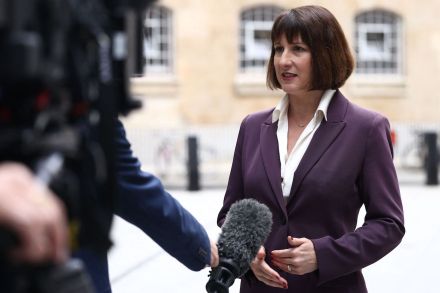
Will Labour and the Tories be heading into the next election ‘following the same tram lines on spending?’ That was the question the BBC’s Laura Kuenssberg put to Rachel Reeves this morning, as the shadow chancellor insisted once again that the Labour party is committed to fiscal discipline, promising to ‘not play fast and loose with the public finances’. Labour may not need to show a radical difference in spending priorities if they can stand out in other areas Reeves tried to suggest the differences in tax-and-spend policy would still be significant, citing Labour’s proposed changes to non-domiciled tax status in the UK. But if this is really going to be the dividing line between the two parties going into a general election, then there is very little difference at all.

Kate Andrews, Igor Toronyi-Lalic and Ivo Dawnay

From our UK edition

17 min listen

This week: Kate Andrews on the NHS and the celebrations that marked its 75th birthday (01:05), Igor Toronyi-Lalic is in Marseille watching with interest as the riots happen around him (06:57) and Ivo Dawnay describes how being related to Boris is cramping his style oversees (11:13). Produced and presented by Linden Kemkaran.

Did the NHS need a service at Westminster Abbey?

From our UK edition

14 min listen

The NHS marks its 75th anniversary today, and in Westminster, both Rishi Sunak and Keir Starmer attended a service at Westminster Abbey in honour of the organisation. James Heale talks to Katy Balls and Kate Andrews about why there was a church service for the NHS and whether Rishi Sunak's time would have been better spent at Prime Minister's Questions. Produced by Cindy Yu.

What’s there to celebrate about the NHS?

From our UK edition

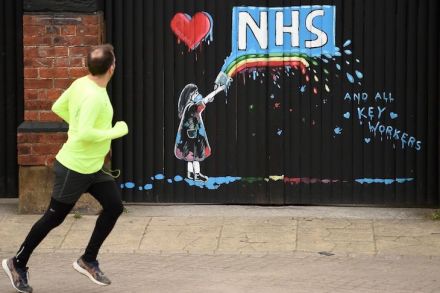
It’s a rare occasion that sees politicians put aside their feuds and rivalries to gather together at Westminster Abbey. These moments are limited to weddings, coronations, funerals – and the National Health Service’s birthday. This week the Prime Minister, the opposition leader and a sprinkling of royals joined together to mark the NHS’s 75th anniversary, singing hymns and giving thanks for a system that, according to the latest report, delivers some of the worst outcomes for patients in Europe. ‘We all get that the model is broken and has to change. It’s just that no one is willing to say it out loud’ The George Cross, presented to the NHS by Queen Elizabeth last year, was brought to the High Altar at the start of the service.

Rishi Sunak’s Tory approval ratings turn negative

From our UK edition

12 min listen

Rishi Sunak’s personal approval rating among Tory members has turned negative for the first time in his premiership. Why is the Prime Minister becoming more unpopular in his party? Should he be worried about internal dissent?  James Heale speaks to Katy Balls and Kate Andrews. Produced by Max Jeffery.

The mortgage pain is going to get worse

From our UK edition

When the average two-year fixed mortgage hit 6 per cent last month, panic started to set in. For the 1.3 million homeowners set to renew before Christmas, many would now be facing interest payments three times higher than what they had originally paid. Chancellor Jeremy Hunt immediately called a meeting with lenders and customer representatives to formalise safety nets, including repayment holidays and moving people over to interest-only payments.  But this was always set to be the start – not the end – of mortgage pain. Today we learn from Moneyfacts that the average five-year fixed-rate mortgage has also now passed 6 per cent.

The NHS isn’t underfunded

From our UK edition

We’re going to hear a lot about the NHS this week: mostly tributes and praise – and even a few prayers – all in recognition of its 75th anniversary on Wednesday. The loudest criticism you’re likely to hear will be about underfunding – which is not the fault of NHS officials, really, but rather the fault of politicians who set the health service’s budget. The NHS is only falling short on patient outcomes, the logic goes, because it’s being denied resources in the first place. Is it really? New data published by the OECD this afternoon pops some of those birthday balloons. It reveals that the NHS actually remains one of the best-funded healthcare systems in the world.

Why is the NHS in such a bad way?

From our UK edition

27 min listen

Next week is the NHS's 75th birthday. Why is the health service in such a poor state? Are the Tories selling it off? And is there any hope for its future? Max Jeffery speaks to Kate Andrews and Isabel Hardman.

The ‘workforce plan’ can’t save the NHS

From our UK edition

The NHS is in crisis, but the government at last has a plan: a ‘Long-term Workforce plan’, that is, aimed at getting staffing levels up to something functional in the years to come. The £2.4 billion blueprint (which has big question marks around how it will be funded) was published today. Medic placements will be doubled to 15,000 a year and close to 25,000 more nursing and midwife places will be created by the start of the next decade. These might be good ideas but they will do little to help ease the misery of those stuck on the NHS's enormous waiting lists. The plan comes a week ahead of the 75th anniversary of the NHS — but also as it dawns on government that it may not meet one of its five pledges, to get the NHS waiting list down by the end of the year.

Is Thames Water about to sink?

From our UK edition

Thames Water appears to be in trouble. The company, which has billions in debt, is in talks with the Treasury about a possible bailout. We may soon be adding the firm, which serves one in four Brits, to the list of victims of rising interest rates. ‘Victim,’ in this case, is perhaps the wrong word. It's hard to feel sorry for a company that has been relying on ultra-low rates to keep itself afloat, racking up £14 billion worth of debt and now severely struggling to service it. Financial mismanagement is just one of a series of accusations levelled against the company. Its problems have been in the spotlight for years, especially for its links to leaks and pollution. Its CEO Sarah Bentley stepped down yesterday, forgoing her bonus.

The case for capitalism

From our UK edition

27 min listen

Kate Andrews is joined by Fraser Nelson and Johan Norberg, author of The Capitalist Manifesto: why the global free market will save the world. On the podcast Johan talks about its why lockdown societies never worked; whether he finds the word capitalism useful and his endless optimism for a better future.

Shock as interest rates hiked to 5 per cent

From our UK edition

11 min listen

James Heale speaks to Isabel Hardman and Kate Andrews as the Bank of England announced it has hiked interest rates to 5 per cent. Faced with inflation, a looming mortgage crisis and personal debt, Rishi Sunak said today he is '100 per cent on it'. But can he turn things around? Produced by Natasha Feroze.

Shock as interest rates hiked to 5 per cent

From our UK edition

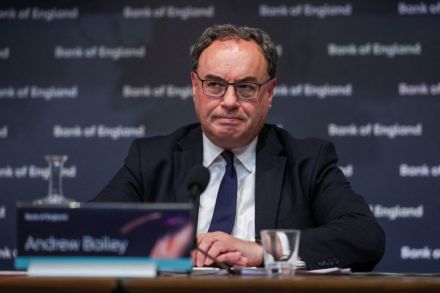
The Monetary Policy Committee has voted seven to two to take interest rates to 5 per cent, a 0.5 point increase. Its thirteenth rise in a row takes rates to their highest level in 15 years, and is being described as a ‘shock’ increase, brought in as a response to the rise in core inflation on the year in May, which has hit 7.1 per cent. The horror of inflation is that it gobbles up your income and your savings After this week’s dire inflation update, the question wasn’t whether the Monetary Policy Committee would raise interest rates, but by how much. After last week’s labour market update, which saw nominal wages rise at record speed (albeit below the rate of inflation – in real terms, wages are falling), it was expected that the MPC would opt for another 0.

Home truths: the crushing reality of the mortgage crisis

From our UK edition

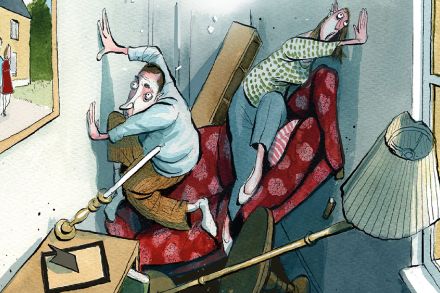
In December Jeremy Hunt hosted a mortgage summit, attended by lenders and the Financial Conduct Authority, to discuss rate woes. At the time, the numbers were at least moving in the right direction. During Liz Truss’s 49-day premiership, the FCA expected interest rates to rise to 5.5 per cent, an increase which was forecast to put 570,000 people into mortgage payment difficulty. Once Rishi Sunak and Hunt undid Truss’s mini-Budget, things looked calmer: a 4.5 per cent peak was expected, and 356,000 people were due to be in difficulty. Hunt was still struck by the figure. Horribly high, he thought. The Chancellor used the meeting to lay the foundation for regulatory changes that could be used in the future to help struggling mortgage-holders.

Could Britain turn into a stagflation nation?

From our UK edition

10 min listen

Natasha Feroze speaks to Kate Andrews and Katy Balls about today's inflation figures, stuck at 8.7 per cent despite predictions it would fall. As a flagship policy of Rishi Sunak's to half inflation, what options does the Prime Minister have?

Britain risks turning into a stagflation nation

From our UK edition

Inflation figures out this morning make for grim reading: the headline rate didn’t budge, sticking at 8.7 per cent on the year in May. Far worse, core inflation (which excludes food and energy) rose once again, to 7.1 per cent on the year in May, up from 6.8 per cent in April. This latest update from the Office for National Statistics carries far more weight than your usual monthly report. With mortgage costs spiralling into a crisis, the Bank of England will have been looking for any excuse to stick to a dovish interest rate hike or to even hold rates, as the Federal Reserve did last week for the first time since 2022. But it's hard to see how they can opt for such a cautious strategy now.

Are mortgage rates the next crisis?

From our UK edition

The average two-year fixed mortgage now sits at 6 per cent, according to financial data group Moneyfacts – just below the 6.65 per cent reached in December last year, after the fallout from Liz Truss’s mini-Budget. Five-year fixed rates aren’t too far behind, at 5.7 per cent. For many of the 2.4 million homeowners whose mortgages are up for renewal between now and the end of next year, this is, at best, cause for alarm. At worst, it’s an alert to a crisis. Later this week, we’ll get last month’s inflation data – and the next rate update from the Bank of England. Threadneedle Street’s dilemma is only getting worse. Between core inflation rising last month (from 6.1 per cent on the year last April to 6.