Kate Andrews

Kate Andrews

Kate Andrews is deputy editor of The Spectator’s World edition.

Would strike talks be different under Labour?

From our UK edition

15 min listen

As junior doctors begin the longest strike in history, Lucy Dunn speaks to Isabel Hardman and Kate Andrews about whether public support for industrial action is starting to wane, and how talks might be different under Labour.

The Tories’ immigration U-turn didn’t take long

From our UK edition

Has the immigration U-turn already begun? When Home Secretary James Cleverly announced his overhaul of the legal migration system at the start of the month, it included a big crackdown on the family visa route into the UK. The Minimum Income Requirement (MIR) for a British citizen wanting to bring their foreign spouse to the UK was set to rise from £18,200 to £38,700 – a threshold thousands of pounds above the median salary in the UK. But in the small print of the ‘legal migration statement’ released last night by the Home Office, we learn that the MIR has been watered down significantly. Instead of more than doubling the salary threshold, the new earnings requirement will be £29,000 as ‘part of a staged implementation’ – an amount below median earnings.

Will we avoid recession in 2024?

From our UK edition

10 min listen

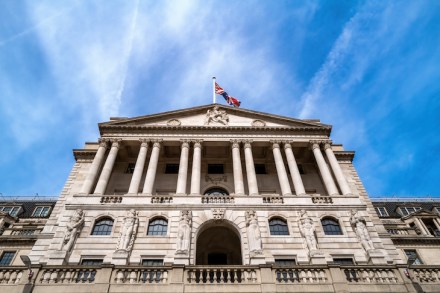
The big economic news of the week was that the Bank of England has held interest rates at 5.25 per cent for the third consecutive time. This was the expected outcome of the Monetary Policy Committee’s latest vote, but it wasn’t unanimous. There were six MPC votes to hold rates but three to raise it to 5.5 per cent. Should we expect a rate cut any time soon?  James Heale speaks to Katy Balls and Kate Andrews. Produced by Oscar Edmondson.

In search of a second epiphany

From our UK edition

When I go home to America next week for Christmas, I’ll go to church – the one my family and I used to attend every Sunday, a few towns over. I visit intermittently throughout the year when I’m back home, but I always go on Christmas Eve. The routine is the same: I sit quietly in the pews, sing along to the carols, and hope to have a second epiphany.   I had my first epiphany – that God exists – when I was a child. This, I’m sure, is the result of having two religious parents who raised me in the church. When I tell my British friends that I was brought up a Methodist, they tend to flash me a nervous look. I must assume that going to a Methodist church in the UK means something different than it does in liberal Connecticut.

Interest rates may start to fall – but not yet

From our UK edition

The Bank of England has held interest rates at 5.25 per cent for the third consecutive time. This was the expected outcome of the Monetary Policy Committee’s latest vote, but it wasn’t unanimous. There were six MPC votes to hold rates but three to raise it to 5.5 per cent. No one voted to cut. This speaks to the biggest challenge the Bank faces right now: how to balance getting the inflation rate back to target without tipping the economy into recession. But markets expect the next movement to be downwards – so much so that mortgage rates are already falling in anticipation. The MPC today urges markets not to get ahead of themselves and says that inflation risks are ‘skewed to the upside’. This is why it continues to lean in a slightly hawkish direction.

Is Britain’s economy ‘going backwards’?

From our UK edition

Has the UK economy come to a standstill? This morning we learn that the economy contracted by 0.3 per cent in October, far worse than the zero per cent change to GDP that was expected by economists. Furthermore, the Office for National Statistics (ONS) reveals there was no overall growth in the three months to October. These figures are even more disappointing after the economy grew by 0.2 per cent in September, as they are the first indication that growth could flatline in the final quarter of the year. Health and social activities did increase – rising by 0.4 per cent, as there were fewer strikes in October than September and fewer appointments rescheduled –  but services output, production output and the construction sector all took a hit (contracting 0.2 per cent, 0.

The Tories created this Rwanda Bill mess

From our UK edition

Climate change minister Graham Stuart is flying back to Britain from the UAE for a matter of hours so he can cast his vote tonight for the Safety of Rwanda Bill. It’s not a great look from the green perspective, and even worse from the political one. The government is so concerned about the numbers tonight that every vote must count. This includes flying one in. Even the best case scenario for Rishi Sunak this evening is rife with problems (Katy Balls lays out all the possible outcomes here). If the Bill passes today, it will face more hurdles at the committee stage. Neither the right nor centre is particularly happy with the Bill, so any concession to one camp risks the support of the other.

What Sunak really said about lockdown

From our UK edition

14 min listen

It was Rishi Sunak's turn at the Covid Inquiry today. The Prime Minister faced questions on Eat Out to Help Out, his relationship with No.10, tiers and PPE procurement. How did the former Chancellor come across? And how has his tone changed because he is now Prime Minister? Natasha Feroze speaks to Fraser Nelson and Kate Andrews.

The Tories’ migration crackdown will have many victims

From our UK edition

The UK’s immigration system must be ‘fair, consistent, legal and sustainable’, proclaimed the new Home Secretary as he presented his ‘five-point plan’ to reduce legal migration in parliament. James Cleverly billed these changes as ‘more robust action than any government’ has taken before to reduce the headline net migration figure.

Starmer offers a heavy dose of the big state

From our UK edition

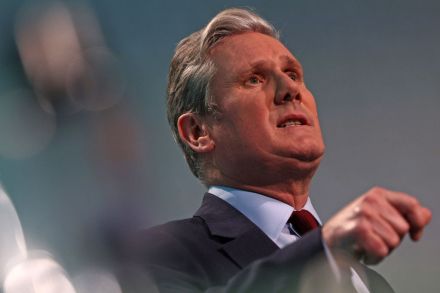
Keir Starmer wants to set expectations early. Speaking at the Resolution Foundation’s economy conference later today, the opposition leader used his speech to emphasise just how little scope he’d have at the start of any Labour government to splash the cash. His party will not ‘turn on the spending taps’, he told an audience of economists and policy analysts. Anyone expecting them to do so is ‘going to be disappointed.’ The speech seemed to deliberately echo the infamous ‘I’m afraid there is no money’ note left for the incoming Tory government by a Labour minister.  Starmer responded to the spending trap laid out in the Autumn Statement last month: where Chancellor Jeremy Hunt used almost all his fiscal headroom to cut taxes rather than boost public sector spending.

When will Rishi Sunak see sense on the Triple Lock?

From our UK edition

When Jeremy Hunt announced his ‘Autumn Statement for Growth’ last week, there was a slight problem: the Office for Budget Responsibility (OBR) had actually revised down its growth forecasts. Apart from this year and the last year for the forecast, GDP gains are expected to be smaller than were predicted back in March. Yes, the government can still technically say it is making good on its pledge to ‘grow the economy’ — but best of luck to any minister who stands up and sincerely insists that 0.6 per cent or 0.7 per cent growth is something to boast about. The OBR is not, of course, the only forecaster. There are plenty of independent bodies that try to put estimates on GDP, including the OECD, which released its latest Economic Outlook report this morning.

Should Sunak reduce immigration?

From our UK edition

23 min listen

Figures out this week put net migration at 672,000 in the year to June 2023. Should the government cut the number of work visas, to immediately reduce this figure, or should it accept that high levels of immigration are needed to sustain the economy? Natasha Feroze speaks to Fraser Nelson and Kate Andrews.

New Zealand’s smoking ban u-turn is bad news for Rishi Sunak

From our UK edition

New Zealand's new coalition government has announced that it will scrap Jacinda Ardern’s plan to usher in a generational smoking ban. The scheme would have steadily lifted the legal age for buying cigarettes from 2027, effectively stopping anyone born after 2008 from purchasing them.  The right-leaning parties now in power – the National party, the libertarian ACT party, and centrist New Zealand First – aren’t even going to give such a strange experiment a chance. No doubt they want to avoid the myriad problems the policy will conjure up in future, including burdens on businesses one day having to ID people in their 50s and 60s.

In defence of the latest high migration figures

From our UK edition

The debate over migration figures released today seems to be whether or not we’ve reached a new ‘record high’. The Office for National Statistics reports net migration rose 672,000 in the year to June. This would have been a record high if the ONS hadn’t also revised last year’s figures up by a staggering 140,000 to 745,000. This seems, to me, to be a technicality. Either way, the figure is hovering around its highest point in recent history. Net migration has more than doubled since June 2016, when the UK voted to leave the European Union. The numbers really took off after Boris Johnson’s post-Brexit reforms, which created pathways for graduates to work in the UK and for non-EU migrants to more easily make their way here.

Have we seen peak migration?

From our UK edition

12 min listen

After much Whitehall spin, the official figures are now in. Net migration in the year to June hit 672,000, down from 745,000 in 2022. A total of 1.2 million people arrived to live in the UK, whilst 508,000 moved overseas. The ONS says it's too early to call this a downward trend, but has migration to the UK peaked?  Katy Balls speaks to James Heale and Kate Andrews.  Produced by Oscar Edmondson.

The truth about Hunt’s ‘tax cutting’ Autumn Statement

From our UK edition

18 min listen

The Chancellor today delivered his fiscal update, branding it as an ‘Autumn Statement for Growth’. In it, he announced a series of tax cuts for both businesses and workers including the decision to make 'full expensing' permanent and a surprise announcement on National Insurance, which has been cut by two percentage points for workers and simplified for the self-employed. Fraser Nelson, Kate Andrews and Katy Balls unpack the details of Jeremy Hunt's Autumn Statement.

The truth about Hunt’s ‘tax cutting’ Autumn Statement

From our UK edition

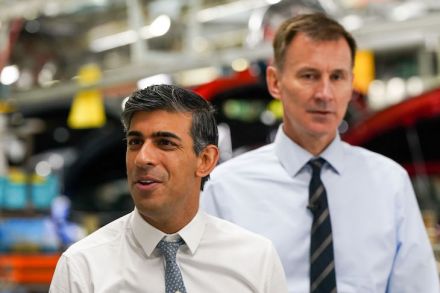
Jeremy Hunt’s March Budget was an exercise in Big State Toryism. It lacked meaningful tax cuts, was full of new spending promises, and was estimated by the Office for Budget Responsibility (OBR) to take the ratio of public spending to GDP to ‘43.4 per cent, its highest sustained level since the 1970s’. But today’s Autumn Statement, the Chancellor told the Commons today, was going to be different. Framing the fiscal update as an ‘Autumn Statement for Growth’, Hunt began his announcement by insisting that  ‘our choice is not big government, high spending and high tax because we know that leads to less growth, not more. Instead we reduce debt, cut taxes and reward work’.  What followed was a series of concrete tax cuts for both businesses and workers.

Can Jeremy Hunt cut taxes in good conscience?

From our UK edition

When the government announces a range of tax cuts tomorrow, it has pledged to do so in a ‘sustainable’ way. What counts as sustainable, however, is going to be hotly contested – especially in light of this morning’s update from the Office for National Statistics, which saw the UK borrow more than forecast or expected last month. Public sector net borrowing came in at £14.9 billion in October – more than a billion pounds higher than forecast by the Office for Budget Responsibility and £4.4 billion more than was borrowed during the same month last year. There are two ways to look at the data.