Josh Barrie

Food influencers aren’t going anywhere

From our UK edition

At Gordon Ramsay’s launch party for his new Netflix show, Being Gordon Ramsay, influencers could be found in every corner of the room. Soon after getting another ‘lemongrass cha’ and walking past Victoria Beckham, I came face-to-face with Eating With Tod, a man whose wide-eyed hand rubbing and hyperbolic cries for enormous dinners has earned him 2.3 million followers and counting – impressive however you bill it.   Next to Ramsay, near the pulled pork bao station, was Jesse Burgess, one half of Topjaw and the presenter on another one of the chef’s food programmes Knife Edge on Apple TV.
Why Russell Norman was a restaurant genius

From our UK edition

Polpo, Russell Norman’s celebrated and original Italian restaurant in Soho, was in full flow when I visited for the first time: busy, loud, glasses full and meatballs rolling. I had returned to London after some years away in my early twenties, and had little money. Polpo welcomed diners with its buoyancy and affordability. It was a good restaurant for everyone. Importantly, it was one that we could afford. There is much to say about Norman, a pioneering and visionary restaurateur who died suddenly at the age of 57 on Thursday. I’ll leave the more personal and intimate conversation to those who knew him well. What I want to say is that it is a rare and fine cause to open restaurants that are quite so approachable.

Au revoir to Le Gavroche

From our UK edition

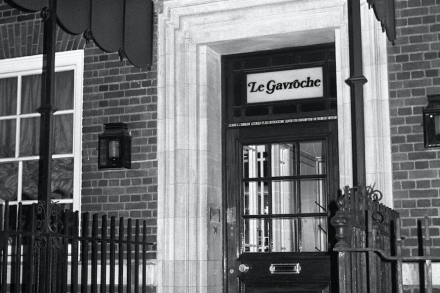
You do not need to be a ‘food person’ to know the name Roux. Or to be familiar with Le Gavroche, the family’s cherished Mayfair restaurant, soon to close after 57 years. They are a name and a restaurant that transcend beyond the world of Michelin stars. And this despite the fact the restaurant requires a considerably plump paycheck or a lot of saving up to become familiar with its riches. Michel Roux – formerly Jr. – the son of the late Albert who founded Le Gavroche with his brother Michel Roux Sr. in 1967 – announced the restaurant’s closure late on Friday. The need for an improved ‘work-life balance’ was the primary cause.

The best alternatives to Diet Coke

From our UK edition

British media wouldn’t be British media without endless stories of possible health risks in food and drink. The news cycle turns and we land on whether butter is good or bad, or whether having a glass of red wine in the evening is toxic or therapeutic. Another long-running, oft-studied and frequently-discussed topic of debate is aspartame, the artificial sweetener found in the likes of Diet Coke and Coke Zero. The latter is a favourite drink of mine.  Aspartame has suffered its fair share of derision in the past, but it is now being officially declared a ‘possible’ cancer risk by the International Agency for Research on Cancer, a World Health Organisation body.

Forget cod – there are plenty more fish in the sea

From our UK edition

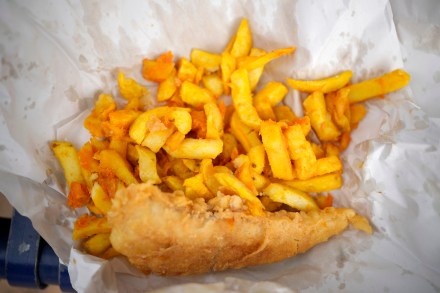
When it comes to seafood, Britain is a curious place: surrounded by water, in which you can find some of the best fish and shellfish money can buy, and yet so often we are averse to eating it.   There have been numerous campaigns promoting British fish led by just about every chef on television. Hugh Fearnley-Whittingstall is one. It seems almost every month that the River Cottage fellow is trumpeting the virtues of our fish stocks. Rick Stein is another; a little more successfully, from his empire in Cornwall. When was the last time you spotted a John Dory in Tesco or a fresh megrim sole on ice in Sainsbury’s?

The cult of Aesop

From our UK edition

Do you think the luxury soap-maker Aesop would have been valued at £2 billion pre-pandemic? I don’t. Sure, the botanical Aussie cosmetics brand, famously seen in the prettiest restaurants and lining the bathrooms of the fashionable, has been valuable for some time, but ‘hands, face, space’ propelled its growing stardom into a multi-billion pound lather. Today, having one of the cult bottles on the basin is as ubiquitous a status symbol as driving a 4×4 around Chipping Norton.  L’Oréal announced this month that it has signed an agreement with Natura &Co, the brand’s owners, to acquire Aesop in a deal worth $2.5 billion USD (around £2 billion).

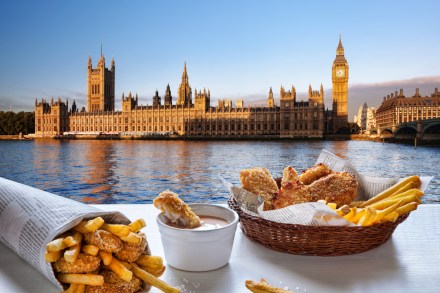
Why is the food in parliament so bad?

From our UK edition

Anyone who finds themselves gazing at a parliamentary samosa for two minutes or more (me, for the avoidance of doubt) probably has a problem. Sadly, this is what my life has become since the Twitter account @Parliscran arrived on the scene. The reason the samosa was so mesmerising is because I was trying to work out whether it had been covered in balsamic glaze, a long-held obsession of mine. The sauce, dark and sticky as it appeared, was more likely to be some sort of tamarind situation, but nevertheless I found it beguiling.  https://twitter.com/ParliScran/status/1625869677711839232 A cursory doom-scroll through Parliscran would be a cathartic deviance to anybody who enjoys food.

In defence of the £20 burger

From our UK edition

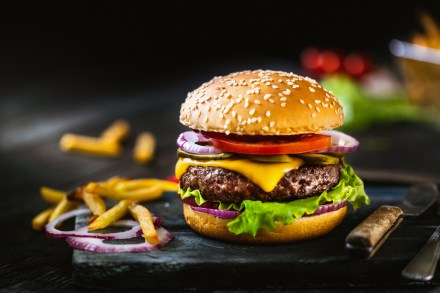
Would you spend £20 on a burger? To many in Britain, that price would be unaffordable. Possibly this applies to more people in 2023 than it would have done five years ago because the country has become that much more egregious. Financial progress today is an increasingly laughable concept. Unless you own Amazon, that is, or landed a PPE contract in the pandemic.  But there are many others who could afford a £20 burger, yet find the notion of paying that sum unacceptable. This was made glaringly apparent recently when the chef Gary Usher shared the menu from his new Cheshire pub, The White Horse. The pub doesn’t open until 3 March, but already would-be punters have been scoffing at the burger on offer.

My great-grandfather, the World War I hero

From our UK edition

I am not a patriotic person. I felt joy at London 2012 and like it when our sports teams and players win things; so much of Britain’s history is rich, eclectic, and impressive. But given the fact I barely have a drop of British blood in me, I don’t feel a huge amount of pride in our nation, just for the sake of it. The mindless patriotism of Americans puzzles me to the point of annoyance. Which is why I don’t bat an eyelid when people decide not to wear a poppy on Remembrance Day. Often, they have very personal, strongly held reasons for abstaining. Nobody should feel forced into it or be bullied about their choice not to wear one. My own choice is to wear a poppy, and it isn’t out of any sense of social duty.

Great British Bake Off’s move to Channel 4 is a recipe for disaster

From our UK edition

The Great British Bake Off (GBBO) is like a steaming spotted dick, moist and dense and delicious, and speckled with dried fruit. Paul Hollywood is the flour. He binds it all together. Mel and Sue are the milk and butter. They’re rich and creamy, and maybe a bit naughty in their comedic charm. Mary Berry? She’s the sugar, of course. Were she not there, the pudding wouldn’t be a pudding at all. It would just be a mound of carby sadness. Spotted dick is a fine pudding. And so terribly British, just like GBBO. Yesterday, gasps were heard when it was announced that the show will, as of the end of series seven, move to Channel 4. The maker, Love Productions, could not agree a deal with the BBC. Shockingly, the disagreement between the BBC and Love Productions is over money.