Jonathan Sacerdoti

Jonathan Sacerdoti

Jonathan Sacerdoti is a broadcaster and writer covering politics, culture and religion

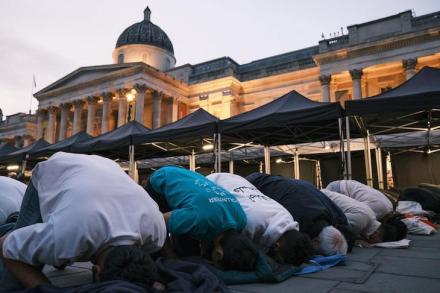
Feeling uncomfortable about Muslim prayer in Trafalgar Square isn’t racist

From our UK edition

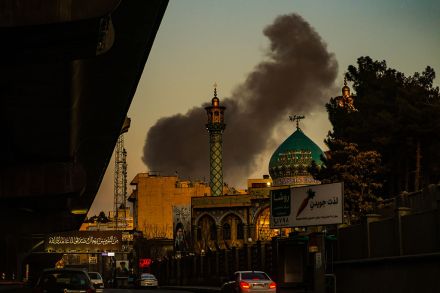
If you hear ‘allahu akbar!’ shouted in the street, you’ll probably run for cover. If a stranger bellows the Jewish equivalent, ‘Baruch hashem!’ in public, you might guess they're expressing gratitude for their good health when asked how they are. If the words ringing out from the midst of a crowd are ‘Jesus Christ!’ You’ll probably think someone has stubbed their toe, or seen something ridiculous. Islam is a proselytising religion, unlike, say, Judaism, which actively discourages conversion Instinctive reactions matter because they expose deeper dispositions, often aligning with the very intention behind the action that provoked them. There is no true equivalence between the three phrases, even if they appear to cover similar ground across the Abrahamic traditions.

Iran hits back at Israel after Larijani’s death

From our UK edition

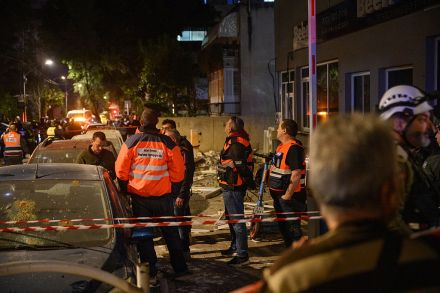
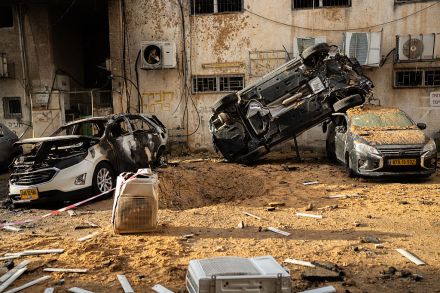
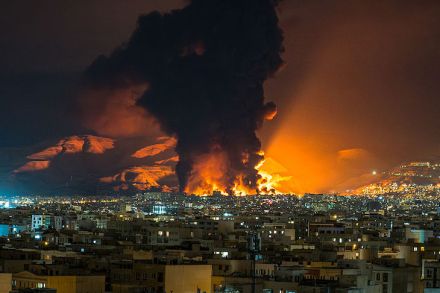
Situation update Missiles were launched from Iran toward Israel overnight, targeting its central and southern regions and triggering nationwide alerts that sent civilians into protected spaces. Israeli air defence systems intercepted multiple incoming threats, though several impacts were recorded across central Israel. In Ramat Gan, two civilians, a man and a woman in their seventies, were killed after reportedly failing to reach shelter in time. Search and rescue teams operated at multiple sites, while further damage was reported in cities including Holon, where debris fell in residential areas. Explosions were heard widely across the centre of the country. Some reports indicate that cluster-type munitions were used.

Israel blows up Ali Khamenei’s jet

From our UK edition

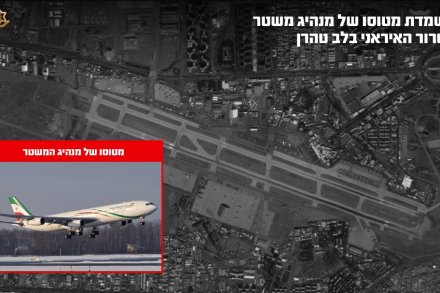
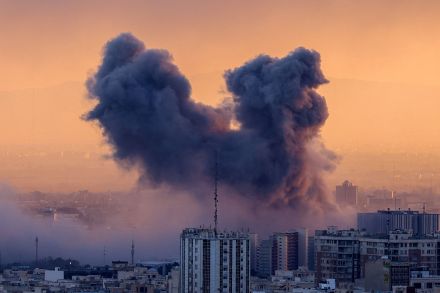
Situation update Israeli forces carried out strikes across Iran over the past 24 hours, hitting targets in Tehran, Shiraz and Tabriz, while fighting with Hezbollah continued in southern Lebanon. At the same time, Iranian attacks on energy infrastructure were reported across the Gulf. The Israel Defence Forces (IDF) said its strikes formed part of a wide-scale wave against Iranian regime infrastructure. Among the reported strikes was the destruction of an aircraft at Mehrabad airport used by Iran’s Supreme Leader, Ali Khamenei, presented as a symbolic blow as well as an operational one. The IDF said the aircraft had been used for military procurement and coordination with allied states.

Britain can learn from Trump’s moral clarity over Iran

From our UK edition

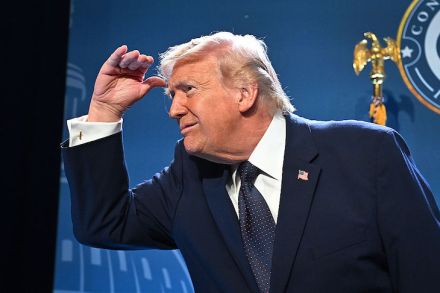
Two weeks into the war in Iran, Donald Trump’s critics have intensified their attacks not only on his conduct of the war, but on his decision to start it at all. As oil prices, global trade routes and energy markets come under strain, endless strategic and economic debates produce more speculation than answers. Does the war weaken America against China, or strengthen it? Was the decision legal? Is there a long term strategy for this confrontation? Just as technology empowers ideological extremists, ideological self-doubt weakens many Western societies All are important questions. Yet we must not overlook another perspective, increasingly unfashionable but repeatedly invoked by President Trump and his administration in statements and briefings.

Iran doubles down on the Strait of Hormuz blockade

From our UK edition

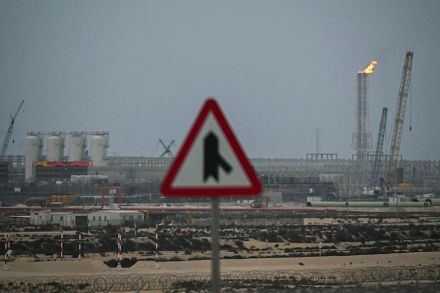
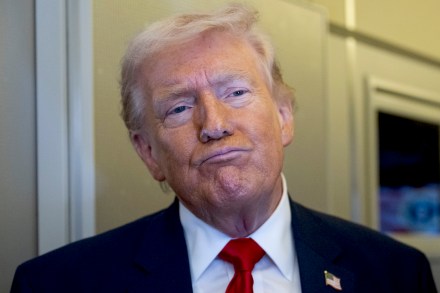
President Trump said on Saturday that the United States is seeking an international naval coalition to reopen the Strait of Hormuz. In a message posted on Truth Social, he said ‘many countries’ affected by Iran’s attempted blockade, including China, France, Japan, South Korea and Britain, should deploy warships alongside the U.S. Navy to secure the waterway. In the meantime, he warned that American forces would continue attacking Iranian maritime assets and coastal positions, after the U.S. had carried out one of its most significant direct attacks on Iranian military infrastructure since the war began with its large-scale precision strike on Kharg Island, Iran’s principal oil export hub in the northern Persian Gulf.

Trump targets Iran’s ‘crown jewel’ in massive US bombing raid

From our UK edition

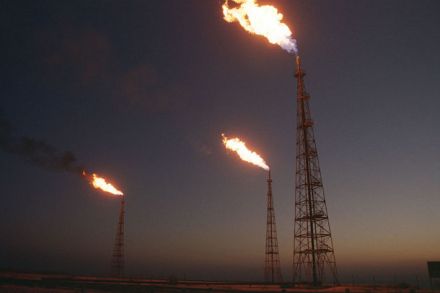
The United States has carried out what President Donald Trump described as one of the most powerful bombing raids in the history of the Middle East, striking Iran’s most important oil export hub on Kharg Island as the war draws to the end of its second week. Iran has attacked tankers and threatened to close the route entirely In a statement posted online, Trump said U.S. Central Command had “totally obliterated every MILITARY target” on the island, which he described as Iran’s “crown jewel”. Kharg Island, a five-mile-long outpost about 19 miles off the Iranian coast, accounts for roughly 90 per cent of the country’s oil exports. Despite the scale of the attack, Trump said he had deliberately chosen not to destroy the island’s oil infrastructure.

Can Israel help the people of Iran rise up?

From our UK edition

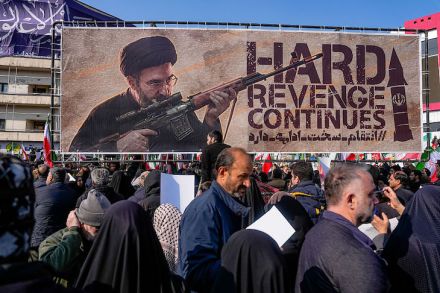
The new supreme leader of Iran has still not been seen in public. Instead, the country’s state television broadcast what it described as his first message to the nation: a speech attributed to Mojtaba Khamenei, read out by a newsreader in a studio, with no appearance or recording of the man himself. In the address, the regime declared that the Strait of Hormuz would remain closed, vowed revenge for those killed in the conflict, and urged regional states to shut down American bases on their territory. This disembodied broadcast is the first public message attributed to the new leader. The speech came amid intensifying strikes by Israel and the United States against Iranian targets.

Suicide drones hit Tehran as instability mounts inside Iran

From our UK edition

Overnight on Wednesday, around 100 Basij soldiers were killed across Tehran by dozens to hundreds of suicide drones in a covert operation some are comparing to Israel’s previous pager operation against Hezbollah in Lebanon. The drones hit Basij bases, motorcycles, and vehicles, targeting IRGC, Basij, and special forces checkpoints. Inside Israel, political debate is intensifying over the war’s long-term objectives Iraq also experienced a heavy night of strikes against pro-Iranian militias. At the same time, the regime in Iran continues its efforts at self-preservation through sustained attrition from within Iran and on other fronts.

The Al-Quds march should have been banned years ago

From our UK edition

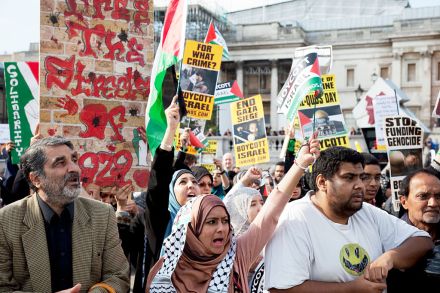
The government has approved a request from the Metropolitan Police to ban the annual Al-Quds day march in London, which was due to take place this Sunday. The Home Secretary, Shabana Mahmood, said the decision was necessary to prevent ‘serious public disorder’. The Met cited the expected scale of the protest, the likelihood of large counter-demonstrations, and the wider tensions generated by the conflict in the Middle East. Each year the same scenes returned: Hezbollah banners, chants celebrating the ‘resistance’, speakers denouncing Zionism as an open expression of hostility towards Jews The march itself will not take place. A stationary protest may still occur under strict conditions. While this is a significant decision, it is also absurdly late.

Where is the new Supreme Leader of Iran?

From our UK edition

Situation report Nearly four days after Iran named Mojtaba Khamenei as its next ‘Supreme Leader’, his whereabouts remain unknown. The 56-year-old cleric and son of Ali Khamenei has not appeared publicly, delivered a speech, or issued even a written statement since the announcement. Iranian state media has instead relied on archival footage when introducing him to the public. Reports in Iran’s state media suggest Mojtaba may have been injured during the ongoing US-Israeli strikes Reports in Iran’s state media suggest Mojtaba may have been injured during the ongoing US-Israeli strikes. State television has described him as an injured war veteran.

Trump threatens ‘death, fire and fury’ for Iran

From our UK edition

Situation report The war with Iran shows little sign of slowing. Even as Donald Trump said on Monday that the war was ‘very complete, pretty much’ and suggested it was nearing its end, fresh waves of strikes continued overnight across Iran while missiles were fired toward Israeli cities. The exchange now stretches from southern Lebanon to the Gulf, with oil prices surging and diplomatic efforts elsewhere in the region abruptly frozen.

The days are numbered for Iran’s new Supreme Leader

From our UK edition

As the war continues, the Iranian regime has pressed ahead with appointing its new Supreme Leader. Mojtaba Khamenei, the son of Ali Khamenei, was formally elevated in Tehran even as Israeli and American strikes continue to dismantle the regime’s military leadership, its fighting forces and its air defences – a striking dynastic turn for a system that has long presented itself as a revolutionary republic rather than a hereditary regime. Having watched Israel systematically eliminate senior figures around him while degrading the regime’s ability to fight and defend itself, the new leader may reasonably wonder whether his days could be numbered.

Trump says no thanks to Britain’s aircraft carriers

From our UK edition

The war with Iran entered its second week on Saturday with intense fighting across multiple fronts, as Israeli forces struck deep inside Iran while Tehran retaliated with missiles and drones across the region. Political rhetoric in Washington and Jerusalem meanwhile suggested the conflict could widen further still. The day began with reports of renewed Israeli air operations across Iran. The Israeli military said more than 80 aircraft had taken part in a wave of strikes targeting infrastructure linked to Iran’s missile and military programmes. Israeli officials said the attacks hit a series of facilities including missile storage sites, weapons factories and command compounds used by the Islamic Revolutionary Guard Corps (IRGC).

Is this Iran’s first climbdown?

From our UK edition

Iran’s president, Masoud Pezeshkian, has announced that the country’s temporary leadership council has approved the suspension of attacks against neighbouring countries unless those countries launch attacks on Iran themselves. He said that the council decided the day before that Iran will stop attacking surrounding states unless attacks on Iran originate from those territories. The statement was delivered publicly as the war in the region continues to intensify, and while Iran continues to launch attacks in the region in response to the US-Israeli strikes on the Islamic Republic.

Is the US preparing for a long war against Iran?

From our UK edition

Situation report The war in the Middle East shows no sign of slowing. Instead, there were heavy air strikes inside Iran and missile barrages across the region over the last 24 hours, with indications that the United States is preparing for a longer and potentially wider conflict. Israeli fighter jets carried out a major new wave of attacks on Iranian military infrastructure overnight, striking targets in Tehran and central Iran. According to Israeli military statements, more than 80 Israeli Air Force aircraft took part in the operation, guided by intelligence that identified key Revolutionary Guard facilities.

The Iran war is showing no sign of slowing

From our UK edition

Israeli and American military operations against Iranian targets intensified over Thursday, while Iran and its proxy militias across the region sought ways to retaliate across a widening geographic arc. The day began with reports of expanding hostilities around Iran’s borders. Early in the morning, Iranian positions in eastern parts of the country – including areas around Zahedan near the borders with Pakistan and Afghanistan – were reportedly struck, with air-defence systems activated in response. Opposition sources claimed the targets were military facilities in a region with a strong Sunni Baloch population that has long opposed the Iranian regime. At roughly the same time, the conflict appeared to spill into the South Caucasus.

The Iran war is turning into a regional conflict

From our UK edition

The war in the Middle East widened further over the past 24 hours, with missile interceptions stretching from Turkey to Saudi Arabia, naval clashes in the Indian Ocean and mounting pressure inside Iran itself. Nato air defences shot down an Iranian missile heading toward Turkish airspace, Saudi forces intercepted cruise missiles near Riyadh, and reports emerged that Kurdish militants may be preparing to exploit the conflict along Iran’s western border. Taken together with continuing Israeli and American airstrikes across Iran and escalating fighting in Lebanon, the developments suggest the confrontation is steadily spreading.

Iran vows to fight on

From our UK edition

Situation update The Middle East conflict intensified dramatically on Tuesday, as Israel and Iran exchanged strikes across multiple fronts while regional powers scrambled to respond to a rapidly widening confrontation stretching from Lebanon to the Gulf. The day began with reports of Iranian drone attacks far beyond the immediate battlefield. Overnight, two Iranian drones struck the United States embassy compound in Riyadh, Saudi Arabia. The building had been emptied of personnel and no casualties were reported, but the attack marked a significant escalation and drew swift condemnation from Riyadh, which warned it reserved the right to respond to the ‘aggression’. Separate reports suggested the attack in Riyadh may have struck more than diplomatic facilities.

The Iran war is expanding rapidly

From our UK edition

Situation update The conflict between Israel, the United States and Iran has escalated dramatically, with simultaneous air strikes on Tehran and Beirut, missile exchanges across the Gulf, and drone attacks reaching the US embassy in Riyadh. By 7.30 a.m. Israel time, the Israel Defence Forces (IDF) announced it was conducting a ‘wide-scale wave of attacks’ against what it described as the Iranian terror regime and the Hezbollah organisation, striking targets in both the Iranian capital and Lebanon’s southern suburbs of Dahiya. The IDF later said its aircraft had killed members of Iran’s air defence array who were attempting to target Israeli jets, and that it was continuing to suppress Iranian radar systems, launchers and ballistic missile sites.

How Israel killed Khamenei

From our UK edition

Benjamin Netanyahu, the Israeli Prime Minister, was presented with irrefutable evidence yesterday, including footage, confirming the death of Iran’s so-called ‘Supreme Leader’: Ayatollah Ali Khamenei. He was killed in a targeted Israeli airstrike on his compound in Tehran, marking a pivotal blow to the Islamic republic regime. Initially Netanyahu only hinted at the fact that he was dead, but as the evening progressed more and more sources confirmed it until President Donald Trump eventually took to Truth Social to declare ‘Khamenei, one of the most evil people in history, is dead.