PMQs live blog | 1 February 2012
From our UK edition
<a href="http://www.coveritlive.com/mobile.
From our UK edition
<a href="http://www.coveritlive.com/mobile.
From our UK edition
https://www.youtube.com/watch?v=Ku6SEWb3NJM ‘A double-digit shellacking’. That’s how Gingrich endorser Herman Cain described Mitt Romney’s 14-point win over Newt Gingrich in last night’s Florida primary. It has certainly helped Romney get over the drubbing Gingrich gave him in South Carolina ten days ago, and recertifies him as the presumptive nominee. A big Gingrich win would’ve blown the race wide open. Instead, Romney comes away with a commanding lead in both votes cast and delegates pledged. Romney’s victory speech (above) was almost a rerun of the one he gave in New Hampshire three weeks ago.
From our UK edition
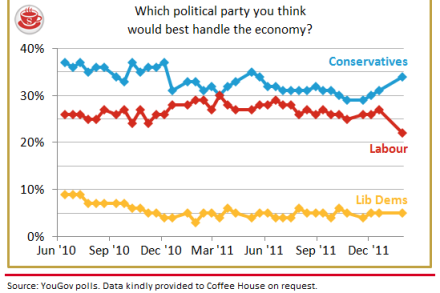
It looks like Dave’s still made of Teflon. Even after the economy shrank by 0.2 per cent and the unemployment rate rose to its highest point since 1995, the public still think his party is better at handling the economy than Labour. And the Tories’ lead on what is by far the most important issue to voters hasn’t just survived all this bad economic news — it’s actually grown. Before Christmas, 31 per cent said the Tories would best handle the economy, against 27 per cent for Labour.
From our UK edition
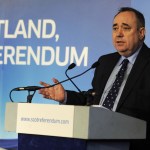
It looks like Fraser was right to question Vision Critical’s recent Scottish independence poll. That poll surveyed just 180 Scots and found 51 per cent saying they would vote ‘Yes’ to Alex Salmond’s referendum question – ‘Do you agree that Scotland should be an independent country?’ – and just 39 per cent saying ‘No’. Today, Ipsos MORI has released a somewhat more reliable poll, sampling 1,005 Scots. It finds 50 per cent saying they’d vote ‘No’ and just 37 saying ‘Yes’. So, it looks like even if the referendum asks Salmond’s leading question, the Nationalists are likely to be defeated.
From our UK edition
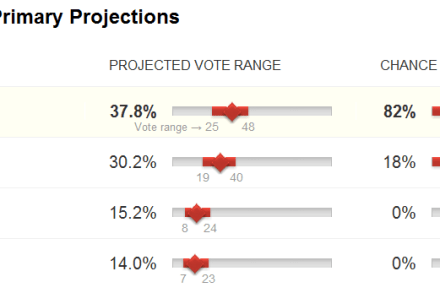
When this week began, Newt Gingrich was the clear favourite to win tonight’s Florida primary. He’d just beaten Mitt Romney by 13 points in South Carolina and two new polls put him 8 to 9 points ahead in Florida. Momentum was on his side, Romney was facing criticism over his tax returns, and he’d have two debates – his favourite campaigning medium – to press his advantage home. But – despite securing an endorsement from Herman Cain on Saturday – Gingrich now finds himself well behind Romney, and with just a 3 per cent chance of victory, according to Nate Silver’s model (above). Why the turnaround? Partly it’s down to advertising.
From our UK edition
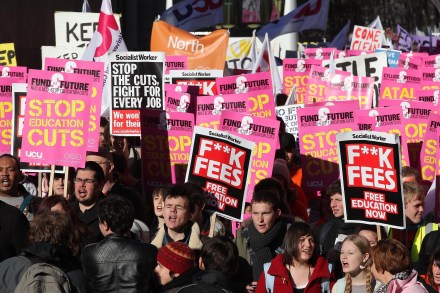
The coalition’s tuition fee rise will put young people from poor backgrounds off applying to university — or so we were told by Labour and the National Union of Students. But now we can actually put that claim to the test. UCAS today revealed how many of that first year group to be affected by the rise have applied to university. So what does those number tell us? Looking at the headlines resulting from the release, you’d be forgiven for thinking that Team Miliband have been vindicated. ‘University applications plunge 9% after tuition fees are trebled,’ proclaims the Daily Mail. ‘Thousands give up on university because of tuition fees,’ says the Telegraph. And the BBC: ‘UK university applications down as fees rise’.
From our UK edition
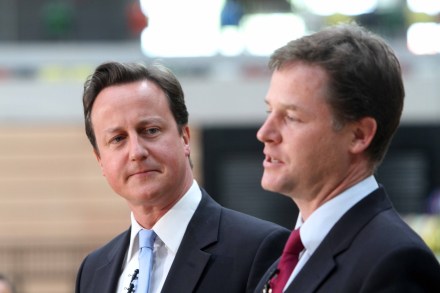
Yesterday's YouGov poll for the Sunday Times had a few interesting nuggets buried beneath the top line (Lab 40, Con 39, as it happens). Here are some of the most topical findings: 1) Clegg’s tax proposals are very popular. 83 per cent support the Lib Dems’ policy of increasing the personal allowance to £10,000. This might explain the 12-point jump in Nick Clegg’s net approval rating since last week. And there’s strong support for the ‘mansion tax’ that Vince Cable’s been pushing since 2009. 66 per cent back ‘a new tax upon people with houses worth more than £2 million’ — something Clegg called for again last week — and 50 per cent support taxing those with houses worth over £1 million.
From our UK edition
Thanks to his spectacular surge last week, culminating in a big win in the South Carolina primary on Saturday, Newt Gingrich looked like he was back in contention for the Republican presidential nomination. Immediately, he took a commanding lead in Florida – which will host the next primary on Tuesday. And though Mitt Romney remained the clear favourite to go up against Barack Obama in November, Gingrich was still in the hunt. But this week – just when he was looking strong – it’s all gone a bit wrong for Gingrich. $13 million worth of ads from the pro-Romney Super PAC ‘Restore Our Future’ have dwarfed the $3 million spent by pro-Gingrich ‘Winning Our Future’, and they seem to have taken their toll on the former Speaker.
From our UK edition
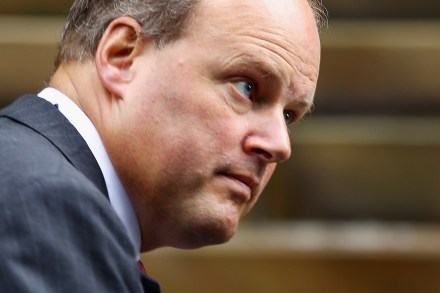
Condemnation’s coming from all sides for the £963,000 bonus awarded to RBS’s Stephen Hester, on top of his £1.2 million salary. The most prominent denunciation came from Lib Dem Foreign Office minister Jeremy Browne on last night's Question Time: ‘I think there’s a sort of question of honour. Even if there is a contractual opportunity for him to have a bonus, it doesn’t mean he has to accept it. He’s already being paid more than £1 million a year. His total package now, means he gets paid in about three days what a soldier risking his life in Afghanistan gets paid in a whole year. And I think he should reflect on that.
From our UK edition
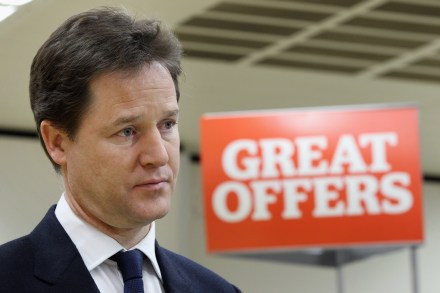
Nick Clegg, this morning, advocating closing loopholes for the rich to pay for raising the income tax threshold: ‘Right now, because of loopholes and shelters in the tax code, a quarter of all millionaires pay lower tax rates than millions of middle-class households. Right now, Warren Buffett pays a lower tax rate than his secretary.’ Oh, all right, that wasn't Clegg. That was Barack Obama, in his State of the Union address on Tuesday night. But it's remarkably similar to what Clegg just said in his speech at the Resolution Foundation this morning.
From our UK edition
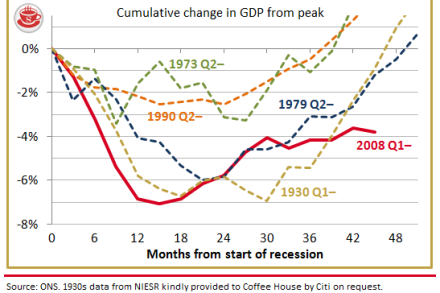
It is now four years since recession hit the UK. It took just over three years for GDP to return to pre-recession levels in the much milder downturns of the ‘70s and the ‘90s. Even after the Great Depression of the 30s, the economy had fully recovered by this point. By contrast, economic output in 2011 Q4 was still 3.8 per cent down on 2008 Q1. And it’s going to take a while longer to get back. The OBR’s projections suggest the economy won’t have fully recovered until the end of 2013. Other forecasts are gloomier still. But even if we do manage it by then, it’ll have taken us two years longer than it did to recover from the Great Depression.
From our UK edition
Finally, grudgingly, Mitt Romney has released his tax returns for the last two years. After much um-ing and ah-ing — and a lot of prodding from Democrats, Newt Gingrich and the media – he has disclosed that he paid $3 million in tax on his 2010 income of $21.7 million, and $3.2 million on the $20.9 million he made in 2011. Romney hoped that releasing this information would allow him to move past the focus on his financial affairs, but his rivals – both inside and outside his own party — don’t seem prepared to let that happen.

From our UK edition
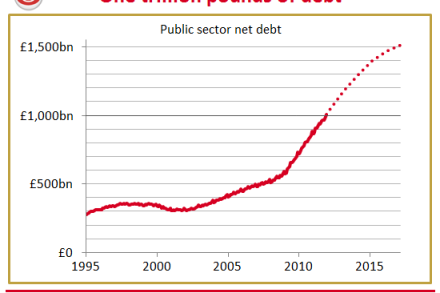
New figures out today show the UK's public sector net debt at just over £1 trillion for the first time ever. In the first 19 months since it took over, the coalition added £225 billion to the £779 billion debt it inherited. And it's projected to rack up another £390 billion by the next election.
From our UK edition
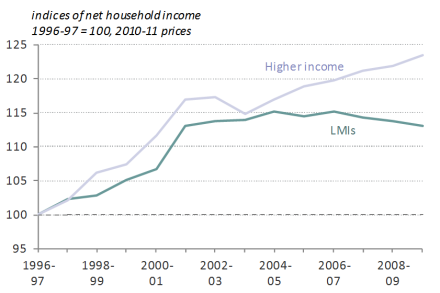
The ‘word of the year’ for 2011 is already featuring prominently in 2012. Yep, the ‘squeezed middle’ is the focus of the Resolution Foundation's latest report, which they launched in central London earlier today. It’s a fascinating and nicely presented study, and I’d recommend you read it in full: this think tank really is very good at choosing the most revealing metrics to bring some clarity to an often vague debate. But, in the meantime, here are some of the things that stood out to me from today’s event: 1. The squeeze started long before the recession.
From our UK edition
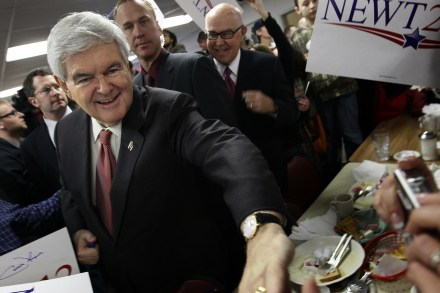
They said South Carolina would be Mitt Romney's big test. Tonight, he failed it. The networks have called the primary for Newt Gingrich, and CNN's exit poll shows him beating Romney 38-29. It's an astounding turnaround, considering that Romney led by around 10 points just a few days ago. The Romney campaign is already trying to claim it's not too disappointed by the result – that a few weeks ago they would have been happy with third place, that it's Florida that really matters. But the truth is, he's suffered a big upset. After it looked like he'd won Iowa and he took a solid if unsurprising win in New Hampshire, there was speculation he might sweep every state.
From our UK edition
When the week began, the idea of anyone but Mitt Romney claiming victory in tonight's South Carolina primary seemed fanciful. He had a 10 point lead in the polls, giving him a 90 per cent chance of victory according to Nate Silver's model. Any talk of someone else winning sounded like the wild hopes of a media keen for the nomination battle to go on as long as possible. But no longer. As I said on Thursday, it's been a particularly bad week for Romney and a particularly good one for Newt Gingrich. Gingrich even managed to turn the one thing that seemed likely to halt his momentum – an ABC News interview with his ex-wife in which she claimed he had asked for an open marriage – into by far the strongest moment of Thursday night's debate.
From our UK edition
Herman Cain may have dropped out of the Presidential race weeks ago, but new ads are advocating a vote for him in South Carolina. These videos, including the one above, are being put out by the ‘Super PAC’ set up by satirist Stephen Colbert, the host of the Colbert Report famous for joking at George Bush's expense at the 2006 White House Correspondents' dinner. Super PACs — organisations which can raise unlimited sums from corporations and other groups as well as individuals, but are prohibited from coordinating with candidates or political parties — became a feature of the US political landscape in 2010, after a Supreme Court ruling made them possible.
From our UK edition
video platform video management video solutions video player It had been a pretty good week for Newt Gingrich's presidential campaign. He put in a strong performance in Monday night's debate, he got a near-endorsement from Sarah Palin (she said ‘If I had a vote in South Carolina, in order to keep this thing going, I'd vote for Newt.’), a poll yesterday put him just 3 points behind Romney nationally, and one today shows him taking the lead in South Carolina. And he can expect to pick up a good number of Rick Perry's few remaining supporters, with the Texas Governor dropping out today and endorsing Gingrich. Meanwhile, things haven't been going so well for Mitt Romney.
From our UK edition
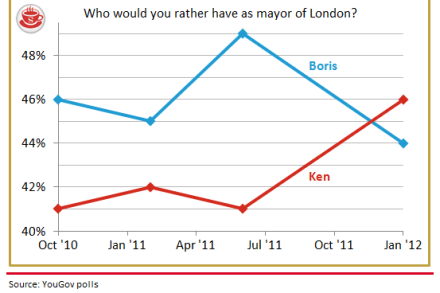
It looks like the May's election for Mayor of London will be a close run thing. A new poll today from YouGov has Ken Livingstone two points ahead of Boris Johnson – a big turnaround from the eight point lead Boris had in June: Ken shouldn't be popping any champagne corks yet, of course. His lead is well within the poll's margin of error, and there's three and a half months to go before election day. But he's certainly looking more likely to topple Boris than he did seven months ago. So why the change? YouGov's Peter Kellner has a good article on the poll's details here, but two key points jump out from the numbers: 1. Labour voters are getting behind Ken.
From our UK edition
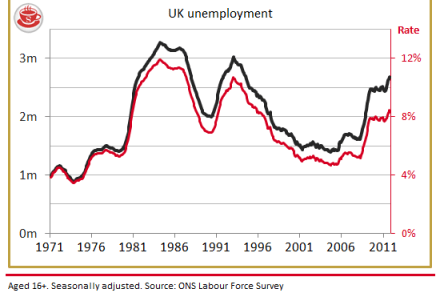
No two ways about it: today’s employment figures are difficult for the coalition. The unemployment figure’s up for the seventh month in a row, and now stands at 2.68 million — the highest since 1994. And the unemployment rate — up to 8.4 per cent — is at its highest since 1995. It doesn't look like getting better anytime soon, either: unemployment's predicted to carry on rising at least until the end of the year, possibly matching the three million peak of the early ‘90s. In its defence, the government claims that employment is rising too. Today's figure of 29.1 million in employment is about 150,000 higher than it was at the general election. That may seem odd — how come unemployment's up when more people are employed?