John Oxley

John Oxley writes a newsletter about politics, history and culture

Britain has a Martin Lewis problem

From our UK edition

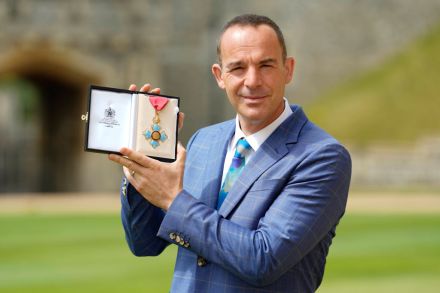
Martin Lewis, the Money Saving Expert, has become the sage of the cost-of-living crisis. He is closing in on national treasure status, dispensing helpful advice on TV and online to help people avoid rip-off charges and ensure they are getting the benefits they are entitled to. This is all good work, but as the housing campaigner Anya Martin notes, Lewis, and resources like him, rarely focus on increasing earnings. Watching the similarly themed American show How to Get Rich on Netflix, the contrast is noticeable. The expert here, an American named Ramit Sethi, does all the Lewis-style tricks to save pennies here and there – but also encourages his subjects to leverage their skills to make more money.
Martin Lewis

Prince William should house the homeless on his lands

From our UK edition

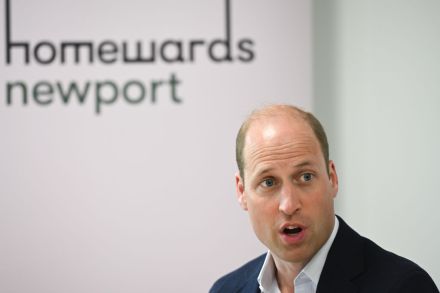
The Prince of Wales has announced that homelessness will be his charitable focus while he awaits his eventual succession to the Crown. In an announcement this week, he pledged £3 million as the start of a lifelong commitment to tackling the issue, which will begin by funding ‘housing first’ schemes in six areas, taking the lead from Scandinavian approaches which aim to stop people falling between the cracks and sort them with accommodation before focusing on other issues in their life. There is a danger of being another wealthy man throwing money at a problem that others have already found impossible to solve It is a sensible choice for the Prince.

Keir Starmer’s housing pledge has trapped the Tories

From our UK edition

Sir Keir Starmer has broken cover on planning. In perhaps his most daring policy announcement so far, he has declared his intention to overhaul the planning system to free up more housing. When pressed on the morning media round he was clear – he would take the fight to NIMBYs and wouldn’t yield to backbenchers about developments in their patch. Labour, he said, would be on the side of the ‘builders not the blockers’. The discussion around planning has gradually broken away from interest groups and into the mainstream – and the Labour leader wants to make it a focus of the next election It is a bold move, but one which shows the shifting sands of the politics of housing.

Why ‘Spotify dads’ are turning on the Tories

From our UK edition

It’s probably never been cool to be a Tory. There will never be a Conservative youthquake – they are the unhip party, the unkissed party. Voting Conservative has always been a mark of being a bit older, a bit more settled down. Like a sensible saloon car and comfortable shoes, it was something you eased into when you acknowledged you were past the flush of youth. Now, however, the party is seemingly losing even that. New polling from Portland Communications shows the Conservative party is losing sway with the least cool demographic of all: middle-aged dads. On almost every metric, the party is in retreat, with its vote share among the normally solid blue 50-59-year-olds dropping by a precipitous 27 points since 2019.

A tax break for the over-fifties is a terrible idea

From our UK edition

Downing Street’s latest initiative to boost the workforce is a curious mix of good and bad ideas. In the past week Sunak has said he wants to reform the benefits system to get more disabled people into work. But he has also floated the idea of scrapping income tax for the over-fifties. And by combining largely sensible policies on workers with disabilities with an ill-thought-out plan to get the over-fifties back into work, he risks undermining his party’s image .   The Prime Minister is right to want to get Britain back to work. There is a labour shortage and a chunk of waiting workers that could be unlocked with the right incentives. Getting people into paid work would be good for the economy and potentially good for them too.

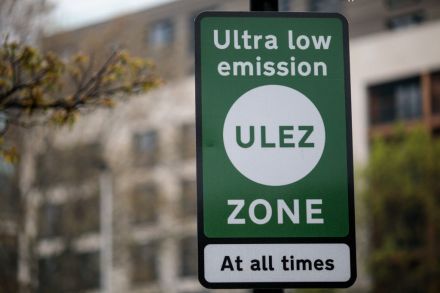
Why are the Tories so obsessed with defending motorists?

From our UK edition

Margaret Thatcher most likely never said that 'anyone on a bus over the age of 25 is a failure', but it’s handy for her supporters and detractors to pretend that she did. It encapsulates a certain view of the Iron Lady: that the individualism of cars was for the go-getters, a reliance on public transport for the life’s losers. Now, nearly three decades after she didn’t utter those words, it is becoming the de facto view of many Tories. The Conservatives find little they agree on and often little to shout about, but the party has increasingly found its voice as the party of motorists. At both parliamentary and local level, Conservative politicians have become ardently pro-car at the expense of almost every other form of transport.

Britain’s young are giving up hope

From our UK edition

The Conservative party faces a new challenge in the battle to win back younger voters – how to sell the party of aspiration to a generation that has soured on ambition. Articles abound on the under forties drifting towards professional apathy, from quiet quitting to abandoning the rat race entirely. Now polling has indicated a spread of this disillusionment from the working world. It’s not that younger generations are particularly workshy or lazy, but more that they feel the prizes promised for a lifetime of graft have become a phantom. A new survey from Opinium shows that only a third of young people will achieve their career aspirations, and only a quarter think they will earn more than £30,000 (roughly the current median wage) at the end of the next decade.

We need to talk about boomer radicalisation

From our UK edition

Andrew Leak, the man named as the perpetrator of the petrol bomb attack on Dover migrant centre was, on the surface, an unlikely terrorist. Aged 66 and living in High Wycombe, reports paint him as a somewhat odd but largely harmless character. His internet history told a different story. Though he does not appear to have been led on to his attack by anyone else, there is a clear pattern of self-radicalisation. Analysis from Hope Not Hate, the anti-far-right campaign group, shows that his online presence was riddled with racism. He seemed to support Tommy Robinson and engaged with several other personalities who post inflammatory coverage of issues around migration.

Rishi Sunak and the triumph of managerialism

From our UK edition

A few short months ago, Liz Truss dismissed Rishi Sunak’s business-as-usual managerialism on the economy. The former chancellor responded by constantly reiterating that her homage to Thatcherism, led by cuts to personal and corporation taxes, would unleash chaos rather than growth. She peddled belief while he dealt in realism. The grassroots preferred the former. Seven weeks after the result and Sunak looks vindicated. Trussonomics collided with the reality of the markets. Interest rates surged and the Bank of England was forced into a massive gilt-buying operation. The pound slumped against the dollar and (even after a few rallies) sits down slightly on when Truss came to power – and is worth nearly twenty cents less than last autumn.

Is it time to kill the Conservative party?

From our UK edition

Dominic Cummings’s response to the plight of the Conservative party is typically bellicose. He calls for it to be driven into the earth, the furrows planted with salt, and banished for eternity like some latter day Carthage. He sees no sense in reviving or reforming it, only blood-eagling it. It is a strong take, and perhaps unexpected from someone who was at the heart of a Conservative government just a few years ago. Cummings is not, of course, a Conservative. He has never professed to be one, nor seemingly been a member of the party at any point. His relationship with it was always a temporary alliance driven by his own views of what to deliver for the country. Brexit was part, but not all of this, a necessary precondition to unleash the state in a new direction.

The crisis at the heart of the Conservative party

From our UK edition

It is always interesting to read the Wikipedia pages of plane crashes. Thanks to the data recovered from black boxes, especially the cockpit voice recordings, the last moments of flights can be recreated with vivid accuracy. The most interesting are those caused largely by human error. In those final fateful moments, you can observe highly intelligent, highly trained professionals making error after error, gradually dooming them and their passengers. Despite the ringing alarms of the onboard systems, they lose sight of what they are doing or how to avoid the impending doom. They pull the joystick instead of releasing it, they shut down the working engine instead of the failing one, or sometimes the two pilots pull in different directions, cancelling each other out.