John Lloyd

John Lloyd is Contributing Editor to the Financial Times. His latest book is ‘Should Auld Acquaintance Be Forgot: the Great Mistake of Scottish Independence’.

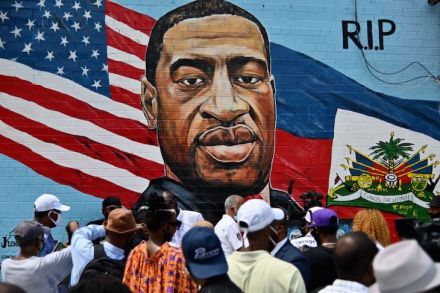
George Floyd was no martyr

From our UK edition

To write that George Floyd died is to take a position. The received belief is that he was murdered – a murder bigger, in its consequences, than any other crime for decades. Unlike the relatively muted protests against the Russian invasion of Ukraine, the streets of the world hosted men and women passionate in their denunciation of Minneapolis police officer Derek Chauvin, whose detention in May 2020 of Floyd by, apparently, kneeling on his neck for around ten minutes, had killed him.  Chauvin became a synecdoche for the perceived repressions of the state – any state, from South Africa to Germany, no matter how strongly committed to democratic governance and civil rights.
The dark history of the SNP

From our UK edition

The Scottish National party, under new and inferior management, continues to struggle out from under English oppression – colonialist oppression, as seems to be the view of the outward bound Mhairi Black, who wants Scotland to be the sixty-third country to escape from England. Yet, running through the SNP’s history has been a thin line of tenderness for authoritarian rule and rulers that contradicts its own struggle for freedom.  Despotic ideologies attracted thousands of followers in the 20s and 30s. Communism, inspired by the Bolshevik takeover in Russia, carried the promise of freedom and power for the working class, while fascism gained a hold in the 20s after the success of Benito Mussolini in seizing power in 1922.

The real story of the Putin emigres

From our UK edition

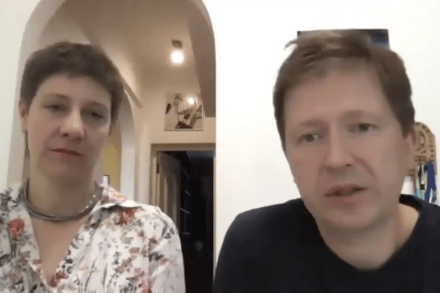
'Russians are fleeing their country in droves'. That’s how Andrei Soldatov and Irina Borogan, partners in life and journalism, sum up in seven words one of the many tragedies of Russia, from which they too have fled – further than most, to Britain. Had they stayed, Soldatov at least would be in jail, charged with spreading 'fake news' – or, as he puts it, 'contradicting the state narrative'. An arrest warrant was issued against him in April, and in May, he was put on an international wanted list. A trial – in absentia – is expected in October. Soldatov and Borogan are part of an exodus larger than any since the Bolshevik Revolution.

The power of black conservatives

From our UK edition

Black conservatism is a particular form of conservative politics. As a movement, it’s American, with strengthening echoes in the UK, in France and beyond. Some of its most prominent activists would be classed, and class themselves, as straight-down-the-line conservatives. Some, such as Glenn Loury, an economics professor at Brown University, confess to being, as Irving Kristol’s neoconservative quip has it, ‘liberals mugged by reality.’ All would say of themselves that they are Americans first, patriots, proud of being and glad to be so, dismissive of the radical critique of their country, and harsh on black personalities and protestors who they believe parade a status of subjugation which they have not earned.

The SNP’s mountain of mendacity

From our UK edition

The Scottish National Party’s great and continuing success has been to mobilize a large part of the Scottish population to see England and the English as a more or less malign force. In this, the party has connected with and deepened strong currents of thought and belief in Scots culture, especially in the 20th century. The country’s most famed and lauded poet, Hugh MacDiarmid (Christopher Grieve), its most influential ideologist, Tom Nairn and its most prominent literary novelist, James Kelman have all adopted long-running acidic views of the southern neighbour.

Should Nicola Sturgeon get a statue?

From our UK edition

The Scottish National party and its supporters like the world to see Scottish independence as a final act of decolonisation, Scots throwing off the yoke of English imperialism and, with it, the taint of having been imperialists themselves. Last week Scots academic Sir Geoff Palmer compared it to the process that led to his native Jamaica gaining its independence. Yet Scots were the greatest of British colonialists and, for most of the 300-odd years of the Union, strong unionists. Scots statuary of figures from before the 1707 Act of Union is quite sparse. But even those few earlier Scots haven’t been exempt from the wider debate about our monuments.

The SNP has an Anglophobia problem

From our UK edition

When Boris Johnson said no to another referendum on Scottish independence, Alex Neil, a former health secretary in the Scottish government, called on Scots to force the PM’s hand by emulating Mahatma Gandhi. Passive resistance, “securing rights by personal suffering” as Gandhi put it, was the way, thought Neil, to shame the British oppressor into acquiescence. To borrow a tactic for Scots dissent from the Indian national movement is to reveal how nationalists see Scotland (once a great reservoir of imperial officials, high and low): as an oppressed colony under the despotic rule of the South England Company. Nationalists have long believed Scots are a more moral people than the English (a view not confined to nationalists, to be fair).

The Scottish literary giants who stoked the fires of Anglophobia

From our UK edition

Though Scots are doubtful about secession from the UK, Scots literary figures and intellectuals are likely to be strongly, even aggressively, for it. Conspicuous in this is Anglophobia, which is a default position for many. At an extreme, it amounts to a rejection of the English and Scots unionists which conjures up the rhetoric of racial hatred. The influence of two large 20th-century figures has soaked into the Scots literary ground. These are the poet and polemicist Hugh MacDiarmid (1892-1978), and the intellectual Tom Nairn (born 1932). They have a close disciple in the figure of the novel-ist James Kelman (born 1946), the only Scots Booker Prize winner in the past half-century.