John Jenkins

Sir John Jenkins is a senior fellow at Policy Exchange and former UK ambassador to Saudi Arabia. He is the co-author of the Policy Exchange paper ‘The Iran Question and British Strategy’.

Why Iran is not Iraq

At the moment, a lot of people – notably including the Prime Minister, Sir Keir Starmer – are comparing the current war with Iran with the Iraq invasion of 2003. Do they have a point? There are several common claims of comparison, some good, some bad. There is no use pretending that the decisions Starmer has made will not have vast and far-reaching consequences The principal claim is that what happened in Iraq means we should steer well clear of any further involvement anywhere. It reminds me of the final scene in that magnificent film, Chinatown. A private detective moves to intervene to stop a horror unfolding but one of his associates holds him back, saying, “Leave it, Jake, it’s Chinatown”. In this reading, the Middle East is Chinatown. Iran and Iraq are neighbours.
America won’t be cowed by these Iranian attacks

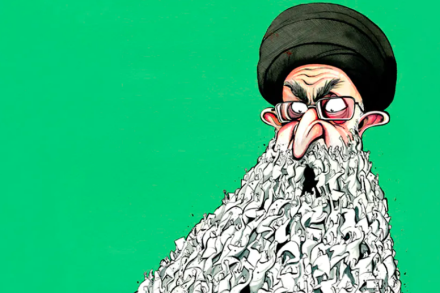
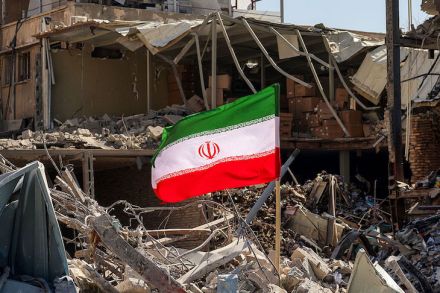
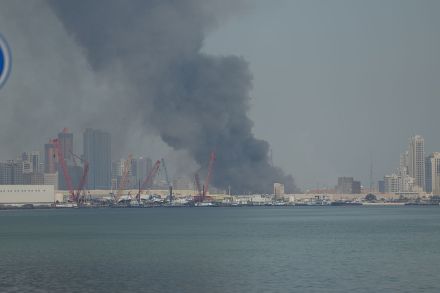
Many commentators are already claiming that the war with Iran is ‘spiralling out of control.’ I try not to be uncharitable: I am a Catholic, after all, and the Church tells me it is a sin. But if I were tempted, I should say that the only thing spiralling out of control is cliché. You could argue that drone attacks are a sign that Iran’s ballistic and cruise missiles aren’t actually proving that effective Iran said it would hit out wildly if it were attacked. It also made clear that direct attacks on the leadership of the Islamic Republic would be treated as an existential threat.

Iran’s useful idiots: British complicity in Tehran’s terror

From our UK edition

It is still unclear what will happen next in Iran. I fervently hope the current protests will cause the tyrants of Tehran to fall. It would be ideal if they were replaced by an order that allowed the population of 90 million to choose who governs them and build a country that reflects joy, hope and modernity rather than Ali Khamenei’s brutal Islamist fever dream. I also know how unlikely that is. Revolutions tend to produce disorder and repression, not order and freedom. After the failure of the Constitutional Revolution in 1911, there was a decade of chaos, fragmentation and insurgency in Iran until Reza Khan seized power and founded the Pahlavi dynasty.

What Iran will do now

From our UK edition

The fact is, no one knows where this war ends. Overnight, the United States entered the conflict, bombing a series of targets across Iran. What happens next is difficult to predict. All we can really say for certain about this situation is where it began. And that was on 1 February 1979, when Ayatollah Khomeini returned to Iran – by courtesy of Air France – from Neauphle-le-Château, where he had been resident since his expulsion from Najaf in Iraq a few months earlier. Left alone, it is almost certain that Iran would seek to reconstruct its nuclear programme Khomeini had inveighed against Israel and Zionism (not always distinguishing either from Jews in general) for decades.

Has the Islamophobia ‘Working Group’ already made up its mind?

From our UK edition

Sir John Jenkins was invited by the Government-appointed 'Working Group' to offer his views on a proposed definition of 'Islamophobia'. Here is his response to Dominic Grieve, the Group's chair: Dear Dominic Grieve,  It is kind of you to seek my views on 'whether a definition [of Islamophobia] would be helpful'. I have some fundamental reservations about both the process you are overseeing and its likely trajectory. I owe you the courtesy of explaining what these are. I remain unconvinced that anything I might say would make a difference to the Working Group on Anti Muslim Hatred/ Islamophobia Definition’s deliberations. But I am always open to being persuaded otherwise.

The UK still hasn’t come to terms with the Muslim Brotherhood

From our UK edition

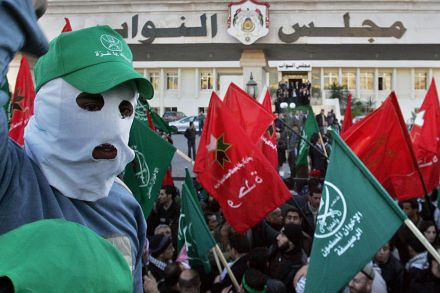
Earlier this month, the UAE announced it was sanctioning 11 individuals and eight rather obscure organisations for alleged connections to the Muslim Brotherhood (MB). The UAE proscribed the MB as a terrorist group in 2014, so you might be forgiven for thinking this was routine. But it wasn’t. All eight organisations were based in the UK. Normally this works the other way round: the UK bans or sanctions entities elsewhere. Having an Arab country – especially one we claim as a friend – do that in reverse should set alarm bells ringing. There was a brief flurry of press interest, then silence.  The Muslim Brotherhood is the mothership of all modern Islamisms In early 2014 David Cameron commissioned me to deliver a policy review of the Muslim Brotherhood.

Missiles alone won’t solve the problem of the Houthis

From our UK edition

Eventually then, enough was enough. After months of Houthi drone and missile attacks on Israel and vessels in the Red Sea, the US and the UK launched retaliatory strikes in Yemen last week. But how did we get here? The Houthis have been a nuisance for at least 30 years, when they emerged as a clan-based opposition movement in the northernmost governorate of Yemen. They had a number of grievances: endemic poverty, government hostility and Saudi-funded attempts to spread Salafism in their Zaidi Shia stronghold. The last Zaidi ruler had been deposed in 1962. The subsequent civil war set the stage for more or less continuous domestic turmoil ever since. The 1990 shotgun marriage between North and South exacerbated the conflict.

How the West made a mess of Syria

From our UK edition

It was the last week of August 2013. I was Her Majesty’s Ambassador to Saudi Arabia. The course of the Arab uprisings of 2011, which had been greeted with such naïve optimism at the time, had become bloody, not least in Syria. Only the previous week there had been a chemical weapons attack on opposition-controlled areas of Damascus in the ancient oasis – the Ghouta – that lies to the south-east of the city.  UN inspectors were begrudgingly and belatedly allowed access by the Syrian government. They concluded that the chemical in question was Sarin. Hundreds of people had been killed, many others severely injured. Some may have been insurgents.

Ayman al-Zawahiri got the death he deserved

From our UK edition

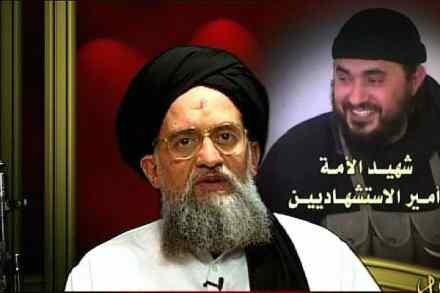
At times like this, it’s tempting to channel Bette Davis: only speak good of the dead. Ayman al-Zawahiri’s dead. Good. But perhaps the moment deserves some more considered reflection. There’s striking footage (see below) of al-Zawahiri in the defendants’ cage during the 1982 trial of Islamic Jihad members implicated in the assassination of Anwar al-Sadat. Al-Zawahiri alone speaks in English for the cameras. He is uncompromising and belligerent. But his command of the language of international communication reveals his background: educated and middle class. That made him different to most of his fellow accused. https://www.youtube.com/watch?v=AY3nM9I19c4 He had been a member of the Muslim Brotherhood since adolescence.

Iran’s hidden hand in the Houthi drone strike on Saudi Arabia

From our UK edition

Over the past six years, Saudi Arabia and its allies have – not always accurately – dropped western-built munitions worth billions of pounds on both military and civilian targets in Yemen. On Monday, the Houthis, the Zaidi militia they are fighting, hit back. The Houthis claimed to have struck a number of targets in the UAE – including a petroleum storage facility and Abu Dhabi airport – with a mix of drones and missiles, all probably Iranian-built and therefore cheap as chips. In a stroke of nominative indeterminism, the Saudi-led campaign was initially called ‘Storm of Decisiveness’. The Houthis rather more soberly named their latest attack ‘Hurricane of Yemen’.

A blurred distinction between refugees and migrants is a recipe for chaos

From our UK edition

Among the most evocative and distressing press images of the year were those of Maryam Nuri Hama Amin. The 24-year-old Kurd from Soran, in northeastern Iraq, drowned along with 26 others in the Channel last month. In photographs published after her death, she is seen at her engagement party smiling at the camera in a park, by a lake, amid fallen leaves. She looks beautiful, bright, confident and full of hope. If you read reports and trawl through Twitter, you’ll find that many believe Maryam was a victim of a heartless international order, of European xenophobia, of the British government’s inability to manage its own affairs properly. But how did she come to end up in a dinghy that would sink in the cold waters of the Channel?

Will we learn the truth about the Liverpool bomber’s conversion?

From our UK edition

It's been more than a fortnight since the bombing of Liverpool Women’s Hospital, and there remain plenty of unanswered questions. It is a sign of the challenge authorities face that even establishing something as basic as the nationality of the man killed in the blast, Emad Al Swealmeen, has proved difficult. There is also much uncertainty over the circumstances surrounding Al Swealmeen's conversion to Christianity. Al Swealmeen is believed to have entered the UK from Dubai, and his claim for asylum was rejected soon afterwards. Permission to appeal was refused, but, in 2017, Al Swealmeen converted to Christianity. This year, he applied for asylum under the name Enzo Almeni, claiming his Christian faith would put his life in danger in the Middle East.

Don’t be fooled: the Taliban hasn’t changed its spots

From our UK edition

Has the Taliban really changed its spots? Those who advocate talking to the Taliban make the case that they have. The organisation, they say, has recognised the mistakes it made in the years culminating in 9/11. Others claim that the organisation is now committed to local and national aims, not international terrorism, and that the Taliban have – or can be moderated – via the tool of engagement. All of these approaches seem to share the view there is a disconnect between the west’s reaction to events in Afghanistan, and the reality. But is this really the case?  Pakistan's national security adviser, Dr Moeed W Yusuf, has suggested the time has come to face facts: we need to accept the Taliban has won, negotiate with them and treat them as partners.

There’s nothing wrong with Macron’s war on Islamism

From our UK edition

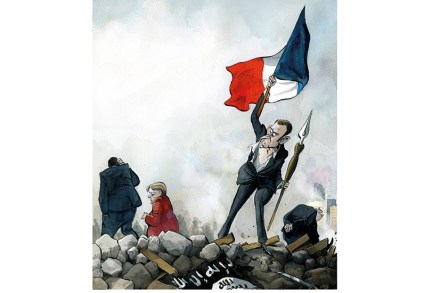
It’s always the French, isn’t it? Not content with having given the modern world existentialism, structuralism, deconstructionism (with some help from the Belgians) and Marxist psychoanalytic, they have also, it seems, produced something called Islamo-gauchisme — allegedly an unholy alliance between some on the left and Islamists. And a lot of people are very cross about this. Or rather, cross with President Macron and his ministers for daring to suggest first that Islamo-gauchisme is actually a thing, then that it might represent a threat to the cohesion of the Fifth Republic — indeed the western liberal order as a whole — and that it, therefore, needs to be resisted.

Britain is still failing to confront Islamism

From our UK edition

How time flies. In March 2014, quite out of the blue, I was commissioned by then prime minister David Cameron to lead an internal review designed to inform and improve the government’s understanding of the Muslim Brotherhood. It’s been six years since I delivered what has become known as the Muslim Brotherhood Review. And on 17 December, it will be exactly five years since Cameron reported on its main conclusions to the House of Commons. I made it clear before I started that if I accepted the commission, I would need the freedom to conduct my own research, travel widely and have proper support within Whitehall. I would look at Islamism in the round, not simply the Brotherhood variety.

We’ve become desensitised to terror

From our UK edition

Samuel Paty, a teacher at a school in a sedate suburb of Paris, was beheaded in the street last Friday by an 18-year old Chechen former asylum-seeker. The reason for this act of savagery was that Paty had shown cartoons of the prophet Muhammad to a school class, to illuminate a discussion about civic freedoms and the boundaries of debate. In order to avoid unnecessary offence, he had allowed anyone who wished to avoid viewing the cartoons to leave the classroom. Afterwards, one Muslim pupil is reported to have told her father.

Coronavirus is a ticking time-bomb for the Middle East’s old guard

From our UK edition

I used to believe that there were only two options for leadership change in the Middle East: the coup or the coffin. But now there’s another thing for embattled authoritarians to worry about. It’s not the Republican Guard, CIA, MI6 or Mossad, Delta Force or the SAS – it’s Covid-19. And while the virus may well end up fundamentally changing many of our own political expectations, not least about China (Huawei anyone?), and the resilience of our own societies, it may have an even bigger impact on the fragile political ecosystem of the Middle East and North Africa. And that’s because it is there that a superannuated old order has most persistently refused to die. Revolutions have been dead ends, reform an illusion.

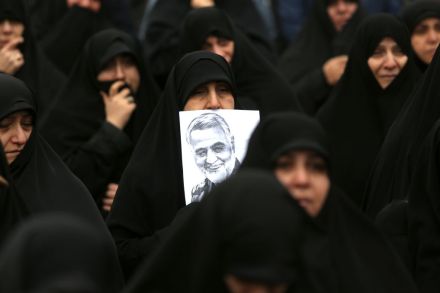
Soleimani’s assassination has exposed the EU’s big weakness

From our UK edition

What a difference a day makes. When I went to bed on 2 January what seemed to be the most important issue in the Middle East was the long-term impact of the brave – if desperate – mass protests in Lebanon, Iraq and Iran. Many were trying to extract some positive meaning: were they the precursor of a renewed popular drive for better governance in some of the key states of the region? Could they shake the stability of the Islamic Republic of Iran and its grip on the greater Levant? Or would they be suppressed and ignored, only to recur more virulently, as had happened so many times before? When I woke up on 3 January, the world had changed.

The Muslim leader who offers an example on how to tackle Islamism

From our UK edition

The Christchurch attack has prompted a considerable degree of soul-searching in the West about the potential impact of anti-Muslim rhetoric. The need to tackle deadly far-right conspiracy theories is clear for all to see and the debate about how to do so continues. But what lessons might we learn from the response to Christchurch in the Muslim world, where I spent many years of my professional life working? Yahya Cholil Staquf, the general secretary of Nahdlatul Ulama – the largest independent Muslim organisation in the world – wrote a good piece in the Daily Telegraph this week under the headline, “Don’t weaponise the term ‘Islamophobia’”.