John Connolly

John Connolly

John Connolly is News Editor of The Spectator

Britain is hooked on car finance

From our UK edition

It’s unnerving to think how close Britain came to financial disaster last Friday, ahead of a Supreme Court ruling on – of all things – car financing. In October, the Court of Appeal found that motor finance firms could be liable for hidden commission payments to car dealers. If the Supreme Court had agreed, the biggest lenders, including Lloyds Banking Group, Santander, Barclays and Close Brothers, would have been on the hook for some £44 billion, with Lloyds already putting aside £1.15 billion for compensation payments and Close Brothers selling off its asset management arm this year.


John Connolly, Gavin Mortimer, Dorian Lynskey, Steve Morris and Lloyd Evans

From our UK edition

26 min listen

On this week’s Spectator Out Loud: John Connolly argues that Labour should look to Andy Burnham for inspiration (1:51); Gavin Mortimer asks if Britain is ready for France’s most controversial novel – Jean Raspail’s The Camp of the Saints (4:55); Dorian Lynskey looks at the race to build the first nuclear weapons, as he reviews Frank Close’s Destroyer of Worlds (11:23); Steve Morris provides his notes on postcards (16:44); and, Lloyd Evans reflects on British and Irish history as he travels around Dublin (20:44).  Produced and presented by Patrick Gibbons.

Labour should look to Andy Burnham for inspiration

From our UK edition

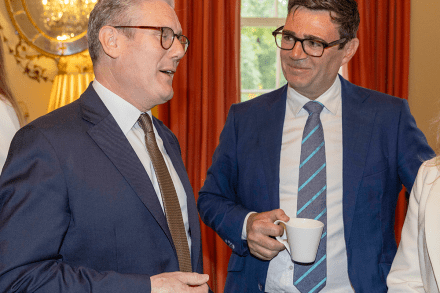
For Keir Starmer, it seems everything is going south. His MPs are openly rebelling, his advisers are mutinous and it often feels as though he can’t decide whether to run the country as human-rights-lawyer-in-chief or as Nigel Farage-lite. It’s no wonder that some in his party are beginning to look north for an answer to the party’s woes – specifically to Manchester, where Andy Burnham increasingly looks like the King over the river Irwell. With the government trapped in an ideological Bermuda triangle, Greater Manchester suggests there is a way out – a way for Labour to govern effectively.

Trump: UK encryption laws are like what you get in China

From our UK edition

Keir Starmer may have survived his meeting with Donald Trump yesterday – with the President saying he was ‘inclined’ to support the Chagos deal and might not impose tariffs on the UK – but it appears the US President still has plenty of concerns about the state of this country. Speaking to The Spectator’s Ben Domenech yesterday, the President was asked what he thought about our new Prime Minister. While Trump conceded that ‘He’s different. Different type’ to Boris Johnson (which may well go down as understatement of the year) he was generally positive about Sir Keir, saying ‘I have to say, he was very nice. We had a very good meeting.’ But policy differences remain.

Energy prices are shattering Britain’s remaining potteries

From our UK edition

The ceramics industry of Stoke-on-Trent is one of the great survivors of the Victorian era. At its height, some 70,000 people were employed by the likes of Wedgwood and Spode to work in the potteries. Despite the Clean Air Act of 1956 – which banned coal-fired kilns – the deindustrialisation of the 1980s and the struggle to compete against the rise of cheaply made Chinese goods, the industry lives on and still employs around 7,000 people, manufacturing everything from teapots to tiles for the London Underground. In 2022, some companies saw their six-month energy bills rise tenfold Stoke can at times seem like it’s living in the ruins of its past – but while the ceramics sector is no longer a large industry, it is still hugely important to the city.

‘They don’t want me to rise again’: China’s gene-editing scientist on why he’s back in the lab

From our UK edition

Before he agrees to be interviewed, He Jiankui has one request: that he is introduced as a ‘gene editing pioneer’. This may come across as grandiose, but it is also indisputable. No one else in history, after all, can say they have created genetically edited human beings. In 2018, He dropped the mother of all scientific bombs when he announced that he had used Crispr, a gene-editing technique, to alter the DNA of two babies. In a YouTube video, He explained that the twins, ‘two beautiful Chinese girls’, codenamed Lulu and Nana, had been born safely just a few weeks before in Shenzhen. Both had had their embryos edited to prevent them catching HIV from their father. Later, it emerged that another woman was pregnant with a genetically modified baby.

Exclusive: How many XL Bullies live in your area?

From our UK edition

In the past few years, you may have noticed a terrifyingly large breed of dog stalking the streets of Britain: the infamous XL Bully.  An offshoot of the American Pit Bull Terrier, it’s hard to miss an XL Bully when you pass one in the street. Often weighing more than nine stone (or 57 kg) and with males at least 20 inches tall at the shoulders, they are defined by the government as ‘heavily-muscled’, with a blocky head, and a physique ‘suggesting great strength and power for its size.’ The breed can probably be summed up best though as a kind of hellhound on steroids. XL Bullies seem to have a remarkable propensity for violence, with this one breed believed to be responsible for the number of fatal dog attacks in the UK rising to at least 16 in 2023.

The remarkable example of the JCB Academy

From our UK edition

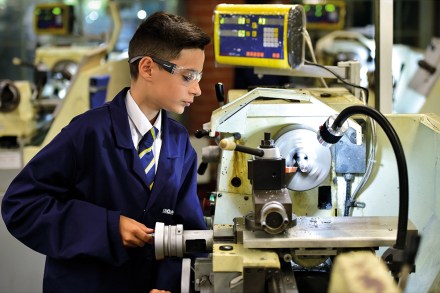
If you’re into diggers, the JCB world headquarters must look a bit like paradise. The factory sits in the rolling green hills of the Staffordshire countryside, bordered by three lakes and its own golf course. As you drive there you pass a giant spider-like sculpture made entirely out of digger claws, and inside the building, stuffed with bright-yellow tractors, there is a JCB museum featuring the first cab to have an in-built kettle. At the end of the tour you can buy JCB scented candles, JCB cut-glass crystal and JCB jumpers from the JCB gift shop. The most interesting thing JCB stamps its name on, though, is actually round the corner in the tiny village of Rocester.

Israel and Hamas strike hostage deal: what we know so far

From our UK edition

After weeks of negotiations, a hostage deal has been struck between Israel and Hamas. Under the terms of the deal, Hamas will release 50 of the women and children it kidnapped on 7th October in exchange for a four-day ceasefire. In return, Israel will release 150 Palestinians from its prisons. Substantial amounts of humanitarian aid, which will include medical supplies and fuel, will also be sent by Israel into the Gaza strip. The ceasefire has been structured so that it can potentially continue after the first four days are over. Israel has said that for every additional ten hostages Hamas releases, the truce will be extended by 24 hours.

Rishi Sunak’s conference speech gamble

From our UK edition

17 min listen

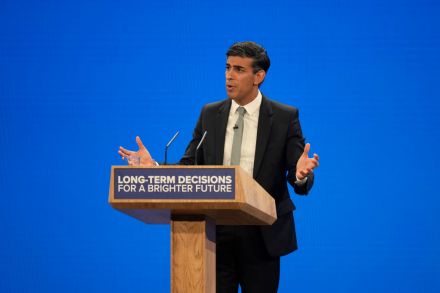
After spending most of his conference refusing to say much at all, Rishi Sunak used his speech to make three big policy announcements on HS2, smoking and A-levels. Will these gambles pay off?  Fraser Nelson speaks to Katy Balls, Isabel Hardman, Kate Andrews and John Connolly.

West Midlands mayor rebels over HS2

From our UK edition

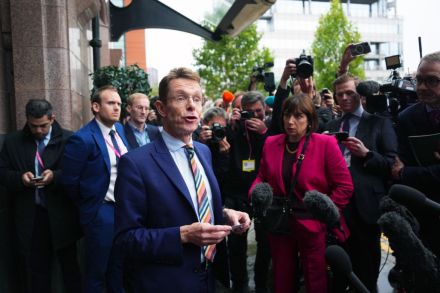
Well, it didn’t take long for Rishi Sunak’s conference to be derailed by the fate of the HS2 rail link. Today reports began to emerge that Rishi Sunak would officially announce at conference that the Birmingham to Manchester leg of the route would be scrapped – ending over a week of speculation about his plans for the route. The reports have been denied by Downing Street, with a spokesman saying that ‘No final decisions have been taken on Phase 2 of HS2’. But the news has already managed to create ructions at conference.

James Cleverly defends his China policy

From our UK edition

How should Britain handle its relationship with China? That’s an increasingly fraught question inside the Tory party lately, with several China hawks in government and on the backbenches keen to limit engagement while classifying the country as a security threat. Earlier this year, James Cleverly faced criticism after becoming the first UK Foreign Secretary to visit Beijing in five years – a trip he defended at the time as necessary for diplomacy, arguing that disengaging from the country was not ‘credible’. Speaking to Cindy Yu at conference today, for a special edition of the Chinese Whispers podcast, Cleverly defended his position again, saying: ‘Foreign secretary flies to foreign country to have meetings should not be controversial.

Why are the Troubles being glorified now?

From our UK edition

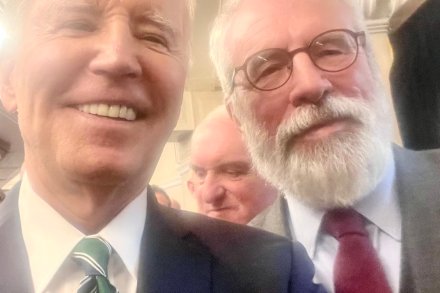
As world leaders gathered to mark the 25th anniversary of the Good Friday Agreement, is violence glorified when it comes to remembering the Troubles? John Connolly speaks to Spectator columnist Douglas Murray and former DUP leader Arlene Foster. This episode can be watched in full on Spectator TV's Week in 60 Minutes.

Jeremy Hunt defends his Autumn Statement

From our UK edition

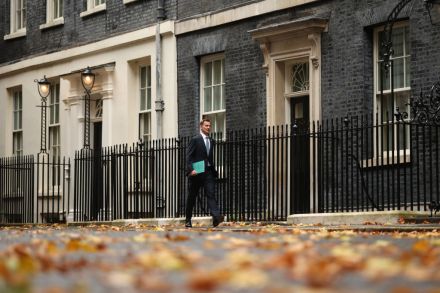
The Chancellor Jeremy Hunt has woken up to a harsh set of front pages this morning following his Autumn Statement, with the Mail accusing the Tories of ‘soaking the strivers’ and the Telegraph lead headline quoting an economist who says the Chancellor has combined ‘the rhetoric of George Osborne and the policies of Gordon Brown’. In particular the Chancellor has come under fire for raising the tax burden to a post-war high while also overseeing what the Office for Budget Responsibility says will be the biggest fall in living standards over the same period. The Chancellor therefore set out this on the morning broadcast round to steady the ship and see off criticism from the Tory backbenches.

Kwasi Kwarteng’s £45 billion tax cuts

From our UK edition

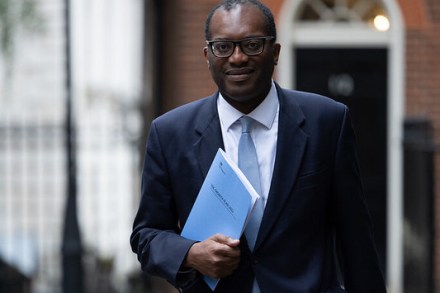
Chancellor Kwasi Kwarteng has just announced a surprise 5p cut to the top rate of income tax and a 1p cut to the basic rate of tax. Together with stamp duty cuts and others, it will reduce tax by £45 billion by 2026-27 according to the Treasury's analysis. The IFS says this is the biggest tax cutting event in half a century. Kwarteng confirmed that the National Insurance rise will be reversed, with the tax going down from November. Stamp duty will also be cut. Kwarteng argues that this will put money back into the economy and kick start growth, but without an OBR forecast there is no formal assessment of the actual impact on growth. Rachel Reeves, the Shadow Chancellor, led her attack on his refusal to implement a windfall tax.

Is the violence in Leicester spreading?

From our UK edition

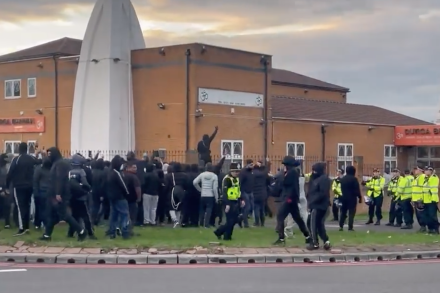
After a weekend of violent clashes between Muslim and Hindu men, things seemed to have calmed down in Leicester. A total of 47 arrests have been made since the trouble started at the end of August, according to Leicestershire Police. One man has been sentenced to ten months in jail for his part in the violence. The police crackdown has, for now, appeared to have worked: on Monday and Tuesday there were no reports of disorder. It remains to be seen whether tensions will flare up again in the city – and whether the disorder spreads to other areas. Events last night in Smethwick in the West Midlands – some 30 miles away from Leicester – suggests that might be a possibility.

Why is violence breaking out in Leicester?

From our UK edition

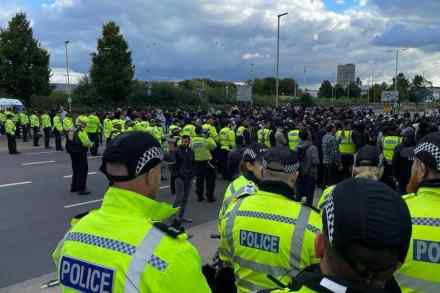
Just what is going on in Leicester? Last night violence broke out in the city after hundreds of young men in Covid masks and balaclavas took to the streets as part of an ‘unplanned protest’. The police attempted to contain the protestors but soon lost control of the situation. Videos posted online show officers struggling to contain the crowds while bottles fly and smash on the pavement around them. In another unverified video a group of men flip a car. According to the police, two arrests have been made and they are investigating several other incidents of violence and disorder. For the past few weeks Leicester has become a kind of mini-Kashmir in the middle of England, with clashes, protests and disorder breaking out in the city between young Muslim and Hindu men.

Svitlana Morenets, Cindy Yu and John Connolly

From our UK edition

18 min listen

This week on Spectator Out Loud, Svitlana Morenets discusses the changes to the syllabus in Ukraine and the difficult decisions parents are having to make over whether to send their children back to school (00:59). Cindy Yu argues that she would be the perfect communist shill (07:45), and John Connolly tells us why cow attacks are no laughing matter (13:26). Produced and presented by Oscar Edmondson.

Cow attacks are no laughing matter

From our UK edition

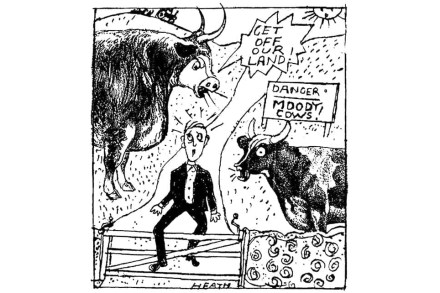
One of the worst things about being attacked by a cow is that no one takes it very seriously afterwards. My partner Claire and I found that out the hard way after a walk in Devon. We were making our way through a large field on a public footpath, heading towards a herd of cows milling around a stile. Most were ignoring us, but one seemed different – larger and more malevolent than the others. It began to stare intensely at us, and as we carried on, it started to walk slowly in our direction. Hoping it might be a curious cow, rather than an aggressive one, we branched out to the left to give it a wider berth. But the cow then broke into a full-on run. At this point we froze, thinking it might slow down if we didn’t spook it.

Is Boris Johnson’s Chris Pincher story falling apart?

From our UK edition

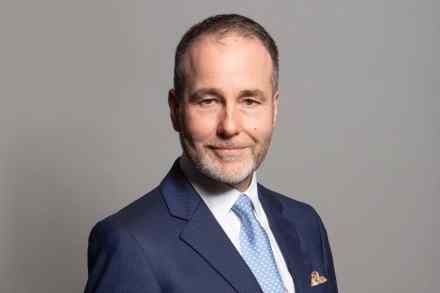
What did Boris Johnson know about Chris Pincher before appointing him as deputy chief whip? That question has been haunting No. 10 ever since it emerged that Pincher allegedly groped two men at the Carlton Club last week – with previous allegations about Pincher’s behaviour coming to light in recent days. So far the government line has been shaky to say the least. On Friday a government spokesperson said that the Prime Minister had been unaware of any specific allegations against Pincher before appointing him. That position shifted early this week, with the government then saying that Boris Johnson had been aware of media reports about Pincher, but they were ‘allegations that were either resolved or did not progress to a formal complaint.