Joanna Williams

Joanna Williams

Joanna Williams is an academic and author. Follow her on Substack here

Leave Enid Blyton alone

From our UK edition

Once again, people are getting their knickers in a twist over Enid Blyton. Such is the capacity for outrage these days, the same accusations are recycled on a biannual basis. This time around it’s The Magic Faraway Tree that’s in the spotlight. For those unfamiliar, this 1943 tale features a fantastical array of plots and characters aimed at delighting young children. Three siblings stumble upon an enchanted wood where they befriend Moon-Face, Silky the fairy, the Saucepan Man, Dame Slap, Mr Watzisname and the Angry Pixie. At the top of a magical tree they find a ladder which takes them to a different land each time they visit. It really is that surreal. Enid Blyton is one of the most popular children’s authors of all time.

When did traditional masculinity become toxic?

From our UK edition

It’s hard for privileged white men to stay relevant in this age of identity politics but a number of fail-safe strategies have begun to emerge. Prince Harry and, to a lesser extent his older brother, have captured the mental health market by publicly discussing their issues. William’s school pal Eddie Redmayne, and pretty much the entire cast of the Harry Potter films, have spoken out in defence of the transgender community. Benedict Cumberbatch is going down the feminist route. Cumberbatch is calling time on ‘toxic masculinity’. Interviewed by Sky News ahead of the release of his latest film, a Netflix Western in which he plays the part of a rancher, Cumberbatch took the opportunity to chastise men.

EastEnders isn’t the place for a lecture on climate change

From our UK edition

Soap operas are cultural punctuation points. Big plot lines unite colleagues, neighbours and distant family members in shared conversation starters. Den and Angie’s Christmas divorce? Brookside’s before-the-watershed lesbian kiss? Tony Blair’s support for the wrongly-imprisoned Deirdre Barlow? I was there for it, along with millions of others. I even got caught up in Rob’s coercive control of Helen over in Ambridge. But not any more. When drama gave way to a continual stream of awareness-raising, I got bored. And if ratings are to be believed, I’m not alone. Now soap’s directors and script editors are fighting back: unfortunately with a plan to ratchet up the political messaging still further.

Is Harry and Meghan’s Time profile a parody?

From our UK edition

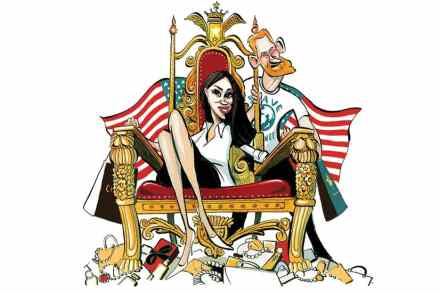
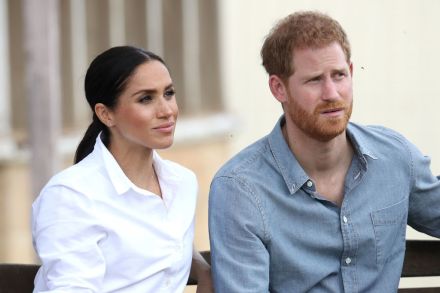
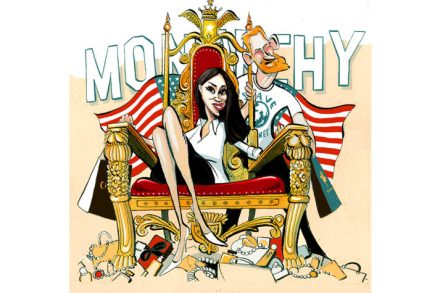
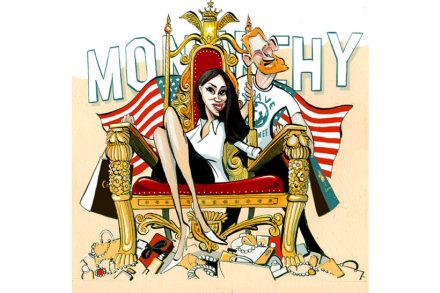
Of course the Duke and Duchess of Sussex are named in Time magazine’s 100 most influential people of 2021. And of course their listing, which makes the publication’s front cover, is accompanied by a lavish citation and photos of the pair put together by Hollywood A-list stylists. Did we really expect anything less? Time truly has it all. First there are the photos. The couple are groomed beyond the imagining of mere mortals, their clothes carefully co-ordinated. They are artistically positioned in order to comprise both a beautiful image and a political statement. Yes, indeed! These are no ordinary celebrity snaps. They are Harry and Meghan’s meaningful portraits. The cover shot symbolises equality.

Lindsay Hoyle is right to give scruffy MPs a dressing down

From our UK edition

MPs are making their way back to Parliament with an order from Speaker Sir Lindsay Hoyle ringing in their ears. In the post-Zoom world, they must smarten up their appearance. ‘Members are expected to wear business attire in and around the Chamber,’ Hoyle reminded them.  ‘Jeans, chinos, sportswear or any other casual trousers are not appropriate. T-shirts and sleeveless tops are not business attire,’ continued his memo. ‘Men are encouraged to wear a tie, and jackets must be worn.’ Good for you, Mr Speaker! Perhaps you could send a similar directive to the rest of the country too. After 18 months of working from home, it’s not just MPs who have forgotten how to dress.

Why is the UN preaching about Covid and patriarchy?

From our UK edition

Who can we blame for Covid-19? Over in the US, Trump is still desperately trying to make ‘the China virus’ and ‘the Wuhan flu’ stick. There can be no doubt where his finger is pointing. The United Nations, on the other hand, has a different target. The UN’s Twitter account notified the world yesterday that, ‘The #COVID19 pandemic is demonstrating what we all know: millennia of patriarchy have resulted in a male-dominated world with a male-dominated culture which damages everyone – women, men, girls & boys.’ So, forget China. Coronavirus is an opportunity to bash the patriarchy. Trump’s China-blaming may have a basis in reality, though he no doubt welcomes any excuse to turn the spotlight abroad. But the patriarchy?

Harry and Meghan’s glib Afghan statement

From our UK edition

Finally, some news to cheer us all up on this grim, relentless August. The Duke and Duchess of Sussex have been rendered ‘speechless’ by the news from Afghanistan and Haiti. No doubt, there’ll be no more Oprah interviews or birthday messages. And there’ll be no more lectures from Harry on the importance of imagining how it feels to be a raindrop or from Meghan on the importance of people asking her if she is okay. At least, that’s what we should assume, right? Surely being left ‘speechless’ is a sign that you are about to shut up? Unless, of course, you are Harry and Meghan. In their world, being ‘speechless’ requires the release of a 200-word public statement.

Spare us Prince Harry’s ‘literary memoir’

From our UK edition

However you look at it, ‘freedom day’ turned out to be a bit of a damp squib. So thank goodness for Prince Harry who managed to squeeze in some good news to cheer us all up. His formerly-royal highness is to publish his memoirs. It’ll be an ‘intimate and heartfelt’ account no less, written, he tells us, ‘not as the prince I was born but as the man I have become.’ I can’t be the only one barely able to contain my excitement. One tantalising question is what more Harry still has to reveal. Having spent a tempestuous couple of years desperately seeking privacy in between pouring his heart out in a series of podcasts and high profile interviews, is there really anything about Harry we do not already know?

What Meghan Markle can learn from Enid Blyton

From our UK edition

The year is 2070 and English Heritage are unveiling their latest Blue Plaque: 'The Duchess of Sussex, children’s author, lived here 2017 – 2018'. The accompanying online guide praises Meghan for her work promoting inclusion and diversity. I have no idea whether Meghan will one day be rewarded with an iconic plaque for her services to literature. But she’s certainly heading in the right direction.

The problem with Prince Harry’s mental health drive

From our UK edition

Has Prince Harry ever had a thought and not made it public? Are there feelings or emotions he has experienced but kept to himself? The latest episode of The Me You Can’t See, the Duke’s documentary series exploring mental health and emotional well-being, aired this week. Loyal viewers were rewarded with a bonus ‘town hall conversation’ show in which Harry and his co-host and producer, Oprah Winfrey, were reunited with advisors and participants from the series.  The premise of the programmes, drummed home once again in the town hall special, is that having ‘a me we can’t see’ is bad for our mental health. Full emotional disclosure is open, honest, liberating, brave and true.

School playgrounds are no place for ‘free Palestine’ protests

From our UK edition

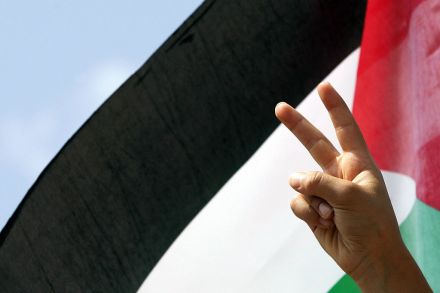
GCSE and A level assessments. Enforcing social distancing. Catch-up provision for pupils who fell behind during lockdown. Mental health support. Behavioural issues. Headteachers have more than enough to worry about right now. The conflict between Israel and Palestine? This one, at least, can be filed under ‘beyond my pay grade’. Or perhaps not. Should pupils be able to wear lanyards that show the Palestinian flag? Or display pro-Palestinian posters? Some see engaged teenagers exercising their right to free expression; others a stoking of racial tensions. Getting the balance right, particularly in a large, ethnically diverse school, is not straightforward. Mike Roper, headteacher at Allerton Grange school in Leeds, faced this problem head on.

Gender neutrality and the war on women’s literature

From our UK edition

Education has become embroiled in a culture war and rather than extricating itself politely, it just keeps digging. What gets taught has long been subject to debate: move beyond the basics and you rapidly head into dangerous terrain (although, look hard enough, and you will find those prepared to argue that even maths and spelling are racist). Now it’s not just taught content but the name of modules that is under the woke microscope. One of the UK’s leading exam boards, OCR, has proposed renaming the ‘Women in Literature’ section of its A level English courses. It is taking votes on new titles: ‘gender in literature’ or ‘representing gender’.

America, Britain and two very different realities on race

From our UK edition

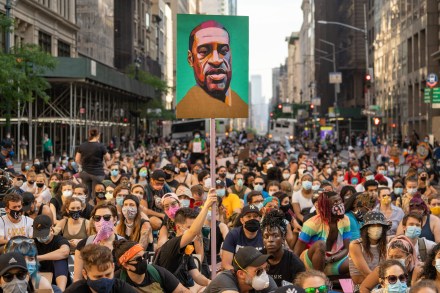
‘If people in Wales had access to as much media coverage of decisions that affected Wales as they do of US domestic news we’d have a better election campaign.’ This statement, tweeted by Welsh government minister Lee Waters shortly after 10 p.m. on Tuesday evening, just as the verdict in the George Floyd murder trial was about to be announced, sparked outrage. ‘Rancid,’ ‘horrific’ and ‘ignorant’ were just some of the comments directed at Welsh Labour’s deputy minister for transport. Fellow Senedd members rushed to join in the condemnation. A Plaid Cymru spokesperson declared, ‘Lee Waters’ tweet was highly inappropriate, ill-judged and thoughtless.

Harry and Meghan have played a blinder

From our UK edition

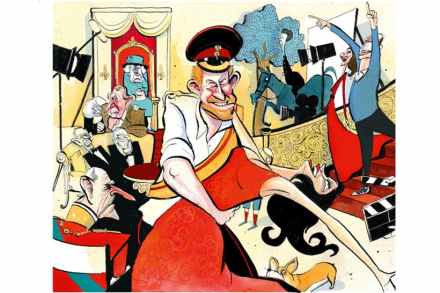
If bouquets and Bollinger were winging their way to Montecito last night they were well deserved. When Harry and Meghan met Oprah, the trio turned in the performance of their lives. From dramatic pauses, wiping away tears, hand-holding, Diana-reminiscent eye make-up, the English country garden-style backdrop interspersed with scenes from the chicken coop and shots of little Archie running along a Californian beach, to accusations and big reveals – everything was performed with absolute perfection. The build-up was justified. This did not disappoint. For Harry and Meghan, no doubt poring over press coverage, the success of their interview will be measured not in advertising revenue, or in viewing figures, but in public sympathy. In this, they’ve played a blinder.

The stage-managed world of Harry and Meghan

From our UK edition

Congratulations Meghan and Harry! Another baby. How lovely! You both look so happy and relaxed: all bare-foot, belly-cradling, fondly-gazing into each other’s eyes. It’s just adorable to hear that Archie can’t wait to become a big brother. And that the Queen and Prince Philip are delighted by the news of their tenth great grandchild; or eleventh if Zara gets there first. And so thoughtful to give a nod to Harry’s mum, Princess Diana, who also made a Valentine’s Day pregnancy announcement. I bet you were relieved to have that pesky case against the Mail on Sunday settled in time to break the news! https://twitter.com/scobie/status/1361034908051898374?ref_src=twsrc%5Etfw But hang on a minute. I’m confused.

Prince Harry should dial down his eco-alarmism

From our UK edition

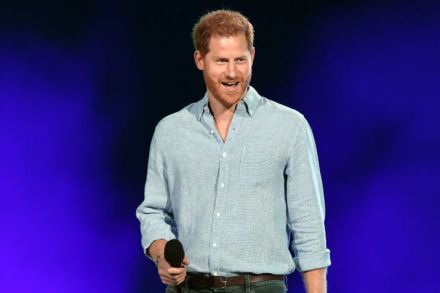
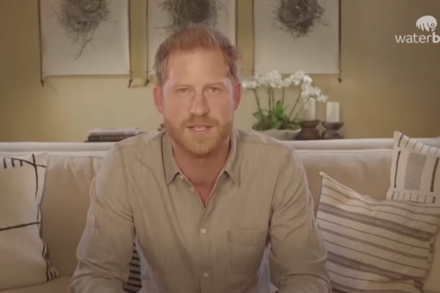
‘What if every single one of us was a raindrop?'  I have no idea what goes into the Californian drinking water, but the Duke formerly known as Prince Harry seems to have been knocking it back. We are fortunate indeed that, despite having fled State-side to secure greater privacy, the Duke and Duchess of Sussex continue to send us regular character-improving missives. This week sees Harry return to a favourite theme: climate change. Speaking at an online event to mark the launch of WaterBear, a new subscription television platform for environmental and conservation documentaries, Harry pondered: ‘Every single raindrop that falls from the sky relieves the parched ground. What if every single one of us was a raindrop, and if every single one of us cared?

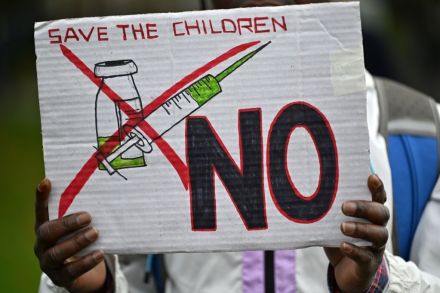
Don’t censor the anti-vaxxers

From our UK edition

Pfizer has come up trumps. Now that a vaccine for Covid-19 is more than just a possibility, we can breathe a collective sigh of relief. But before we relax too much, a new problem arises: will people actually take it? A third of people in the UK – and half of people in the United States – say they are either uncertain or unlikely to agree to be vaccinated against coronavirus, according to research from the Royal Society and the British Academy. It’s easy to scorn anti-vaxxers. They are the tin-foil hat wearing idiots who set fire to 5G phone masts at the start of the ‘plandemic’.

How the ‘diploma divide’ helps explain the US election result

From our UK edition

If the US election was a television drama, the drum-roll end credits of the penultimate episode played this week and we are now waiting for the denouement. Only, there was never supposed to be a cliffhanger. An exhausted nation should have chosen boredom. Biden was meant to have been the clear victor and the political clock reset to a pre-2016 normality. But, in a plot twist that is by now so familiar we have no excuse for not anticipating it, opinion polls and commentators alike called it wrong. It’s not just in the US. All around the world, elections have become more difficult to predict. Traditional party loyalties have been shattered and old certainties have given way to new divisions in voting patterns.

Where have all the male teachers gone?

From our UK edition

Should it matter whether a teacher is male or female? Research out on Monday from the Education Policy Institute shows that teaching is becoming an overwhelmingly female-dominated profession. Men are far less likely than women to become teachers in the first place and those that do take the plunge are much more likely to quit the classroom than their female colleagues. Primary schools have long been dominated by women. For the past five years the proportion of male primary teachers has remained constant at around 14 per cent of the workforce. But it is the ‘exodus of male teachers’ from secondary schools that is raising concern. The proportion of men in secondary schools has fallen year on year since 2010 and now stands at just 35.5 per cent.

The rise of the shy lockdown sceptic

From our UK edition

‘Coronavirus could kill half a million Britons and infect 80 per cent of the UK population.’ ‘The number of coronavirus cases in England is doubling each week.’ ‘At least six English NHS trusts could be overwhelmed this winter.’ ‘Long-term effects of coronavirus include damage to heart, liver, kidneys.’ ‘Don’t kill your gran by catching coronavirus and then passing it on. And you can pass it on before you’ve had any symptoms at all.’ ‘Thank you for taking the time to complete our survey, Mrs Smith. My final question: do you support the government’s new lockdown rules?’ ‘Yes. I do. In fact, I don’t think they go far enough.