Jay Elwes

Dictators with the luck of the devil

From our UK edition

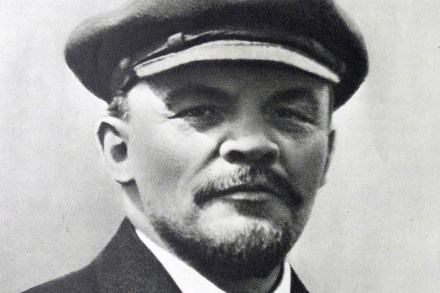
‘What brings strong personalities to power?’ asks the historian Ian Kershaw. ‘And what promotes or limits their use of that power?’ Those two questions are at the centre of this book, a study of some of the 20th century’s most important leaders. The result is partly an analysis of character, but also an attempt to gauge how much history’s main players directed world events, and how much events directed them. Kershaw begins with Lenin, whose rise was punctuated by huge strokes of luck. For one thing, his mother was willing to support him financially for his entire life. She must have had a very forgiving nature as, in Kershaw’s arrow-sharp description, Lenin was an exceptionally tedious, unpleasant man. He was ‘punctiliously insistent on pedantic forms of order.
Solving the mystery of mass almost ruined Peter Higgs’s life

From our UK edition

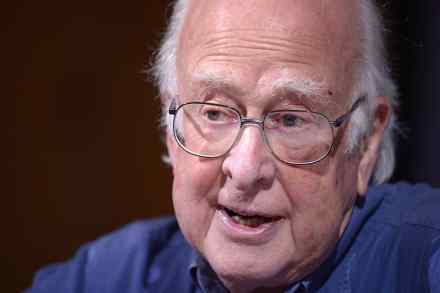
In 1993 William Waldegrave, the science minister, was looking into a project being planned on the continent. Cern, the European research body, was upgrading its particle collider to create what it called the Large Hadron Collider. This underground apparatus ran beneath the French-Swiss border and it was so vast that its diameter equalled that of the Circle Line. Two beams of subatomic particles called protons would be fired around this subterranean loop in opposing directions and smashed together at 99.99 per cent of the speed of light. The scientists’ aim was to prove the existence of a fundamental particle called the Higgs Boson, which they hoped would appear momentarily from the sub-atomic luminescence. Waldegrave grasped the significance of the project.

The deep roots of global inequality

From our UK edition

Thomas Piketty, the French economist who shot to fame for writing a colossal work of economics that many people bought but few actually read, recently received some advice. ‘What you write is interesting,’ a friend told him, ‘but couldn’t you make it a little shorter?’ Piketty has answered the call for brevity with a book which by his standards is the equivalent of a Post-it note. It’s certainly ‘brief”– but is it a ‘history of equality’? Alas, no. What we have instead is an eye-wateringly left-wing manifesto for dismantling economic inequality, both domestically and internationally.

The trouble with Thomas Piketty

From our UK edition

Thomas Piketty, the French economist who shot to fame for writing a colossal work of economics that many people bought but few actually read, recently received some advice. ‘What you write is interesting,’ a friend told him, ‘but couldn’t you make it a little shorter?’ Piketty has answered the call for brevity with a book which by his standards is the equivalent of a Post-it note. It’s certainly ‘brief’ – but is it a ‘history of equality’? Alas, no. What we have instead is an eye-wateringly left-wing manifesto for dismantling economic inequality, both domestically and internationally.

Could Putin be toppled? An interview with Richard Dearlove

From our UK edition

‘One of the things about being in Moscow as the guest of the Russian government,’ says Richard Dearlove, the former head of MI6, ‘is this real attempt to make you feel like an outsider.’ It comes, he says, ‘from a fundamental Russian suspicion of foreigners’: ‘The Kremlin is designed to intimidate you. It’s designed to make you feel as if you are at the centre of a great empire.’ Dearlove joined the Secret Intelligence Service in 1966, and though spies are always a little cagey about their past, it seems he served as an intelligence officer behind the Iron Curtain. After a stint as head of station in Washington, in 1999 he was appointed chief of MI6 by Robin Cook. It was then that he first met the man who is now Russian president.

Has liberalism destroyed itself?

From our UK edition

According to Vladimir Putin, liberalism is an ‘obsolete’ doctrine, a worn-out political philosophy no longer fit for purpose. In this well-timed, rather urgent book, Francis Fukuyama attacks that view and puts a vigorous case for the defence. Despite its faults, liberalism is a force for good, he says, and it remains the only political philosophy capable of taking on the authoritarians of Moscow and Beijing. But the despots are not the central focus of his argument. The biggest threats to the liberal society, he writes, come from within. In Fukuyama’s crisp retelling, the liberal ideal emerged in the aftermath of Europe’s wars of religion. The notion that people could only exist as part of a rigid group had led to division, antagonism and slaughter.

Has the past decade blunted our sense of the duty of care?

From our UK edition

Modern British history can be divided into two parts: before Covid and after. That is the central pillar of this at times arid but ultimately compelling account of British social policy since 1945. We recovered in the aftermath of the second world war. Can we do it again, post-pandemic? Peter Hennessy, a crossbench peer, starts with the observation that government has a duty of care to the people, a conviction that emerged in the aftermath of the war and underpinned the creation of the welfare state. At the centre of it all was William Beveridge – ‘dry, prickly and difficult, but a genius when it came to the social arithmetic of welfare’. His aim was to attack the five great social evils of the time: want, disease, ignorance, idleness and squalor.

Inside Putin’s mind: the lessons of Chechnya

From our UK edition

As far as Vladimir Putin is concerned, ‘we are nobody, while he who chance has enabled to clamber to the top of the pile is today Tsar and God’. So said Anna Politkovskaya, the eminent Russian journalist, in her book Putin’s Russia. She continued: ‘In Russia we have had leaders with this outlook before. It led to tragedy, to bloodshed on a huge scale, to civil wars. I want no more of that.’ She wrote those prophetic words almost two decades ago. A reporter for the Russian newspaper Novaya Gazeta, Politkovskaya came to prominence during the second Chechen war. Her accounts of that conflict, which officially lasted from 1999 to 2000, revealed Putin’s war against separatist rebels in the Caucasus as a hideous, corrupt sham.

Is it an exaggeration to talk of a ‘gender war’?

From our UK edition

According to Nina Power’s forceful and rather unusual What Do Men Want?, we in the West are currently engaged in a ‘battle over sex’. And while that has been going on, ‘another war is being waged. This one is against men, the whole damn lot of them!’ To back up this ‘war on men’ idea, Power cites, among other examples, I Hate Men, a book by the French writer Pauline Harmange in which she damns men as ‘violent, selfish, lazy and cowardly... men beat, rape and murder us’. Power’s argument is that the all-out assault on men has gone too far. The mistake, she says, is in ‘treating people as mere examples of a negative category, rather than as complex individuals in their own right’.

Love in a cold climate: Snow Country, by Sebastian Faulks, reviewed

From our UK edition

In the months before the outbreak of the first world war, Anton Heideck arrives in Vienna. Family life offered him the prospect of a job in his father’s meat factory, but he goes to the big city to start a career as a writer. What he finds is Delphine. They fall in love, move into a flat, then a house in the countryside outside Vienna; but when war breaks out the fragility of their happiness is brutally exposed. Snow Country moves from this doomed love to post-war Vienna, and to Lena, the daughter of an alcoholic part-time call girl. Lena eventually goes to Vienna, where she comes close to following her mother’s path, before finding work at a sanatorium near to where she grew up.

Startlingly sadistic: Once Upon a Time in Hollywood, by Quentin Tarantino, reviewed

From our UK edition

There’s no doubt that Quentin Tarantino is a movie director of brilliance, if not genius. But can he write? Well he can certainly tell a good story. What we have here is Tarantino’s ninth feature film, a 1960s Hollywood yarn about a fictional actor and his stunt double, but rendered in book form. Rick Dalton is the TV and B-movie actor, while his stuntman, Cliff Booth, ruined his own career by beating up Bruce Lee during a shoot. He’s now reduced to being Rick’s driver and drinking buddy. The two of them are on the slide, but things start to look up when Rick lands a role in a new cowboy TV drama.

It’s time the British faced some uncomfortable truths, says Matthew d’Ancona

From our UK edition

As Britain starts its long Covid recovery, are deeper problems lurking beneath the surface? Matthew d’Ancona certainly thinks so, and in this brief, rather shrill polemic, he urges us to face some uncomfortable truths. Uppermost in his mind is the threat posed by the populist right, which he worries will try to blame Britain’s post-Covid economic hardship on immigrants. D’Ancona suggests that a message of intolerance would fall on fertile ground. Britain, he says, is already in a state of disarray: Public confidence in our institutions has plummeted, as has the belief in a widely honoured social contract; the notion of shared universal rights and responsibilities is mortally threatened in many places by a sense of futility and voicelessness.

How the third world war was narrowly averted

From our UK edition

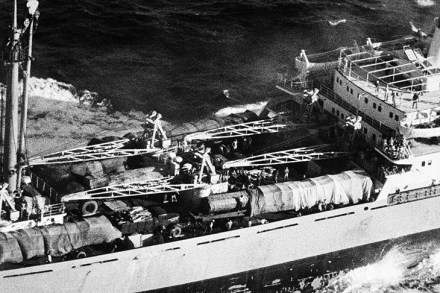
Nuclear weapons carry a payload of cold logic: if both sides have them, neither will ever use them. But in 1962, when the Soviet Union and US squared up to one another over Cuba, that logic broke down. As this superb new book shows, the Cuban Missile Crisis was the product of miscalculation, ignorance and staggering recklessness. The main culprit was Nikita Khrushchev. His first error was to mistake the US president for a callow weakling. ‘Don’t worry,’ he assured his Cuban friends, ‘I’ll grab Kennedy by the balls.’ After their first meeting, JFK remarked that negotiations with Khrushchev had been the ‘roughest thing in my life’.

The myth of ‘progressive’ thinking

From our UK edition

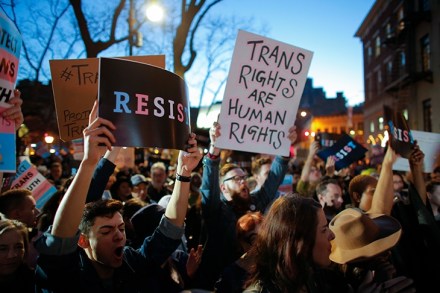
One of the guiding instincts on the political left is that society should be ‘progressive’. Social attitudes, politics and the economy should all advance together, making society fairer and more equal in the process. In this view, a tax can be progressive if it targets the income of the wealthy, just as a law is considered progressive if it protects the rights of a minority. This progressive worldview permeates almost all thinking on the modern left. And yet the contemporary idea of the progressive society has undergone a logical collapse. It has been driven that way by activists, some of whom represent groups with valid causes, but whose messages have been concentrated and distorted out of all proportion by the lens of social media.

A bored business administrator in Leicester puts the intelligence services to shame

From our UK edition

In the summer of 2012, a man was walking near Jabal Shashabo, a Syrian rebel enclave, when he spotted a group of turquoise canisters with what appeared to be tail fins attached. He picked up one of the objects and filmed it. Later he uploaded his video to YouTube. What were those strange turquoise cans? The answer was provided not by a UN investigator, war correspondent or military expert, but by a bored business administrator at his desk in Leicester. He had never been to Syria, spoke no Arabic and by his own admission knew nothing about weaponry. But Eliot Higgins had become fascinated by the war in Syria, and was following the social media feeds of people in the thick of it. He saw the YouTube clip and noticed the serial number ‘A-IX-2’.

The autistic mind could hold the key to the future

From our UK edition

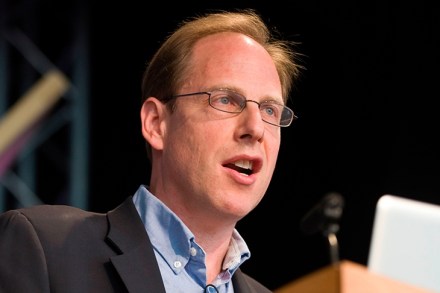
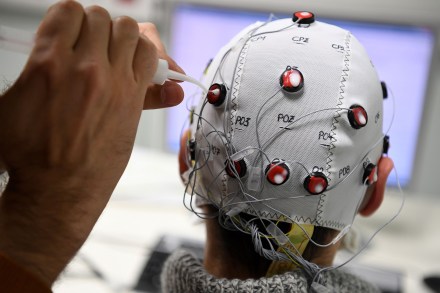
An old, cynical adage holds that ‘if all you’ve got is a hammer, everything looks like a nail’. I remembered that aphorism while reading the new book by Simon Baron-Cohen, one of the world’s leading authorities on autism, in which he unpicks the instincts and processes that have driven human progress. His conclusion? The great engine of our advancement as a species has been autistic behaviour. It’s a bold, rather startling claim. In this intriguing volume, the author explains that it is the habitual pattern-seekers who are responsible for human invention. These are people who display what he calls ‘the Systemising Mechanism’, which developed in humans around 70,000-100,000 years ago.

Shock and awe — what should we make of our Viking ancestors?

From our UK edition

In June 793, a raiding force arrived by boat at the island monastery of Lindisfarne, on the Northumbrian coast. The attack that followed was shockingly brutal. The English cleric Alcuin wrote: ‘Never before has such terror appeared in Britain… Behold, the church of St Cuthbert spattered with the blood of the priests of God, despoiled of all its ornaments.’ It was the first recorded Viking raid on Britain. Many others were to follow, and the image of the axe-wielding raiding party remains the stereotypical view of the Viking horde. The question that this dark, brilliantly written and absorbing book asks is: who were these people and where did all that violence come from?

Disrupting the world — from a small bedroom in Hounslow

From our UK edition

On 6 May 2010 the eurozone crisis was tearing through the continent. Greece was bankrupt, and it looked as though Spain or Italy could be next. Markets were on edge, volatility was high — and then something very strange happened. The S&P 500, one of the US’s main stock indexes, began to crash. It went faster and further than it ever had before, losing 5 per cent of its value in four minutes. The shock spread to the Dow Jones, which hurtled downwards. Financial markets across the globe were going haywire. The oil price started to fall. Shares formerly valued at $50 were suddenly trading at 0.0001 cents while others soared. In little more than 20 minutes, trillions of dollars had been wiped off the value of global markets.

Much-hyped technological innovation isn’t necessarily progress

From our UK edition

Modern advances in communication technology, computer power and medical science can sometimes be so startling as to seem almost like magic. It’s easy to get excited about it all — but what happens if we get too excited? What happens if we lean too heavily on technology, convinced that it can solve all our problems? What happens if we begin to see technology in an unrealistic, hyped-up way? These are the questions at the heart of Gemma Milne’s book. The answer — somewhat unsurprisingly — is that over-excitement is a bad thing. Hype can damage scientific progress and in some cases send it into reverse.

The nightmare of Okinawa made Truman decide to use the atom bomb

From our UK edition

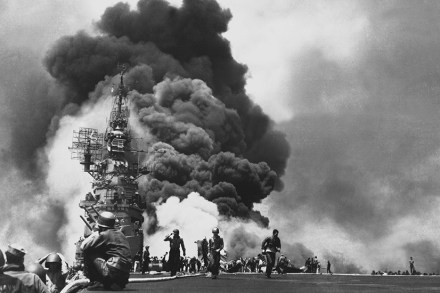
The US operation of 1945 to take the island of Okinawa was the largest battle of the Pacific during the second world war. Seven US divisions were used in the operation, approximately half a million men, along with the entire US Pacific fleet of 1,457 ships. The initial assault was led by a landing force of 183,000, which brought with it 747,000 tons of cargo. It was, according to this superbly researched, well-written book, ‘the greatest air-land-sea battle in history’. The US side was led by Lieutenant General Simon Bolivar Buckner Jr, the son of a famous Confederate general. His opponent on Okinawa was Lieutenant General Mitsuru Ushijima, whose force of 60,000 was vastly outnumbered — but the terrain was in his favour.