James Kirkup

James Kirkup

James Kirkup is a partner at Apella Advisors and a senior fellow at the Social Market Foundation.

J.K. Rowling and the death of nuance

From our UK edition

There are few good things to say about the public conversation around transgender issues, which all too often shows us — all of us — at our worst. But it also offers up a seemingly endless series of case studies illustrating wider problems with the way contemporary culture and institutions deal with difficult ideas. The latest lesson comes from Boswells School in Chelmsford, Essex. It has dropped J.K. Rowling’s name from one of its houses. Previously, she was honoured as a champion of self-discipline, regarded as a role model for children perhaps for her determination in starting her globally-successful series of books under difficult circumstances.

Most-read 2021: The shameful evacuation of Pen Farthing’s pets from Afghanistan

From our UK edition

We're closing the year by republishing our ten most popular articles in 2021. Here's number five, James Kirkup on the Afghan doglift: Two stories on the Afghan evacuation today combine to leave me full of bewildered rage. The first, from the Times: Britain may have to leave 1,000 Afghan support staff behindUp to 1,100 Afghan citizens entitled to come to the UK are likely to be left behind as British forces withdraw from Afghanistan in the next 48 hours.The RAF was expected last night to complete the evacuation of 15,000 Afghan and British citizens from Kabul airport despite the terrorist attacks. The military will have pulled out by the end of the weekend.

In praise of Harry Miller’s fight for free speech

From our UK edition

Almost three years ago, I spoke on the phone to a man called Harry Miller. A Lincolnshire businessman, he’d just been interviewed by the police because someone had complained about things he’d written, on Twitter, about sex and gender and transgenderism. He was angry, and rightly so. After all, he’d broken no law, and even the police force involved confirmed that. Instead, he was contacted and a record was made of his conduct under rules around ‘non-crime hate incidents’ (NCHIs). These were introduced after the 1993 murder of Stephen Lawrence, with the intention of giving the police a means of tracking behaviour that, while not crossing the threshold of a crime, gave a fair indication that a person’s actions were likely to escalate to full-blown crime.

Boris won’t change. Why should he?

From our UK edition

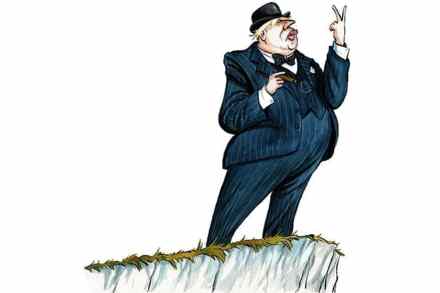
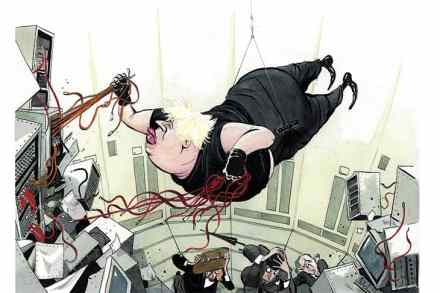
Boris Johnson is not short of troubles, or advice. Most of that advice, from colleagues and commentators alike, comes down to the same thing: he’s got to change. Change his team, change his approach. Change the way he does things. That argument is a familiar one at Westminster. When a Prime Minister hits trouble – and this one has hit it harder and faster than most – those of us who comment on politics reach for ‘change’ as the answer. It’s often good counsel, too. It is logical that the best way out of a situation is to change the fundamental causes of that situation. But there’s a problem with the argument that this Prime Minister – or any PM, come to that – must change. It won’t happen.

The sex work divide in British politics

From our UK edition

They seem like completely unrelated questions: 'Is sex work real work?, and 'Who will replace Yvette Cooper as chair of the Commons Home Affairs Committee?' Yet the two are deeply linked. Sex work first. If you’re not familiar with the phrase 'sex work is work', get used to it, because you’re going to be hearing it a lot more in public debate in the next few years. The phrase has been around since at least the 1970s, but is now being used with growing frequency and energy by people on the self-appointed 'progressive' side of politics. As a result, 'sex work is work' is looking like being a new dividing line for people who enjoy identity and culture politics.

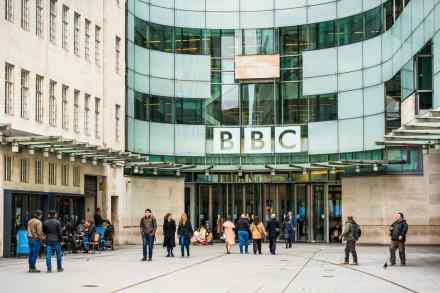
Gender is contentious. The BBC is pretending it isn’t

From our UK edition

The BBC has produced its annual 100 Women list, a showcase for women who have done interesting, important things. There’s a lot to like about this year’s list: half the women on it come from Afghanistan; some of them, tellingly, can’t be pictured for their own safety. Perhaps if fewer British resources had been deployed getting Pen Farthing's dogs out of Kabul in the summer, some of those women wouldn’t live in fear for their lives. But that’s another debate. There’s something else interesting about the BBC’s 100 Women, which says something about the Corporation’s ongoing struggle for impartiality. At least two of the people on the 100 Women list were born male and now identify as transwomen.

Who cares about a power cut in the north east?

From our UK edition

How long could you cope without electricity, dear reader? And how many days could you endure without running water? Imagine your home was without power or water for four or even five days. What would you expect to happen? How do you think your country and your government would respond to your plight? There’d be a bit of a fuss, right? I mean, this is an advanced industrialised economy where we have, quite reasonably, come to take the supply of basic utilities as a given. If thousands of people were left without power, heat and water -- and in winter too – for the better part of a week, it would be a deal, wouldn’t it? Actually, no. Not if those people were somewhere in the north of England.

In praise of Stonewall

From our UK edition

This morning saw a profound breakthrough in the trans debate. I say that on the basis of an interview Nancy Kelley, Stonewall's CEO, did with the BBC’s Emma Barnett on Woman’s Hour.  What’s important is not really anything that Kelley said, though some of that was indeed interesting and I’ll come to it in a second. What matters is that the interview took place at all, since that constitutes a significant shift in the way Stonewall does its work. Stonewall's instinct has been to largely avoid mainstream media and other political debates about its work on trans issues that is now its primary focus.

The vaccine cheer is gone

From our UK edition

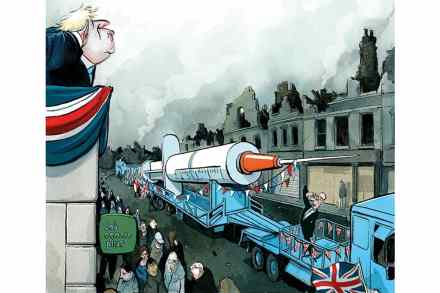
I am 45, which means I’ve now had my third Covid vaccine. The experience of getting that injection crystallises a thought: Britain is starting to take the miracle of vaccination for granted, and that spells trouble for Boris Johnson. I don’t use that word ‘miracle’ lightly. The development and distribution of working vaccines with such speed and scale is surely a historical event, and one that should give both big-state left-wingers and the free-market right pause for thought, since it relied on the partnership between public and private. The politics of the vaccine have always been slightly under-appreciated in the Westminster village.

Paterson resigns. Johnson is diminished

From our UK edition

What are the long-term political implications of the government’s clown show over Owen Paterson? My guess is that voters won’t pay too much attention, but MPs certainly will. And that could matter at least as much. Start with the public. Do voters feel angry that their Prime Minister doesn’t play by the rules — written and unwritten — of politics and government? There’s a lot to be angry about, and ripping up the rules against cash-for-lobbying certainly justifies rage. And maybe in time, the idea of the PM as leader of a privileged clique who don't play by the same rules as the rest of us will indeed prove harmful to the Conservatives’ vote.

In praise of MPs

From our UK edition

My first full-time job, at the age of 18, was working for an MP. In the following 27 years, almost my entire career has been spent in or near Westminster. I know and have known lots of MPs. To coin a phrase, some of my best friends are members of parliament. This, of course, means I’m biased on the topic of MPs, inclined by reason or familiarity to think well of them as a group. But it also means, I hope, that I have a bit of knowledge — knowledge that might be worth sharing as the Commons remembers Sir David Amess and James Brokenshire. It’s hard to generalise about an inherently diverse group, but MPs as a whole are not, in an important way, like the rest of us. To reach the Commons requires a type of drive and motivation that most people lack.

The BBC’s relationship with Stonewall is finally being scrutinised

From our UK edition

I have often criticised BBC journalism on the issues of sex and gender because that journalism has often been quite bad. So it’s all the more important to for me to highlight instances when the Corporation does good journalism here. Stephen Nolan of the BBC has done that this week, and more. You might not be aware of the series of outstanding podcasts that Nolan released this week, examining the influence that Stonewall, a charity that lobbies on sex and gender issues, has over public bodies including the BBC itself. One reason you might have missed those podcasts is that the BBC itself has hardly bothered to promote them, even though they represent the very best of its journalism, the sort of inquiry that a public service broadcaster exists to carry out.

Does Sunak care about net zero?

From our UK edition

The biggest story of the Tory conference wasn’t about a gaffe or a controversial statement. It was about something that wasn’t said, and the person who didn’t say it. Rishi Sunak’s silence on net zero is a big deal, as the next few weeks will prove. The Chancellor didn’t mention net zero in his conference speech. So what, you might ask? After all, it’s an environmental thing and he’s Chancellor, right? No. net zero is an economic story, and a big one. It’s about growth, investment, public spending, tax and jobs. According to Sunak’s Treasury: This will be a collective effort, requiring changes from households, businesses and government.

The gas crisis shows how important net zero is

From our UK edition

This gas crisis has hit Britain because we rely too much on gas. That’s not a reason to abandon net zero. It’s a reason to do it. Gas prices are soaring, energy companies are failing. A few people are blaming government environmental policies for that. Their apparent hope is that Boris Johnson proves wobbly on green causes and backs away from net zero. I think they’re wrong, both about the policy and about the politics. Start with the policy. The net zero decarbonisation of the UK economy isn’t the cause of the gas price crisis. It’s the solution.

No, Gavin Williamson wasn’t the worst education secretary ever

From our UK edition

Gavin Williamson was the worst education secretary in history, according to Sam Freedman, a former Tory education adviser. In the wake of Williamson’s departure from the Department for Education, many other commentators are being even less generous. No one has a good word to say about the man. No one except me, that is. I write here in defence of Gavin Williamson. To be utterly clear, my defence is a very narrow one. I am speaking up for Williamson over only a portion of what he did as Education Secretary, and not the largest part either. While a lot of things Gavin Williamson did were indeed dismal, not everything he did was bad or wrong.

Boris should keep copying Blair

From our UK edition

Having written here at least once before that Boris Johnson is the heir to Blair, my first thought on the Prime Minister's tax-to-spend announcement on the NHS and social care is a petty one: I told you so. The striking thing about making the Boris-Blair comparison is how resistant some people are to it. Among Bozza fans on the Leave-voting right, there is often fury at the suggestion that their man, the hero of Brexit, is anything like the Europhile they used to call ‘Bliar’. On the left, there is an almost pathological determination to believe that a Tory PM must, by definition, be a small-state free-marketeer intent on starving and privatising public services. That latter point is why Labour people sometimes struggle to respond to Johnson.

The shameful evacuation of Pen Farthing’s pets from Afghanistan

From our UK edition

Two stories on the Afghan evacuation today combine to leave me full of bewildered rage. The first, from the Times: 'Britain may have to leave 1,000 Afghan support staff behindUp to 1,100 Afghan citizens entitled to come to the UK are likely to be left behind as British forces withdraw from Afghanistan in the next 48 hours.The RAF was expected last night to complete the evacuation of 15,000 Afghan and British citizens from Kabul airport despite the terrorist attacks. The military will have pulled out by the end of the weekend.Ben Wallace, the defence secretary, said that between 800 and 1,100 Afghan interpreters and other support staff were unlikely to make it out. Up to 150 Britons are also likely to be left behind.

Where is Britain’s anger about Afghanistan?

From our UK edition

This is an age of anger. Social media amplifies rage and exaggerates polarisation. Twitter isn’t Britain, but too many people in politics and journalism spend too much time on the site and – consciously or not – start to mistake its shallow extremes for real public opinion. The result is a public discourse more often driven by fury than understanding. Just about any question or issue can unleash this lab cultured rage. Some people are angry about being asked to wear a mask to avoid spreading a disease that might kill someone else. Some people are angry about an alpaca. So where’s the anger about Afghanistan? A Suez moment is passing almost unremarked Afghanistan, where two decades of Western intervention is ending in bloody failure.

The cost of net zero

From our UK edition

35 min listen

In this week’s podcast: First up, to deny the man-made climate crisis we now find ourselves in would be an act of wilful delusion. But what is the right way for the UK to try and minimise this looming disaster? In our cover story this week Ross Clark looks at the financial viability of the government’s central proposal: getting to net zero. Lara Prendergast talks to him along with James Kirkup, chair of the Social Market Foundation, who writes in this week’s magazine saying that the cost for net zero is more than worth it. (00:48)‘Ten years ago, electric cars were a work of science fiction, now the best-selling car in the UK in June was the Tesla.

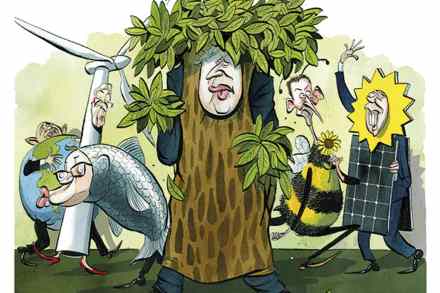
In defence of net zero: yes, we can afford it

From our UK edition

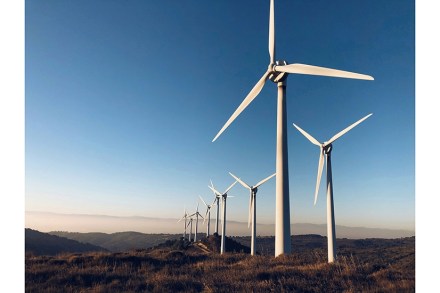
Late in 2013, David Cameron snapped. ‘Get rid of all the green crap,’ the then prime minister told energy ministers. His demand came after a backbench revolt over the surcharges tacked on to household energy bills to support onshore wind power. Not for the last time, his decision was based on a spectacular failure to see one of the big trends of the age: the stunning fall in the costs of renewable energy that was already under way. In the past decade, the cost of generating electricity from onshore wind has fallen by 40 per cent. For offshore turbines, it’s down almost a third. Globally, it’s now generally cheaper to construct and run new renewable generation than it is to build a new station to burn fossil fuels.