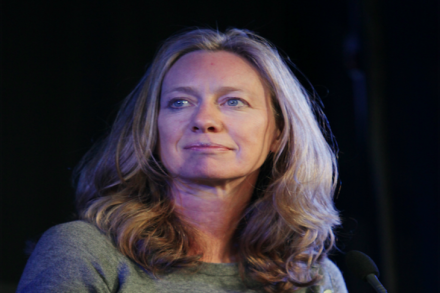
James Kirkup

James Kirkup

James Kirkup is a partner at Apella Advisors and a senior fellow at the Social Market Foundation.

Is the BBC scared of the transgender debate?

From our UK edition

I like the BBC. I like the idea of a national broadcaster and I like a lot of BBC output. I admire many BBC journalists – the Corporation employs some of the very best. I am not a Beeb-basher, not least since so many of the people who bang on relentlessly about the BBC’s supposed biases are stupid or horrible or both. I say these things because for all my affection for it, this is an article about an area where the BBC is sometimes getting things wrong. Some recent BBC coverage of transgender issues fails to meet the usual standards of its journalism. Those failings, in turn, raise some wider questions for the BBC on this topic. The first piece that isn’t up to scratch is this Reality Check about transgender prisoners, published earlier this week.

Is the BBC scared of the transgender debate? | 15 August 2018

From our UK edition

I like the BBC. I like the idea of a national broadcaster and I like a lot of BBC output. I admire many BBC journalists – the Corporation employs some of the very best. I am not a Beeb-basher, not least since so many of the people who bang on relentlessly about the BBC’s supposed biases are stupid or horrible or both. I say these things because for all my affection for it, this is an article about an area where the BBC is sometimes getting things wrong. Some recent BBC coverage of transgender issues fails to meet the usual standards of its journalism. Those failings, in turn, raise some wider questions for the BBC on this topic. The first piece that isn’t up to scratch is this Reality Check about transgender prisoners, published earlier this week.

Why don’t the pro-EU crowd join the Tories?

From our UK edition

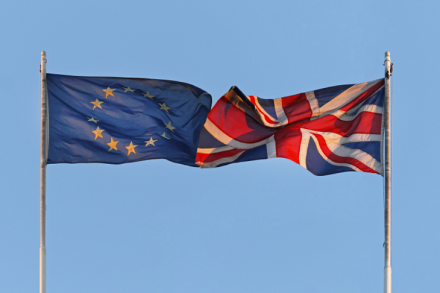
Theresa May has a rare talent for turning decent policy into a political problem. Her general election manifesto last year contained an unusually high number of quite sensible and even sometimes progressive ideas: it’s quite common around Westminster these days to hear Tory and Labour people alike admit that things like the “dementia tax”, a full-scale review of post-18 education and some technical-sounding stuff on corporate governance were all, in retrospect, quite solid, worthy attempts to address big public policy problems. The problem, of course, was selling that stuff to the punters. Now we have the Chequers deal on Brexit.

Are female prisoners at risk from transgender inmates?

From our UK edition

Earlier this week, it was reported that an inmate in HM Prison New Hall, a women’s prison, had been charged with sexually assaulting four female inmates. According to the Sun, the inmate is transgender. Born male and still possessing male anatomy including male genitals, she now identifies as female. Because of that “identification”, the inmate was housed in the female prison estate; in broad terms, the Ministry of Justice says that transgender prisoners should be housed in the part of the prison system that corresponds to their gender identity.  That policy has many implications, one of which is that it is possible for a person with male anatomy, hormones and outlook, to be confined in prison with inmates who are anatomically female.

Tories – and Brits – are warming to immigration

From our UK edition

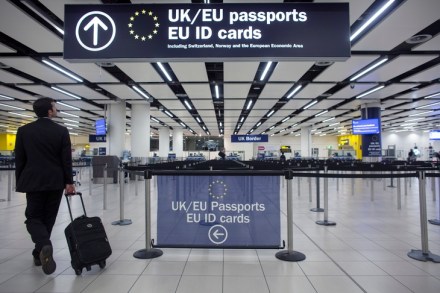
In the dark, foggy night that is the Brexit debate, immigration is the dog that has not yet barked. The Chequers agreement contains a promise to formally end free movement, but also to replace it with a “mobility agreement” that could well mean EU migration continues at more or less its current level. Would that provoke a furious public backlash? There are growing signs that some voters are more relaxed about immigration than at the time of the referendum, and more aware of its economic usefulness. Could Theresa May ask the British people to accept a fairly liberal European immigration regime?

The EU is now in control of Britain’s Brexit destiny

From our UK edition

The list of things about the European Commission that many people at Westminster don’t understand is long. My favourite is that in quite a lot of the EU, the Commission, regularly accused in Britain of spewing out red tape, has often been accused of wanting to deregulate domestic markets and expose cosy economic arrangements to the bracing winds of “Anglo-Saxon capitalism”. Today though, what’s more important is this: the Commission understands British politics. Understands it very well, in fact, and sometimes better than people in the Westminster village. Brexit is a case in point.

Labour and Tories finally see the truth about the gender debate

From our UK edition

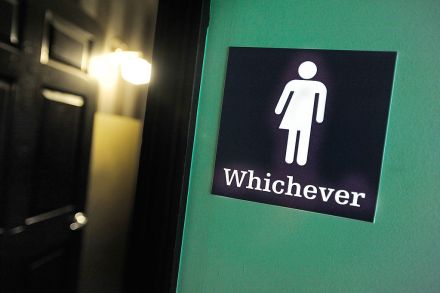
You might not have noticed that yesterday the Government announced possible changes to the Gender Recognition Act. That’s what ministers wanted: the announcement was carefully made late in the day and was partly obscured by an earlier promise to ban “conversion therapy” that tries to stop gay people being gay. Why did the Government bury its transgender announcement? The approach was very different last autumn when the Prime Minister herself fronted a prominent media drive which Tory spinners said showed that the Conservatives were inclining towards a system of “self-identified” gender.

Why are women who discuss gender getting bomb threats?

From our UK edition

Last night, some women got together in a room to talk about law and politics and sex and gender. The meeting, in Hastings, was organised by a group called A Woman’s Place UK, which is concerned about the way politics and public debate is developing with regard to the legal rights of transgender people and women. This stuff is complicated and, to many people, obscure. I’ve written about these issues quite a bit here, and while quite a lot of people seem keen to read about the transgender debate, I’m under no illusions that this has broken through into wider public consciousness.

QE is the biggest thing in politics but politicians aren’t talking about it

From our UK edition

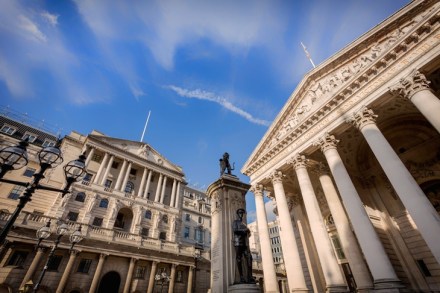
Essay question: what was the most consequential British public policy decision taken in the last 10 years? Clue: it wasn’t David Cameron’s call on an EU referendum. It wasn’t even done by a politician. The biggest thing in British public life since 2008 has been the Bank of England’s emergency stimulus package for the UK economy. It probably averted an even worse economic crisis. It possibly allowed or perhaps necessitated the Coalition’s fiscal austerity. And it skewed the distribution of economic advantage in favour of people who own stuff, especially houses. [caption id="attachment_10104672" align="aligncenter" width="502"] How the assets of the rich have soared thanks to QE and low interest rates.

Why Brexit will never end

From our UK edition

I hate to take issue with a fellow Spectator writer, but Robert Peston’s revelation that a “no deal” Brexit is now off the table strikes me as a prime example of Westminster’s ability to ignore the bleeding obvious for months on end then talk cobblers in an authoritative voice when finally forced to confront reality. Robert is far from alone in his conclusion about last night’s Commons vote. To be honest, I’m just taking issue with his post because the spectacle of Spectator writers disagreeing seems to interest some people, probably because they struggle with the idea of one publication publishing multiple and contradictory viewpoints.

Why Brexit will never end | 13 June 2018

From our UK edition

I hate to take issue with a fellow Spectator writer, but Robert Peston’s revelation that a “no deal” Brexit is now off the table strikes me as a prime example of Westminster’s ability to ignore the bleeding obvious for months on end then talk cobblers in an authoritative voice when finally forced to confront reality. Robert is far from alone in his conclusion about last night’s Commons vote. To be honest, I’m just taking issue with his post because the spectacle of Spectator writers disagreeing seems to interest some people, probably because they struggle with the idea of one publication publishing multiple and contradictory viewpoints.

Boris Johnson must learn there is more to life than Brexit

From our UK edition

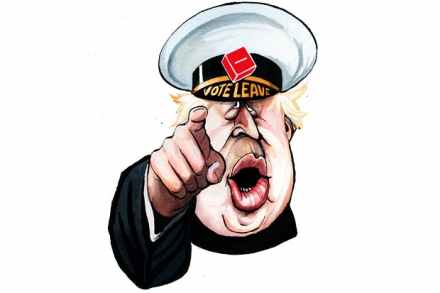
I know we’re not supposed to be shocked or even surprised by anything Boris Johnson says any more – “Boris is Boris” and all that. But still I find that one of the comments revealed in Alex Spence’s excellent Buzzfeed scoop about the Foreign Secretary is gnawing at me. It’s this: “It’s so small and there are so few firms that actually use that border regularly, it’s just beyond belief that we’re allowing the tail to wag the dog in this way. We’re allowing the whole of our agenda to be dictated by this folly.” He was referring to the small matter of the border between Northern Ireland and the Republic of Ireland, to which so much attention is paid in the Brexit talks.

Could a messy Brexit elevate Jeremy Hunt to the top?

From our UK edition

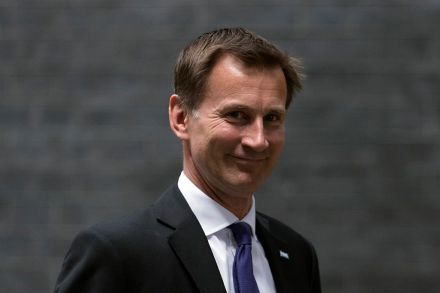
Jeremy Hunt is now Britain’s longest-serving health secretary. Having held the post since September 2012, he has been in office for almost six of the 70 years of the NHS that the Government will shortly mark with a major new funding settlement. The occasion seems appropriate for an evaluation of Hunt the politician, as distinct from Hunt the health chief.  Because health is a job that tends to consume and define its holder, we don’t hear much about Hunt except as part of the conversation about the NHS, its funding and its performance. It’s an obvious point today, but reflect on how resilient Hunt has been. Health is a brutal job, especially for Tories.

Can Ruth Davidson snap Theresa May out of her Brexit delusion?

From our UK edition

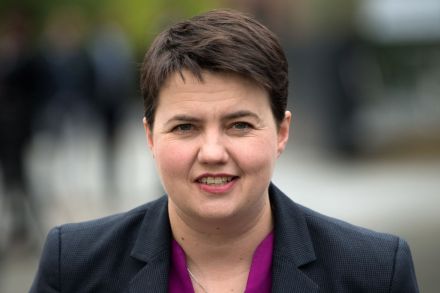
Ruth Davidson’s Glasgow speech is making headlines about the NHS because that’s where most political village attention is right now. We all know that a big government announcement on health funding is coming and Davidson knows it too. As a former hack, she also knows how to hijack someone else’s story, so her speech is deftly done. (In the trade, this would be known as byline banditry, and it’s Jeremy Hunt’s byline she’s attempting to bandit, or at least share.) But I’m more interested in what she said about immigration. Yes, she repeated a previous call to scrap the stupid “tens of thousands” target because it’s, well, stupid. That’s not news because she’s said it before and the target has been stupid before.

The Catch 22 of Labour’s gender policy

From our UK edition

Earlier this week, I wrote about David Lewis, a Labour member who was allowed to stand for election as a constituency women’s officer on the basis that he identifies as a woman under some circumstances. That report seems to have drawn some attention, not least from Labour HQ. David Lewis was told on Tuesday night that he has been suspended from the party and cannot therefore stand for election as Basingstoke CLP women’s officer. I’ll try to unravel the implications of that in a moment, but first I want to say something about David Lewis and the general debate around this case. As is usual with debates around gender, a lot of people have strong feelings about this case, and have expressed them bluntly.

Meet the man standing to be a Labour party women’s officer

From our UK edition

Sometimes it’s hard to be a woman. Except in the Labour Party, when it’s surprisingly easy. Just ask David Lewis. David, 45, is a member of the Labour Party. After several years of supporting the party, he became a full member last year having been “inspired” by Jeremy Corbyn. Tomorrow, David will be a candidate for election as an office-holder in his Constituency Labour Party in Basingstoke. He is standing for election as women’s officer, a post that Labour rules say can only be held by a woman. David is standing for that post because he is a woman. On Wednesdays, at least. When we spoke yesterday, he put it like this: “I self-identify as a woman on Wednesdays, between 6.50am when my alarm goes off and around midnight when I go to bed.

The silencing of the lesbians

From our UK edition

Even I’m a bit surprised by this and I’m writing it, but this is an article about lesbians. I’m writing about lesbians because some of them believe they are currently the subject of political failure. They believe that the people, organisations and institutions that are supposed to speak and stand up for them and their interests are not doing so. I think those concerns are reasonable and should be addressed. A political system that’s supposed to represent the views of everyone in it really isn’t working for the women I’m talking about here. This is, of course, about gender and the debate around gender and sex. Quite a lot of the people who have questions and concerns about law and practice around transgender issues are lesbians.

The Tories should learn from Wandsworth – not celebrate it

From our UK edition

I live in Wandsworth. It’s nice. That’s not a political comment, just an observation on the borough. OK, it’s not edgy or cool or even wildly imaginative, but neither am I. It is also the sort of place the Tories should win at a canter. There’s a reason it’s called a flagship council, after all. It’s still Conservative today and Tories are celebrating that: Theresa May has been in the borough lauding “success” and noting that Labour threw a lot of resources at Wandsworth and appeared to believe that it really might turn the borough red. Of course, a win’s a win and nothing else really matters, but I can’t help thinking May might have found a better place to celebrate the absence of Tory disaster in the local election stalemate.

Why are some MPs trying to shut down the transgender debate?

From our UK edition

Even if you don’t know who Stephen Doughty MP is, if you’re vaguely familiar with the history of New Labour, you’ll know his story: Oxford, a job for a senior Labour politician and a brief spell working in charities. Then selection for a safe seat in his early 30s, thanks to a combination of talent and friends in the right places. Now 38 and having resigned from Jeremy Corbyn’s front bench over, well, Jeremy Corbyn, Doughty sits on the Home Affairs Committee, which, among other things, is inquiring into hate crime, and its causes. To that end, the committee last week took evidence from a bunch of newspaper editors about the way their papers covered groups including British Muslims and transgender people.

If Mumsnet can stand up for free speech, why can’t MPs?

From our UK edition

OK, I admit I’m a bit of a Mumsnet groupie, but this needs to be said: Justine Roberts is great. Roberts is the founder of Mumsnet who has this week come out fighting for free speech and sensible political discussion, both of which are at risk in the debate about gender laws. Why Mumsnet? Because a website previously best known for chat about childcare, biscuits and something called a penis beaker has developed an important role in an important political debate.