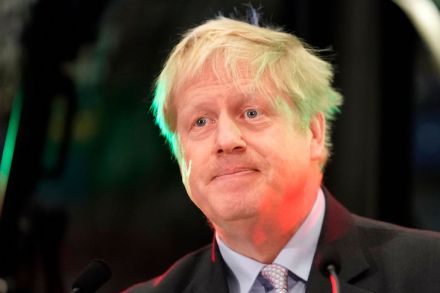
James Kirkup

James Kirkup

James Kirkup is a partner at Apella Advisors and a senior fellow at the Social Market Foundation.

Get ready for Boris vs the Bank of England

From our UK edition

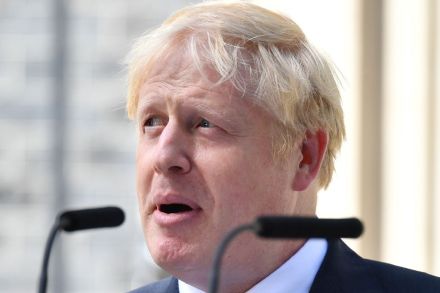
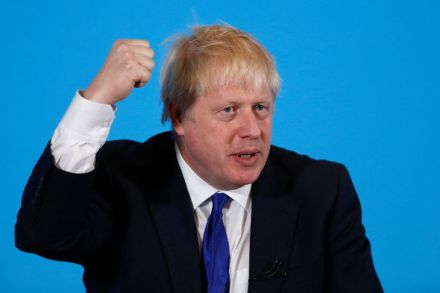
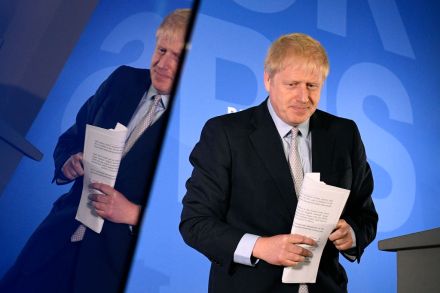
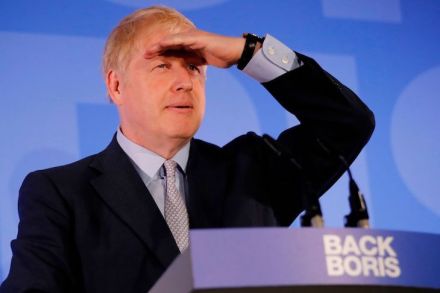
Westminster is, naturally, fixated on Boris Johnson and his first speech since his Conservative leadership victory. But it’s just possible that the most interesting and important speech of the day took place in Scunthorpe. That’s where Andy Haldane, chief economist of the Bank of England was delivering a speech called 'Climbing the Jobs Ladder'. His speech was, nominally, about wage progression and the quality of employment. But about halfway through, the speech becomes something very different, something that looks an awful lot like a warning to a new prime minister: don’t bank on the Bank to bail you out over Brexit.

It’s time to listen to the NHS gender clinic whistleblowers

From our UK edition

Why are increasing numbers of children designated as transgender? Are the resulting medical interventions safe and justified and in the best long-term interests of those children? These are questions of public interest. Some of the answers being offered are troubling, to say the least. One such answer came this week, and deserves attention from politicians and journalists. It’s an open letter from Dr Kirsty Entwistle, formerly a clinical psychologist at the Gender Identity Development Service, the main NHS service for children who might be transgender. It’s a long piece and should be read in full.

What Tories can learn from Theresa May’s mistakes on immigration

From our UK edition

Percy Bysshe Shelley’s Ozymandias is often taught to schoolchildren, who read it as a warning about the fragility of human power. Conservatives should study it now and ensure they take an opportunity to learn from Theresa May’s mistakes on immigration. If there was one issue that helped May become, for a short time, a figure of “cold command” over her party, it was immigration. As home secretary and then Prime Minister, she was the senior figure at the top of the Conservative party who consistently took the hardest line on the issue.

Some women have penises. If you won’t sleep with them you’re transphobic

From our UK edition

I’m bored with writing about politicians and Brexit so this is an article about genitals instead. Feel free to make your own jokes about the sentence above, but I promise what follows is not funny. You could not, as the old phrase goes, make it up. Most of us, I think, like to see ourselves as tolerant and open-minded. Live and let live is the prevailing social attitude of our times. For all the division and acrimony in political debate and online, British society is, by international and historical standards, strikingly liberal and tolerant. This is a good thing. People should not face abuse or exclusion or hostility because of who or what they are; we all should be judged on what we do. The eternal question of tolerance is how far it extends.

Who will defend the civil service from the Revolutionary Conservative Party?

From our UK edition

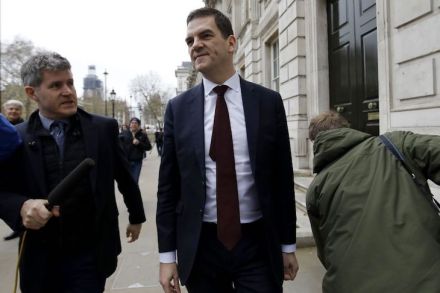
It's said that when Iain Dale, overseeing last night’s Conservative hustings in Manchester, announced the news that Oliver Robbins, the senior civil servant in Theresa May’s Brexit team, was leaving his post and the Civil Service, many of the Tory audience cheered. https://twitter.com/shippersunbound/status/1145056962800959488?s=21 By doing so, they underlined several of the most striking, and troubling, elements of Britain’s Brexit drama. First, the cowardice of politicians who seek to blame the civil service for failing to deliver impossible goals and for pointing out that some things are impossible. Olly Robbins has been traduced, and cannot – yet – even answer those who traduce him.

Why David Gauke is key to the survival of the Tory party

From our UK edition

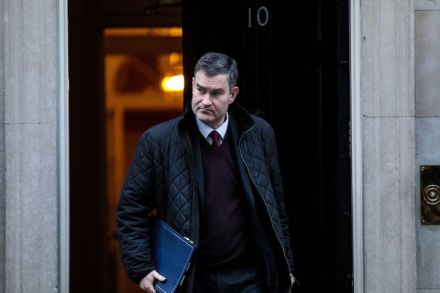
Everyone knows the story of how a small number of Conservatives will cast a vote that decides something of great and lasting importance. But the group of Tories is much smaller than you think, and they vote much sooner than you imagine: on Friday, in fact. I am not referring to the 160,000 members of the national Conservative party. I am talking about the 600 who belong to the South West Hertfordshire Conservative Association. On Friday 28th June, those members will be invited to a special meeting to vote on a motion of no confidence in the Conservative MP for South West Herts, David Gauke. According to the motion, Gauke has 'wilfully obstructed' the implementation of the 2016 referendum result. It does not specify how Gauke, the Justice Secretary, has done this.

This tape will always threaten Boris Johnson

From our UK edition

It’s not hard to work out the 'lines to take' that are being handed out from Boris Johnson’s team to his surrogates in politics and the media after the police were called to the flat he’s been living in. 'It’s a private matter. It’s an invasion of privacy. The neighbour who taped the incident, called the cops and tipped The Guardian (yes, The Guardian) clearly has an agenda. This is the same sort of smear they’ve tried against poor old Mark Field. All couples have rows. It was just a domestic. Besides, women commit at least as much domestic violence as men.

Boris Johnson should want to face Rory Stewart

From our UK edition

You don’t have to be a conspiracy theorist to look at recent media coverage of the Tory leadership race and conclude that Bois Johnson is a bit scared of Rory Stewart. Johnson’s fiends and surrogates have been training their fire on Stewart since the weekend, sometimes subtly and sometimes not. This started when Matt Hancock dropped out, putting his backers in play. Then Stewart’s performance in Sunday’s Channel 4 debate convinced a number of his colleagues that he could survive the second ballot and thus qualify for a BBC debate tonight. A debate that Johnson has reluctantly agreed to be in. Reluctantly because the entire Johnson strategy in the race is about avoiding engagements where he could be bloodied. As the overwhelming favourite, this is his to lose.

The problem with Theresa May’s desire for a legacy

From our UK edition

In less than a month, Theresa May’s premiership will be history. If she is remembered at all, it will mainly be for Brexit. She took on a near-impossible task, made it harder (her misjudged ‘red lines’ from autumn 2016 will always haunt her), and finally failed at it. That had many consequences, not least the neglect of domestic policy. The burning injustices she so memorably listed on the Downing Street step are still blazing away. Poor social mobility, health inequality, racial bias in the justice system, a dysfunctional housing market and poor provision for mental health problems – all remain unresolved.

Munroe Bergdorf, the NSPCC and the failure of the media

From our UK edition

It’s exam season, so here’s a test, suitable for anyone interested in how the media and public conversation work in 2019. Here is a sequence of events: A charity involved in the safeguarding and welfare of children appoints a celebrity ambassador. It emerges that the celebrity has a history of asking children in emotional distress to contact them online. This appears to contradict the charity’s safeguarding guidance, which is that children should not share personal information with strangers online. It emerges that the celebrity has a history of posing for pictures for publication in sexualised clothing and poses, including for Playboy.

Rory Stewart is a reminder of what Boris Johnson used to be

From our UK edition

Britain is not quite in the grip of Rorymania. He gave a properly impressive speech this week and he has spoken with honesty and clarity about politics and policy. But Rory Stewart isn’t going to be our next prime minister and it’s hard to see him remaining in Cabinet for much longer. He’s a hit on Twitter, but Twitter is not real life. Most voters still don’t know who he is. None of that means what Stewart has done during the Conservative leadership election is irrelevant or unimportant. He, like Matt Hancock, has run towards conversations about difficult and important things like social care when many of their colleagues have run away.

Donald Trump has done Britain a favour with his NHS grab

From our UK edition

“Everything with a trade deal is on the table...so NHS or anything else, a lot more than that". That was Donald Trump talking about a possible UK-US trade deal after Britain leaves the EU’s common trade policy. Cue political drama, headlines and Conservative leadership contenders trying to work out what to say when someone asks them if they would be willing to include NHS procurement in any future trade talks. (Not for the first time, Matt Hancock was first off the blocks, tweeting to rule it out.) There will doubtless be a great deal of good analysis of what this comment means for the Tory leadership race: does it harm Boris Johnson, whom Trump has previously endorsed? I have nothing to say on that.

In praise of Matt Hancock’s Brexit plan

From our UK edition

Matt Hancock is the youngest of the candidates running to be Conservative leader but he’s starting to look like the grown-up in the room. At the weekend he published the outline of a Brexit plan that might just prove the basis for a way ahead that averts either economic or political disaster. The plan, as I read it, entails accepting the Withdrawal Agreement as negotiated by Theresa May is the only viable way to avoid a No-Deal exit in October and shifting the focus of British ambitions to the Political Declaration on the future relationship between the UK and EU that would follow Withdrawal. That’s both sensible and smart.

The question that no-deal Brexiteers must answer

From our UK edition

The fact that the Confederation of British Industry is directly intervening in the Conservative Party leadership contest – to warn against a no-deal Brexit – should be remarkable, not least for what it says about how some business leaders now doubt the Conservative party's instincts and sympathies. The fact that this isn’t bigger news says a lot about recent politics, including how little force such warnings have for many people. The concept of 'Project Fear' is powerful and convinces many to discount warnings like today’s as mere scaremongering and shroud-waving. To a lot of people, no deal holds no fear and should be positively embraced. A lot of those people have a vote on who becomes our next Prime Minister. I am very much not relaxed about no deal.

The Tories will now regret not giving Nigel Farage a peerage

From our UK edition

Nigel Farage has been on the radio this morning, almost plaintively offering to be part of a Government team renegotiating the Brexit Withdrawal Agreement. Maybe it’s a genuine offer in good faith. Maybe it’s a political wheeze, meant to make him and his Brexit Party sound like a proper, grownup organisation. And maybe it’s revealing something about Farage and what he really wants. I don’t claim to know Farage well, or even at all. I’ve interviewed him several times and spoken to him many times less formally. I’ve also spoken to many people who have worked with him over the years. And one abiding impression I’ve taken from all that is that Nigel Farage, the ultimate outsider, wants to be accepted and embraced by the insiders.

In defence of Theresa May

From our UK edition

Pretty much all the bad things that people are saying today about Theresa May are true. She’s bad at politics, bad at communicating, bad at dealing with colleagues. She created the conditions that made her job as prime minister handling Brexit almost impossible. Her 'red lines' in the autumn of 2016 gave Britain almost no room for manoeuvre and made the sort of cross-party consensus approach to Brexit that is the logical response to a 52:48 referendum result practically impossible. Her 2017 general election cost her the Commons majority that might just have made that hardline approach viable. Her response was quintessentially Theresa May: she compromised on policy but not on politics. When you hear people today scoffing that May didn’t do compromise, they’re wrong.

Can Brexiteers trust Boris Johnson to deliver a ‘real’ Brexit?

From our UK edition

The current Westminster consensus that Boris Johnson is the next Tory leader and prime minister raises all sorts of thoughts. Among them is to speculate about the sheer terror this consensus should strike in the man himself, given that Westminster consensus has been wrong about basically everything in the last three years.  For what it’s worth, I also think Johnson is the favourite to replace Theresa May, but I also thought Remain would win the referendum, that May could never be PM, and that she would win her general election with an increased majority. I suspect most of the people now sagely tipping Johnson as a dead cert made similar predictions.   But we are where we are, and so all the chat around the Commons is about prime minister Boris Johnson.

The truth about David Cameron and the ‘mad, swivel-eyed loons’

From our UK edition

Six years ago this week, I went to dinner with four friends. Three were journalists: James Lyons, Sam Coates, Tim Shipman. The fourth does something else; I’m not going to drag him into this tale. Dinner was in the Blue Boar, a cornerstone of Westminster entertaining and then, as now, the sort of place you bump into all sorts of political people. Which is exactly what happened that night. A senior person in the orbit of David Cameron passed our table. Spotting us, the person stopped to chat, gossip and trade information. Business as usual for Westminster, though what happened next was a little out of the ordinary. First, a bit of context. This was May 2013 and Cameron was struggling with backbench Tory discipline.

Theresa May’s successor should be careful what they wish for

From our UK edition

Let’s assume this really is the start of the last act of Theresa May’s premiership. Let’s assume too that her Withdrawal Agreement dies a fourth and final death in the Commons in early June. The Conservatives will then go looking for a new leader and prime minister. There are already no end of candidates.  But I have a question: why would anyone want the job in those circumstances? If the WA dies, there are only two options left for Britain: leave with no deal on October 31, or revoke Article 50. Anyone who tells you there is a third option is trying to sell you something.  Yes, I know that various people suggest that a better form of exit deal is possible. It’s not.

What the next Tory leader needs to know about inequality

From our UK edition

The Institute for Fiscal Studies has launched an impressive new commission on inequality. What’s most impressive about the project is not the Nobel-winning array of commissioners, it’s the fact that the IFS is trying to broaden public and political understanding of what inequality is. And in so doing, it also describes a political trap that many Conservatives seem keen to fall into. Start with the definition. Here’s the Deaton Commission’s opening publication: “…inequality is not just about money. Inequality exists in the stresses and strains on family life, which shape the environment in which children grow up.