James Heale

James Heale

James Heale is The Spectator’s deputy political editor.

Green by-election triumph is a sign of things to come

From our UK edition

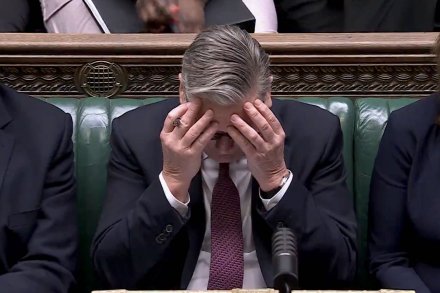
In the end, it was not even that close. The Green party has stormed to victory in Gorton and Denton, winning their first ever parliamentary by-election by more than 4,000 votes. Hannah Spencer, the new MP, pulled off an impressive result, winning 41 per cent of the vote compared to Reform's Matt Goodwin on 29 per cent and Labour's Angeliki Stogia in third on 26 per cent. In her victory speech, Spencer – a plumber – attributed her victory to ordinary people being 'bled dry' and jokingly apologised to customers who had booked in her services. If Hannah Spencer is the clear winner, then Keir Starmer is the obvious loser If Hannah Spencer is the clear winner, then Keir Starmer is the obvious loser.

In bed together: The writers of HBO’s Industry on bankers and politicians

No TV show better encapsulates the nexus between money and power than Industry. The HBO drama sees investment bankers screwing, snorting and slogging their way to the top of English society. Now, in its fourth series, political intrigue is taking centre stage. Think House of Cards – but with more sex and better-remunerated hotties. Mickey Down and Konrad Kay, the co-writers of the show, explain when we chat that they wanted to ‘expand the canvas’ as Industry progressed. It initially focused on the ‘hermetically sealed’ world of the trading floor but has now expanded beyond. ‘Finance is linked to other spheres of influence,’ says Down. ‘Obviously finance and media have a transactional relationship. Finance and politics also have a transactional relationship.

Reform has stepped up its donations game

From our UK edition

One intriguing element of the battle on the right is the arms race for donations. Twelve months ago, Kemi Badenoch’s supporters could point to her prowess in this field; the Tory leader managed to raise £3.3 million in the first three months of 2025. By contrast Reform UK, the pop-up party, were struggling to keep the lights on for much of 2024. They received just £280,000 large donations in the final quarter that year – less than the moribund Communist Party of Great Britain registered. Indeed, when I interviewed Nigel Farage last May, he wondered aloud just how the Tories were still able to raise so much money, given their diminished political fortunes. Fast forward to the beginning of 2026 and Reform can boast a different story.

Why by-elections matter – with Iain Dale & Jon Craig

From our UK edition

17 min listen

Two titans of broadcasting – LBC’s Iain Dale and Sky's Jon Craig – join deputy political editor James Heale for a whistle-stop tour of British by-elections. From Oxford City in 1938 to Chesterfield in 1984 right up to Runcorn in 2025, why do by-elections matter? When have they been most significant? And are longer vote counts the product of fractured politics in the modern age? Produced by Patrick Gibbons.

James Heale, Lisa Haseldine, Simon Heffer & Lloyd Evans

From our UK edition

25 min listen

On this week’s Spectator Out Loud: James Heale reflects on Nigel Farage's leadership team; Lisa Haseldine argues that Europe is in denial over its defence; Simon Heffer looks at the extraordinary rise – and tragic fall – of the first Labour Prime Minister, Ramsay MacDonald; and finally, Lloyd Evans reviews the plays I'm Sorry, Prime Minister and American Psycho. Produced and presented by Patrick Gibbons.

James Heale, Lisa Haseldine, Simon Heffer & Lloyd Evans
Andrew's arrest spells trouble for Labour

Andrew’s arrest spells trouble for Labour

From our UK edition

12 min listen

Andrew Mountbatten-Windsor has been released under caution after he was arrested on suspicion of misconduct in public office – the image of him sat slumped in the back of a car while leaving Norfolk police station on his 66th birthday splashes all the morning papers. Focussing on the politics, his could throw up lots of difficult questions for Labour and Keir Starmer – and governments famously don’t much like talking about the Royals. What problems will this cause Starmer? In other news, it is not shaping up to be an easy return after recess, not least with Donald Trump’s latest intervention on the Chagos deal. How many more setbacks can the plan endure? Oscar Edmondson speaks to Tim Shipman and James Heale. Produced by Oscar Edmondson.
The thinking behind Nigel Farage’s shadow cabinet

From our UK edition

There is an old joke about Nigel Farage, put about by former colleagues. ‘Why is Nigel like a beech tree?… Because nothing grows under him.’ The comparison to this acid-leafed tree which stifles all beneath it is one the Reform UK leader has never accepted. ‘I don’t fall out with people,’ he once said. ‘They fall out with me.’ Like Tintin, Farage has enjoyed many different adventures in different guises: ‘Nigel in America’, ‘Nigel in the Jungle’, ‘Nigel in the City’. This week, we got another: ‘Nigel and the Gang of Four’, the leader who seeks power only to yield it to others. Four names were unveiled as part of Reform’s new ‘shadow cabinet’ to show he is building something bigger than himself.

James Orr is Reform’s new Head of Policy

From our UK edition

It has been a busy few days for Reform UK. Having dominated the last summer recess, this week they are determined to do the same. This morning, the party unveiled their ‘shadow cabinet’, with prime jobs for Robert Jenrick (Shadow Chancellor), Richard Tice (Shadow Business, Energy and Trade), Suella Braverman (Shadow Education, Equalities and Skills) and Zia Yusuf (Shadow Home Affairs). It is part of Reform’s attempt to show that they are serious about building a team that can rebuild ‘Broken Britain.’ Yusuf, of course, has served as Reform’s Head of Policy since September, when he was appointed to succeed Simon Marcus during the party conference.

Nigel Farage unveils his shadow cabinet

Nigel Farage unveils his shadow cabinet

From our UK edition

12 min listen

Reform UK is no longer a one-man band. Nigel Farage has unveiled Reform's four spokesmen for the “great offices of state” at a press conference in Westminster. Recent Tory defector Robert Jenrick has been given the Chancellor brief, Zia Yusuf is in charge of home affairs, Suella Braverman is responsible for education and Richard Tice will look after business and energy. The format resembled a game show like the ‘Weakest Link’ or ‘Take Me Out’. Each of the quartet was introduced, given a spotlight and then had it turned out when their time was up. Is this new 'shadow cabinet' ready for No. 10, or just Tory 2.0? Tim Shipman, James Heale, and Megan McElroy discuss.

Nigel Farage unveils his shadow cabinet

From our UK edition

It is parliamentary recess and once again, Reform is making all the running. Having successfully rebuffed Labour’s plans to cancel council elections yesterday, today they announced their long-awaited shadow cabinet. The first four members of Nigel Farage’s team were unveiled at a press conference, with each stepping out on a podium to deliver a four-minute speech. The format resembled a game show like the ‘Weakest Link’ or ‘Take Me Out’. Each of the quartet was introduced, given a spotlight and then had it turned out when their time was up. Robert Jenrick was named shadow chancellor; Zia Yusuf was handed home affairs. Richard Tice, meanwhile, got a souped-up business, trade and energy portfolio.

Starmer’s local election rebuff benefits Reform

From our UK edition

The parliamentary recess ought to buy Keir Starmer a bit of much-needed breathing space. But the Prime Minister has suffered an unwelcome rebuff today on his plans to reorganise local government. Amid protests at his plans, a legal showdown was planned for Thursday on proposals to delay 30 council elections across the North and South of England. Yet barely 72 hours ahead of that court deadline, officials threw in the towel, conceding that those elections could now go ahead. It marks a significant victory for Reform UK, who launched the lawsuit, and risks exacerbating the scale of Labour losses on 7 May.

Can Starmer protect the country (and himself)?

Can Starmer protect the country (and himself)?

From our UK edition

23 min listen

Following a weekend at the Munich Security Conference, there have been reports that the Prime Minister is set to sign off on a huge increase in defence spending. While this comes at a time of increasing threats to Britain, it isn't just the UK's position that's under threat but Keir Starmer himself – who continues to face questions about his leadership. Defence secretary John Healey has been talked about as a potential 'unity' candidate between the left and right flanks of the Labour party. But Labour's internal problems continue to grow, with reports that journalist – and friend of Coffee House Shots – Gabriel Pogrund was the subject of a malicious investigation by Starmerite think-tank Labour Together. Tim Shipman joins James Heale to discuss all the developments.

Starmer, Mandelson & HMT: why Gordon Brown has never been more relevant

From our UK edition

17 min listen

James Macintyre joins James Heale to discuss his new biography of former Prime Minister Gordon Brown: Power With Purpose. While the book has been years in the making, little did James know that it would end up published at the same time that its themes and subjects could never be more relevant. James tells our deputy political editor about the relationship between Brown and Blair, what the Labour leader makes of Keir Starmer’s problems today and his reflections – with hindsight – about bringing the now-disgraced Peter Mandelson back into government in 2008. Produced by Patrick Gibbons.

Starmer, Mandelson & HMT: why Gordon Brown has never been more relevant

Can Starmer escape his problems in Munich?

From our UK edition

11 min listen

Keir Starmer has headed to Germany for the Munich Security Conference to meet allies and discuss defence, NATO and the war in Ukraine. He is expected to meet Chancellor Merz and President Macron later, before delivering a speech in the morning. But – after his worst week as Prime Minister – can Starmer use this moment to reset his image as one of a statesman on the world stage, or could his problems follow him to Munich? Lisa Haseldine is attending the conference and joins Tim Shipman and James Heale to discuss. Produced by Patrick Gibbons.

Can Starmer escape his problems in Munich?

Is Antonia Romeo what the civil service needs?

From our UK edition

13 min listen

When a PM is in crisis, what do they do? Sack the head of the civil service. Having lost both his Chief of Staff and Director of Communications at the beginning of the week, Keir Starmer resolved to make it a hat-trick by dispensing with the services of his short-serving Cabinet Secretary. The favourite to replace him is Antonia Romeo – currently doing great work at the Home Office, but comes with a series of ‘caveats’ concerning historic allegations of bullying and irregularities over expenses when she was in New York. She has been cleared of these and passed the civil service vetting process (with caveats) – although Simon McDonald, the former Permanent Secretary at the Foreign Office, has popped up in the news to warn No.

Is Antonia Romeo what the civil service needs?

Keir Starmer staggers on for another day

From our UK edition

Sir Keir Starmer is now the Black Knight of British politics. Like the mutilated pugilist of Monty Python, he stumbles around the Westminster battlefield, blustering and boasting while desperately trying not to totter over. Starmer and his team have spent most of the day trying to defend their decision to hand a peerage to Matthew Doyle, No. 10’s former communications chief. Doyle was appointed to the House of Lords last month – despite having campaigned for a friend charged with child sex offenses.  The subject dominated Prime Ministers’ Questions this lunchtime and the subsequent briefing for journalists.

Keir Starmer gets angry

Keir Starmer gets angry

From our UK edition

15 min listen

PMQs today and – as predicted – Keir Starmer came out worst in a pretty unpleasant session. Kemi Badenoch pinned the Prime Minister on the continued Mandelson fallout and now the scandal over Matthew Doyle, the former No. 10 comms chief who – just four weeks after his ennoblement – Labour have already been forced to kick out of their party in the House of Lords, after it emerged he had campaigned for a friend charged with possessing indecent images of children. Once again, one of those mysterious appointments for which the Prime Minister is never responsible came back to haunt him in public – sound familiar?

‘We know where the bodies are buried’: How Kemi put Keir on the ropes

From our UK edition

What does a dying government sound like? At 12.08 p.m. on 4 February we got an answer. Keir Starmer admitted to the House of Commons that he knew about Peter Mandelson’s relationship with Jeffrey Epstein when he made him ambassador to the US in 2024. There was a sharp intake of breath from the shocked Labour benches. It was the kind of moment that defines a premiership. And it was also testament to an effective Leader of the Opposition. In the drama of Mandelson’s disgrace, the Conservative party played its part well. After besting Starmer at Prime Minister’s Questions, Kemi Badenoch turned to coaching the Labour backbenches. She had put down a humble address, urging all correspondence be released between ministers and Mandelson. Would they back her or not?

Is Starmer back from the brink?

From our UK edition

13 min listen

After a dramatic day in Westminster, the threat to Starmer appears to have receded – at least in the short term. But with the Gorton and Denton by-election less than three weeks away, (more) trouble could be on the horizon. Luke Tryl – from pollsters More in Common – and James Heale join Patrick Gibbons to discuss. Produced by Patrick Gibbons.

Is Starmer back from the brink?

McSweeney resigns – is Starmer next?

From our UK edition

25 min listen

Morgan McSweeney resigned yesterday as Keir Starmer’s chief of staff and – while it was not a surprise, given his role in appointing Peter Mandelson – the news that the Prime Minister has now lost his closest aide and political fire blanket is a huge shock. The repercussions are numerous: Starmer loses the man widely regarded to have won him his large majority and someone who was popular in No. 10; he has recruited two new deputies to fulfil a role considered insurmountable for one person; and it sets a precedent that anyone who allowed Mandelson to become US ambassador is liable for the chop. For a Prime Minister without a political philosophy, McSweeney was the man with the plan – where does Labour go from here? Is this the end for Starmer – and who might replace him?

McSweeney resigns – is Starmer next?