James Heale

James Heale

James Heale is The Spectator’s deputy political editor.

Trump is making life increasingly hard for his allies

Here is a fun one: what do Giorgia Meloni, Pope Leo XIV, Ed Miliband and the Cato Institute all have in common? The answer is that they have each been attacked in the past 24 hours on Donald Trump’s overactive Truth Social feed. The US President’s erratic actions both online and off now seem to be exhausting the patience of even erstwhile allies. In the aftermath of the Iran crisis, Keir Starmer and his ministers appear to have had enough of pussyfooting and pandering to the whims of the Commander-In-Chief. Downing Street sees little benefit in indulging what one Labour MP calls ‘Trump’s imperial overreach’ This afternoon, Rachel Reeves publicly called the war a ‘mistake’.

Are the Treasury & the MOD at war?

From our UK edition

11 min listen

George Robertson (pictured), a former defence secretary and former NATO secretary-general, has accused the government of 'corrosive complacency' towards defence, which puts the UK 'in peril'. This is all the more stinging because the Labour peer was one of the authors of the government's Strategic Defence Review – and that makes two of the three who have since criticised it. How much trouble does this spell for Starmer? And is this just the latest battle in the ongoing war between His Majesty's Treasury and the Ministry of Defence? Megan McElroy speaks to James Heale and Lucy Fisher, Whitehall editor of the financial times and who broke the story. Produced by Patrick Gibbons and Megan McElroy.

Are the Treasury & the MOD at war?

Keir Starmer thinks he’s Henry VIII

From our UK edition

13 min listen

Two big stories to chew over on today’s podcast, starting with Viktor Orban’s landslide defeat in Hungary. The left have been celebrating this as a victory over populism, but have they misunderstood Peter Magyar’s politics? He’s hardly the Hungarian Ed Davey – as figures such as Zack Polanski would have you believe – and shares a lot of similarities with the outgoing leader when it comes to his conservatism. What are the real lessons from this weekend’s result? And why should Donald Trump be wary? Then, Henry VIII is back! The government is considering reviving the so-called Henry VIII powers, passing legislation which would allow Labour to change regulations without having to face full scrutiny from MPs.

Keir Starmer thinks he's Henry VIII

Reform aim to weaponise the ‘Boriswave’

From our UK edition

With three weeks to go until the local elections, Reform are back campaigning on their favourite subject: migration. Having talked up deportations in the run-up to last year’s contests, the party is hoping to rerun the same playbook to achieve similar success. At a press conference this morning, Nigel Farage and Zia Yusuf unveiled a new 21-page document which claimed that the so-called ‘Boriswave’ – referring to the 1.6 million migrants who arrived between 2020 and 2024 – would cost £622 billion in real terms. This, they claimed, means £20,000 per UK family. Reform plans to abolish the status known as indefinite leave to remain (ILR), which allows those who have lived here for more than five years to receive benefits and apply for citizenship.

Orbán concedes defeat in Hungary

From our UK edition

Prime Minister Viktor Orbán has conceded election victory in Hungary after 16 years in power, with the opposition on course for a landslide win. Péter Magyar is set to be the country's new prime minister and his party, Tisza, is forecast to win a massive majority in parliament. 'The election results are not final yet, but the situation is understandable and clear,' a gloomy Orban said at the Fidesz campaign offices. 'The election result is painful for us.' The eve-of-election intervention by US Vice President J.D Vance underlines the symbolic importance of Hungary to elements of the global conservative movement. It would be wrong to read today's result as a victory for unashamed progressivism: Magyar is a moderate conservative who campaigned heavily on corruption.

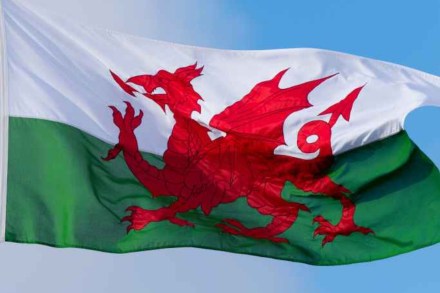
Will Labour lose Wales?

From our UK edition

14 min listen

With one month to go until the local and regional elections, Megan McElroy and James Heale have hit the road with Luke Tryl and Louis O'Geran of More in Common. They report back from the focus groups they've been running in Wales, where voters view Labour through the prism of a double incumbency, as they hold both the Senedd and Westminster. Starmer faces an uphill battle to avoid an historic loss – so is he about to lose Wales? Produced by Megan McElroy and Patrick Gibbons.

Will Labour lose Wales?

Left turn: who should Reform target?

From our UK edition

15 min listen

Gawain Towler, Reform UK board member and their former director of communications, sits down with James Heale to talk about Reform's appeal ahead of the local elections. Gawain argues that Reform needs to broaden its appeal as it won't find the votes to win to its right, but points to their anti-establishment, nationalist and pro-business credentials. While acknowledging that some of the negative stories about a minority of Reform councillors is uncomfortable, he argues that the scrutiny that comes with governing is necessary in order for Reform to prove credibility and competency for national government.

Left turn: who should Reform target?

The ‘Anglo-Gaullism’ debate | Ben Judah

From our UK edition

In the magazine this week, Ben Judah – former adviser in the Foreign Office – makes the case for ‘Anglo-Gaullism’. He says that Britain should learn the lessons of France’s Charles de Gaulle when carving out its place in the world, especially given the increasingly erratic nature of the US and the fragmentation of politics at home. In practice, Ben suggests that this would involve an Australian-style ranked-choice voting, injecting Whitehall with experts (in tech and AI), taking on the welfare system (including ending the pensions triple lock) and European geo-political co-operation which would limit reliance on the US. But would Anglo-Gaullism ever work in Britain? And is it still possible to produce a leader with the authority of de Gaulle to implement it?

The 'Anglo-Gaullism' debate | Ben Judah

Antonia Romeo takes on the civil service

From our UK edition

12 min listen

The new cabinet secretary, Antonia Romeo, has published a list of objectives setting out her vision for what the civil service will look like under her. Many have interpreted it as her tightening control over government ... especially since Darren Jones stepped back from his Downing Street role. The path is clear for her to become the Prime Minister’s ‘principal policy adviser’, and to reform the civil service ‘so that it is recognisable for excellence in delivery, innovation and improved productivity’. Is this all just word salad, or is she onto something? James Heale speaks to Isabel Hardman and former Foreign Office diplomat Ameer Kotecha. Produced by Oscar Edmondson.

Antonia Romeo takes on the civil service

The ‘Tory-fication’ of Reform

From our UK edition

Nigel Farage likes a gamble. Crypto bros and hedge-fund managers bankroll his enterprises; his social circle is filled with traders, bridge players and money men who fancy a flutter. It was Malcolm Muggeridge who claimed that ‘to succeed pre-eminently in English public life it is necessary to conform either to the popular image of a bookie or of a clergyman’. Farage is firmly in the former camp. But the man who has never been afraid to take a punt is now betting on playing it safe. In his bid to kill off the Conservatives, Farage has sought to woo the party’s voters by poaching their talent and ridding Reform UK of all suspect economic baggage. The manifesto of 2024 has been binned; full-fat nationalisation is out, save for British steel and key strategic industries.

The strange beauty of Greenland

From our UK edition

It is one of the world’s most remote corners – but Greenland is playing an increasingly important role in global affairs. In January last year, the island’s 57,000 residents became an object of desire for Donald Trump. ‘I think Greenland we'll get because it has to do with freedom of the world,’ declared the bombastic President. ‘I think the people want to be with us.’ Six weeks later, the people of Greenland duly gave their reply, crushing their pro-Trump party in an election centred on questions of independence. The ongoing struggle for control of the Arctic motivated Trump’s demands. The British government believes that the Arctic Circle will be ice free each summer by 2040; some experts predict it will be sooner.

Iran deadline: is it too late for Trump to back down?

From our UK edition

We are hours away from Donald Trump’s deadline for Iran to reopen the strait of Hormuz. The President has ‘chickened out’ many times before and offered an extension of some kind, but the threats and posturing ahead of this deadline make it difficult for either side to back down. Will Trump really ‘end Iranian civilisation’ tonight? James Heale speaks to Michael Stephens. Produced by Oscar Edmondson.

Iran deadline: is it too late for Trump to back down?

Why is Starmer so unpopular? with Lewis Goodall

From our UK edition

28 min listen

Opinion polls consistently show Keir Starmer as one of the most unpopular Prime Ministers in history. His critics point to inertia and a lack of vision, while his supporters argue that media spin is harming the image of a decent man. Less than two years on from Labour's landslide victory, broadcaster Lewis Goodall joins James Heale to try to answer the question 'where did it all go wrong?' – a subject which Lewis explores in a Channel 4 Dispatches documentary. Lewis explains the factors at play, from Starmer's personality and Labour party politics to the effect that the Conservative Party's implosion had on Labour's preparedness for government. Is Starmer a politician from a bygone era?

Why is Starmer so unpopular? with Lewis Goodall

Conservative radicalism: who should the Tories target? with Jack Rankin MP

From our UK edition

27 min listen

Can the Conservatives win back voters' support through a new kind of 'conservative radicalism'? Jack Rankin, Conservative MP for Windsor, joins James Heale to explain why he believes a focus on aspiration and wealth creation, paired with political courage to combat 'short-termism and stakeholderism', would enhance the Party's appeal and energise its supporter base. Jack argues that Conservative politicians need to be more honest about the country's problems, including with immigration and integration – where the expectation of a minimum level of British values should be set. He doesn't shy away from discussing the Tories' challenging record too, reflecting on political unity, the need for party reform and the flaws of 2019 election winner Boris Johnson.

Conservative radicalism: who should the Tories target? with Jack Rankin MP

EU déjà vu: the emergency brake is back!

From our UK edition

13 min listen

Charles Grant from the Centre for European Reform and Tim Shipman join James Heale to reflect on the rumours about Britain's latest set of negotiations with the European Union. There are reports that the EU may be willing to accept some form of mechanism, that the UK could use, should Britain ever wish to temporarily halt the number of inbound students. Perhaps we could call such a mechanism an 'emergency brake'. Sound familiar? What does this tell us about the dynamics of the EU, how the UK-EU relationship works – and how inevitable was the result in 2016? Produced by Patrick Gibbons and Megan McElroy.

EU déjà vu: the emergency brake is back!

Will Trump pull the US out of NATO?

From our UK edition

15 min listen

Donald Trump has said he is 'strongly considering' pulling the US out of NATO, in comments made to the Telegraph – and it doesn't appear to be an April Fool. This isn't the first time he has rallied against the Alliance so should the UK take him seriously? Plus – what is Keir Starmer's strategy? – as he tries to balance a testing transatlantic relationship with pursuing closer relations with the EU. Patrick Gibbons speaks to Tim Shipman and James Heale. Produced by Patrick Gibbons.

Will Trump pull the US out of NATO?

Why is Britain so exposed to rising energy prices?

From our UK edition

The IMF has warned Britain is particularly vulnerable to another spike in energy prices, and is more exposed than many of its European neighbours. Why is that the case? And does the government have any real plan to shield households and businesses from the fallout? With the Tories and Reform calling for the government to drill baby drill, why is the government avoiding a pretty obvious solution? James Heale speaks to Tim Shipman and Michael Simmons.

Why is Britain so exposed to rising energy prices?

The curious case of Morgan McSweeney’s missing phone

From our UK edition

20 min listen

Questions are being asked about Morgan McSweeney's missing phone, which he reported stolen to police last year. What might seem like a minor case of petty theft actually has serious implications for the investigation into Peter Mandelson's appointment. It also raises questions about Keir Starmer's general approach to government. James Heale speaks to Tim Shipman and Cleo Watson, former special adviser to Boris Johnson, about the case – and also about how it can hurt public trust in government. Do you believe in cock up – or conspiracy? Produced by Oscar Edmondson and Patrick Gibbons.

The curious case of Morgan McSweeney's missing phone

Starmer was plodding and peevish at PMQs

From our UK edition

One of the great gifts in politics is the capacity to surprise. Kemi Badenoch, again, demonstrated her ability in this respect when she chose to wrong-foot Keir Starmer at the last PMQs before recess. All of Westminster is talking about Morgan McSweeney’s missing phone, which has taken on the status of Chekhov’s gun in the minds of some. But having led on Peter Mandelson at last week’s exchange, Badenoch chose to switch it up today. Energy proved to be the Tory leader’s line of questioning, hammering Starmer on the government’s refusal to grant new drilling licences for Jackdaw and Rosebank. With oil prices in the headlines and the Holyrood elections looming, it was an opportunity to put some clear blue water between the Tories and Labour on an issue affecting voters’ pockets.

Should we brace for another financial shock?

From our UK edition

Britain’s response to the conflict in Iran is dominating Westminster – but is Keir Starmer really keeping the country out of war? After a tense Liaison Committee appearance exposed divisions over defence spending, pressure is also mounting on the government’s economic strategy. With energy prices rising, mortgage products disappearing and fears of inflation returning, how prepared is Labour for the fallout? James Heale speaks to Isabel Hardman and Michael Simmons.

Should we brace for another financial shock?