James Heale

James Heale

James Heale is The Spectator’s deputy political editor.

To spend or not to spend

From our UK edition

16 min listen

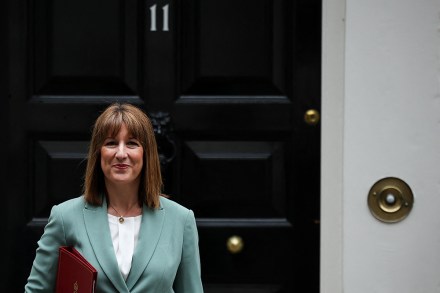
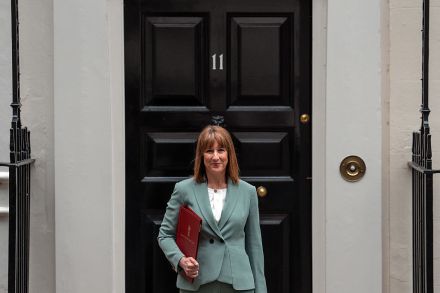
Rachel Reeves unveiled billions of pounds of investment today for transport and infrastructure projects, as Labour attempts to demonstrate that next week’s spending review is not just about departmental cuts. However, most of the political noise today has centred on her announcement that the winter fuel cut will be reversed by the end of the year. But what does this all mean for the average voter, for the Chancellor’s fiscal headroom – and why is the government still blaming its own ‘fiscal rules’? James Heale and Michael Simmons join Lucy Dunn to unpack the Chancellor’s announcements and explain the economic jargon, plus a look at today’s PMQs. Produced by Patrick Gibbons and Oscar Edmondson.

Kemi has a new favourite word: chaos

From our UK edition

Whisper it, but there was some rather good lines amid the dross of today's PMQs. 'Mr Speaker, I asked the Prime Minister what he believes in', jibed Kemi Badenoch at one point. 'He had to look in his folder to find out the answer.' The Speaker responded in kind. 'Please', he said, during one of Keir Starmer's lengthier evasions, 'Let's listen to the answer even if you don't believe you're getting one.' But it was one word, repeated more than a dozen times, which emerged from today's session: chaos. Badenoch hit the PM with it at every chance, pointing to the winter fuel and two-child benefit U-turns as proof of the 'chaos, chaos, chaos' in which, she said, this government is now embroiled.

Is the public ready for difficult decisions on defence?

From our UK edition

16 min listen

Former Commander of Joint Forces Command – and one of the authors of the Strategic Defence Review – General Sir Richard Barrons joins Lucy Dunn and James Heale to talk through the main conclusions of the review, and the questions it raises. Labour have talked up the fact that this is the first government in a generation to not reduce the size of the armed forces. But, as Sir Richard explains, difficult choices await politicians and the public if the UK wants to be more prepared, and faster, for potential threats. Produced by Patrick Gibbons.

Is Britain ‘battle-ready’?

From our UK edition

15 min listen

Today the government has published the long-awaited strategic defence review. The brief was to take a new look at some of the challenges to the UK in 2025, and what is needed to ensure our security and reset our defence priorities. We are still waiting for some of the detail, but so far we know: £15 billion for new warheads to be carried by the new Dreadnought-class submarines; a dozen new SSN-Aukus attack submarines; £1.5 billion to build at least six munitions' factories; £6 billion to procure munitions over the remainder of this parliament; and £1 billion for digital capability and a new CyberEM Command. Where is all that money coming from? Most of the squabbling today has been over the commitment to 3 per cent of GDP on defence spending.

Starmer tries to sell the Strategic Defence Review

From our UK edition

The Prime Minister has been up in Scotland this morning, ahead of the full publication of the Strategic Defence Review (SDR) at 3.30 p.m. today. It will set out the UK’s defence spending priorities for the next ten years, including plans to build up to 12 new nuclear-powered attack submarines and spend £15 billion on the warhead programme. In a speech, Starmer touted the document as a ‘a blueprint to make Britain safer and stronger, a battle-ready, bomber-clad nation with the strongest alliances and the most advanced capabilities.’ Three changes will come from this review, he said. The first, a move to ‘war-fighting readiness’. The second: an additional focus on ensuring that everything this government does is to add to Nato’s strength.

What is Robert Jenrick up to?

From our UK edition

It has been another good week for Robert Jenrick. At a time when many of the shadow cabinet are struggling to make an impact, his video on fare-dodging in London has certainly caused a stir. The 58-second clip – in which Jenrick, like some Tory Batman, accosts Tube passengers walking through barriers – has now been viewed nearly 15 million times. It prompted a Newsnight discussion, acres of coverage and begrudging private praise from opposition politicians too. Such videos are not some mere fluke but rather, the product of much time and effort by Jenrick and his aides. He has learned from masters of the craft like Pierre Poilievre, the leader of the Canadian Conservatives.

What will save the Tories? The economy, or Robert Jenrick?

From our UK edition

16 min listen

Lots to discuss today: Robert Jenrick takes on TfL, a Nazi jibe from the attorney general and allegations of shoplifting made against our own Michael Simmons. But we start with Keir Starmer’s big speech yesterday, where the theme was ‘get Nigel’, after polling from More in Common showed that framing the election as a two-horse race could be beneficial to Labour. They are attempting to cut the Tories out altogether but, in response, the Conservatives plan to use fiscal credibility as the battleground to crawl back up the polls. Will the economy save the Tories? Elsewhere, Robert Jenrick is the star of the week after a video of him reprimanding fare-dodgers on the Tube went viral, racking up more than ten million views on X.

Lord Hermer’s ‘Nazi jibe’ shows his naivety

From our UK edition

Amid talk of a summer reshuffle, I recently asked a senior member of the Labour party if he thought the Attorney-General was likely for the chop. He paused and reflected. 'No', he eventually replied. 'But he's going the right way about it.' Similar sentiments will no doubt be expressed in Downing Street today as they pore over the morning papers. 'Law chief in Nazi jibe at Tories and Reform', screams the splash headline of today's Times: Richard Hermer KC has done it again. Hermer showed a naivety of how his remarks would be interpreted The cause of the headline is a speech which Hermer made to the RUSI think tank yesterday on the government's commitment to international law.

Senior Tories plan candidate overhaul

From our UK edition

There are many justifiable criticisms of how the Tories ran candidate selection for the last election. On the day that Rishi Sunak headed to the Palace, scores of nominees were still to be chosen, prompting a mad scramble to find 160 candidates in 12 days. Some seats faced accusations of 'stitch-ups', including Basildon and Billericay, where the-then party chairman was controversially selected from a shortlist of one. Scores of unknown names had to be parachuted in elsewhere. The good news for long-suffering members is that this message appears to have been heard by senior Tory figures. An eight-page paper on candidate selection has now been drawn up as part of the Party Review into the 2024 election.

This won’t be the last time Starmer attacks ‘fantasy’ Farage

From our UK edition

Liz Truss's short-lived premiership is remembered fondly by few in British politics. But one group who certainly never miss a chance to mention it are Labour MPs sent out on broadcast duty. Having successful used the ex-PM as a two-word stick to hammer the Tories, now Keir Starmer is trying to use the same trick on Nigel Farage. The Prime Minister used an engagement at a business manufacturer in the north-west of England to test his party's latest attack lines on Reform UK. The striking thing about Starmer’s comments is how they echo the Tory critique of Farage His remarks focused on those industries affected by the tariffs Donald Trump has slapped on the UK. The Labour leader claimed 'We protected those jobs. Would Nigel Farage have done the same? Absolutely not.

Rape investigation into Crispin Blunt dropped

From our UK edition

An 18-month investigation into allegations of rape against former Justice Minister Crispin Blunt has now been dropped. In October 2023, the-then Tory MP was arrested by Surrey Police, prompting the removal of the party whip. He confirmed he was the subject of the probe at the time following reports of a Conservative parliamentarian being arrested. Blunt was subsequently bailed and stood down from parliament at the July 2024 election, with the investigation still ongoing. However, in a statement, Surrey Police today told The Spectator that: An investigation was launched following a report of rape in October 2023. Extensive enquiries have been carried out and a man in his 60s and a man in his 50s were arrested on 25 October 2023 in Horley in connection with the offence.

The rise of the Red Queen

From our UK edition

‘All Labour prime ministers go gaga for the Queen,’ sighed Cherie Blair, played by Helen McCrory, in the 2006 film about the death of Diana, Princess of Wales. Her words were fictitious but the sentiment is real. From Ramsay MacDonald to Harold Wilson, left-wing prime ministers invariably end up as royalists. The current cabinet is no exception: former republicans such as Lisa Nandy have been charmed by Charles III. Even Keir Starmer – who once boasted on camera that he ‘often used to propose the abolition of the monarchy’ – is said to have a warm relationship with the King. Yet geniality is only one reason why Labour loves the monarchy. The King has been a helpful sovereign to Labour ministers.

How to do a spending review

From our UK edition

21 min listen

Labour’s spending review is expected on the 11th of June, when we will find out which government departments face cuts and which costs have been ringfenced. This can set the tone for politics for months to come as it gives a clue to which priorities matter most – especially in times of fiscal restraint – and which ministers are up, and which are down. But how is a spending review conducted? How does His Majesty’s Treasury balance the negotiations with those competing for its attention? And, following the leaked Angela Rayner memo, do we know which economic arguments are winning out?

Is the welfare state about to expand?

From our UK edition

18 min listen

James Heale and Michael Simmons join Patrick Gibbons to discuss the speculation that Labour could scrap the two-child benefit cap. Is this just red meat for the left of the party or is it a sign that public opinion around welfare has shifted? And, with mixed messages on the economy, can the country afford to scrap it? This comes just a week after Labour’s partial U-turn over the winter fuel allowance so, with pressure also increasing from Reform, is the welfare state about to expand? Produced by Patrick Gibbons.

The welfare state is Nigel Farage’s new battleground

From our UK edition

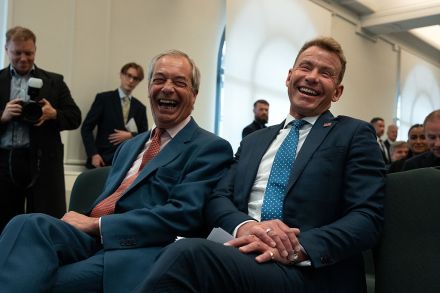
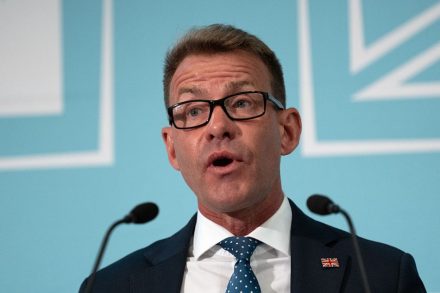
What, if anything, can stop Nigel Farage? That’s the question many in Westminster are asking as they try to reconcile themselves to the rise of Reform UK. The party has soared to 30 per cent in the polls – and is now seeking further gains. Farage’s speech this morning was his attempt to make hay from Labour’s woes on welfare. Reform, he pledged, would scrap both the winter fuel cut and the two-child benefit cap, while introducing a new tax allowance to reward married couples. It was all part of Farage’s pitch to frame himself as the defender of the welfare state, besieged by cuts at home and invaders from abroad. He argues that, currently, social services are a perverse inversion, offering little to British voters while generously subsidising foreign citizens.

Man arrested after Liverpool parade car crash

From our UK edition

A 53-year-old man was arrested on Monday after a car ploughed into a crowd of Liverpool supporters during their Premier League trophy parade. Thousands were out on the streets to celebrate when the car drove through the crowds and collided with pedestrians, shortly after 6 p.m. The incident occurred in the heart of Liverpool city centre, with emergency services quick to arrive on the scene. Witnesses described a scene of panic as fans left the parade area, telling local media that the driver went past a police van before mounting the kerb. At a press conference at 11 p.m on Monday night, Merseyside emergency services provided an update on the victims affected by the crash. There were 27 patients taken to hospitals across Liverpool, including four children.

Russia seizes on Kemi’s ‘proxy’ comment

From our UK edition

It has not been an enjoyable bank holiday weekend for Kemi Badenoch. The Sunday Times contained not one, but two, critical stories of the Tory leader. The first was about her choice of car in government; the second about a recent shadow cabinet meeting at which her MPs were instructed on 'management theory and values.' Labour opponents outside the party were quick to leap on the first story; Tory critics are circulating the second as proof of her ineffectiveness. Badenoch had one of the prized slots on the Sunday morning round to answer back. On GB News, Camilla Tominey credited her guest for shouldering the burden on media commitments – unlike other members of the Tory frontbench. But it was on Sky that Badenoch came somewhat unstuck.

James Heale, Angus Colwell, Alice Loxton, Lloyd Evans, Richard Bratby, Christopher Howse and Catriona Olding

From our UK edition

38 min listen

On this week’s Spectator Out Loud: James Heale analyses the splits in Labour over direction and policy (1:27); Angus Colwell asks if the ‘lanyard class’ are the new enemy (6:21); Alice Loxton explains why bite-sized histories have big appeal (9:58); Lloyd Evans reports on how Butlin’s is cashing in on nostalgia (15:00); Richard Bratby on Retrospect Opera, the non-profit record label that resurrects the forgotten works of British opera (20:40); Christopher Howse provides his notes of typos (27:27); and, Catriona Olding reflects on the death of her partner, the Spectator’s Jeremy Clarke, two years ago this week (32:15).  Produced and presented by Patrick Gibbons.

David Gauke on prisons, probation & the political reaction to his review

From our UK edition

18 min listen

Former Justice Secretary and Lord Chancellor David Gauke joins James Heale to talk about his review into prison sentencing. The former Tory minister was appointed by the current Labour Justice Secretary Shabana Mahmood, but says there is a clear centre-right argument for prison reform. He talks James through his policy proposals and the political reaction to them, the thinking behind expanding chemical castration for sex offenders and why deportation is complicated when dealing with the very worst foreign criminals. Ultimately his review is designed to reduce what is currently the highest incarceration rate in Europe. Produced by Patrick Gibbons.
The Chagos deal will haunt Keir Starmer

From our UK edition

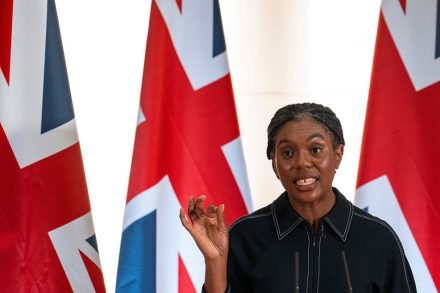
After months of negotiation, the UK has today signed a deal to hand over the Chagos Islands to Mauritius. Under the terms of the agreement, Britain will lease back the military base there for an annual rate of £101 million. The net value of the payments from the UK under the treaty will reach £3.4 billion. Keir Starmer insisted that the Chagos deal is in Britain's best interests The Prime Minister insists that the deal – which involves a lease on the base for 99 years ‘and beyond’ – is in the country’s national interest. It comes after an ‘advisory opinion’ by the UN’s International Court of Justice (ICJ), that the Chagos Islands belonged to Mauritius.