James Heale

James Heale

James Heale is The Spectator’s deputy political editor.

Why Keir Starmer is worried about Wales

From our UK edition

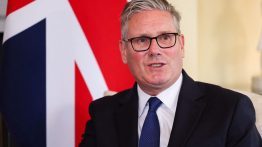
Keir Starmer's address to the Welsh Labour conference this morning was exactly the kind of speech we expected. With eleven months to go until a difficult set of devolved elections, the Prime Minister fell back on the greatest hits to play to the party faithful. Labour is the party with the 'interests of working people at their heart' and 'it always will be', Starmer said. The Senedd elections next May risk producing a 'backroom stitch-up between the Tories, Reform and Plaid' with 'working families left to pick up the bill.' He reeled off various achievements: the minimum wage increase, workers' rights, the carer's allowance and, most significantly, a 'record uplift to Welsh funding.' The Llandudno audience received it appreciatively enough.

Steve Baker on how to organise a successful rebellion

From our UK edition

25 min listen

As Labour rebels appear to have forced concessions from Keir Starmer over welfare this week, former Conservative MP Steve Baker joins James Heale to reflect on his own time as a rebel, and to provide some advice to Labour MPs. Steve, an MP for 14 years and a minister under Theresa May, Liz Truss and Rishi Sunak, tells James about the different rebellions he was a part of (from Brexit to Covid), explains how to organise a successful one and reveals how he has lost close friends when he has made the decision to compromise.

Welfare U-turn: is Keir in control?

From our UK edition

15 min listen

Keir Starmer has performed a screeching about-turn on his flagship welfare reforms, all in the hope of quelling the rebellion from more than 120 MPs who have been promised ‘massive concessions’ over concerns about disability benefits. These include moderating the bill to make it easier for people with multiple impairments to claim disability benefits, and offering to protect Personal Independence Payments (PIP) for all existing claimants for ever – to ensure there would be no detriment from the reforms for existing claimants, a key concern of the welfare rebels. But new claimants will be affected, as ministers desperately try to stop ever-spiralling disability and sickness welfare spending climbing to £100 billion by 2030.

The knives are out after Labour’s welfare debacle

From our UK edition

If the Labour party were a cinema, then it would currently be showing a double billing: Groundhog Day and Knives Out. For older heads, the Welfare Bill has echoes of the 2015 vote on Universal Credit; newbies MPs are now experiencing what it is like to be in a full-on government briefing war. Plenty of fall-guys are cited in today's newspapers: from Alan Campbell and the whips' office to Morgan McSweeney and the political operation in No. 10. The most immediate loser from the welfare U-turn is Rachel Reeves. Both politically and fiscally, the Chancellor is now in a tight spot The most immediate loser from the welfare U-turn is Rachel Reeves. Both politically and fiscally, the Chancellor is now in a tight spot.

Keir Starmer climbs down on welfare cuts

From our UK edition

At last, Keir Starmer has bowed to the inevitable. Having first adopted a posture of defiance, then conciliation, the Prime Minister has tonight admitted capitulation on the great welfare revolt. The Guardian reports that the ringleaders of the 126 rebels who signed a wrecking amendment to the Welfare Bill are now claiming ‘massive concessions.’ It follows a tense afternoon of talks between Starmer and his MPs. It means another big U-turn for Starmer – and another hole in the Treasury’s finances The rebels say that they have been promised significant changes to planned cuts. These include moderating the Bill to make it easier for people with multiple impairments to claim disability benefits.

Can Keir Starmer save his Welfare Bill?

From our UK edition

The Prime Minister has never been a huge fan of the press. But there is an apt Fleet Street phrase to describe his screeching shift in tone on the great Labour welfare rebellion: reverse ferret! Just yesterday, he was all bullish talk, claiming that the more than 100 Labour MPs who want to vote down his Welfare Bill were little more than 'noises off'. But this morning in parliament, he has adopted a much more emollient approach. It comes after six more MPs backed a rebel amendment overnight, bringing the total to 126 – around half of those Labour MPs who do not hold a government role. The marked change in language is now being taken as No.

Small boats are causing Labour big problems

From our UK edition

Summer is here – and for some in Labour it cannot come soon enough. After a tricky first year in office, the parliamentary party is in fractious mood. More than 100 of Keir Starmer’s MPs are raging against his welfare cuts; others are fuming about Israel. Some aides in No. 10 hope recess will give the government a much-needed chance to catch its breath. ‘Everyone needs a lie-down,’ says one party manager.  Yet in one corner of Whitehall, summer brings no respite. The Home Office is braced for a season of bad headlines: two more months helplessly watching small boats cross the Channel every day. Warm weather increases the likelihood of such trips.

Welfare rebellion: why Starmer – and Reeves – should be worried

From our UK edition

17 min listen

Keir Starmer is facing war on both fronts. He is in the Netherlands to talk about defence and announce a major change in the UK's nuclear posture in response to rising challenges in the Middle East. But everyone in Westminster wants to talk about a different kind of warfare: the warfare over welfare. MPs will vote on the government’s controversial welfare bill, after more than 120 MPs signed a reasoned amendment that would effectively stop the bill in its tracks. What has been most concerning for the government is how organised the rebellion appears, with many picking up on the mutinous mood since Kim Leadbeater’s assisted dying bill. The government is increasingly looking like it will lose the vote. Are Labour going to pull the bill?

Starmer stands by his welfare bill

From our UK edition

Keir Starmer is in the Netherlands to attend the Nato summit – but that is not the subject which is gripping everyone back home. This afternoon, the Prime Minister held a press conference to confirm that the UK will shortly be expanding its nuclear deterrent by buying a squadron of American-made fighter jets. It is the most significant change in Britain’s nuclear posture since the end of the Cold War. Yet the attendant hacks chose to focus on a rather different conflict. The welfare bill dominated today’s PMQs in Starmer’s absence and is clearly the obsession of MPs here in Westminster. With 120 Labour rebels now publicly confirmed, would the PM now be pulling the bill? Absolutely not, suggested Starmer.

Angela Rayner had a bad PMQs

From our UK edition

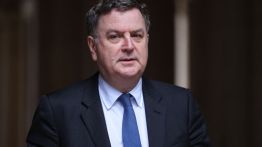
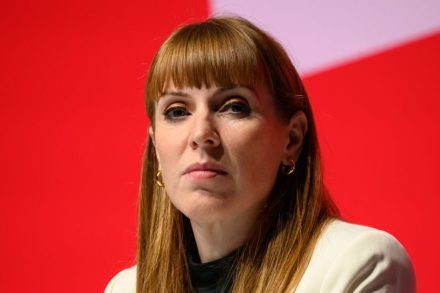
With Keir Starmer at Nato, the hospital pass of this week's PMQs was handed instead to Angela Rayner. The welfare row is tearing apart the Labour party, with more than 120 MPs now committed to voting against the changes to disability benefit next Tuesday. In such circumstances, the obvious choice to fill in for Kemi Badenoch was the shadow chancellor Sir Mel Stride – the man who had previously held the work and pensions brief from 2022 to 2024. Given Labour's woes, today was always going to be a difficult day for Rayner. Sir Mel certainly made it so, opening with a decent crack about her recent leaked memo to Rachel Reeves. Welcoming Rayner to her place, Stride declared, ‘we share many things – not least that we both viscerally disagree with the Chancellor’s tax policy.

Iran: ‘what the f***’ is going on?

From our UK edition

14 min listen

It is rare to see the President so visibly frustrated (see The Apprentice, circa 2004), but after Iran and Israel seemingly ignored his ceasefire announcement – and his plea on Truth Social, ‘PLEASE DO NOT VIOLATE IT!’ – Donald Trump has come down hard on both sides. In a clip taken this afternoon he exclaimed: ‘These are countries who have been fighting so long and so hard, that they don't know what the f*** they're doing.’ Succinctly put by the President. The exchange of fire could be the expected tit-for-tat seen after the announcement of ceasefires in other global conflicts, but it has dampened the mood at Nato, which world leaders were approaching with cautious optimism, believing the road to de-escalation was clearing. What happens next?

Labour rebels declare war over Starmer’s welfare cuts

From our UK edition

It is a year next week since the general election and Labour is marking the occasion with the biggest backbench rebellion of Keir Starmer's premiership. Overnight, scores of Starmer's MPs have signed a reasoned amendment to the Universal Credit and Personal Independence Payment (PIP) Bill. This would effectively kill the Bill at its second reading next Tuesday if it passes through the Commons. Of the 108 Labour MPs who have signed the amendment, ten are Labour select committee chairs. The key message being sent by the rebels is that these are not the so-called 'usual suspects' on the left of the party.

Badenoch: Tories are ‘the adults in the room’

From our UK edition

It is a year of two major anniversaries for the Tories. The first is the centenary of Margaret Thatcher's birth; the second is the half-centenary since she was elected leader. To mark the occasion, the think-tank Policy Exchange is laying on a series of events to commemorate the Iron Lady. Today’s was a sit down interview between Thatcher's biographer, Charles Moore, and Kemi Badenoch, one of Thatcher’s successors. The conversation between the pair was an engaging one, aimed at highlighting Badenoch’s ability to grasp the major issues of our time. Some of her remarks were punchy: like her suggestion that the UK ‘is being cut out of intelligence’ on the Iran crisis ‘because we cannot be trusted’. Others were familiar: her insistence that Reform is ‘not serious...

Farage makes his pitch to non-doms

From our UK edition

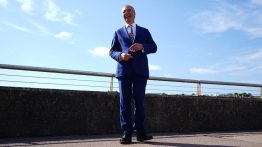
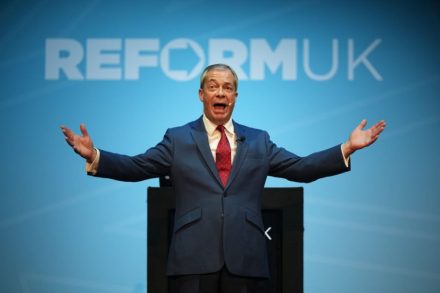
Reform UK are on the rise – quite literally. The party is planning to move one floor up in their headquarters at Millbank Tower, giving its 40-odd staff a commanding view of Westminster from their office. That change in circumstance was reflected in Nigel Farage's speech this morning, when he strolled in to Westminster's Church House to set out his party's pitch to non-doms. The Clacton MP told journalists that 'tens of thousands' of people would be tempted to the UK by the offer of the card The party's headline announcement today was the launch of a new 'Britannia card'. This would be a one-off £250,000 fee which would allow non-doms – UK residents whose permanent home for tax purposes is outside the UK – to avoid income tax.

Does the government support Trump’s Iran strikes?

From our UK edition

13 min listen

The weekend saw the US launch airstrikes on three Iranian nuclear sites, with Tehran warning of ‘everlasting consequences’. Despite an emergency Cobra meeting and Luke Pollard’s morning media round, we are still waiting for an answer on whether the government supports Trump’s action. Keir Starmer’s assured and confident position on the world stage now looks to be in peril, as he is pulled between Trump, his attorney general and the court of public opinion. Can he de-escalate? Also on the podcast, Nigel Farage delivered a speech this morning in which he announced changes to non-doms and unveiled a new ‘Britannia card’ – although most of the questions afterwards centred on the situation in the Middle East.

Farage’s latest hero? Benjamin Disraeli

From our UK edition

At 9 a.m on Monday morning, Nigel Farage will march into a central London venue to make one of his most audacious speeches yet. Since returning as leader of Reform UK last May, he has trodden carefully when it comes to policy. Farage quickly canned the party's manifesto after the election, preferring to focus on a few key areas: lifting the two-child benefit cap, hiking the annual income tax personal allowance to £20,000, cutting council waste, abolishing Net Zero and renationalising steel. But his next move is more original in its thinking. Farage will announce a new policy for 'non-doms': British residents whose permanent home for tax purposes is outside the UK. Rachel Reeves' first Budget abolished this status in April, claiming it would raise £2.7bn a year by 2029.

Keir Starmer is not having a good war

From our UK edition

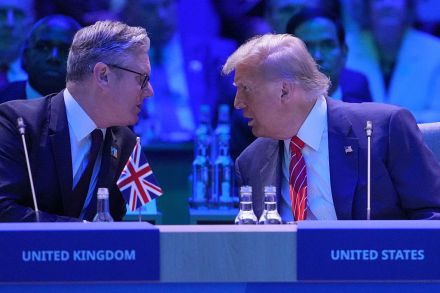
This is not been Keir Starmer's finest week on the world stage. At the G7 on Tuesday, the Prime Minister breezily dismissed talk that the Americans would shortly join Israeli's attack on Iran. 'There’s nothing the President said that suggests he’s about to get involved in this conflict,' he insisted. 'On the contrary, throughout the dinner yesterday, I was sitting right next to President Trump, so I’ve no doubt in my mind the level of agreement there was.' Within hours, Trump left Alberta to return to the White House Situation Room and approve the final attack plan for Iran. Then there was the row over whether US bombers would launch from Diego Garcia, the British military base on the Chagos Islands.

America hits Iran’s nuclear sites

From our UK edition

Just before 1 a.m GMT on Sunday morning, Donald Trump announced that the United States had bombed three nuclear sites in Iran: Fordow, Natanz, and Esfahan sites. It followed a tense 72 hours in which senior White House advisers became increasingly convinced that diplomatic channels had been exhausted, with military action the only available recourse to eliminate Iran's nuclear programme. Following the attack, Trump declared: We have completed our very successful attack on the three Nuclear sites in Iran, including Fordow, Natanz, and Esfahan. All planes are now outside of Iran air space. A full payload of BOMBS was dropped on the primary site, Fordow. All planes are safely on their way home. Congratulations to our great American Warriors.

Tories will remember this assisted dying vote

From our UK edition

'I judge a man by one thing, which side would he have liked his ancestors to fight on at Marston Moor?' So said Isaac Foot, the Liberal MP and father of Michael. For some Tories, both in and out of parliament, Friday's assisted dying debate will carry a similar weight in judgements of character. Some 80 per cent of Tory MPs voted against Kim Leadbeater's Bill at Third Reading, with 92 against, 20 in favour and five registered abstentions. Of the 25-strong new intake, elected last year, just four backed Leadbeater's Bill: Aphra Brandreth, Peter Bedford, Ashley Fox and Neil Shastri-Hurst. Social conservatives note that the Tories were much more aligned on assisted dying than Reform UK, which narrowly opposed the change by three votes to two.

Jeremy Hunt on Trump, Budgets and Welsh whisky

From our UK edition

18 min listen

On this week’s special Saturday edition of Coffee House Shots, James Heale sits down with Jeremy Hunt to discuss his new book, Can We Be Great Again?. The former chancellor and foreign secretary argues that Britain remains one of the world’s most influential nations – but is in danger of losing its nerve. He reflects on working in the Foreign Office during Donald Trump’s first term, makes the case for the BBC as a tool of soft power, and admits he wanted to be the first chancellor since 1997 to deliver a Budget with a whisky in hand. Produced by Oscar Edmondson and Patrick Gibbons.