James Forsyth

James Forsyth

James Forsyth is former political editor of The Spectator.

The John Worboys verdict is a triumph for justice

From our UK edition

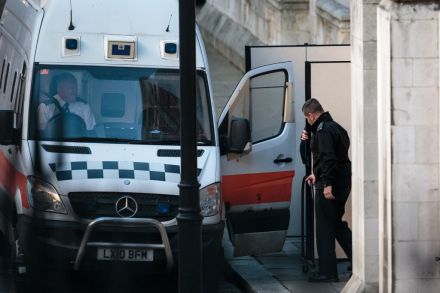
The John Worboys verdict is a triumph for justice, and a huge credit to the victims who so bravely brought their case to court. This rapist is staying in prison and a fresh parole board will now review his case. With the court recommending that someone with judicial experience should be on the panel, one has to hope that it will come to a more sensible verdict. The other good news from today’s proceedings is that the Sun, who I write a column for, has won its case against the blanket ban on revealing the details of the Parole Board’s decision-making. This greater transparency is hugely to be welcomed. If you want to maintain public confidence in the judicial system and in the early release of some prisoners, then you need to be able to show how these decisions are being made.
Labour MPs are suspicious of Corbyn again

From our UK edition

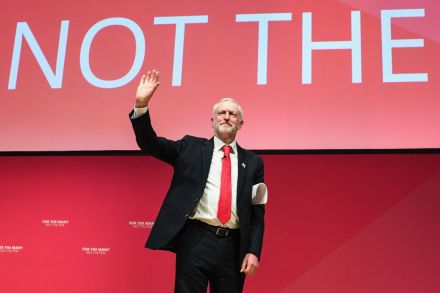
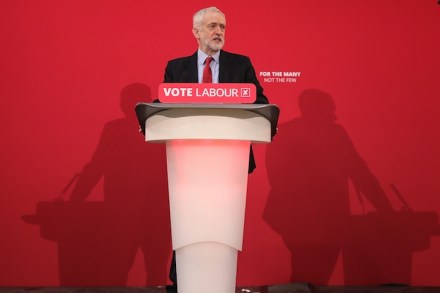
One of the mistakes Theresa May made in calling an early election was not anticipating the effect it would have on the Labour party. Up until April 2017, Labour had been noisily divided between the parliamentary party — the vast majority of whom had no confidence in its leadership — and Jeremy Corbyn whom they couldn’t remove because he had the backing of the membership. But the snap election changed this dynamic. Corbyn’s internal opponents nearly all went quiet once the campaign was announced. This wasn’t just tribal loyalty asserting itself. They wanted to make sure that Corbyn failed on his own terms — that there could be no stab-in-the-back narrative. They also felt there was little risk in keeping schtum.

Why no deal preparations must continue

From our UK edition

Theresa May has had by far her most successful EU Council this week. The terms of the transition deal were signed off and, in a genuine diplomatic achievement, she got the EU to collectively recognise that no one other than Russia could have been responsible for the Salisbury attack. But as I say in The Sun today, that doesn’t mean the government should ease off on ‘no deal’ planning. There is a sense in Whitehall that with the negotiations progressing well, there’s not much point in rocking the boat by preparing for a no deal scenario or spending money on things that might not ultimately be needed. One of those intimately involved in no deal planning complains that ‘there is an institutional reluctance to continue working on contingency in Whitehall’.

Who is right on stop and search, Boris or May?

From our UK edition

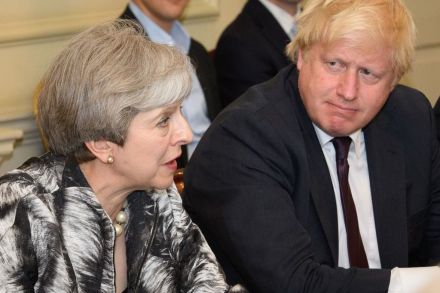
Theresa May’s Home Office record is normally off limits at cabinet. But, as I write in the magazine this week, when ministers discussed the government’s strategy for reducing violent crime on Tuesday, Boris Johnson took issue with what the Prime Minister regards as one of her key legacies: the dramatic reduction in stop and search. He argued that more stop and search was needed to deal with a spike in crime. What went unsaid — but what everyone around the cabinet table was acutely aware of — was that this was the opposite of May’s approach as Home Secretary. As Home Secretary, May toughened up the rules around the police’s use of stop and search. In 2014, she said that the system was ‘unfair - especially for young black men’.

British passports being made abroad isn’t a ‘national humiliation’

From our UK edition

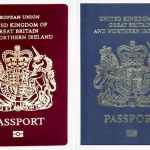
The new British passport being made abroad is a perfect symbol for Brexit Britain. For after we leave the European Union, we should be an open, free trading nation. If a French firm is offering to make our passports to the requisite standard for a lower price than any British company, then the contract should go to that firm. Let’s leave the Colbertism to the French. Rather than being all defensive about this contract going to a foreign firm, the government should be pointing out that this approach will save the taxpayer money.

The Tories are risking their reputation as the party of law and order

From our UK edition

Theresa May’s Home Office record is normally off limits at cabinet. But when ministers discussed the government’s strategy for reducing violent crime on Tuesday, Boris Johnson took issue with what the Prime Minister regards as one of her key legacies: the dramatic reduction in stop and search. He argued that more stop and search was needed to deal with a spike in crime. What went unsaid — but what every-one around the cabinet table was acutely aware of — was that this was the opposite of Mrs May’s approach as Home Secretary. The exchange was pointed. ‘They irritate each other,’ one cabinet minister observed to me afterwards. They also have form on these matters.

Jeremy Corbyn’s post-election honeymoon is over

From our UK edition

The political weather has changed at Westminster. Tory MPs now have a spring in their step in a way that they haven’t had since the snap election went so wrong. By contrast, the Labour benches look glummer than they have in a while. Tory MPs might be exaggerating how much things have really changed; several of them are currently demonstrating that the Conservative party really does only have two modes, panic or complacency. But a couple of things have shifted in the last few weeks. Jeremy Corbyn’s reaction to the assassination attempt on Sergei Skripal has reminded Labour moderates of why they were so opposed to Corbyn in the first place. Whether this sense leads to them actually taking any concrete steps remains to be seen.

Two things that must change after Salisbury

From our UK edition

As I say in The Sun this morning, one of the things about the Salisbury attack that has disconcerted the UK government is how--relatively obvious--the Russians have made it, that it was them. They clearly wanted to send a message. In Whitehall, the thinking is that there were three things that Moscow was trying to achieve with the poisoning of Sergei Skripal. First, to show Russia’s enemies that they are never safe. If they can hit a former spy for Britain who was keeping a low profile in a small English City then they can get to anyone. Second, they think that the Russians were trying to test Britain. This country is now the major Western power that is most consistently arguing for a robust approach to Vladimir Putin.

The Tory tax bombshell

From our UK edition

The single most important domestic policy decision that the Conservatives must take is what to do about public spending. After the snap election went so wrong last year, many Tories rushed to blame ‘austerity’. Gavin Barwell, now Theresa May’s chief of staff, said this was one of the principal reasons he had lost his Croydon Central seat. Even the Chancellor, Philip Hammond, admitted that the public was weary of the long slog to balance the books. This belief — that the public has had enough of austerity — explains why the Tories aren’t behaving as governments traditionally do.

Corbyn’s Russia response could reignite Labour’s civil war

From our UK edition

Theresa May has just told the House of Commons that there is ‘no alternative conclusion’ other than that Russia was responsible for the attempted murder of Sergei Skripal. She said that Moscow’s response to the UK’s request for an explanation of what had happened in Salisbury had demonstrated ‘complete disdain’. In response to the incident, the government will expel 23 Russian diplomats who it believes to be spies. The UK will also break off all high-level contact with Russia – so there’ll be no British dignitaries at the World Cup this summer – and pass its own Magnitsky act. This UK response is not small. But it is clearly designed so that the government can respond to whatever Russia does next.

Theresa May accuses Russia of an unlawful use of force against Britain

Theresa May has given Russia until Wednesday to explain why a nerve agent that it has developed was used in the Salisbury attack. She told the House of Commons that it was ‘highly likely’ that Russia was responsible for the poisoning of Sergei Skripal and his daughter. She said that Boris Johnson had summoned the Russian Ambassador and put it to him that were only two explanations for what had happened, one that the Russian government itself was responsible or that Moscow has lost control of its stock of deadly nerve agents. I think it is safe to assume that no explanation, at least not one that would satisfy a reasonable observer, will be provided before Wednesday.

With 240 potential witnesses, were Skripal’s poisoners trying to send a message?

From our UK edition

‘Any fool can commit murder, but it takes an artist to make it look like suicide’ the KGB used to say. But whoever put Sergei Skripal and his daughter Yulia in hospital was rather less subtle: police have identified 240 potential witnesses, according to Amber Rudd, and have extensive CCTV coverage to go through.  I write in The Sun this morning that anyone capable of getting hold of the nerve agent used was capable of killing him in a far more subtle manner - with no witnesses and nothing in CCTV. Whoever carried out the attack on Skripal wanted to send a message. They wanted to prove that enemies of Russia are not safe wherever they may be.

How will May respond to the EU’s Brexit approach?

From our UK edition

‘Evolve’ is the new word of the Brexit negotiations. The draft Council negotiating guidelines presented by Donald Tusk yesterday, stressed that the EU's offer would change if the UK’s position evolved. Meeting Tusk today, the Irish Taoiseach Leo Varadkar has made exactly the same point. The negotiating strategy is clear: keep telling the British that if they are prepared to change their position, then the EU will come back with a far more wide-ranging deal. As I say in my column in this week's magazine, the EU will continue to offer Theresa May a choice between—basically—Canada or Norway. They hope that if they can keep this up, the UK will eventually take the Norway option and agree to become a regulatory rule-taker across the economy as a whole.

The EU would regret punishing us

From our UK edition

Last Monday, Theresa May’s chief of staff talked junior ministers through her Mansion House speech. Gavin Barwell was frank with them. The decision to stay in various EU agencies — and the commitment that UK regulatory standards for goods would remain ‘substantially similar’ to Europe’s — would make it harder to negotiate big trade deals with other countries. But he argued that the trade-off in access to the EU market made it worthwhile. In keeping with the current Tory truce over Brexit, no one in the room dissented. No. 10 believes that maintaining this peace is not just desirable, but essential.

Mrs May mustn’t make the same mistake again

From our UK edition

I am told that Boris Johnson harrumphed his way through the Cabinet’s reading of Theresa May’s Brexit speech on Thursday. As I write in The Sun this morning, one minister complained to me ‘it is very hard to concentrate with him making all that noise’. Listening to Mrs May yesterday, you could see why Boris Johnson was harrumphing. There were things in it that are hard to swallow for those who want to ‘take back control’. The decision to try and stay in the European Medical, Chemical and Aviation Safety agencies essentially makes the UK a rule taker in all those sectors of the economy. But May was clear that the UK was not going to stay in any kind of customs union with the EU.

May’s Brexit Speech: David Davis pushes back against a ‘binding commitment’ to align with EU rules

From our UK edition

The Cabinet met earlier today to discuss Theresa May’s big speech on Brexit tomorrow. I understand that in a lengthy meeting most ministers applauded the speech. But there is one particular area of controversy, I hear. Both David Davis and Boris Johnson pushed back against the idea that the UK should make a ‘binding commitment’ to align with EU rules and regulations in certain sectors. The Brexit Secretary, I am informed, led the charge against this idea which the Brexiteers feels go further than what was agreed at the Chequers meeting of the Brexit inner Cabinet.

Tony Blair continues the campaign against Brexit

From our UK edition

The campaign against Brexit continues today with Tony Blair’s speech in Brussels. I personally think that this campaign is unlikely to succeed, it is simply too much of a replay of the In campaign’s arguments from the 2016 referendum. But if this attempt to reverse the referendum result is to have any hope of succeeding, Blair’s leg is the most important. For he is asking the EU to make the UK an improved offer, to show that it is trying to address the concerns that led to so many people voting to Leave. Every time the European Union has asked a country to vote again on a treaty it has provided some concession to make it more palatable second time round.

Which way, Mrs May?

From our UK edition

For every action, there is an equal and opposite reaction. Every time Conservative Leavers speak up demanding a clean break with Brussels, those in the party who want a soft Brexit feel obliged to push back. The latest row has been provoked by a letter from the European Research Group — the most powerful Brexiteer bloc in the party. The letter urged Theresa May to deliver ‘full regulatory autonomy’ for the UK. It was taken by many on the soft Brexit wing of the party as a threat to pull support for her if she deviated from this objective. After all, it was signed by 62 MPs — more than it would take to call a vote of confidence in her leadership. So the soft Brexiteers retaliated.

Michel Barnier’s encouraging comment

From our UK edition

Theresa May’s response to today’s Brexit developments has been revealing. At PMQs, she called staying in a customs union with the EU a ‘betrayal’ of the referendum result, a definite ramping up of her rhetoric, and said that ‘no UK prime minister could ever agree to what the EU’s draft legal text proposes on Northern Ireland.' What makes May’s comments so interesting is that many believe, including the Foreign Secretary, that the EU is raising the stakes on the Irish border to try and get the UK, as a whole, to commit to staying in a customs union with the EU. May seems to want to make clear to other EU governments that this is a non-starter for her.

Are the Brexit talks bordering on collapse?

From our UK edition

The question of the Irish border has almost collapsed the Brexit talks once, remember Mrs May’s first abortive December trip to Brussels, and it is threatening to do so again. A leaked copy of the EU’s proposed legal text of the phase one agreement that was finally reached in December says that if other options cannot be made to work Northern Ireland would be considered part of the customs territory of the EU. Given the UK’s plan is to leave the customs union, this would—in effect—create an internal economic border within the UK. It is doubtful whether this would be acceptable to any UK government, but it is particularly unacceptable to a British Prime Minister who relies on the support of the Democratic Unionist Party. So, what happens now?