James Forsyth

James Forsyth

James Forsyth is former political editor of The Spectator.

Boris backs May’s deal – who is next?

From our UK edition

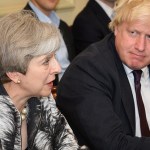
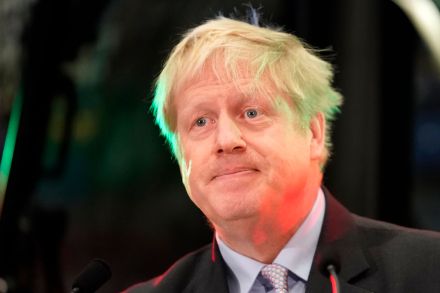
Theresa May’s pledge to go before the second stage of the Brexit negotiation if her deal passes, is already reaping some rewards. Boris Johnson has told a meeting of the ERG that he is now backing the deal. His argument is that what is going on in Parliament means there is a real chance of losing Brexit and that a change of personnel will lead to a change of policy in stage two. This addresses his concern that Theresa May would interpret the withdrawal agreement passing as a license to go and negotiate a Chequers-style agreement. Boris Johnson isn’t the only big beast shifting tonight. Iain Duncan Smith, who played a crucial role in persuading May to make this offer, has also said he will now back it. Charlie Elphicke, the secretary of the ERG, has also swung in.

Theresa May has played her last card: if her deal passes, she’ll go

From our UK edition

Theresa May has played her last card in her attempt to get her Brexit deal through. She has told Tory MPs that if it passes, she’ll go and let someone else do phase two of the negotiations. In this scenario, a new Prime Minister would be in place by the autumn. I’m told that no Tory MP in the room asked May for more specificity about her departure date. Some might have preferred a named date, but after the meeting I bumped into a couple of ERG members who voted against the deal last time who said they would now back it. Their logic is that a change in personnel will lead to a change in policy ahead of the trade talks and so makes the deal more acceptable. Number 10 desperately needs this pledge to bring over most of the Brexit rebels.

If May promises to go, will it be enough to win over Tory rebels?

From our UK edition

Theresa May goes to see the 1922 Committee of Tory MPs at 5pm this evening. Speculation is rife that she will use the meeting to announce a timetable for her departure, though there’s no official line from Number 10 on this. I understand that Tory switchers are being told that Theresa May will go if the withdrawal agreement bill gets Royal assent, which would have to be by May 22nd. This would, obviously, require meaningful vote 3 to pass – though, as Katy says, John Bercow is not keen on the vote happening at all. If May does set out a timetable, then I suspect a good number of Tory Brexit rebels will move into the government column. Even without it, there are already some coming over.

Are we heading for a softer Brexit?

From our UK edition

With Oliver Letwin’s amendment passing, MPs will seize control of the order paper on Wednesday afternoon to hold indicative votes. These votes will come before any third vote on May’s deal. The not-so-secret hope of many in government is that they might help the withdrawal agreement get over the line. Theory one is that they’ll show that the majority in the Commons is for a softer Brexit, and so push some reluctant ERGers into the government column. Some ministers also hope that the DUP will not be keen to go for an early election at this moment; and will be more inclined to compromise if they think that the government will go back to the country rather than accept a customs union.

The one way to give MV3 a chance of passing

From our UK edition

At the moment, the Brexit deal isn’t going to pass. As I say in The Sun this morning, getting it through was always going to be tough, but the errors that Mrs May has made this week have made it even more difficult. As one Secretary of State puts it, ‘She would have been much better off spending three days in bed.’ By putting no deal back on the table, she encouraged the ERG—the Brexit hardliners in her own party—to believe that voting against her deal would get them what they want. Her speech on Wednesday night criticising MPs was also ill-judged, given that they are who she needs to win over. It was particularly mistaken given that May had turned down an invitation to address her own MPs that evening.

Why the DUP are worried about Tory succession

From our UK edition

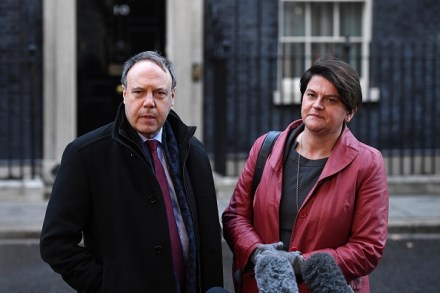
It is the morning after the Bercow before, and it seems pretty much certain that there won’t be a meaningful vote 3 until after the European Council. Whatever is decided there on an extension, should be enough for the government to say that the package is different enough to justify bringing it back for another vote. But there is no point in the government bringing it back for another vote unless it has a chance of winning that vote, and it won’t have that without the DUP. I understand that these negotiations are going relatively well.

Will it never end?

From our UK edition

The government has lost the ability to run the country. It is no longer in charge of its own destiny, let alone that of the nation. What makes this so humiliating is that power has been ceded not to parliament, but to the European Union. The immediate future of our country will be decided in Brussels and the capitals of the EU, not in Westminster. It will be the EU that decides whether or not to offer the UK an extension to the Article 50 process, and how long it will be. Once the extension has been agreed, then parliament — which has already voted against leaving without a deal — will rubber-stamp it. Not since Denis Healey was forced to ask the International Monetary Fund for an emergency loan in 1976 has this country been so humiliated.

May says little new in statement as she again attacks MPs for failing to make a decision

From our UK edition

Theresa May’s statement tonight wasn’t particularly dramatic. She had no new policies to announce or arguments to make. Rather, she once again attempted to frame the choice before MPs as her deal, no deal or no Brexit. She tried to position herself as the defender of the referendum result and attacked MPs for failing to take a decision. As a political journalist my reaction to the statement was, is that it? But the question is whether the attack on MPs for the endless motions and amendments and for not talking about anything else will resonate with the public, and lead to them putting pressure on their MPs to back the deal. May said, as she had in the House earlier, that she won’t delay Brexit beyond June 30th.

Donald Tusk doesn’t rule out a long extension

From our UK edition

Donald Tusk has just declared that the UK can have a short extension if MPs vote for the Brexit deal next week. The Tusk statement implies that if MPs don’t vote for the withdrawal agreement, then the UK can’t have an extension—and so will leave without a deal. I suspect that we’ll see Number 10 trying to use this line to cajole Labour MPs into voting with the government next week. But I don’t think what Tusk was saying was quite that simple. His message was that if the UK wants a short extension then the meaningful vote needs to pass next week, as per the timetable set out in Theresa May’s letter.

What Theresa May revealed to Boris Johnson

From our UK edition

In the House of Commons today, Theresa May indicated that she would quit as Prime Minister if the UK hadn’t left the EU by the 30th of June. She was, in effect, suggesting that if MPs vote down her deal again next week, they’ll be making her departure from Downing Street more likely. But this is the opposite of the promise many Tories want her to give. A growing number of senior figures in the party believe that May should say that she’ll go if her deal passes. In other words, vote for the deal and then you can pick a new Prime Minister. They believe that this carrot might entice some Brexiteer rebels to back the deal.

Once an extension is agreed, domestic law won’t take us out of the EU

From our UK edition

As we wait for the text of Theresa May’s letter requesting an Article 50 extension, it is worth remembering that once the UK government and the EU have agreed an extension then the UK will continue to be an EU member under international law—and international law trumps domestic law. A Department for Exiting the European Union briefing note for ministers points out that the Vienna Convention declares: '''A party may not invoke the provision of its internal law as justification for its failure to perform a treaty." As a matter of EU law, it follows that in these circumstances we would remain a member state after 29 March, and the EU law consequences of that would continue to flow in the UK.

Why the DUP are worried about Tory succession | 19 March 2019

From our UK edition

It is the morning after the Bercow before, and it seems pretty much certain that there won’t be a meaningful vote 3 until after the European Council. Whatever is decided there on an extension, should be enough for the government to say that the package is different enough to justify bringing it back for another vote. But there is no point in the government bringing it back for another vote unless it has a chance of winning that vote, and it won’t have that without the DUP. I understand that these negotiations are going relatively well.

May should pledge to resign – it’s not too late to save her legacy

From our UK edition

Allies of Theresa May have long talked about how she wants her legacy to be about more than Brexit. But the brutal truth is that there is no such legacy available to her. Rather, her choice is between being the Prime Minister who got a withdrawal agreement through or the one who had to ask for a long, humiliating extension. If May wants to increase the chances of the former being her legacy and not the latter, then she is going to have to promise to go at some point before the next meaningful vote. Earlier today, one office holder in the ERG told me that if May said she would leave once the Withdrawal Agreement Bill was through the number of Brexiteer rebels would reduce to 20 or so. But it is not just on the ERG side that the prospect of a new prime minister would help.

Would the EU reject an Article 50 extension request?

From our UK edition

Any extension to the Article 50 process would have to be unanimously agreed by the EU 27. This has led to some speculation that there might be a veto. But this strikes me as highly unlikely. One of the EU’s priorities in this negotiation has been to try and avoid blame, which explains Michel Barnier’s cack handed social media diplomacy. Rejecting a UK request to extend Article 50 would turn that approach on its head. It is also worth remembering that the EU is far from perfectly prepared for a no deal exit—what to do about the Irish border being the most glaring example of this—and if the EU forced that outcome its leaders would then be held responsible by their electorates for what happened next.

Better than 50:50 chance that the government can get the DUP on board for meaningful vote 3

From our UK edition

This weekend all eyes are on the DUP. As I say in The Sun this morning, if the government can satisfy them, then Theresa May has a chance of winning the vote on Tuesday because of the domino effect that them coming across will set off. But if the DUP won’t come over, there’s no point holding a third meaningful vote. The DUP spent yesterday in intensive talks with senior government figures. I understand that these talks were broadly positive. One Cabinet Minister close to the process tells me that the chances of the DUP backing the deal are ‘a bit better than 50:50. I’d put it at 60:40.

Is there a risk Britain will get stuck in the Brexit backstop?

From our UK edition

The prospects of Theresa May’s Brexit deal passing now hinge on what risk there is of the UK being trapped in the backstop against its will. A compelling new legal analysis by Policy Exchange suggests that this risk is significantly lower than thought. Written by three distinguished lawyers—a professor of international law at King’s College London, a former first parliamentary counsel and an Oxford professor—the paper makes clear that the new protections on the backstop have greater force than appreciated. First, the ‘good faith’ obligation in international law is more meaningful than thought.

It’s not over yet

From our UK edition

Almost three years have passed since Britain voted to leave the European Union, and yet we are still no closer to a Brexit resolution than we were on that June morning. No one is in control and this country’s whole system of governance is creaking. We are in an interregnum that shows no sign of ending. What is remarkable about this moment in our history is that something must break the impasse. This means that, although Theresa May’s deal suffered the biggest defeat ever for a piece of government business and was defeated a second time by a three-figure margin, it is not dead yet. Many cabinet ministers, including several of those who are very critical of May, think there is a chance that the deal will pass at the third time of asking.

Row breaks out between the whips and Number 10

From our UK edition

As if the government did not have enough troubles right now, a major row has erupted between the Whips’ Office and Number 10. The whips think that a Number 10 aide was telling ministers they were safe to abstain on the no to no deal motion, when there was a three-line whip to vote against it. After the amendment ruling out no deal in any circumstances passed, the government decided to whip against its own motion rather than allowing a free vote on it. This irritated a slew of Remain / soft Brexit ministers who wanted to vote against no deal. Sarah Newton resigned as a Minister of State to do so. A handful of Cabinet Ministers — Amber Rudd, David Gauke, Greg Clark, David Mundell and Claire Perry — abstained.

Meaningful vote 3 in the next seven days

From our UK edition

Theresa May’s extension motion makes clear that she intends to bring her deal back for another vote in the next seven days. The motion states that if a meaningful vote has been passed by the 20th of March, then the government will request a short technical extension to pass the necessary Brexit legislation. (This request would be made at the European Council meeting next Thursday). But if no deal has been passed by the 20th, the UK would request a much longer extension — which would require the UK to participate in the EU Parliament elections. So, it is clear that the government are going to try and pass the meaningful vote between now and the 20th. There is optimism in government that it might be third time lucky for the withdrawal agreement.

Philip Hammond tore up the Brexit script at his Spring Statement

From our UK edition

Brexit was always going to dominate this Spring Statement. Philip Hammond even began by saying he’d keep it short to allow the Commons to move on to the ‘no deal’ debate. But the most eye-catching thing Hammond said on Brexit came at the very end. He talked about the need to build consensus across the House. This is Westminster code for a customs union style solution. Hammond has been making the case for this approach at Cabinet for quite a while now. But it isn’t yet Government policy—most ministers still think that there is a chance May’s deal could pass in a third meaningful vote. So it was quite remarkable to hear Hammond saying it from the despatch box at the Spring Statement. It is another demonstration of how discipline is breaking down.