James Forsyth

James Forsyth

James Forsyth is former political editor of The Spectator.

Boris Johnson has 72 hours to win over a dozen MPs

From our UK edition

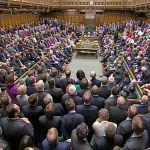
Today was meant to be the day that parliament decided on Brexit. But this parliament will always choose to postpone that moment. By voting for the Letwin amendment by 322 to 306, the Commons chose to avoid stating whether it backs the new Brexit deal or not.  The next key moment will come on Monday when there will be a meaningful vote on the deal. Judging from the vote on the Letwin amendment, Boris Johnson has 306 solid votes both for his deal and a programme motion that would get the legislation through by the 31 October. So he needs to find 14 more votes between now and then. Oliver Letwin and Nick Boles have both indicated that they would back both the deal and the programme motion. This means the whips have 72 hours to find the other dozen votes they need.
With ‘glutinous emollience’, Boris Johnson tries to win the House round

From our UK edition

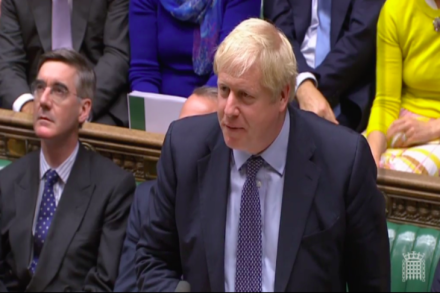
Boris Johnson is in ‘glutinous emollience’ mode today. His opening statement in the debate was not combative but an attempt to cajole and persuade. He said that he would draw on the talents of the whole House in the next stage of the negotiations. In response to Philip Hammond, he accepted the Nandy / Snell amendments which would enable parliament to set the government’s approach to the next stage of the negotiations with the EU. Even when calling on Oliver Letwin not to move his amendment—which threatens to muddy the waters today as Katy explains—he stressed that he thought Letwin was motivated by good intentions. But if the Letwin amendment does pass later, then I think Number 10—if not Johnson’s—tone will change.

Will the Brexit deal get a majority?

From our UK edition

The numbers will be tight today. As I say in The Sun this morning, one minister believes that things are so close that there is a real chance that the Speaker John Bercow may end up having to break a tied vote. Though if the Letwin amendment passes, the vote this afternoon will lose some of its clarity. It is remarkable that Boris Johnson is so close to getting a majority for his deal despite having lost the support of the DUP. Cabinet Ministers are increasingly optimistic that the government might just pull this off. When Cabinet met yesterday afternoon, the Chief Whip Spencer ‘scrupulously avoided giving any numbers’, according to one of those present.

Nobel Peace Prize winner David Trimble backs Boris’s Brexit deal

From our UK edition

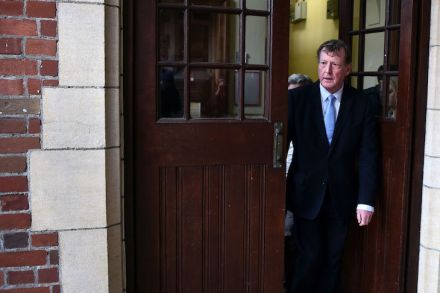
The former First Minister of Northern Ireland David Trimble, who shared the Nobel Peace Prize for his work on the Good Friday Agreement, was highly critical of Theresa May’s backstop. Trimble, who now sits as a Tory peer, wrote a paper for Policy Exchange on how ‘The Backstop Would Wreck the Good Friday Agreement’ In a sign of how much better the new deal is in terms of consent, Trimble has this morning issued a statement saying that the new Brexit deal is ‘fully in accordance with the spirit of the Good Friday Agreement’ and that now ‘is not the time to be looking for excuses not to implement either the Good Friday Agreement or the new deal.’ Here’s his statement in full: 'Yesterday’s agreement is a great step forward.

The EU might tell MPs: it’s this deal or no deal

From our UK edition

Both the UK government and the EU are now saying that a Brexit deal has been done. There is both a revised withdrawal agreement and political declaration.  However, the DUP are not yet on board. This makes it very hard to see how this deal can pass the Commons. At Cabinet yesterday, Chief Whip Mark Spencer went through the numbers and his calculations suggested a majority of one. His assumption was that every Tory MP who still has the whip would back it, as would 15 of the 21 Tory rebels and the DUP. The government could also rely on the support of the nine Labour or independent MPs who had previously voted for a withdrawal agreement.

A Brexit deal will completely change the electoral landscape

From our UK edition

Expect the unexpected has been the rule in British politics these last few years. But even so, few would have predicted the events of the past week. Last Tuesday evening the Brexit talks seemed dead. Even the most mild-mannered figures in Downing Street held out little hope of a deal this side of an election. That all began to shift, though, after Boris Johnson and Leo Varadkar met last Thursday. What changed was that they both realised that the other was serious about a deal. They stopped seeing each other’s proposals as a trap and began engaging with them. This doesn’t guarantee a deal, though. Boris Johnson and Leo Varadkar’s desire to get this done is a necessary but not sufficient condition for an agreement.

Arlene Foster and Nigel Dodds hold the key to a Brexit deal

From our UK edition

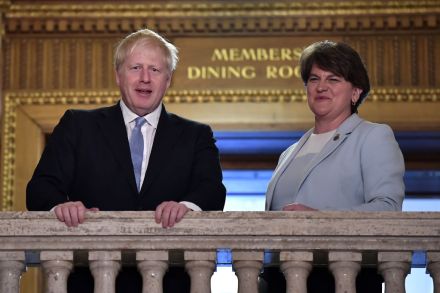
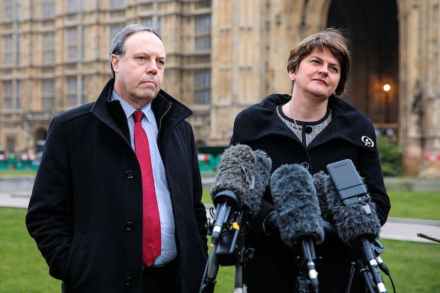
Arlene Foster and Nigel Dodds are currently the two most important politicians on the European continent. If the DUP is happy, there’ll be a Brexit deal between the UK and the EU. If it is not, it is hard to see how there can be—it is almost impossible to see how an agreement that they are opposed to can pass the Commons. At the moment, the DUP have not said they are happy. I understand that there was some movement from the Irish on consent this morning. But that softening hasn’t yet been enough to win around the DUP. They would like something that would enable them to say that they – or at least Unionists more broadly—can end these arrangements if they want to. I am informed that Nigel Dodds is particularly exercised on this point.

Is a deal really possible?

From our UK edition

It is one of the most remarkable turnarounds in recent political history. On Wednesday afternoon, the Brexit talks seemed pretty much dead—hence my piece in the magazine this week. Even the optimists in Downing Street were struggling to see anyway through. But by Friday lunchtime, the UK and the EU were agreeing to intensify negotiations as they searched for a deal. As I say in The Sun this morning, the negotiations going on in Brussels this weekend are serious: they aren’t just for the show. This doesn’t, though, mean that a deal will definitely be done. But things are on the move. Now, the sheer pace of this turnaround is a reason for caution.

The Brexit blame game

From our UK edition

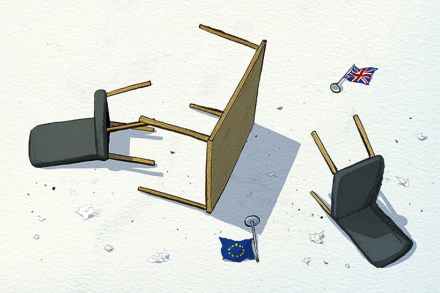
There will be no last-minute deal. The talks between the UK and the EU have effectively broken down. It isn’t that there’s no light at the end of the tunnel, it’s that there’s no tunnel at all. The blame game is now far more advanced than the negotiations. The diplomatic crockery has been smashed even before Boris Johnson and the leaders of the EU27 have arrived in Brussels for this month’s European Council. The question now is whether the talks can ever be resuscitated at a later date —  or if we are in a world where the only options are no Brexit or no deal. The assumption had long been that as the 31 October deadline neared, one side or the other would blink. That the pressure would produce a compromise.

How Number 10 view the state of the negotiations | 8 October 2019

From our UK edition

Earlier today, I sent a message to a contact in Number 10 asking them how the Brexit talks were going. They sent a long reply which I think gives a pretty clear sense of where they think things are. So, in the interest of trying to let people understand where Number 10 reckon the negotiations are, here is their response: ‘The negotiations will probably end this week. Varadkar doesn’t want to negotiate. Varadkar was keen on talking before the Benn Act when he thought that the choice would be ‘new deal or no deal’. Since the Benn Act passed he has gone very cold and in the last week the official channels and the backchannels have also gone cold.

How Number 10 view the state of the negotiations

From our UK edition

Earlier today, I sent a message to a contact in Number 10 asking them how the Brexit talks were going. They sent a long reply which I think gives a pretty clear sense of where they think things are. So, in the interest of trying to let people understand where Number 10 reckon the negotiations are, here is their response: ‘The negotiations will probably end this week. Varadkar doesn’t want to negotiate. Varadkar was keen on talking before the Benn Act when he thought that the choice would be ‘new deal or no deal’. Since the Benn Act passed he has gone very cold and in the last week the official channels and the backchannels have also gone cold.

Boris Johnson will have to win a majority to get the EU to engage with his Brexit plan

From our UK edition

The Brexit talks between the UK and the EU are making very little progress. Number 10 say that there is the ‘potential for some meetings next week’. But, as I say in The Sun this morning, there is little optimism about what will come from them. There is doubt as to whether the process will even make it into the tunnel, the EU’s term for intensive serious negotiations. One Number 10 source tells me, ‘Not going to get into the tunnel without more compromise but we’re getting to the limit of what we can do.’ There are two essential problems. The first is that Theresa May gave away so much with the original backstop.

Brexit rebels warm to Boris Johnson’s Brexit plan

From our UK edition

The European reaction to Boris Johnson’s plan has been getting cooler today. But in parliament it has been a different story. In response to Boris Johnson’s statement earlier, several members of the so-called Spartans—those Brexiteers who voted against Theresa May’s deal on 29 March—indicated they would support it. At the same time, a slew of ex-Tory MPs who voted for the Benn Act made clear they were happy with it too. Frank Field urged Boris Johnson to stage a declaratory vote on this plan before he goes to the EU Council, to show European leaders that it could pass the Commons. Boris Johnson said that he would think about it but didn’t seem keen. Judging by today, though, this plan probably does command majority support in the House.

Will Leave voters forgive a Brexit delay?

From our UK edition

‘It is definitely less than 50 per cent,’ says one Downing Street source when asked about the chances of a Brexit deal. And this is one of the optimists. One cabinet minister warns that the UK ‘is driving into a brick wall’ with its current Brexit proposals; other ministers are not sure if this offer is designed to make a deal or just to make the point that London was prepared to compromise but Brussels refused to budge. So it’s a stand-off. Boris Johnson is determined to take the whole of the UK out of the customs union, and the Irish and the EU are equally robust in their view that there can’t be checks on the island of Ireland.

Will Boris Johnson’s Brexit offer lead to a deal?

From our UK edition

The UK government has now published its Brexit offer to the EU. It has put out a letter from Boris Johnson to Jean-Claude Juncker making the case for its backstop replacement and a briefing note setting out how it would work. In essence, it puts a regulatory border between Great Britain and Northern Ireland and a customs border between Northern Ireland and the Republic. But the briefing notes sets out the British belief that a combination of technology and checks at traders' premises would mean that there'd be no need for checks at—or near to—the border. Northern Ireland’s continuing alignment with the EU on goods rules would require Stormont’s affirmative consent.

The three messages Boris Johnson wanted to get across

From our UK edition

Boris Johnson’s conference speech felt more like an after-dinner speech than a traditional leader’s speech at times. There were more jokes than policy announcements. The purpose of this speech, though, wasn’t to set out a series of detailed policy prescriptions but to try and get three messages across. First, Boris Johnson wanted to persuade the public that he had made a reasonable offer to the EU and that if they wouldn’t engage with it, then no deal was the only way to get this done. He repeatedly stressed that he was compromising in the hope of getting a deal. He claimed that if the EU wouldn’t agree, they’d be going for no deal over ‘what is essentially a technical discussion of the exact nature of future customs checks’.

Boris and the EU are currently too far apart for a deal

From our UK edition

Boris Johnson’s offer to the EU isn’t nothing. He, seemingly with the DUP’s blessing, is proposing that Northern Ireland follow EU regulations on not just agriculture but also manufactured goods for at least the next four years. But his insistence that the UK must leave the EU with its customs territory intact means that there will have to be customs checks on the island of Ireland and that breaches one of the EU and Dublin’s red lines. So, what happens now? Well, I doubt that there will be a deal. I wonder even if there’ll be full-on negotiations; the two sides are just so far apart. Without an agreement, the Benn Act will kick in on the 19 October. Boris Johnson will try and get round it, but in the end the letter will be sent.

Boris Johnson’s conference speech will be quickly overshadowed

From our UK edition

In a lengthy interview on the Today programme this morning, Boris Johnson denied that the UK’s plans for the Irish border will require checks a few miles from the border. When asked if the UK was proposing a ‘hard border’ a few miles in from the border, he said ‘absolutely not’. But he did say that it is ‘just the reality’ that there will have to be checks somewhere.  Given that Ireland and the EU have made checks anywhere on the island of Ireland a red line, there is going to have to be movement from one side or the other if there is to be a deal.

The Tories aim to be the people’s party with minimum wage rise

From our UK edition

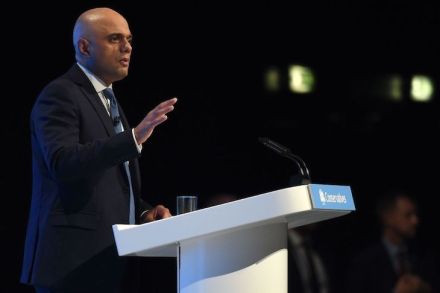
Sajid Javid has just announced that the national minimum wage will rise to £10.50 by 2024. This is another big hike. It is currently £8.21 and was just £5.93 as recently as 2010. It will end up going to everyone over 21, not 25 as currently. The politics of this announcement are clear. The Tories want to position themselves as the people’s party, the party of the worker and delivering a big pay rise for the low paid is one way of doing that. It is also a way of promising to put more money in people’s pockets that doesn’t, directly, cost the government anything. This should help the Tories in their bid to win over traditional Labour voters in Leave voting seats in the Midlands and the North East.

Arlene Foster: I’ll look at a time limit on the backstop

From our UK edition

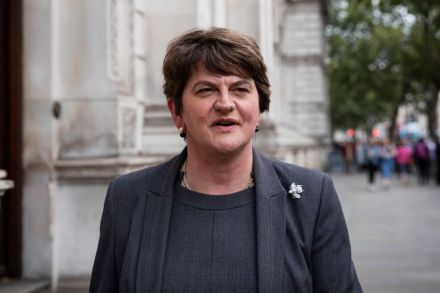
At a Policy Exchange fringe meeting at Tory conference, Arlene Foster has just ruled out any regulatory checks between Northern Ireland and Great Britain that extend beyond agriculture, eliminating one of the possible Brexit compromises. She did say that she’d be prepared to consider a time limit on the backstop. But she thought that Leo Varadkar wouldn’t even be prepared to entertain this. Foster made clear that she could never accept a customs border within the United Kingdom. She argued that would be unacceptable on both constitutional and economic grounds, highlighting that Northern Ireland does far more trade with Great Britain than it does with the Republic of Ireland.