James Forsyth

James Forsyth

James Forsyth is former political editor of The Spectator.

Trust issues mean Heathrow’s third runway is unlikely to ever take off

From our UK edition

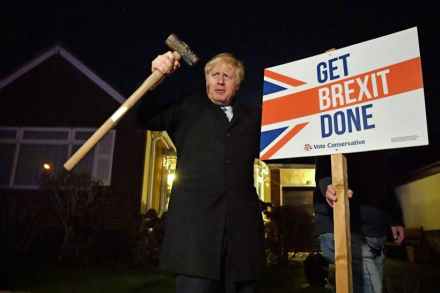
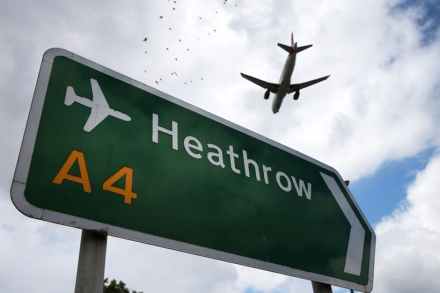
Downing Street is acutely aware that one of the biggest dangers to this government is losing voters’ trust. As I say in the Sun today, if people come to see this administration as just another bunch of politicians who don’t do what they said they would, then it is doomed. Number 10 also knows that Boris Johnson’s opponents love to attack him as ‘untrustworthy’. This didn’t hurt him too much at the election because voters regard most politicians as untrustworthy. But if there was a clear and compelling example of him breaking his word to voters then that could change, and very quickly. The whole emphasis on promise-keeping is bad news for Heathrow and the third runway.
Trade talks between the UK and the EU are heading for a blow-up

From our UK edition

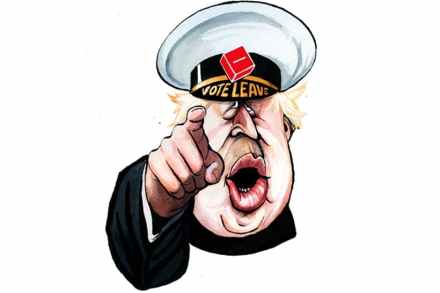
‘The reality is the talks will blow up shortly’. As I say in the Sun this morning, this is the verdict of one Downing Street figure on the UK / EU negotiations. The EU might still be finalising its negotiating mandate. But if you read the draft of it and David Frost’s speech this week, it is clear just how far apart the two sides are. This is going to come to a head quickly as the EU line is that there must be agreement on ‘level playing field’ and governance before the talks proper can commence. If the EU side insists on these preconditions in the opening round of the negotiations, scheduled for the first week of March, then the government will dismiss the talks as pointless.

The Brexit reshuffle: every great office of state is now held by a Leaver

From our UK edition

One of the Tories’ tactical successes has been to push Brexit down the news agenda. But even if it no longer dominates front pages and news bulletins as it once did, the task of sorting out Britain’s future relationship with the European Union remains the government’s biggest challenge. Brexit also provides the best explanation for some of No. 10’s other actions. Last week’s cabinet reshuffle, for instance, can only be properly understood in the context of Brexit. The purpose was to create an all-powerful centre. The three greatest parts of government — No. 10, the Treasury and the Cabinet Office — have now been joined together. There is a combined No. 10 / No.

The big Brexit challenge still facing the Tories

From our UK edition

Since the election, Brexit has fallen down the news agenda. But getting this country ready for the end of the transition period is still—by far—the biggest challenge facing the Government and what drives many of its actions. As I say in the magazine this week, you can only understand the reshuffle through this prism. First, it was about creating an all-powerful centre. The three greatest parts of government — No. 10, the Treasury and the Cabinet Office — have now been joined together. Just as significant as the combined No. 10/11 economic unit is the fact that there is a Minister of State—Theodore Agnew—shared between the Cabinet Office and the Treasury. This links those two motors of government together.

Why the new Attorney General matters so much

From our UK edition

Suella Braverman, Geoffrey Cox’s replacement as Attorney-General, is not a household name. But she is one of the most significant appointments of the reshuffle, as I write in The Sun this morning. Why, because she is serious about taking on judges who she thinks are inserting themselves into issues that should be left to parliament. ‘The key issue for the new AG and many others is that ‘metropolitan liberal elite’ policies that have been rejected by the electorate are being imposed by courts, both domestic and foreign’ one Boris ally tells me.

What the reshuffle means

From our UK edition

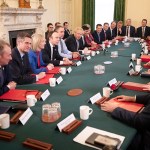
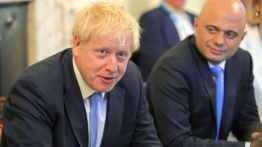
As the dust settles, it is clear that the big story of the reshuffle is that Boris Johnson has created the most powerful central government operation in living memory. He has yoked together Number 10, the Treasury and the Cabinet Office. As I say in the Sun this morning, no department or agency will be able to resist the power of this new centre. The rationale behind this move is simple. Boris Johnson’s view is what is the point of being in power if you are not actually in charge. He wants to bring an emphatic end to a decade of weak government. He believes that this new set up is what will enable him to deliver on his manifesto commitments. Javid’s refusal to agree to this joint team sealed his fate Boris Johnson has been determined to avoid a Blair / Brown split.

Boris wants a 2024 election – and wants to start his building boom now

From our UK edition

‘The clock is ticking.’ It is surely only a matter of time before Michel Barnier returns to his notorious catchphrase from the Brexit talks. The EU’s chief negotiator is already warning that if a trade deal cannot be agreed ‘within the constraints of the time limits imposed by the British PM’, then there will be ‘consequences’ as the UK and EU will end up trading on World Trade Organization terms. Or, as the Prime Minister prefers to call it, an Australia-style deal. Last time around, because Theresa May had no majority in parliament, Barnier was able to throw the British side into confusion: it was quite possible that Brexit could be delayed, or even abandoned.

Boris has tightened his iron grip on government

From our UK edition

This is the LDC reshuffle: loyalty, discipline and competence. Number 10 wants to ensure this government is all singing from the same hymn sheet. The desire for a joint Number 10 / 11 operation is the product of that. Sajid Javid’s refusal to sign up to the scheme made Number 10 think he wasn’t on board with this, which led to his resignation. This joint Number 10 / 11 operation creates a very powerful force at the centre of government. Number 10, the Treasury and the Cabinet Office are now effectively yoked together. Under this set-up, no department will have any chance of resisting what the centre wants.

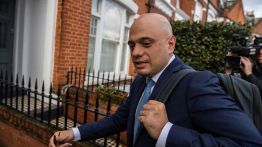
What Sajid Javid’s departure tells us about Boris Johnson’s plan

From our UK edition

Boris Johnson had been getting increasingly irritated by the number of unhelpful stories in newspapers quoting a ‘senior Treasury source’. Number 10 didn’t blame Sajid Javid for them, but – rightly or wrongly – his team. It all reinforced Boris Johnson’s desire for a joint Number 10/ 11 operation. He wanted a relationship between the two political teams akin to that between Cameron and Osborne’s; indeed, what Number 10 is doing is exactly what Cameron and Osborne would have done if they had won a majority in 2010. So when Sajid Javid went to see Boris Johnson this morning, Johnson told Javid that he wanted a joint operation and that only one of Javid’s team would be kept on. Javid felt that he could not accept these terms and quit.

HS2 won’t win the next election for Boris

From our UK edition

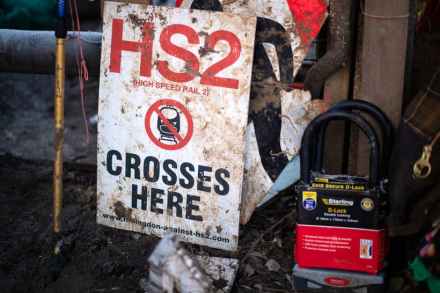
Since the election, few issues have divided opinion among Tory MPs more than HS2. Boris Johnson’s decision to press ahead with the scheme to Crewe will have its detractors. The reason so many smaller, local infrastructure schemes are also being announced today is to try and reassure Tory MPs that this is not an either or choice. The very act of taking a decision should calm some of the blue-on-blue action we have seen over HS2. I suspect that those MPs whose constituencies are most negatively affected by it will continue to campaign against it, as will several Tory MPs who are no longer interested in climbing the greasy pole. But the bulk of the parliamentary party will accept the decision, whatever their misgivings about it.

How will the government try and deal with the terrorist threat?

From our UK edition

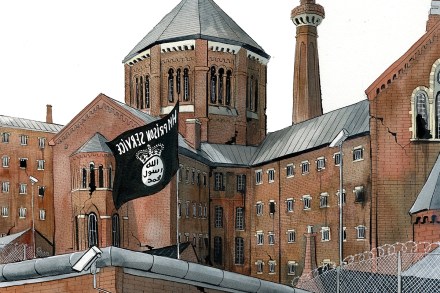
Next week, the government will introduce emergency legislation to stop anyone convicted of terrorist offences from being automatically released half-way through their sentence. But, as Whitehall sources acknowledge, this only tackles one vulnerability in the system. So, as I write in The Sun today, a broader plan to deal with the jihadi threat is being drawn up. One idea under discussion is for a sex offenders’ register for terrorists. This would enable the state to place restrictions on terrorists long after they have completed any prison sentence. These restrictions could include who they are allowed to meet with, where they are allowed to travel to both at home and abroad and a requirement to show the police their phones, laptops and internet and social media use.

Terror is the toughest issue facing the Tories

From our UK edition

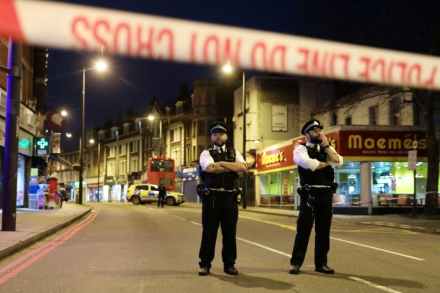
A prisoner is released early and just days later attacks people. It then emerges that he was known to still be a danger to the public before he was let out. Normally at this point in the story one would be expecting ministerial resignations. But in the case of Sudesh Amman, the Streatham attacker, we are not. Why? Because the law meant that there was no alternative to him being released. The government is now in a mad scramble to prevent this from happening again. Emergency legislation is being rushed through parliament to stop terrorists from being automatically freed from prison halfway through their sentence. Historically, one of the Tories’ electoral strengths has been their reputation as the party of law and order.

Damian Green made life difficult for Boris at PMQs

From our UK edition

Today’s PMQs contained an example of an almost perfect backbench question. Damian Green, who was Theresa May’s number two, asked if the aim was to reduce Huawei’s share of the 5G network from 35 per cent, and when it would hit zero per cent. Boris Johnson replied that the aim was to reduce Huawei’s share but he conspicuously failed to answer when it would hit zero. Green’s question, followed up by David Davis, shows that concern over the Huawei decision has not abated on the Tory benches. Boris Johnson’s commitment to reduce Huawei’s share of the network will be enough for some.