James Forsyth

James Forsyth

James Forsyth is former political editor of The Spectator.

The danger of Britain’s slow journey out of lockdown

From our UK edition

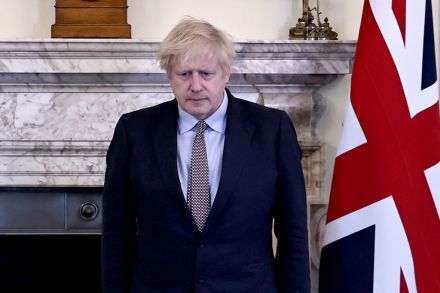
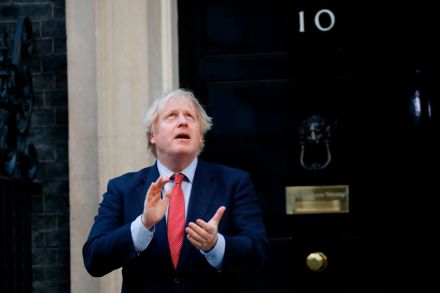
The most striking thing about the lockdown easing that Boris Johnson just announced is how limited it is. Single parents and those who live alone will be able to form a support bubble with one other household; churches and other places of worship will re-open for individual prayer, and zoos will be able to admit people to their outdoor facilities. Listening to Boris Johnson, on the day that Professor Ferguson claimed an earlier lockdown would have halved the death toll, it’s clear that the UK is going to come out of lockdown very slowly. Johnson talked about how the government has ‘to proceed with caution’ and warned that ‘this epidemic has a long way to go.’ The Chief Medical Officer and the Chief Scientific Adviser were even more adamant on these points.

PMQs: Johnson and Starmer clash on schools

From our UK edition

13 min listen

Prime Minister's Questions is becoming an increasingly heated affair. This week, Keir Starmer and Boris Johnson clashed over school closures, as well as the government's response to the Black Lives Matter protests. John Connolly talks to James Forsyth and Katy Balls.

Why aren’t schools reopening?

From our UK edition

12 min listen

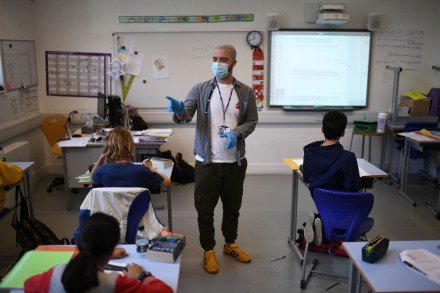
The government has shelved its aim of reopening primary schools before the end of term amid growing pressure from parents and unions. But how will that affect the poorest students? Katy Balls talks to Fraser Nelson and James Forsyth.

The politics of toppling a statue

From our UK edition

17 min listen

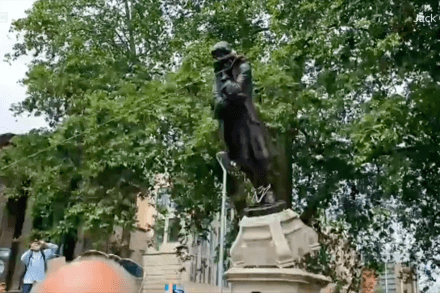
Thousands of protesters took to the streets this weekend as part of the Black Lives Matter movement. In Bristol, a statue of the slaver Edward Colston was toppled and thrown into the city's docks. But are we now seeing a change in the government's response? Katy Balls speaks to Fraser Nelson and James Forsyth.

Brexit talks stall ahead of final showdown

From our UK edition

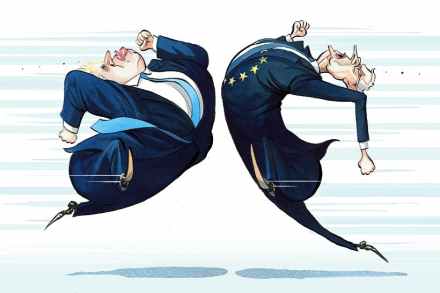
To no one’s great surprise, Michel Barnier has made a very downbeat statement following the latest round of UK-EU trade negotiations. He has declared that ‘there’s been no significant progress since the start of these talks', accused the UK of backsliding on the political declaration and warned that he doesn’t think the talks ‘can go on like this forever.’ Now, in the Q&A session with journalists that followed, Barnier did seem to indicate some flex on the EU's demand that state aid rules continue to apply in this country after Brexit. He also said that a deal was still possible.

Is it time for the government to admit its mistakes?

From our UK edition

16 min listen

With an NHS tracing app not fully up and running until autumn, contact tracing seems like the latest in a series of events where the government has over-promised and under-delivered. Is it time for the government to admit the mistakes it has made in dealing with the pandemic?

In many ways, the Covid inquiry has already begun

From our UK edition

It is inevitable that there will be a public inquiry into the government’s handling of coronavirus at the end of all this – the death toll demands it. There is, as I say in the magazine this week, an interesting question about what kind of person should chair the inquiry. Leveson was a judge, Chilcot a former civil servant—and this showed in the kind of inquiries they led. There’s a view in government that, in the words of one secretary of state, ‘a lawyer would be the worst person to chair it as they will take it down the blame route’. In many ways, the government is conducting a rolling inquiry right now. There are a number of areas where the government has changed tack during this crisis.

Whitehall on trial: how the government is preparing for the Covid inquiry

From our UK edition

During the pandemic, Nicola Sturgeon has developed a reputation for announcing things just before the UK government does. But there has been no Downing Street follow-up yet to her announcement last week at First Minister’s Questions that there will be a full public inquiry into Scotland’s handling of the crisis. This silence should not, however, be taken as a sign that there won’t be a UK-wide inquiry as well as a Scottish one. Staff inside No. 10 accept that there will have to be one: when 50,000 people are confirmed or suspected to have died from a new virus, a private ‘lessons learned’ exercise won’t be enough.

PMQs is increasingly tetchy

From our UK edition

The clashes between Boris Johnson and Keir Starmer are becoming increasingly bad-tempered. Starmer’s strategy is to ask Boris Johnson a series of questions to which there are no good answers. Boris Johnson, informed by focus group research showing that voters don’t want to see a return to partisan politics, responds by accusing Starmer of not being constructive and of undermining public confidence. The result is testy exchanges that don’t shed a huge amount of light on the situation. Interestingly, Boris Johnson took a more emollient tone with Jeremy Hunt than he did at the liaison committee last week, when the former health secretary asked a question.

The end of Keir Starmer’s ‘constructive opposition’

From our UK edition

14 min listen

The time for constructive opposition is over, as Keir Starmer picks up a new tone in his interview to the Guardian, which he continued in PMQs. Cindy Yu talks to James Forsyth and Katy Balls about this strategy; and other issues of proxy voting, Scottish care homes, the BAME impact, and a new testing target.

The growing rebellion against quarantine for UK arrivals

From our UK edition

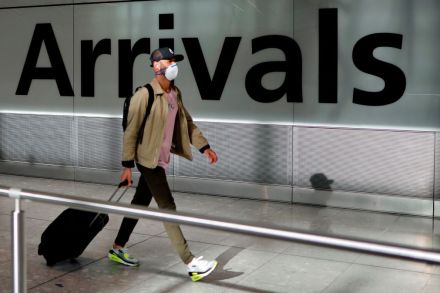
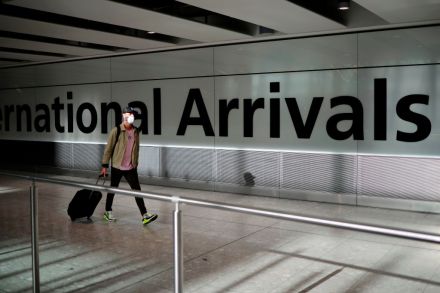
The government’s most unpopular policy on its own benches is its plan to make almost everyone arriving in this country quarantine for 14 days. Among backbenchers and the outer cabinet this policy is disliked with an increasing intensity. ‘Colleagues absolutely hate it’, one cabinet minister tells me. Some backbenchers dislike it because it will hit their own constituencies particularly hard – airlines and airports will lay off more staff because of it. Others dislike the ‘Britain is closed for business’ message it sends out. While for a growing number of ministers it has become a focus of their resentment at how policy is made with their minimal involvement – cabinet committees are meeting far less frequently than they did.

How will a socially distanced House of Commons work?

From our UK edition

12 min listen

MPs are returning to parliament next week, marking an end of the hybrid model that saw most MPs Zooming into parliamentary debates. On the podcast, John Connolly talks to James Forsyth and Katy Balls about the challenges in a socially distanced House of Commons.Get a month's free trial of The Spectator and a free wireless charger here.

Boris Johnson’s majority is not as big as it first appeared

From our UK edition

The last week has shown that Boris Johnson’s majority of 80 isn’t as big as it first appeared, I say in the Times on Saturday. Despite Boris Johnson throwing his full political weight behind Dominic Cummings, forty plus Tories still called for the PM’s senior adviser to go. The problem for No. 10 is that a majority of 80 ain’t what it used to be. It is, roughly, equivalent to a majority of 20-odd a generation ago, which is what John Major had in 1992. That the Tory majority is smaller than it first appeared has profound implications for how Boris Johnson governs. Every policy will now need to be tested against whether it can get through the House or not.

The thinking behind the lockdown easing

From our UK edition

One of the striking things about the government’s further easing of the lockdown is that it has focused on socialising rather than further attempts to get economic activity going again. At first blush, this is a surprising move. The blow that the public finances have taken from coronavirus means that it is imperative economic activity resumes soon.  But the thinking in Whitehall is that the big problem is getting people to be confident enough to resume normal life. The hope is that by allowing people to see some friends and family, they’ll make people more relaxed about sending their children to school and more prepared to go to clothes shops and the like when they re-open.

Escaping the dragon: rethinking our approach to China

From our UK edition

42 min listen

It's not just coronavirus, but the government is keen to have a new approach to China. We discuss what this entails and whether or not it's a good idea (00:50). Plus, what will be the lasting impact of the Cummings affair on the government? (17:16) And last, the way to deal with noisy neighbours now that people are working from home (34:00).With our Political Editor James Forsyth; former Cabinet minister Sir Oliver Letwin; our Deputy Political Editor Katy Balls; Conservative Home's Paul Goodman; Spectator columnist Melissa Kite; and our 'Dear Mary' columnist and Gogglebox star Mary Killen.

Is it really ‘case closed’ on the Cummings affair?

From our UK edition

13 min listen

Chris Whitty and Patrick Vallance refused to give their opinions on the Dominic Cummings affair at today's press conference; while Durham police indicated that they will not be investigating the Barnard Castle trip any further, after announcing that it might have been a minor breach. Downing Street says it's 'case closed' - is it really?