James Forsyth

James Forsyth

James Forsyth is former political editor of The Spectator.

Crash course: how the Truss revolution came off the road

From our UK edition

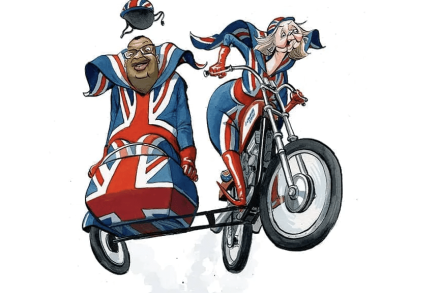
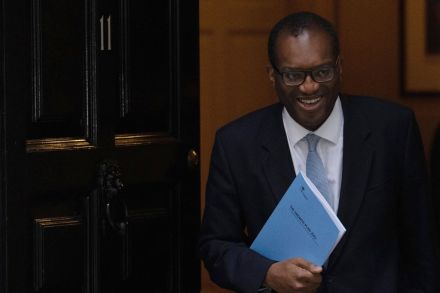
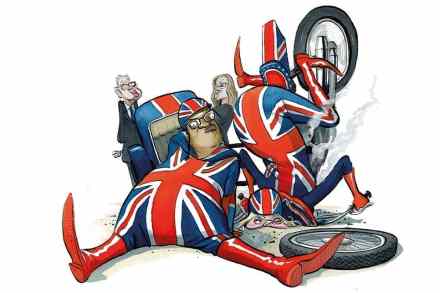
Liz Truss and Kwasi Kwarteng wanted to shake things up. They were radicals in a hurry, keen to show that Britain was under new economic management. Theirs would be an unapologetic pro-growth agenda: no more genuflection in front of failed orthodoxies, no more being paralysed by fear or criticism. As a sign of this, they abolished the 45p tax rate for the highest earners: a move that many Tories longed to make, but did not dare. It seemed Truss and Kwarteng would leap in where other Conservatives feared to tread. This lasted just ten days. As the tax plan was reversed and No.
Is Truss back on track?

From our UK edition

13 min listen

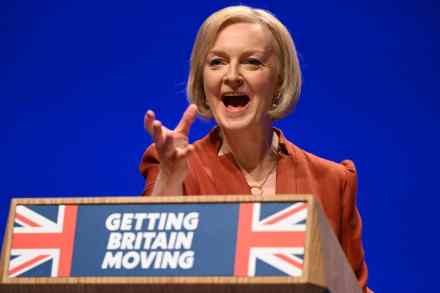
Liz Truss has today delivered her speech to the Conservative Party Conference where she set out the vision for her government. It was arguably the best moment of a difficult week for the party. Has she succeeded in calming Tory nerves? Who are the 'anti-growth coalition' that she is taking on? Isabel Hardman speaks to James Forsyth and Katy Balls. Produced by Max Jeffery.

Liz Truss’s speech was the highlight of a troubled Tory conference

From our UK edition

Liz Truss’s speech was a reminder that she regards ‘freedom’ as the defining Tory value. Her emphasis throughout was on economic growth, and her belief that cutting taxes would help deliver it. The speech was a straightforward elucidation of what Truss believes: it had an argument. But the challenge for her now is twofold.  First, obviously, it is to deliver the growth she talked about. Getting through the supply-side reforms that might really make a difference will not be easy – particularly with Tory MPs reluctant to vote for anything controversial given the state of the polls.  The second is to explain to people how they will benefit from this growth.

Is Truss facing another rebellion?

From our UK edition

11 min listen

Liz Truss is coming under pressure over another of her policies. Should she increase benefits payments in line with inflation, or in line with earnings, as she would prefer? Will the PM change her mind again?Katy Balls speaks to Fraser Nelson and James Forsyth.Produced by Max Jeffery.

Are the Tories in the business of managing decline?

From our UK edition

11 min listen

Kwasi Kwarteng has just spoken at the Conservative Party Conference in Birmingham defending his mini-Budget, despite having u-turned on the cut to the 45p tax rate this morning. Will his speech have calmed his fellow Tories and, more importantly, the markets? Katy Balls speaks with James Forsyth, Kate Andrews and Isabel Hardman. Produced by Max Jeffery and Oscar Edmondson.

Why has Truss u-turned?

From our UK edition

13 min listen

The Prime Minister has abandoned her plan to scrap the top 45 per cent rate of income tax. Why?Katy Balls speaks to Fraser Nelson and James Forsyth.Produced by Max Jeffery.

Is Truss still prepared to be unpopular?

From our UK edition

The U-turn on the abolition of the 45p tax rate marks the end of the first phase of the Truss premiership. Truss came in declaring that she was prepared to do ‘unpopular’ things, that she was going to smash through the consensus and put economics ahead of political optics. Her retreat on 45p signals the end of that period of government. She has retreated under sustained political criticism of, to use Grant Shapps’s phrase, the ‘tin eared’ nature of the cut. She has bowed to the optics. Now, the U-turn was better than the alternative: a rapidly growing rebellion. It was clear when Jake Berry’s threat to take the whip away from those who opposed the cut emboldened its Tory opponents, rather than cowing them that a U-turn would be necessary.

Why Kwarteng’s next fiscal event will have to be brought forward

From our UK edition

In a tetchy performance on The Andrew Neil Show, Tory party chair Jake Berry repeatedly insisted that everyone would have to wait until the Chancellor’s unveiling of his fiscal plan on 23 November to find out whether or not there would be spending cuts and when the government believes it will hit its 2.5 per cent growth target. Berry’s performance, which involved repeatedly trying to answer a different question to the one he was asked, made it even harder to believe that this line can hold. If every minister interviewed for the next six weeks sounded like Berry did just now, then it would be a disaster for the government. https://twitter.com/Channel4/status/1576607943277019137?

Even Liz Truss’s closest allies are nervous

From our UK edition

There is a slightly odd atmosphere at Tory conference in Birmingham. Those who should be striding around triumphantly are instead rather nervous. One of Liz Truss’s closest ideological allies was quick to stress to me that while they might have shaped the thrust of the new Prime Minister’s ideas, they weren’t responsible for their execution in the Budget by any other name. Strikingly, the abolition of the 45p rate of tax on the highest earners has very few friends. Even those who you would expect to laud the measure are at pains to say that they wouldn’t have done it now. Meanwhile, Michael Gove is touring the conference fringes making the case against it.

Why Liz Truss can’t back down

From our UK edition

Is there a way for the government to get out of the mess that it is in? This is the question obsessing ministers and Tory MPs. If the government doesn’t set out how it intends to square the circle, it’ll be risking more market mayhem. But as I say in the Times today, it is very hard to see a way out of this that is both politically palatable and economically possible. Nervous Tory MPs are being told by one of Truss’s cabinet allies ‘the solution is to be very tough on public spending’ A rapidly growing number of Tory MPs think the government should abandon or delay the abolition of the 45p tax rate. They believe that this would show the market that they were now behaving more responsibly.

Liz Truss’s mea culpa moment

From our UK edition

11 min listen

Despite rejecting the Office for Budget Responsibility's offer of a forecast to accompany last week's so-called fiscal event, this morning it appears that the government have u-turned. What can we expect from the OBR's statement ahead of the November budget?Also on the podcast, after last night's YouGov poll put Labour ahead by 33 points, how has the news been received by Conservative MPs? Will Truss row back on her economic plans?Katy Balls speaks to Fraser Nelson and James Forsyth.Produced by Natasha Feroze and Oscar Edmondson.

Could Truss axe Kwarteng?

From our UK edition

23 min listen

Liz Truss broke her silence this morning and embarked on a pre-Tory conference media round of regional stations across the UK. In a brutal set of interviews, the Prime Minister faced questions on tax cutting the rich at the expense of the poor, fracking and bankers' bonuses. With conference just three days away, what will be her next moves to take back control of her party, and win back the British public? Could Chancellor, Kwasi Kwarteng be sacrificed to save her instead?Katy Balls speaks to Fraser Nelson and James Forsyth.

How high a price will Truss pay?

From our UK edition

This year’s Conservative party conference was supposed to be a moment of celebration for the new Tory leader. Instead there is a sense of mounting alarm. Liz Truss’s radicalism has been met with something approaching panic by both the markets and the public. The Bank of England has had to intervene in the gilts market to prevent ‘a material risk to UK financial stability’. The pound hit a 230-year low against the dollar. Meanwhile, Labour has moved into a 17-point lead in the polls. YouGov finds that just 12 per cent of the public view the government’s so-called ‘fiscal event’ as affordable. Only 19 per cent consider it fair. Tory activists at conference will give Truss the benefit of the doubt.

Why is the Bank of England buying gilts?

From our UK edition

18 min listen

The Bank of England has today announced a major intervention into gilts to prevent a 'material risk' to financial stability as a result of government policy. How unprecedented is this move? Will Liz Truss and Kwasi Kwarteng break their silence? Are we heading for another leadership election?Kate Andrews speaks with Fraser Nelson and James Forsyth.Produced by Oscar Edmondson.

Why is the Bank of England buying gilts?

From our UK edition

In a dramatic about-turn, the Bank of England is now intervening in the gilts market to try and calm the reaction to Friday’s fiscal event. It will buy long-dated government gilts for the next two weeks, which will lower the cost of government borrowing. It is also postponing quantitative tightening (i.e. selling the securities it bought during QE). My understanding is that the Bank’s intervention was to prevent the pension market from imploding. The rise in gilt rates meant that traditional pension funds were becoming forced sellers to meet collateral demands from banks. This risked a doom loop. The Bank’s actions have stopped the bleeding but there will likely be damage to the pensions sector, with some funds having lost huge amounts of capital.

Will cyberwar be next?

From our UK edition

Neither the Danes nor Nato have made a direct attribution for yesterday’s pipeline damage. But the fingers are pointing at Russia. The thinking goes that Putin was trying to trigger panic in the energy markets by showing that there’ll be no rapid resumption of gas supplies to Europe and by demonstrating how vulnerable this energy infrastructure is. The UK would struggle to get through this winter without energy rationing if, for example, the interconnectors and gas pipeline from Norway were disrupted Now, given that Russia has turned off Nord Stream 1 for maintenance, the damage to the pipeline will have little immediate impact. But if it is the beginning of a covert sabotage campaign against European energy infrastructure then that is a very different matter.

Labour storm ahead of Tories in latest poll

From our UK edition

Tonight’s YouGov poll in the Times is brilliant news for Keir Starmer ahead of his conference speech tomorrow. It has Labour 17 points ahead, its biggest lead since the company started polling in 2001. These numbers, following the market reaction to the statement, are an awful start To be sure, the numbers reflect more voter disappointment with the government than a sudden bout of Starmer mania. Some 68 per cent of voters said the government was managing the economy badly. Only 12 per cent thought the ‘mini-Budget’ is affordable. Just 19 per cent said it was fair, against 57 per cent who thought it was not fair. And 69 per cent of those who voted Tory in 2019 opposed the scrapping of the 45p tax rate.

Can Kwarteng reassure the markets?

From our UK edition

The Treasury has just released a statement saying that a medium term fiscal plan will be delivered by Kwasi Kwarteng on 23 November, accompanied by an Office for Budget Responsibility forecast. This plan will, the Treasury says, set out the government’s fiscal rules and how it intends to ensure debt falls as a percentage of GDP in the medium term. The Treasury also confirms the Times story this morning that there’ll be no new spending settlements, meaning an effective cut for departmental budgets.

How worrying is the falling pound?

From our UK edition

19 min listen

Following Chancellor, Kwasi Kwarteng's 'mini' budget, the pound has fallen to a record low against the dollar, fueling speculation that the Bank of England will hike interest rates. How worrying are these figures?'I think the pound falling is a bit of a distraction from the real problem' - James ForsythKaty Balls speaks to Kate Andrews and James Forsyth.Produced by Natasha Feroze.

Kwarteng’s audacious budget

From our UK edition

17 min listen

Kwasi Kwarteng has today announced what has been dubbed as his mini-Budget, but looking at the scale of the package it is far from small. The Coffee House Shots team take us through what has been revealed. Who are the winners and who are the losers?Katy Balls speaks to Fraser Nelson, James Forsyth and Kate Andrews.Produced by Oscar Edmondson.