James Forsyth

James Forsyth

James Forsyth is former political editor of The Spectator.

Will the Tories accept tax rises?

From our UK edition

15 min listen

Rishi Sunak has faced a backlash this week over proposals to increase taxes to pay for the UK's coronavirus response. Can the chancellor push the changes through, and how will the party react? Katy Balls speaks to Fraser Nelson and James Forsyth.

The biggest obstacle to a Brexit deal

From our UK edition

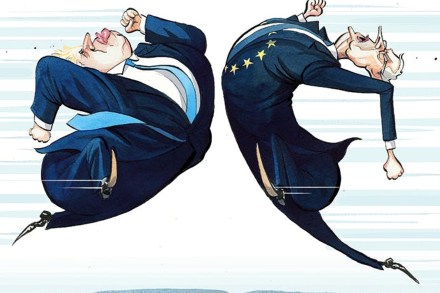
Downing Street now thinks that the chances of a Brexit deal are down to 30 or 40 per cent, I say in The Times today. The sticking point is, rather surprisingly, state aid. Since Margaret Thatcher’s election in 1979, the UK has been sniffy about the idea of government ‘picking winners’. It doesn’t use much state aid (less than half the EU average, according to the Commission’s figures), but the Johnson government doesn’t want to commit itself to something similar to the EU's regime – it wants to use the power of the state to develop what it sees as the industries of the future.

Is mass testing the answer?

From our UK edition

14 min listen

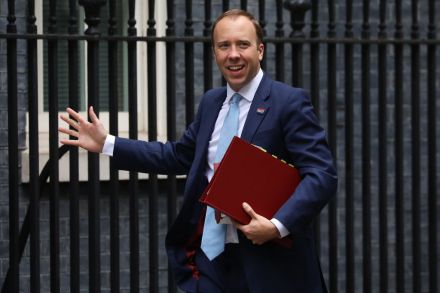
Matt Hancock today announced Operation Moonshot, a £500 million scheme to ramp up the UK's testing capacity and offer a return to normality without social distancing. Does it really offer a way out? John Connolly speaks to James Forsyth and Katy Balls.

Negotiating Scottish independence gives Unionists a winning chance

From our UK edition

If the SNP win a majority at next year’s Holyrood elections, the UK government should be prepared to start independence negotiations with them. This may sound like a mad idea, at first. But as I say in the magazine this week, it might actually offer a way to save the Union. Rather than saying a straight no to another independence referendum, the UK government would tell Nicola Sturgeon she could have one, if the terms of independence were negotiated first. This would take time – unravelling a 300-year-old political, economic and military union would make Brexit look like child’s play – but it would mean that when the referendum came, it would be on the realities of independence not just the idea of it.

To save the Union, negotiate Scotland’s independence

From our UK edition

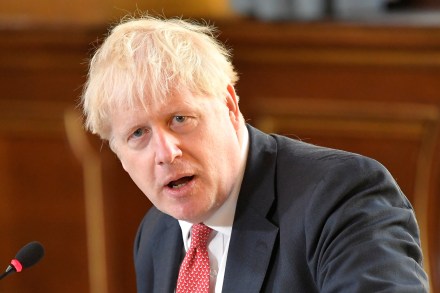
The first cabinet meeting of the new term and Boris Johnson’s summer holiday were both dominated by one concern: how to turn the tide on Scottish nationalism. Johnson’s foray into the Highlands was intended to demonstrate his own personal commitment to the Union; it also allowed him to find out for himself how awful mobile phone coverage is in much of rural Scotland. The cabinet on Tuesday discussed how to stop the Scottish National party turning the legislation that will underpin the UK’s post-Brexit internal market into their latest argument for independence. The Prime Minister is confident about his chances of knocking back the Nationalists.

The latest No. 10 U-turn

From our UK edition

13 min listen

Bolton and Trafford were returned to Manchester's local lockdown this morning after yet another U-turn by the government. Meanwhile, Boris Johnson and Keir Starmer went head to head for their first PMQs of the new parliamentary term. Finally, Rishi Sunak and the PM met members of the 2019 Tory intake in an attempt to shore up the government's backbench support. John Connolly speaks to James Forsyth and Katy Balls.

PMQs: Boris’s diversion tactics fall flat

From our UK edition

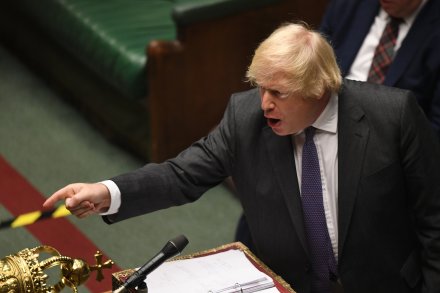
PMQs today was a reminder of how the socially distanced chamber removes the Prime Minister’s most important structural advantage, having more MPs behind him than the leader of the opposition. Keir Starmer was keeping Boris Johnson on the back foot with a series of questions on government U-turns. So, Boris Johnson tried to change the subject.  He launched into an attack on Starmer over Brexit and his willingness to sit in Jeremy Corbyn’s shadow cabinet. With roaring benches behind him, this diversionary tactic might have worked. But, instead, when Lindsay Hoyle cut him off, the whole thing fell rather flat. Keir Starmer was particularly exercised by Johnson’s comments about how he had supported a Labour leader who had supported the IRA.

Can Simon Case reform the civil service?

From our UK edition

11 min listen

Simon Case has been appointed the new cabinet secretary, tasked with leading the UK through its coronavirus recovery and reforming the civil service. Is he up to the job? Gus Carter speaks to James Forsyth and Katy Balls about the country's most powerful official.

Can Boris get people back in the office?

From our UK edition

17 min listen

The government will launch a new publicity campaign to coax people back into the office, it was announced today. This morning's headlines took a hardline approach, telling readers that they could lose their jobs unless they returned to work. Is this really the government's approach, and why are offices important? John Connolly speaks to Fraser Nelson and James Forsyth.

The Trump Show: he could just win again

From our UK edition

35 min listen

With protests in American cities continuing and the Democrat and Republican conventions drawing to a close - are there signs that Donald Trump could win again? (00:45) Plus, could planning reforms be the next Tory battle? (13:05) And finally, can daily commutes really be enjoyable? (25:45)With editor of the Spectator's US edition Freddy Gray; the Spectator's economics correspondent Kate Andrews; the Spectator's political editor James Forsyth; economist and author Liam Halligan; the Spectator's features editor; and author Sara Yirrell.Presented by Cindy Yu. Produced by Cindy Yu and Max Jeffery.

Can Boris build support for his planning reforms?

From our UK edition

The government always knew it would have to expend political capital to get its planning reforms through. Making it easier to build houses was never going to be popular with Tories in leafy areas. The benefit of an 80-seat majority was meant to be the ability to push through difficult but important changes. The problem is, as I say in the magazine this week, that the government has been expending political capital on rather a lot of other things recently. Tory MPs are in a fractious mood, irritated by the number of U-turns, and opposition to planning reform is beginning to build up. One normally mild-mannered former cabinet minister tells me: ‘If you think A-levels were bad, wait until people get their heads round these reforms.

Boris the builder mustn’t buckle over planning reform

From our UK edition

The government will pass the test it has set itself: schools in England will return next week. Pupils may well have to wear masks at times, but they will be back in the classroom. Yet ministers privately acknowledge this isn’t the real challenge. The bigger question is what effect the return of schools has on the prevalence of the virus and what happens to education in the case of further local outbreaks. The exams grading debacle and the various other summer U-turns have been damaging. As one minister concedes: ‘There’s only a limited amount of time before the “incompetence” label sticks. It hasn’t yet — but we can’t afford many more mistakes.

Will the next U-turn be on face masks at work?

From our UK edition

13 min listen

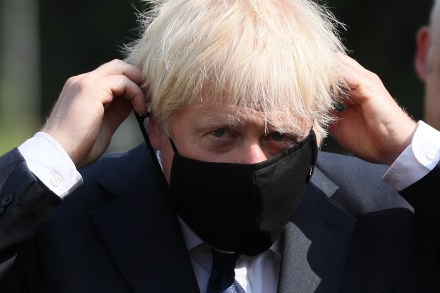
The government reversed its position on masks in schools late yesterday evening, announcing that secondary school pupils in local lockdown areas would be mandated to wear face coverings in communal areas. Could masks in offices be next? John Connolly speaks to Fraser Nelson and James Forsyth about why the government keeps changing its mind.

Is Boris being too defensive on the culture wars?

From our UK edition

15 min listen

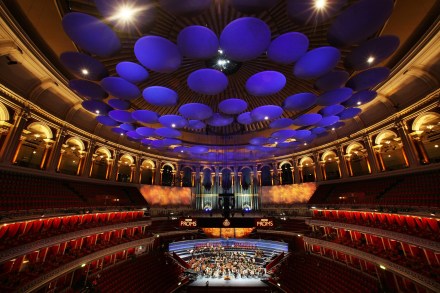
Reports on Sunday suggested the BBC was going to drop 'Rule, Britannia!' and 'Land of Hope and Glory' from its Last Night of the Proms schedule because of the songs' associations with slavery and colonialism. Boris Johnson hit back at the broadcaster today, however, calling for an end to 'this general bout of self-recrimination and wetness'. But was the Prime Minister's response strong enough? Cindy Yu speaks to Fraser Nelson and James Forsyth.

Boris Johnson’s culture war strategy

From our UK edition

Boris Johnson’s approach to the culture war is to wait for the other side to overreach – talk of taking down Churchill’s statue, no singing of Rule Britannia at the Proms – then pile in. So, today he has waded into the row about the BBC’s decision to only have instrumental versions of Rule Britannia and Land of Hope and Glory at the last night of the Proms this year, declaring that 'it's time we stopped our cringing embarrassment about our history, about our traditions, and about our culture, and we stopped this general fight of self-recrimination and wetness.

Can Gavin Williamson reopen England’s schools?

From our UK edition

13 min listen

Boris Johnson has returned from his holiday to embark on a media campaign promoting September's schools reopening. With Scottish pupils already back - and the initial signs of their return looking positive - can Gavin Williamson stage a successful reopening, or will the beleaguered education secretary face another fiasco? John Connolly speaks to Fraser Nelson and James Forsyth.

Will France be quarantined next?

From our UK edition

11 min listen

Belgium, Andorra and the Bahamas were added to the UK’s quarantine list yesterday evening, meaning Brits returning from those countries will be required to stay at home for two weeks. With Belgium’s neighbour, France, also seeing a surge in coronavirus cases, will they be next? Gus Carter speaks to Katy Balls – who is on holiday in Paris – and James Forsyth about air bridges, exam results and the lack of candidates to become the next cabinet secretary.

Why the Tories can’t back down over planning reforms

From our UK edition

A rigid and complicated planning system has long been one of the issues holding back the UK economy. The planning reforms announced by Robert Jenrick this week are designed to bring more predictability and speed to the system. Jenrick’s document is very much a case of politics being the art of the possible. The green belt is left alone in its entirety, despite the fact that a more rational planning system would require examining whether all of the green belt is needed, and if it is all in the right place. For example, building houses around train stations in the green belt would seem a sensible move – but these reforms wouldn’t enable that. But, overall, the shift to a zonal system would be a significant improvement on what this country currently has.

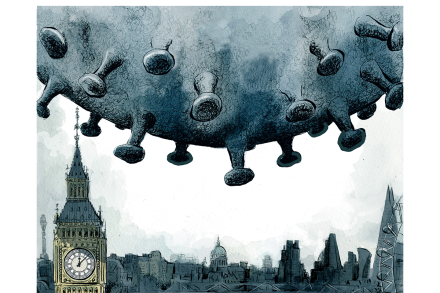
Can London survive coronavirus?

From our UK edition

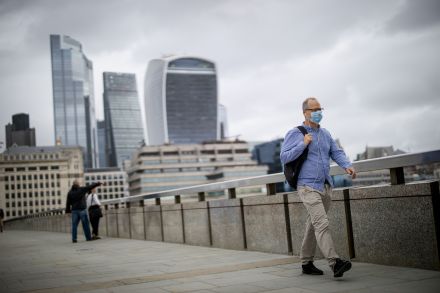
44 min listen

London is the motor to Britain’s economy, so how can it rebuild after the pandemic? (00:55) How can the new Tory leader in Scotland, Douglas Ross, keep the United Kingdom together? (17:50) And why the looming conflict between India and China isn’t in Kashmir, but rather in the Bay of Bengal. (29:33) With economist Gerard Lyons; historian Simon Jenkins; The Spectator’s Scotland editor Alex Massie; The Spectator’s political editor James Forsyth; historian Francis Pike; and author Jonathan Ward. Presented by Katy Balls. Produced by Gus Carter and Max Jeffery.