James Forsyth

James Forsyth

James Forsyth is former political editor of The Spectator.

Why didn’t the government learn from Scotland’s test shortage?

From our UK edition

This country is better prepared for any ‘second wave’ of Covid than it was for the first. But as I say in the magazine this week, a second wave will be far more difficult for the government politically than the first one was. There’ll be no rally round the flag effect this time. The public expect the government to be prepared. The growing anger over testing is an example of this change. This country has the ability to test far more people than it did back in March. But there is mounting irritation about how many people in coronavirus hotspots are being told either that there are no tests available or are being sent long distances for their swab.

Why No. 10 fears the second wave

From our UK edition

The government is bracing itself for a second wave of coronavirus. Everyone knew the autumn and winter would be more difficult than July and August. But what is depressing ministers is how new restrictions have had to be imposed before the summer is even out. ‘It is going to be a long, hard autumn,’ warns one minister intimately involved in this effort. In many ways this country is better prepared for a second wave than it was for the first. Policy-makers know more about the virus and how it spreads, doctors are better prepared to treat it, the government is better organised than it was before, has better data and significantly more testing capacity. In Whitehall, they expect these changes to be put to the test very soon.

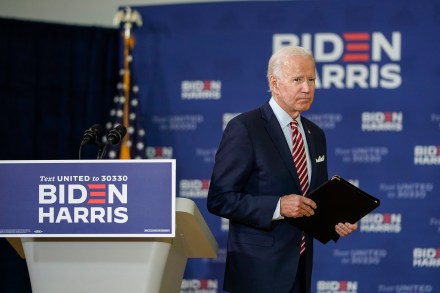
Joe Biden weighs in on the Brexit stand-off

From our UK edition

Today has not been a good day for the government. The government’s decision last week to be so explicit that the Northern Ireland clauses of its Internal Market Bill would break international law in a ‘specific and limited way’ has caused all sorts of problems. First, it created a Tory backbench rebellion on the issue. A chunk of Tory MPs felt that the government’s position meant that they just could not support the legislation as proposed. The government has today pacified this rebellion by agreeing to table an amendment ensuring that the Commons would get a vote before these clauses are used.

Has the government’s Brexit plot backfired?

From our UK edition

12 min listen

The government's Internal Market Bill won't reach the House of Lords until after the October EU Council, James Forsyth tells Katy Balls and Fraser Nelson on the podcast today. This means that the bill won't become law anytime soon, and provides the government leverage for a deal in that Council. So was this a ploy to get a better deal all along?

Can the government fix the testing meltdown?

From our UK edition

14 min listen

Amid reports of local testing shortages, Matt Hancock told MPs today that the system is facing an 'enormous challenge' after a 'sharp rise' in demand. While the government has pledged to deliver 500,000 tests a day by the end of October, just 220,000 are currently being processed. Can the government fix the problem? Katy Balls speaks to Fraser Nelson and James Forsyth.

Has Boris done enough to halt the Tory rebellion?

From our UK edition

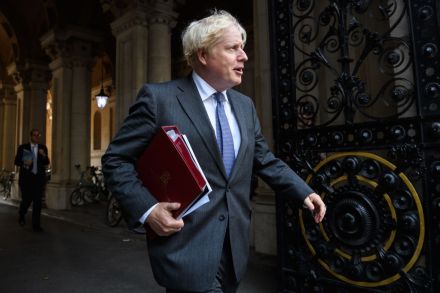
Boris Johnson has just been speaking in the Commons as the government tries to quell the Tory revolt over the internal market bill. Johnson’s tone was different from the government’s last week. There was no repeat of Brandon Lewis’s infamous words about a ‘specific and limited’ breach of international law, rather there was an emphasis on how the Northern Ireland clauses were ‘reserve powers’ that he hoped never to have to use. He stressed that MPs would have the chance to vote on a statutory instrument before they came into force. The problem for the government is that this whole debate has been framed by what Lewis said, and the knowledge that this wasn’t him going off-piste but reading out the official government script.

Can Boris stave off a Tory Brexit rebellion?

From our UK edition

13 min listen

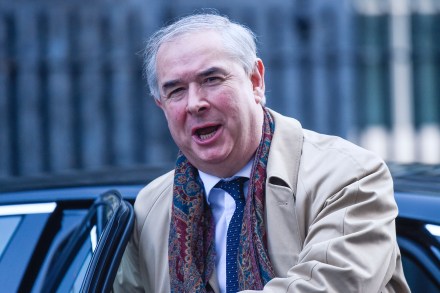
Former attorney general Geoffrey Cox has today warned that the Internal Markets Bill could cause 'unconscionable' damage to the UK's international standing. With a vote on the legislation due later today, could a rebellion overcome the government's majority? Katy Balls speaks to Fraser Nelson and James Forsyth.

Will Ireland stump a Brexit deal?

From our UK edition

19 min listen

The EU said it could walk away from trade talks after the government announced that it planned to break international law in its Internal Markets Bill. But how will Ireland, one of the countries most affected by the government's decision, react? Katy Balls speaks to Peter Foster, public policy editor of the Financial Times, Pat Leahy, political editor of the Irish Times and James Forsyth.

The growing Tory unease over lockdown

From our UK edition

10 min listen

As England heads into stricter lockdown measures shortly, James Forsyth talks to Katy Balls and Fraser Nelson about the growing unease amongst backbenchers over the government's strict Covid response. Is it time for the government to try harder to make a case for its approach?

Boris Johnson can’t afford many more weeks like this one

From our UK edition

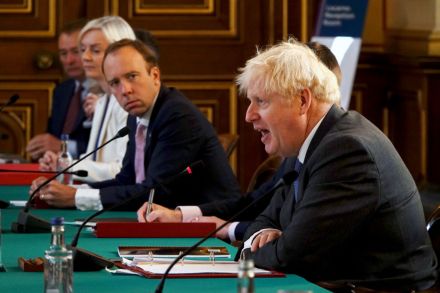
Boris Johnson will address his MPs tonight – and they are in need of some soothing. This week has strained relations between him and the parliamentary party. As I say in the Times, on Tuesday the government horrified the internationalist wing of the party by declaring that it was prepared to break international law in a 'specific and limited way'. On Wednesday, it infuriated the libertarian wing by making it illegal, with some exemptions, for more than six people to gather together. There was particular anger about the fact that all this happened without any fresh parliamentary vote or debate. There’s little overlap between these two factions. But picking a fight with two wings of the parliamentary party at the same time is dangerous for any prime minister.

Winning shot: how the vaccines race has become a power struggle

From our UK edition

34 min listen

Vaccines are normally in the realm of scientists; but not this time as world leaders race to be the first. (00:50) Brexit is heating up, but is the government in a stronger position than it seems? (13:35) And a modern day Caligula - the life and times of the Thai king Rama X. (22:40)With journalist Matthew Lynn; immunologist Beate Kampmann; our political editor James Forsyth; YouGov pollster Marcus Roberts; and Asia historian Francis Pike.Presented by Cindy Yu.

It’s hard to see a way through the Brexit deadlock

From our UK edition

The drama has ramped up again in the Brexit talks. At today’s meeting of the Joint Committee on the Northern Ireland protocol, the EU demanded an explanation from the UK side of what was going on with the Internal Market bill. The UK argued that its clauses on Northern Ireland were needed as a safety net and to guarantee the peace process. The EU were not persuaded by this argument; and have demanded that these clauses are dropped from the bill by the end of the month. The EU statement is not explicit about what will happen if the clauses aren’t dropped. But the pretty clear implication is that the trade talks would likely be called off at that point. It is hard to see a way through this row.

The competing theories that will decide Brexit

From our UK edition

One thing is keeping the temperature among Tory MPs in check: the government’s poll lead. It's hard to claim that this or that event has been an election losing disaster when the opposition is still behind. The explanation for why the Tories are ahead despite such a torrid summer holds the key to what will happen this autumn, as I argue in the magazine this week. To one of those involved with the Tories’ 2019 election victory, the answer is obvious: the party has a core vote of 30 per cent to which it has added another 10 per cent who are Brexit enthusiasts. This analysis would encourage the Tories to prioritise their Brexit coalition. They would not want to give any ammunition to those who are eager to cry ‘Brexit betrayed’ at any deal.

No. 10’s no-deal dilemma

From our UK edition

Backbenchers are discussing when to give Downing Street a bloody nose, a former prime minister is on the warpath and the government is fighting on multiple fronts. All of this is contributing to the heated atmosphere at Westminster. But one thing is keeping Tory tempers in check: the party’s poll lead. As long as the government is ahead in the polls, it is hard to declare that it is in crisis. This lead also limits the frustration of Tory MPs. You can’t claim that this or that event will lead to the Conservatives losing the next election when the opposition are still behind. Why are the Tories still ahead despite such a torrid summer?

Is Britain facing a second Covid crackdown?

From our UK edition

12 min listen

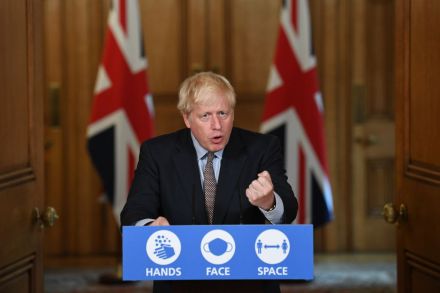
Boris Johnson held a press conference this afternoon to announce that only groups of six or smaller would be able to meet from Monday. The new restrictions come after a spike in coronavirus cases, and were brought in alongside threats to fine those who break the rules. But is there more to come? John Connolly speaks to Katy Balls and James Forsyth.

Boris’s Internal Market bill will struggle in the Lords

From our UK edition

The reverberations from what Brandon Lewis said yesterday continue. Having spoken to various peers, it is clear that the internal market bill will now really struggle in the House of Lords. Two peers who are far more sympathetic to this government than most in the upper house don’t think that it will pass the Lords before the end of the year, meaning that it wouldn’t be on the statute book for the end of the transition period. The view of these peers is that Lewis’ comments about breaking international law and the fact that the bill is unlikely to get legislative consent motions from Holyrood, Stormont or Cardiff Bay will make the Lords feel they are justified in holding it up.

How will Tory MPs react to No. 10’s Brexit law breach?

From our UK edition

16 min listen

As Michel Barnier arrives in London for another round of trade talks, Brandon Lewis today said that government plans to reinterpret the Brexit withdrawal treaty could break international law. Cindy Yu speaks to James Forsyth and Katy Balls about what the No. 10 proposals could mean, and whether Tory backbenchers can stomach the move.

Will the hardline Brexit approach work?

From our UK edition

10 min listen

Boris Johnson last night issued a warning to the European Union that Brexit negotiations must be concluded by October 15 or Britain will walk away. Will this focus minds, or might it spell the end for the talks? Katy Balls speaks to Fraser Nelson and James Forsyth about the government's hardline approach.

Will state aid sink a Brexit deal?

From our UK edition

10 min listen

The deadline for a Brexit deal is fast approaching, but the level of subsidies paid to companies and industries could prove a stumbling block. Will state aid - which makes up just 0.34 per cent of the UK's GDP - scupper an agreement with the EU? Katy Balls speaks to Fraser Nelson and James Forsyth.