James Forsyth

James Forsyth

James Forsyth is former political editor of The Spectator.

Are local authorities fighting back against Covid restrictions?

From our UK edition

13 min listen

Middlesborough's mayor, Andy Preston, today refused to accept the government's decision to place households in the town under a local lockdown. Accusing Westminster decision-makers of 'ignorance', the mayor said the new measures would 'kill viable jobs' and 'damage mental health'. Is this the start of regional authorities fighting back? Cindy Yu speaks to Fraser Nelson and James Forsyth.

What will Boris do if no Covid vaccine arrives?

From our UK edition

In a non-Covid world, next week would be Tory conference in Birmingham. As I say in the magazine this week, it would have been a triumphalist conference with much talk of how the Tories had won a two-term victory. Covid has changed everything, though. Tory conference is now an online only event with short speeches. The Tories are now behind Labour for the first time since Johnson became leader, albeit only in one poll. His backbenchers are becoming more rebellious. More than 50 of them signed the Brady amendment – which calls for parliamentary votes before nationwide Covid restrictions are introduced – enough to wipe out the government’s majority if it had come to vote.

Prime ministers can’t pick the crises that define them

From our UK edition

In a non-Covid world, next week would be the Tory party conference. Boris Johnson would march on to the stage in Birmingham to receive the adulation of his grassroots supporters. The biggest Tory majority since Margaret Thatcher’s final victory in 1987 would have been celebrated. There would have been cheer after cheer for the new intake of Tory MPs, elected in seats that had been Labour for generations. It would have been a triumphalist conference with much talk of how the Tories had won a two-term victory. The virus has changed everything. Tory conference is now an online only event with short speeches.

Is the whack-a-mole lockdown strategy working?

From our UK edition

12 min listen

Keir Starmer attacked Boris Johnson in PMQs today over the effectiveness of local lockdowns, saying in some areas 'things are getting worse not better'. After the PM himself got the rules mixed up yesterday, is the government's strategy working, or is a change of strategy needed? Katy Balls speaks to James Forsyth.

Live at Alternative Conference

From our UK edition

28 min listen

The Prime Minister was forced to apologise this afternoon after misstating new lockdown rules brought into force overnight in the North East. Is government incompetence costing it support? In a live episode of Coffee House Shots for The Spectator's Alternative Conference, Katy Balls speaks to Fraser Nelson, James Forsyth and James Johnson, co-founder of polling company JL Partners.

Can the government avoid a showdown with Tory backbenchers?

From our UK edition

16 min listen

Graham Brady's amendment to give backbenchers a vote over new coronavirus restrictions looks set to pass through the Commons this week, provided it is selected by the Speaker. With the government determined not to give MPs a say, can they avoid a showdown with Tory backbenchers? Cindy Yu speaks to James Forsyth and Katy Balls.

A Brexit breakthrough could be on the cards

From our UK edition

Earlier this month, the prospects for a Brexit deal did not look good. The talks weren’t making progress. But there is now cautious but growing optimism in Whitehall that there will be a deal, I say in the Times this morning. The British side now view the remaining problems as being more about process than substance. One source close to the negotiations tells me:  'There’s no doubt that the tone has improved but we really need to begin the intensive talks to resolve the final tricky issues. We’re keen to begin now, but at the moment the EU keeps blocking these talks and demanding more process. The real risk now isn’t that the talks fail over substance, it’s that they will be timed out.

Why even moderate Tories are voting against No. 10

From our UK edition

15 min listen

Sir Graham Brady, chairman of the 1922 Committee, has tabled an amendment to the government's Coronavirus Act to force a vote in Parliament on any new restrictions. A cross-party group of 40 MPs have signed the amendment, including moderate Tories like Damian Green and Iain Duncan Smith. But why have they chosen to move against No. 10? Cindy Yu speaks to James Forsyth and Katy Balls.

Closing time: the coming Tory brawl over Covid rules

From our UK edition

39 min listen

Another Conservative civil war threatens to bubble over, so will the government start taking its backbenchers seriously? (00:55) Plus, the contentious fight over the next Supreme Court nominee (15:25) and what is it like to be in Madagascar during the pandemic? (29:05)With Political Editor James Forsyth; Chair of the 1922 Committee of Tory backbenchers Sir Graham Brady; Professor Charles Lipson from the University of Chicago; USA Editor Freddy Gray; and writer Jo Deacon.Presented by Cindy Yu.Produced by Cindy Yu and Max Jeffery.

The Brady amendment could spell trouble for Boris Johnson

From our UK edition

If opposition parties back it, the Brady amendment – which calls for parliamentary votes before nationwide Covid restrictions are introduced – will pass. The signatures to the amendment have just been published and there are enough Tories on the list to wipe out the government’s majority of 80 As I say in the magazine, both the rebels and Tory whips believe that the amendment will pass if the opposition parties do back it. So Boris Johnson is trying to assuage the rebels by offering more statements, more debates and more chances for MPs to question Chris Whitty and Sir Patrick Vallance. But these rebels want votes and so are unlikely to be satisfied by this.

How Keir Starmer could capitalise on Tory Covid wars

From our UK edition

Boris Johnson is at odds with his parliamentary party on the biggest issue of the day. Not Brexit – where the vast majority of Tory MPs continue to back his hardball approach – but Covid. No. 10’s approach, as I say in the magazine this week , now is one of pre-emption. They want to clamp down on the virus long before it has a chance to get out of control. Tory MPs, though, still favour a policy of containment: broadly, they believe that the government should stick to the approach that guided the easing of the lockdown, trying to keep the virus within the capacity of the health service to deal with it. Right now, Tory MPs who don’t like the direction of the policy can’t do much more than grumble.

Closing time: the Tory brawl over Covid rules

From our UK edition

‘The mood of the parliamentary party has noticeably worsened in the past five days,’ one senior Conservative backbencher says. He’s not talking about Brexit — these days, the majority of Tory MPs continue to back Boris Johnson’s hardball approach — but about Covid. No. 10 favours a pre-emption strategy when it comes to the pandemic. They want to clamp down on the virus long before it has a chance to get out of control. ‘Go tight, go early,’ as one Johnson ally puts it. But that approach is triggering considerable resistance among Tory MPs. Broadly, they believe that the government should stick to its previous policy of trying to keep the virus within the capacity of the health service to deal with it.

Should the government admit its mistakes?

From our UK edition

12 min listen

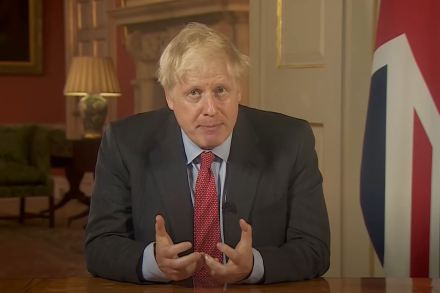
In a televised address to the nation last night, Boris Johnson hailed Britain as a 'freedom loving country', but said that a lack of adherence to existing coronavirus restrictions meant new measures are needed. Is the government right to blame the public for a rise in Covid cases, or should they adopt a more contrite tone and admit to mistakes in areas like testing? Cindy Yu speaks to James Forsyth and Katy Balls.

Can the lockdown hawks stave off further restrictions?

From our UK edition

20 min listen

Boris Johnson today warned that Britain has 'reached a perilous turning point' in its battle with coronavirus, as he ordered pubs to close at 10pm and pledged to crack down on rule-breakers. The package of new restrictions were not as sweeping as many Tory MPs had feared, but with the Prime Minister saying that his government could yet 'deploy greater firepower', is this just the beginning? Cindy Yu speaks to James Forsyth and Katy Balls.

Theresa May rejects Boris’s Brexit bill

From our UK edition

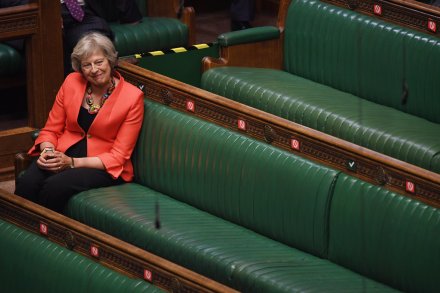
Theresa May was away last week so she didn’t have to take part in the vote on the Internal Market Bill, which contain the controversial Northern Ireland clauses that disapply parts of the Withdrawal Agreement. But in a speech just now, May has made explicit her opposition to the bill, declaring: ‘I can’t support this bill.’ She even went as far as to question how any minister could walk through the division lobby in support of it. May accused the government of acting ‘recklessly and irresponsibly’ and doing ‘untold damage’ to the UK’s international reputation with its willingness to ‘renege’ on the agreement that it has signed. She also added that it was putting the ‘integrity of the UK at risk’.

Why won’t Vallance and Whitty answer any questions?

From our UK edition

11 min listen

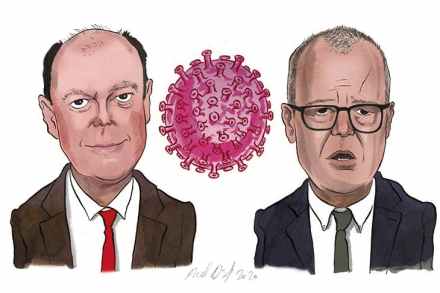
In a Downing Street statement this morning, Chris Whitty and Patrick Vallance presented their take on the latest coronavirus data. Speaking without a government representative, the pair said that Brits needed to 'break unnecessary links between households' and warned that the UK could see 50,000 new coronavirus infections a day by mid-October. But why didn't Vallance and Whitty answer questions from journalists? Cindy Yu speaks to James Forsyth and Katy Balls.

Boris Johnson’s eco ambitions

From our UK edition

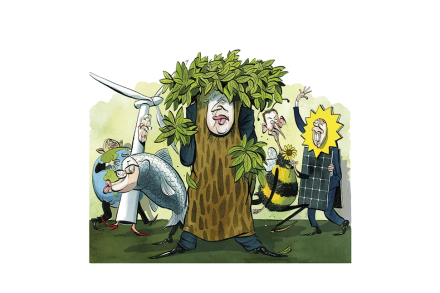
Covid and Brexit dominate Boris Johnson’s premiership, and will for at least the rest of this year. But, as I say in the Times today, the speech that Johnson is most excited about giving is not on either of these subjects. Rather, it is on his green agenda. 'The big narrative we’re not getting right is that this has to be a green recovery,' says one of those who has discussed the speech with the Prime Minister. One of the reasons Johnson is so keen on this speech is his enthusiasm for hydrogen. He and others at the top level of government see it as the answer to many problems. They think that hydrogen could be used not only to fuel heavy goods vehicles, trains and ships but also to heat our homes.

A Covid ‘circuit break’ will infuriate Tory MPs

From our UK edition

Parliamentary allies of Boris Johnson are deeply concerned about how Tory MPs will react to any kind of ‘circuit break’ set of restrictions designed to slow the spread of coronavirus. The public are in favour of tighter restrictions. Even before the latest infection numbers came out, more than 60 per cent of voters backed a 10pm curfew, according to YouGov. But Tory MPs are in a very different place. As one weary secretary of state put it to me earlier in the week, one of the government’s problems is that ‘the libertarian chunk of the population is disproportionately represented in the Tory party and the press’.

What’s the point of a two-week lockdown?

From our UK edition

13 min listen

The government is reportedly considering the short-term reintroduction of nationwide social restrictions to halt the spread of coronavirus. Will a two-week 'circuit break' make a difference, or simply delay the inevitable? Katy Balls speaks to Fraser Nelson and James Forsyth.
The impossibility of Moonshot without fixing test and trace

From our UK edition

16 min listen

The government has promised to deliver a nationwide mass testing programme by the beginning of next year, claiming it could offer a route out of continued restrictions. But with mounting reports about the failing test and trace system, is Operation Moonshot impossible? Cindy Yu speaks to James Forsyth and Katy Balls.