James Forsyth

James Forsyth

James Forsyth is former political editor of The Spectator.

Biden’s Ukraine policy should bolster the Western alliance

From our UK edition

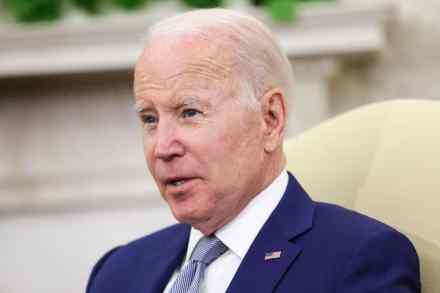
After the confusion about what weaponry the US would supply to Ukraine and growing talk of divisions within the Western alliance, Joe Biden has a piece in the New York Times trying to clarify what US policy is. Biden makes clear that he, like Zelensky, accepts that the war will end through diplomacy rather than total victory for one side or the other. He says that the US will supply Ukraine with weaponry, including longer range artillery, to ensure that it enters those negotiations in the ‘strongest possible position’. He is also adamant that the US will not pressure Ukraine to cede territory to try and bring an end to the conflict.
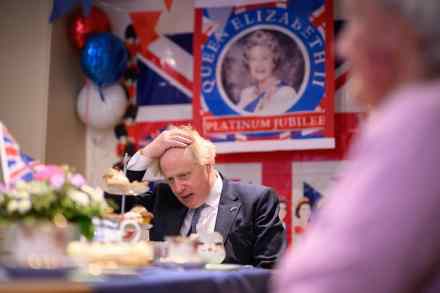
Boris may be toppled by accident

From our UK edition

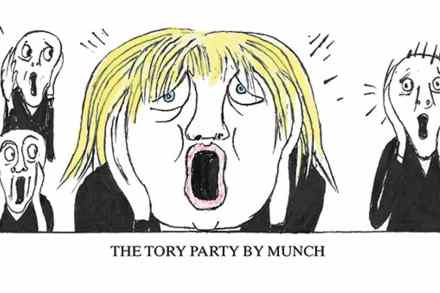
Every Tory leader fears a plot against them. Their paranoia isn’t helped by the layout of Westminster, which lends itself to scheming. They worry about huddled groupings in the tearoom, cosy suppers in townhouses, and what’s said behind closed office doors in Portcullis House. It is no coincidence that before the publication of Sue Gray’s report the Tory whips were keen for their MPs to be in parliament, but once the report was released they were very happy for backbenchers to go home. MPs find it harder to plot when they’re away from the Commons. Yet the truth is that if Boris Johnson faces a no-confidence vote it won’t be because of an organised attempt to topple him. There are too many disagreements among Tory MPs over when is the right time to strike.

Partygate is not going away

From our UK edition

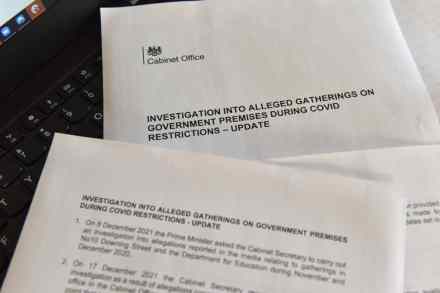
Tory MPs just want partygate to go away. The hope that the Sue Gray report would be the end of things was always likely to be thwarted by the fact the privileges committee was going to investigate the government too. But before that inquiry has even got going, the story continues to rumble on. This evening brings an annual report from Lord Geidt, the independent adviser on the ministerial code, which is written in Sir Humphrey-esque language but still makes clear how cross he is: It may be especially difficult to inspire that trust in the Ministerial Code if any Prime Minister, whose code it is, declines to refer to it.

Why is Boris cutting the civil service?

From our UK edition

16 min listen

The government wants to cut the civil service by over 90,000 people to 2016 levels. Part of the plan is to suspend the Fast Stream recruitment scheme, which hires high-achieving graduates out of university. Why is the government so set on the cut, and is this really the best way to do it? Cindy Yu speaks to Fraser Nelson and James Forsyth.James Forsyth: ‘If these graduates go and work in the private sector instead, frankly the civil service won't be able to afford them in three, five or seven years time.’Subscribe to The Spectator’s Evening Blend, Britain’s most-read politics email, to get an update on the day’s politics every weeknight: https://spectator.com/blendAnd subscribe to The Spectator magazine too.

A confidence vote for Boris is a matter of when, not if

From our UK edition

When, not if, is fast becoming the sense among Tories about a no confidence ballot. One former cabinet minister tells me that he expects the 54 letters to be in even before the two by-elections on 23 June. But, interestingly, he thought that Boris Johnson would win the confidence vote, albeit not handsomely. Another former minister, who thinks the Tories would be best served by a new leader, argues that it would be better for the rebels to wait until after the two by-elections next month before triggering a ballot as that would increase the chances of Johnson losing it. The fundamental problem for the Tories is that they are deeply split on the leadership question.

Boris is fast approaching his moment of maximum vulnerability

From our UK edition

Another day, another couple of Tory MPs calling on Boris Johnson to go — this time it is Jeremy Wright, the former attorney general, and Elliot Coburn, who was elected in 2019 and has a wafer-thin majority over the Liberal Democrats. The worry for No 10 is that this trickle of letters does not appear to be coordinated and seems to be just individual MPs making up their minds. Having to fight a vote of no confidence would be a huge blow to the Prime Minister’s authority. The steady, if not spectacular, flow of letters since the Gray report was published indicates that it isn’t the end of the matter that No. 10 hoped it would be. Most Tory MPs just want this story to go away, but even since the Gray report came out there have been claims about more events.

Could Boris be toppled by accident?

From our UK edition

11 min listen

The Sue Gray report came in last week, but we haven't seen a coordinated effort to either stand behind the Prime Minister, or kick him out. Instead, there has reportedly been a drip of letters of no confidence letters coming in from individual Tories, rather than an organised group. Could we finally see the 54 letters needed to trigger a vote on Johnson's leadership?Cindy Yu, Fraser Nelson and James Forsyth discuss.

Have the Tories lost their way?

From our UK edition

19 min listen

Katy Balls speaks to Fraser Nelson, James Forsyth, and Kate Andrews about Rishi Sunak's latest support package to aid with the cost of living, including the windfall tax on energy companies.

Will Rishi’s stimulus backfire?

From our UK edition

13 min listen

There have been mixed opinions following Rishi Sunak's announcements in the House of Commons yesterday. The £15 billion budget is targeted to help the whole country with a particular emphasis on those most in need - but has it gone far enough? Or will we pay the price for the Chancellor's handouts in the future?Kate Andrews speaks to Katy Balls and James Forsyth.

Is a windfall tax justified?

From our UK edition

11 min listen

Rishi Sunak has announced a new tranche of economic measures designed to help ease the cost of living crisis in the UK. The new payments will be funded by a windfall tax on energy companies, which comes as the government U-turns on its previous opposition to the policy. On the episode, Katy Balls talks to James Forsyth and Kate Andrews about these measures – and especially the windfall tax.Kate doesn't mince her words, arguing that 'This tax grab is possibly going to be a nail on the coffin for a Tory party that has been hiking taxes for the last two years'.Produced by Natasha Feroze and Cindy Yu.

Inside Taiwan’s plan to thwart Beijing

From our UK edition

37 min listen

In this week’s episode:Ian Williams, author of The Fire of the Dragon: China’s New Cold war, and Alessio Patalano, Professor of War and Strategy in East Asia at King’s College London, talk about how the war in Ukraine has changed the thinking in Taiwan. (00:37) Also this week: Was Sue Gray’s report on Downing Street parties a game-changer or a damp squib? The Spectator’s editor, Fraser Nelson, and our political editor, James Forsyth, join the podcast to discuss the fallout from partygate. (15:39) And finally:If rising restaurant prices are causing you grief, you're not alone. Writer Yesenda Maxtone Graham and The Spectator’s Wikiman columnist, Rory Sutherland, join the podcast.

For Boris, the hard bit is just beginning

From our UK edition

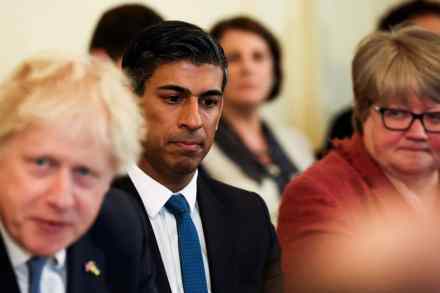
Boris Johnson has been plunged back into the mire of partygate. The publication of a photograph of Johnson raising a glass to his departing communications chief Lee Cain in November 2020 and the long-awaited report by Sue Gray into lockdown breaches in Whitehall means that once again there are Tory MPs publicly calling for him to resign. Some of those who had gone quiet on the basis that the war in Ukraine meant it was not the right time for a leadership election have renewed their calls for the Prime Minister to go. No. 10’s hope is that apologies and an emphasis on how the new Department of the Prime Minister is meant to professionalise Downing Street will be enough to persuade backbenchers to stay their hands.

Did the Sue Gray report move the dial?

From our UK edition

14 min listen

The long-awaited Sue Gray report is finally published today. It included new photographs (including of the birthday bash, though James Forsyth describes the photo as looking more like 'an enforced office socialising occasion' than a party), colourful details (one staffer was threw up at one drinks) and some unsavoury revelations (Sue Gray was damning about some of the staffers' treatment of cleaners and security staff). But amidst all this, has the report really worsened the situation for Boris Johnson? Katy Balls talks to Isabel Hardman and James on this episode.Produced by Natasha Feroze and Cindy Yu.

Why Tory MPs are staying quiet about Boris’s partygate troubles

From our UK edition

The loudest sound at Westminster today has been the silence of most Tory MPs. A few such as Tobias Ellwood have demanded that Boris Johnson should go. Others have defended the PM publicly. But most Tory MPs have chosen to say nothing. Indeed, because only 13 Tory MPs wanted to contribute to the statement the PM made about the Sue Gray report, the chair had to call opposition MP after opposition MP, rather than going from one side of the House to the other as he normally does. What does this silence of the majority of Tory MPs mean? It tells us that while backbenchers might not be prepared to move against Johnson, they don’t want to actively defend what happened either. They just want this whole story to go away.

How will Boris Johnson respond to the Gray report?

From our UK edition

11 min listen

Sue Gray's report into Downing Street parties during lockdown is set to be released on Wednesday morning. The tone Boris Johnson takes will be vital to his political future. What will he say?Katy Balls speaks to James Forsyth and Isabel Hardman.

Have any lessons been learnt from the Pen Farthing debacle?

From our UK edition

Partygate is inevitably dominating in Westminster today – and will do so again tomorrow when the Gray report is likely to be published. But the attention on partygate should not obscure today’s Foreign Affairs select committee report on the handling of the withdrawal from Afghanistan. It is devastating, and should lead to a period of deep reflection in King Charles Street – and across Whitehall – of how badly things went wrong. The nature of the Afghan withdrawal shames our country: it was more scuttle than orderly evacuation. There are many shocking things in the report. But perhaps the most shocking is how the UK government failed to plan for the withdrawal – despite the fact it knew it was coming because US policy was not going to change.

What do we know about the Sue Gray report?

From our UK edition

13 min listen

It's finally happening! This is the week the infamous Sue Gray report into partygate will be released. Details are few and far between, although we do know that the Prime Minister will be mentioned by name in the document. Mutterings from Tory HQ are that this is not going to be a good week for the government but not the end of Boris Johnson. Only time will tell.Isabel Hardman talks with Katy Balls and James Forsyth.

Should the Tories try to lose the next election?

From our UK edition

9 min listen

Some Tories want to lose the next election. Conservative policies and ideologies are stale, they say, and the party could do with a period in opposition. Is this really a good idea? And could a Labour, SNP and Liberal Democrat coalition find a way to keep the Tories out of government for decades?'If anyone is thinking that way, they don't deserve to be in power.' – Fraser NelsonKaty Balls speaks to Fraser Nelson and James Forsyth.

The existential threat facing the Tory party

From our UK edition

As James Kirkup says, some Tories are beginning to wonder whether it might be better for them to lose the next election. But defeat at the next election could see the Tories locked out of power for a generation. The local elections and the opinion polls suggest that the most likely result of the next election is not a Labour majority, but some kind of anti-Tory majority. But, as I say in the Times today, the Tories have more to fear from this kind of governing arrangement than an outright Labour victory. Why? Because it is more likely to lead to electoral reform.

Has Boris won back Tory MPs?

From our UK edition

10 min listen

Given that Boris Johnson escaped the latest and final set of party fines from the police yesterday, does this mean partygate is over? Sue Gray's report is still yet to be published, where she intends to name and shame those in her report. Could this take some of the pressure off the Prime Minister?Also on the podcast, there is a growing divide within the Conservative party between those who want a windfall tax and those that don't. But where does Boris stand on this?All to be discussed as Katy Balls speaks to James Forsyth and Fraser Nelson.