James Delingpole

James Delingpole

James Delingpole reviews television for The Spectator.

I hope more darlings are killed off in Game of Thrones season 6

From our UK edition

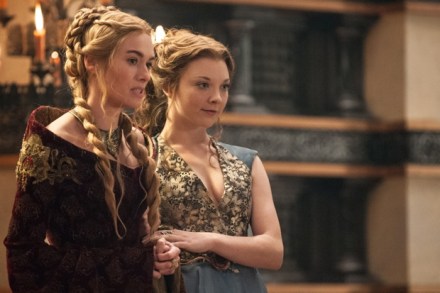
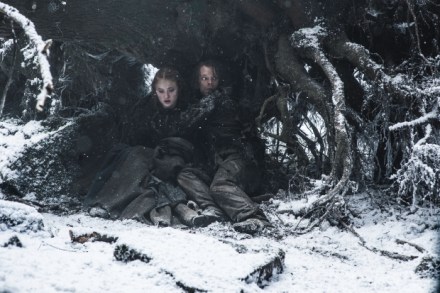
So: Game of Thrones. Finally — season six — the TV series has overtaken the books on which it is based and the big worry for all us fans is: will it live up to the warped, convoluted, sinister genius of George R.R. Martin’s original material? As regulars will know, the great thing about Martin is that you never know which of your favourite characters he’s going to kill off next. Really — and I can’t think of any other series of which this is true — they could die any moment, which is one of the things that makes it such gripping, unsettling, memorable TV. (The ritual immolation of that little girl last season, for example. Will it ever be surpassed?

Oxford in my day was another, better world

From our UK edition

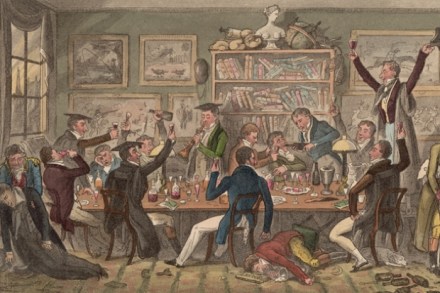
I was in the attic killing some Taleban on Medal of Honor when Girl interrupted and said: ‘Dad, what’s this?’ What it was was a pile of memorabilia which I’d stuffed into a plastic shopping bag on leaving university and which I’d barely looked at since. We picked through the contents rapt with wonder. To me it seems like yesterday but this was a window to a world that no longer exists — an Oxford at least as remote from current experience as my Oxford was from the version attended 30 years earlier by all those clever grammar-school boys with their pipes and tweed suits, fresh from doing their National Service. ‘Wow!’ I thought. ‘I’m living history.’ Probably the biggest change has been in communications.

An inconvenient truth | 14 April 2016

From our UK edition

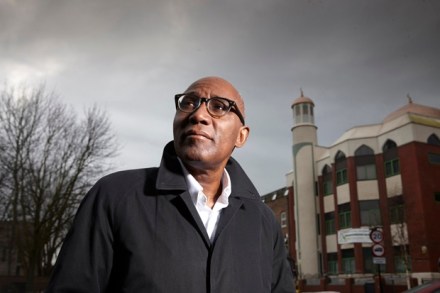
‘Our findings will shock many people,’ promised Trevor Phillips at the beginning of What British Muslims Really Think (Channel 4, Wednesday). But the depressing thing is that I doubt they will, actually. I think the general British public have known for some time what Phillips’s documentary professed to find surprising: that large numbers of Muslims don’t want to integrate, that their views aren’t remotely enlightened, and that more than a few of them sympathise with terrorism. It’s only the establishment elite that has ever pretended otherwise. As former head of the Equality and Human Rights Commission, Phillips was very much part of that elite. He commissioned the 1997 Runnymede report that popularised the word ‘Islamophobia’.

Give thanks for the tomb raiders

From our UK edition

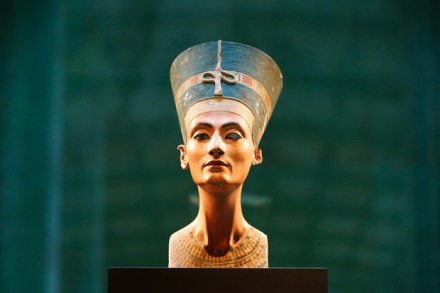
If ever you find yourself in Berlin, there are three places you absolutely must visit. The first two are museums: the Neues Museum, to see the well-worth-the-detour head of Nefertiti; and the Pergamon Museum, so you can offer up a prayer of gratitude for the arrogance of all those 19th-century imperialist looters who understood that the treasures of classical antiquity are far too precious to be wasted on the barbarous cultures which, by geographical accident, have inherited them since. Yes, perhaps I’m overstating it.

Love at first sight | 31 March 2016

From our UK edition

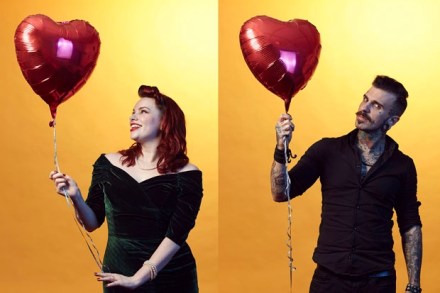
Now the kids are back for the school holidays, I have a licence to watch complete trash again. No more brooding Scandi dramas (though Follow the Money is shaping up very nicely — plus, as an added bonus, its anti-windfarm theme is really winding up Guardian readers) — just pure televisual soma, such as the masses use to anaesthetise themselves after another thankless day in their veal-fattening pens. First Dates (C4, Fridays), for example. You wouldn’t want to pig out on more than one episode at a time but it’s about as perfectly formed a TV experience as you’ll get: you laugh, you cry, you gawp, you cringe; you feel uplifted by the stories with happy endings and reassured by the ones without as you realise — hurrah!

What will I do with my second chance at life? Play more video games, for a start

From our UK edition

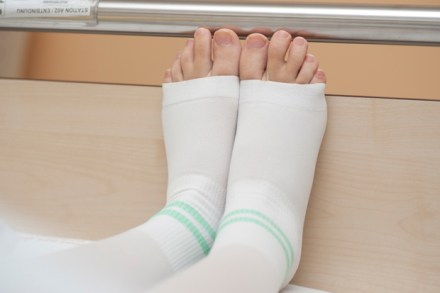
Does a near-death experience make you a better person? This is something I’ve been thinking about on and off since my pulmonary embolism. Initially, it hadn’t occurred to me that a PE was a big deal. But the research that I’ve done since suggests that these things aren’t unserious. My seen-it-all ex-army GP, for example, was properly impressed. As too have been the various people I know whose friends and relatives have died of them, one a 23-year-old girl who succumbed after breaking her ankle while walking on the moors. So yes, as my fellow ‘survivors’ keep telling me, I should be grateful for my lucky escape — and perhaps see it as a heaven-sent opportunity to put my life into perspective.

Greedy greenies

From our UK edition

‘We have a problem. Yes. At the wind farm.’ Any conspiracy thriller with lines like that has definitely got my vote. Possibly most of you are unaware of this, because it’s not something I talk about often, but I happen to be not too fond of the things I call bat-chomping, bird-slicing eco-crucifixes — nor of the charlatans, crooks, liars and parasites who make their living out of them. Indeed, whenever I try to think of an industry that’s worse than wind farms I keep coming unstuck. At least landmines serve a useful purpose for force protection; at least Albanian prostitutes make a few men very happy.

Want to leave the EU? You must be an oik like me

From our UK edition

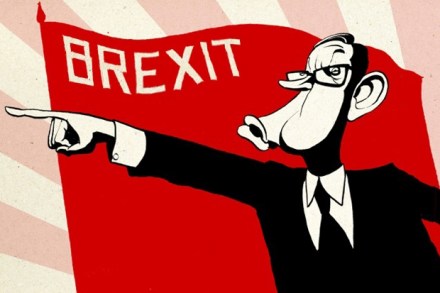
If you need to know how properly posh you are there’s a very simple test: are you pro- or anti-Brexit? Until the European referendum campaign got going, I thought it was a no--brainer which side all smart friends would take. They’d be for ‘out’, obviously, for a number of reasons: healthy suspicion of foreigners, ingrained national pride, unwillingness to be ruled by Germans having so recently won family DSOs defeating them, and so on. What I also factored in is that these people aren’t stupid. I’m not talking about Tim Nice-But-Dims here. I mean distinguished parliamentarians, captains of industry, City whiz-kids, high-level professionals: the kind of people who read the small print, sift the evidence and take a considered view.

Northern exposure | 3 March 2016

From our UK edition

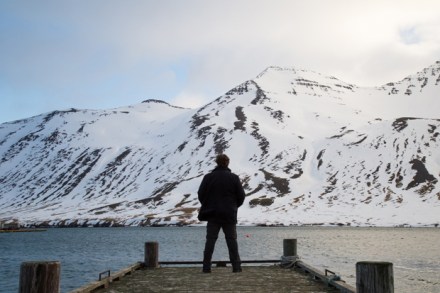
Some things I have learned about Iceland after watching six episodes of Trapped (BBC4, Saturdays). 1. They seem to feel much the same way towards the Danes as the Irish or the Scots do towards the English. 2. Some typical Icelandic first names: Andri, Ásgeir, Dagný, Hjörtur, Hrafn, Þórhildur. But even if you did Anglo-Saxon at university and know what a ‘thorn’ looks like, they’re still pronounced nothing like they’re spelt. 3. They drink more coffee than booze, even at night. Only tourists, millionaires and politicians can afford alcohol. 4. If it weren’t for the excitement provided by the swimming-pool, the kids in remote Icelandic towns would die of boredom. 5. Everyone in Reykjavik is poncy, effete, synthetic.

What was this bed-blocker doing on my ward?

From our UK edition

There’s some journalistic research you’d really never do by choice. Spending four days in an NHS hospital with a life-threatening pulmonary embolism, for example. Unfortunately it was out of my hands. I fell off a horse, one thing led to another, and suddenly there I was, lying in what I imagine is a reasonably typical NHS ward being tended by all those multi-ethnic nurses and hard-pressed doctors you read about in the newspapers but rarely encounter yourself because in order to do so you have to be quite seriously ill. So: what have I learned? First, that it’s not as bad as you’ve long feared, especially not for anyone hardened by the experience of the military, prison or — in my own case — being at an English prep school in the 1970s.

Time to put my money where my mouth is

From our UK edition

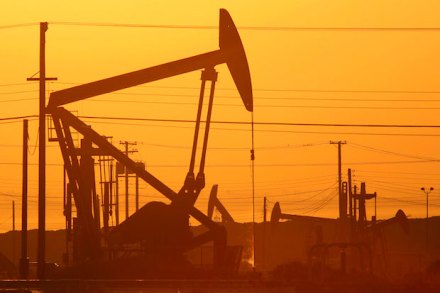
'As oil crashes, is it time to short solar stocks?’ Gosh, I wish I’d read that headline a year ago. The solar stock it tipped for doom in January 2015 has since plummeted from $19 to $2.65. Yes, hindsight can be a wonderful thing. But what if there were an area of the markets which you knew to be grotesquely overvalued as a result of ignorance, dishonesty, and false sentiment? You’d be mad not to bet against it, wouldn’t you? It would hardly be gambling: more like plain common sense. This is how I’ve felt for quite some time about the climate change industry. Very often when I read the expert commentators writing on the subject in the City pages, I’m shocked by how much more I know than they do.

Green sentimentalists forget something: nature is utterly brutal

From our UK edition

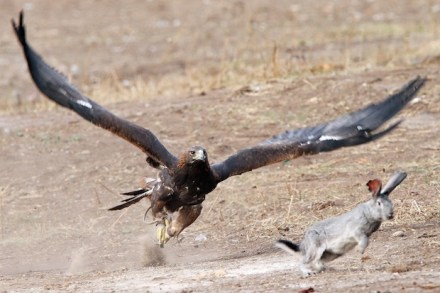
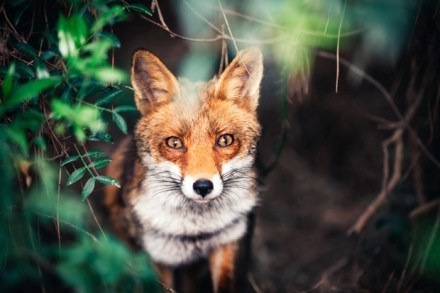
Wild Lone is one of the most violent books I’ve ever read. It was published just before the last war and it doesn’t pull its punches: mothers are slaughtered with their babies; brothers and sisters are eaten alive; callous parents look on indifferently as their sick children die slowly beneath them; the few survivors almost invariably succumb to disease, cold or starvation. Every child should read it, for it tells you how the world really is. The natural world, I mean. It was written by one of the last century’s great amateur naturalists, Denys Watkins-Pitchford, under his nom-de-plume ‘BB’ and it purports to be the biography of a ‘Pytchley fox’ called Rufus. Rufus is simultaneously the book’s hero and villain.

Class of ’83

From our UK edition

No one remembers this now but there really was a period, not so long ago, when the Eighties were universally reviled as the ‘decade that style forgot’. For a time it got so bad that none of us survivors could even bear to look at old photos of ourselves: mullets, feather cuts, Limahl-style bleaching, pastels, legwarmers, unflattering suits so boxy they made you look broader than you were tall... But try telling this to the kids today and they won’t believe you. The Eighties, as far as they’re concerned, are so achingly, incredibly, bleeding-edge cool that there’s no way their parents could possibly have lived through them and, ‘Oh, by the way, Dad, do you mind if I take that old jacket of yours back to school?

Nature is red in tooth and claw. Get over it

From our UK edition

Wild Lone is one of the most violent books I’ve ever read. It was published just before the last war and it doesn’t pull its punches: mothers are slaughtered with their babies; brothers and sisters are eaten alive; callous parents look on indifferently as their sick children die slowly beneath them; the few survivors almost invariably succumb to disease, cold or starvation. Every child should read it, for it tells you how the world really is. The natural world, I mean. It was written by one of the last century’s great amateur naturalists, Denys Watkins-Pitchford, under his nom-de-plume ‘BB’ and it purports to be the biography of a ‘Pytchley fox’ called Rufus. Rufus is simultaneously the book’s hero and villain.

Coming up for air | 7 January 2016

From our UK edition

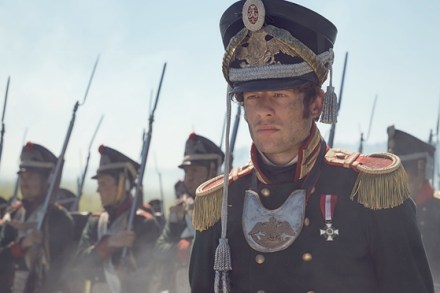
Gosh what a breath of fresh air was Andrew Davies’s War & Peace adaptation (BBC1, Sundays) after all the stale rubbish that was on over Christmas. There were times when the yuletide TV tedium got so bad that I considered preparing us all a Jonestown-style punchbowl. That way, we would never have had to endure Walliams and Friend nor the special time-travel edition of what everyone is now rightly calling Shitlock. Sherlock has a terminal case of Doctor Who disease. That is, it has become so knowing, so self-referential, so — ugh! — meta that it no longer feels under any obligation to put in the hard yards needed to surprise and delight anyone who isn’t already a committed fanboi.

War & Peace is actually just an upmarket Downton Abbey

From our UK edition

Gosh what a breath of fresh air was Andrew Davies’s War & Peace adaptation (BBC1, Sundays) after all the stale rubbish that was on over Christmas. There were times when the yuletide TV tedium got so bad that I considered preparing us all a Jonestown-style punchbowl. That way, we would never have had to endure Walliams and Friend nor the special time-travel edition of what everyone is now rightly calling Shitlock. Sherlock has a terminal case of Doctor Who disease. That is, it has become so knowing, so self-referential, so — ugh! — meta that it no longer feels under any obligation to put in the hard yards needed to surprise and delight anyone who isn’t already a committed fanboi.

If I was elected your dictator for life, this is what I’d ban in 2016

From our UK edition

Things I am going to ban when, by popular acclaim, I am elected your Dictator For Life in 2016. 1. Onions where the brown skin doesn’t come off easily. You know the ones: where the papery outer layer clings so tightly that you have to pick it off laboriously with a sharp knife and it takes forever. I hate these onions so much. I’m pretty sure they’re all foreign, though I may be mistaken. 2. Slimline tonic water. (See also: Diet Coke; semi-skimmed milk) ‘Oh? Is it really? Sorry about that. I think it’s all we’ve got.’ ‘Aspartame? Oh, is that not good?’ ‘Not sure I can tell the difference, to be honest.’ ‘Don’t blame me. I don’t get any say in the shopping.

The best things in the world spring up by accident

From our UK edition

Since no one has bothered to ask what my must-read book of last year was I’m going to tell you here: it’s Matt Ridley’s Evolution of Everything. I don’t think it has appeared on nearly so many recommended lists as his previous bestsellers Genome and The Rational Optimist, nor has it been so widely reviewed. And I have a strong inkling as to why: its message is so revolutionary as to alienate pretty much everyone across the spectrum, from Christians and Muslims to corporate bosses, historians, feminists, educationalists and conspiracy theorists, from Greens and socialists all the way across (if there’s a difference) to Conservatives like George Osborne and David Cameron.

Will you survive the Delingpole Era? See below…

From our UK edition

  Things I am going to ban when, by popular acclaim, I am elected your Dictator For Life in 2016.   1. Onions where the brown skin doesn’t come off easily. You know the ones: where the papery outer layer clings so tightly that you have to pick it off laboriously with a sharp knife and it takes forever. I hate these onions so much. I’m pretty sure they’re all foreign, though I may be mistaken.   2. Slimline tonic water. (See also: Diet Coke; semi-skimmed milk) ‘Oh? Is it really? Sorry about that. I think it’s all we’ve got.’ ‘Aspartame? Oh, is that not good?’ ‘Not sure I can tell the difference, to be honest.’ ‘Don’t blame me. I don’t get any say in the shopping.

Was my article the inspiration for this brilliant BBC dramatisation?

From our UK edition

The two things I hate most about Christmas are a) Advertland showing me how sparkly and joyous my home and bright-eyed kids are at this time of year, and b) the Doctor Who Xmas special telling me that if only I can open my heart and put cynicism aside, then I too can enjoy a mash-up of Dickens, C.S. Lewis and the Brothers Grimm, where daleks with tinsel round their guns exterminate the spirit of Scrooge as laughing children come pouring from the Ice Queen’s dungeon and something nice happens on a London housing estate. Or similar. That’s what was so great about We’re Doomed! The Dad’s Army Story (BBC2, 22 December).