James Delingpole

James Delingpole

James Delingpole reviews television for The Spectator.

SAS: Who Dares Wins is harsh, gruelling and transgressively countercultural

From our UK edition

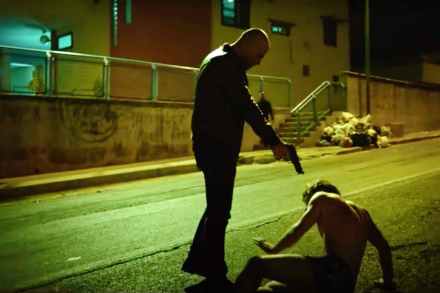
SAS: Who Dares Wins (Channel 4, Sundays) is literally the only programme left on terrestrial TV that I can bear to watch any more. And I’m only slightly exaggerating. Where else, anywhere from the BBC to Channel 4, would you see a woman being punched in the face and made to cry by an ex-SAS soldier for your amusement and delectation? Where else would the competition not be rigged in one way or another so as to ensure that the appropriate race and gender mix made it through to the end? Yes, of course it was shocking a few weeks back watching midwife Louise Gabbitas, 29, get thumped several times in the head by a bloke. Especially when we viewers knew that he was in fact undercover ex-special forces and had been sent to spy on her.

How to be a man

From our UK edition

  The river of death has brimmed his banks And England’s far and Honour’s a name But the voice of a schoolboy rallies the ranks ‘Play up! Play up! And play the game!’ Even as long ago as the first world war, men bitterly mocked the tritely jingo-istic sentiment of Sir Henry Newbolt’s poem ‘Vitaï Lampada’. So it wouldn’t remotely surprise me if it turned out that I was the last chap on earth who still finds it an inspiration. Yes, I know all that G.A.

The Witcher’s hours

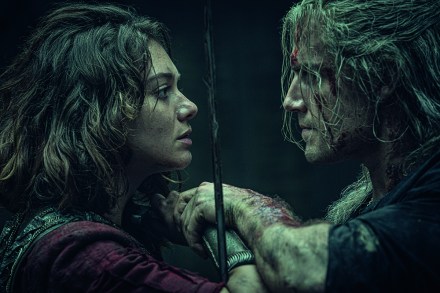
This article is in The Spectator’s February 2020 US edition. Subscribe here. If you want to get really depressed about the future of television, consider this: over Christmas, The Witcher was Netflix’s highest-rated original series on IMDb, beating everything from Black Mirror to Stranger Things and The Crown. The reason you should be depressed is that The Witcher’s popularity may send a dangerous signal to screen producers: don’t worry about the script or the acting, just chuck in lots of monsters, ultra closeups of swords cleaving heads, arrows going into people’s eyes and girls in body-hugging leather fantasy outfits, like a Dark Ages version of Hooters.

witcher

Netflix’s Messiah is a great concept undermined by implausible politics

From our UK edition

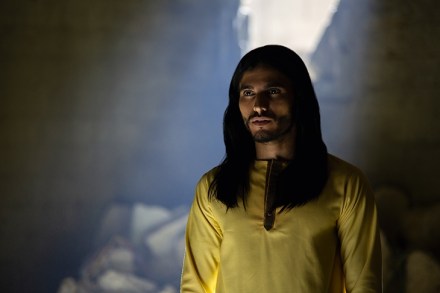
Sky’s latest bingewatch potboiler Cobra can’t quite make up its mind whether it wants to be an arch, knowing House of Cards-meets-The Thick Of It satire about parliamentary intrigue. Or a full-on post-apocalyptic thriller in the manner of Survivors or The Walking Dead. It ends up succeeding in neither. The premise is that a powerful solar flare is heading towards Britain, leaving the government little time to prepare, and subsequently causing all manner of chaos: plane crashes, hotel fires, escaped prisoners, mass blackouts. Will mild, likeable Conservative prime minister Robert Sutherland (a miscast Robert Carlyle), his fractious cabinet and his civil service prove up to the job of extricating Britain from a new Dark Age?

I’m at risk of becoming a cat person

From our UK edition

Just before Christmas our cat Runty died and I wasn’t in any rush to find a replacement. I like cats well enough but I wouldn’t consider them one of life’s essentials. You can’t ride them; they won’t come with you on walks or bark at burglars or gaze at you like you’re the most wonderful, special, adorable person in the entire universe; plus, of course, they are the most evil, deadly and inappropriate predator. Domestic cats kill an estimated 55 million birds each year in the UK alone — and an estimated total (when you add in all the mice, voles, slow-worms, newts and so on) of 275 million wild animals.

A hero for the Snowflake age

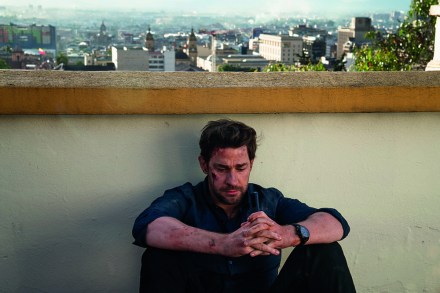
This article is in The Spectator’s January 2020 US edition. Subscribe here. What have they done to Jack Ryan? That’s a rhetorical question, by the way: he’s been captured by a crack team of Ivy League majors in Race, Gender and Weaponized Resentment Studies — probably the same guys who wrote the Washington Post headline calling Abu Bakr al-Baghdadi an ‘austere religious scholar’ — and they’ve reengineered him as a beta-cuck pantywaist woke dork for the Age of Snowflakes. To be fair, Jack did slightly show these tendencies in the first season of his Amazon adventures.

jack ryan

BBC’s A Christmas Carol was the victim of tub-thumping lefty politics

From our UK edition

'People trust us,' claimed Lord Hall, recently. But like a lot of what you hear from the BBC these days I'm not sure that that is strictly accurate. The BBC's shamelessly biased news coverage over Brexit was bad enough but what has really started in sticking in viewers' craws is the way its relentlessly woke politics have now infected pretty much the entirety of its entertainment output. There is almost no escape from the BBC's finger-wagging lectures, not even when it's Christmas and you're desperately trying to have fun. As exhibit A, allow me to present A Christmas Carol. 'Charles Dickens, Christmas and the BBC: what could possibly go wrong?', you might have thought. To which the BBC replied: 'Hold my beer!

The only way to survive Christmas TV is to avoid anything seasonal and watch Giri/Haji

From our UK edition

The key to surviving the next couple of weeks of TV is to avoid like the plague anything that smacks of seasonal viewing. So, no Christmas specials (such as the semi-celebrity, elderly grown-ups version of University Challenge where the questions are even more laboriously PC than on the student edition), no Harry Potter, no adverts featuring tinsel, dragons and patronisingly diverse families making merry. Basically, you want to steer clear of terrestrial TV altogether — but with one exception. You may use BBC iPlayer to download the only decent drama series that slipped through the net: Giri/Haji. Joe Barton’s blackly comic Anglo-Japanese thriller was by some margin the most original and inspired thing on the BBC all year. But it was a bit unlucky with the reviews.

My 2019: mice, Marrakesh and a fond farewell to my dear friend Christopher Booker

From our UK edition

Another year over and it wasn’t all bad, you know. Here are some of my personal highlights. Best birthday parties: my dear old friend Liz Hogg’s 90th and my dear older friend’s Jim Lovelock’s 100th. The latter, in the Orangerie at Blenheim Palace, was possibly the most unboring semi-formal social occasion I’ve ever attended. My table included the philosopher John Gray, a dapper Japanese gentleman who had been blown out of his bed by the Hiroshima bomb, and an economist from northern Uganda who’d narrowly escaped the Lord’s Resistance Army massacres. For her PhD, she had delighted in triggering her thesis supervisors by arguing that western aid programmes don’t work.

What have the Anglo-Saxons ever done for us?

From our UK edition

It has been a while since I’ve considered the vexed question of Byrhtnoth’s ‘ofermod’. More than 30 years, in fact. I remember, as if it were yesterday, my Anglo-Saxon tutorials with dear, lovely, gentle Richard Hamer. And now he is the author of the standard translation being used by my children on their own university English Literature courses. (I suppose the Latin equivalent would be having been taught by the author of Kennedy’s ‘Eating’ Primer.

If you like Joe Biden, you’ll love The Irishman

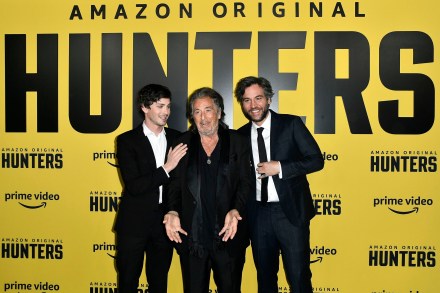
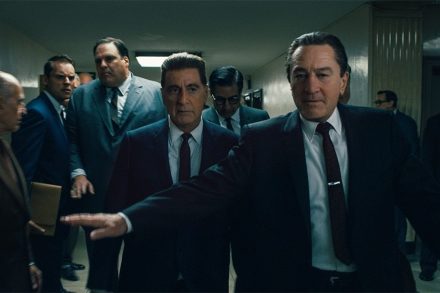
According to Nielsen Media’s ratings service, 17 million people watched ‘at least a few minutes’ of Martin Scorsese's The Irishman on Netflix over its first weekend. Impressive. Rather less impressive, I'm guessing, is the proportion who actually made it to the end of this excruciating ordeal of an embarrassment of a movie. If it was even close to 50 percent, I'd be surprised. Some critics are saying its Scorsese's best since Goodfellas. Don't believe the hype. Though it reunites arguably the all time greatest trio of mob movie actors — Joe Pesci, Robert de Niro and Al Pacino — it's not the performances you notice, but their age. De Niro is 76, Pacino 79 and Pesci 76.

irishman

The only bearable TV series these days are the ones with subtitles, like Der Pass

From our UK edition

True to the Andrew Roberts rule that the only bearable series on TV these days are ones with subtitles, I’ve started watching Der Pass (Sky Atlantic). Not unlike The Bridge and The Tunnel, it starts with a dead body exactly straddling a border, thus requiring the intervention of detectives from two national jurisdictions. This time, it’s a shambolic male Austrian and a perky blonde German. It’s fascinating to see what quirks foreign authors choose to give their detective characters.

What I learned on my speed awareness course

From our UK edition

Speed is in my blood. My father, grandfather and great-grandfather all used to race cars in their youth. We even have a hill-climb specialist car part-named after us, the Dellow. Just after I’d passed my test, my dad let me share the driving in his V12 Jag en route to our holiday home in Devon. I vividly remember him rebuking me whenever I let the speedometer dial creep below 100mph. So I suppose it was inevitable that naughty habits would catch up with me in the end and that I’d find myself doing one of those compulsory speed awareness courses. If there’s one thing every boy racer who has yet to experience one knows, SACs are a massive waste of time. They’re run by embittered ex-coppers with PTSD who torture you with bad jokes and treat you like children.

Payton’s place

This article is in The Spectator’s December 2019 US edition. Subscribe here. Four episodes in, I finally decided I really didn’t like The Politician (Netflix). Initially, I thought I might because there was lots of advertising assuring me how good and culturally important it was going to be. Also, it’s made by the same creative team responsible for Glee, that slick but likable and quite moreish series about an American high school glee club where an impeccably diverse class of gay and disabled people keeps bursting into implausibly accomplished cover versions of classic pop songs. But no. The Politician leaves you with the same unpleasant, dirty, life-just-wasted feeling I imagine you’d get from watching Japanese hentai porn.

politician

War of the Worlds is as bad as Doctor Who

From our UK edition

Edwardian England deserved everything it got from those killer Martian invaders. Or so I learned from the BBC’s latest adaptation of The War of the Worlds (Sundays). Everything about that era, apparently, was hateful, backward and ripe for destruction: regressive attitudes to women and homosexuality; exultant white supremacy (cue, a speech from a government minister on the superiority of the Anglo-Saxon race); a general prevailing bone-headedness and stuck-upness; stiff, stuffy, relentlessly brown clothing with superfluous belts; and as for those ridiculous bristling moustaches… Still, I don’t think H.G. Wells would have been totally appalled by this travesty of his 1898 potboiler.

The joy of a day spent bagging almost no birds

From our UK edition

The highlight of my country calendar is when I’m lucky enough to be invited to what even the host describes as ‘the world’s best worst shoot’. It’s the worst shoot because the bag is often truly atrocious. This year, for example, in the course of six or possibly seven drives — the details are hazy — we managed a total of nine birds between us. That works out at an average of one and one eighth of a bird per gun over an entire day. But still, disappointingly, we were well short of the all-time record low of three. I’d love to be able to blame this shaming tally on poor gamekeeping: ‘Of course, I’d have bagged loads more if a single bloody pheasant had flown anywhere near my peg the entire day.

God awful: BBC1’s His Dark Materials reviewed

From our UK edition

‘Here’s your new Sunday night obsession...’ the BBC announcer purred, overintoned and mini-orgasmed, like she was doing an audition for a Cadbury’s Flake commercial, ‘... a dazzling drama with a stellar cast.’ My hackles rose. Did no one ever mention to her the rule about ‘show not tell’? And my hackles were right. His Dark Materials has indeed become my Sunday night obsession: how can the BBC’s most-expensive-ever drama series possibly look, sound and feel so clunkingly, God-awfully, disappointingly flat? Yes, I know Philip Pullman’s trilogy is an extended, bitter rant against Christianity disguised as children’s entertainment.

I’m taking inspiration from an ancient Athenian

From our UK edition

How sorry I felt for the poor man who died this week stuck up a 290ft chimney in Carlisle despite desperate attempts — helicopter; cherry-picker — by the emergency services to rescue him. We’re so used to the idea that no matter how precarious or remote our plight — be it stranded kids deep inside a flooded cave in Thailand or tourists who’ve had their feet bitten off while snorkelling in Australia’s Whitsundays — those amazing emergency services will get us to safety in the end. It comes as quite a shock to be reminded that survival isn’t always inevitable. But is this a sign, I wonder, that we’ve all become a bit too pampered and complacent for our own good?

Top Boy wins the turf war

This article is in The Spectator’s November 2019 US edition. Subscribe here. I couldn’t stand The Wire. Everyone mumbled unintelligibly, the pace — inexcusably in a series about drugs and violence — was often glacially slow, and I found some of its characterization too transparent, like, ‘Ooh, I know. We’ll make the wise old black guy have the unlikely hobby that he repairs dolls’ houses, so that viewers will appreciate the nuance and hinterland.’ Top Boy (new on Netflix), on the other hand, is pacy, plausible and deliciously ruthless. It’s like The Wire, relocated to London with a much cooler soundtrack and with all the boring bits removed.

top boy

If we do get a good Anglo-American trade deal, we should thank Trump’s mother

From our UK edition

In an uncharacteristic fit of almost-robustness, Culture Secretary Nicky Morgan has said she is ‘open-minded’ about scrapping the BBC licence fee and replacing it with a Netflix-style subscription service. Good idea. What would we actually miss if we didn’t subscribe? Not an awful lot in my view. Some people cite David Attenborough’s nature documentaries but I certainly wouldn’t now that they have become so obtrusively propagandistic. The problem with the BBC isn’t — and never has been — lack of talented filmmakers, wildlife camera crews, presenters, actors, writers or production teams. It’s that, from news to drama, the BBC’s woke politics now subsume and corrupt its entire output.