Isabel Hardman

Isabel Hardman

Isabel Hardman is assistant editor of The Spectator and author of Why We Get the Wrong Politicians. She also presents Radio 4’s Week in Westminster.

Starmer’s press conference with Trump was a triumph

From our UK edition

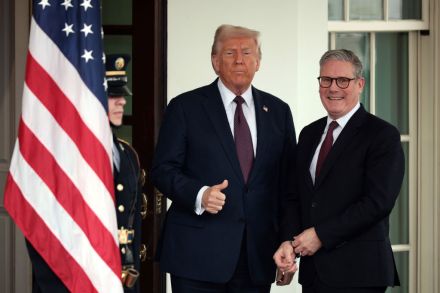
Keir Starmer could not have dreamed of a better press conference with Donald Trump. Much of its success was not down to luck, either: the Prime Minister has meticulously prepared for these talks both in terms of substance and (very important) superficialities such as flattering the President. But instead of appearing to be a sycophant who just says whatever Trump wants to hear, Starmer ended up looking as though he was the one in control of the relationship. The President came into the press conference telling journalists that Starmer is a ‘very tough negotiator, however I’m not sure I like that, but that’s OK’.
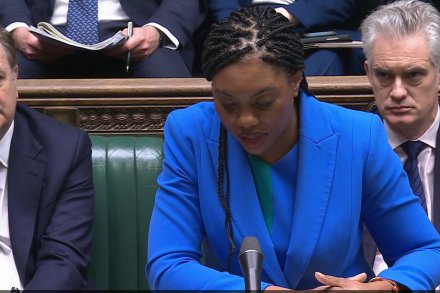
Why is Kemi struggling at PMQs?

From our UK edition

12 min listen

For the second week in a row, the leader of the opposition seemed to struggle at Prime Minister's Questions, ending up accusing Keir Starmer of being 'patronising' after having a couple of her questions rebuffed. Cindy Yu talks to James Heale and Isabel Hardman. Produced by Cindy Yu.

Badenoch accuses Starmer of ‘patronising’ her

From our UK edition

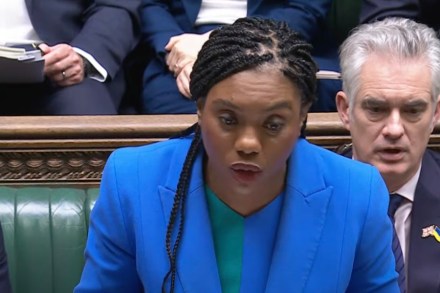
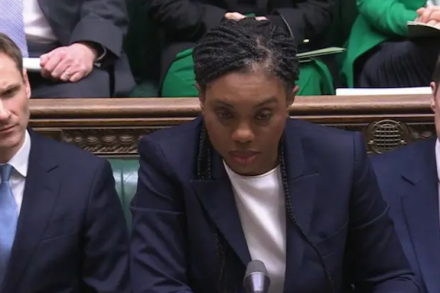
It is getting rather repetitive writing that Kemi Badenoch had an uncomfortable Prime Minister’s Questions, so how about this: today’s PMQs showed that Keir Starmer does not regard the Conservative leader as any kind of political threat. He openly ridiculed her in his answers – perhaps too openly to appear statesmanlike.  The question that invited that ridicule followed a fairly benign one on ensuring that Ukraine be at the negotiating table in talks on the country’s future. Badenoch told the Commons she would then turn to the details of the defence spending announcement, saying: Over the weekend, I suggested to the Prime Minister that he cut the aid budget, and I am pleased that he accepted my advice. It’s the fastest response I’ve ever had from the Prime Minister.

Amanda Pritchard resigns as NHS boss

From our UK edition

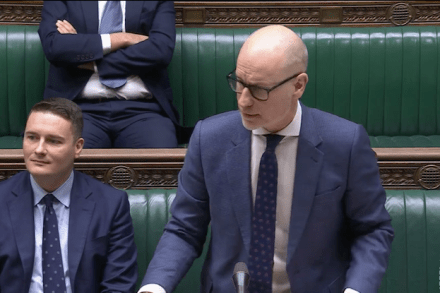
Amanda Pritchard is resigning as chief executive of NHS England, after three years in the job. Pritchard's announcement, in the last few minutes, is not a huge surprise given there had not been a great deal of confidence among ministers and aides in the leadership of the NHS – though it is worth pointing out that this lack of confidence was not solely focused on Pritchard. Pritchard's departure leaves Streeting and colleagues more exposed Pritchard had been very anxious to show that she was ready and willing to implement the reforms that Labour wanted to introduce, particularly the shift from acute, hospital-based care to preventive and community services.

Was that Kemi Badenoch’s worst PMQs?

From our UK edition

14 min listen

Today was the final PMQs before recess, and Kemi Badenoch had been hoping to leave on a high before the break. She started promisingly, opening with the case of a family from Gaza being granted asylum in the UK under the scheme designed for Ukrainians. Starmer replied to say he disagreed with the decision of the courts and that the Home Secretary was already looking at how to close the ‘legal loophole’ enabling that decision. But Badenoch seemingly hadn't prepared for his rebuttal, exposing once again the weakness of her own technique. Does she risk being outshone by her own backbenchers? Also on the podcast, Kim Leadbeater is having to duck suggestions that she has watered down the safeguards in the Assisted Dying Bill by removing the need for a High Court judge.

Tory backbenchers are outshining Kemi Badenoch at PMQs

From our UK edition

Prime Minister’s Questions is rapidly becoming a challenge for Kemi Badenoch to come up with a topic that the Tories aren’t vulnerable on so she has a decent chance of attacking Keir Starmer. Given things aren’t exactly going swimmingly for the Labour government, it shows how very weak the Conservatives are that Starmer can get through entire sessions of the most dramatic point of the parliamentary week without sustaining even a light scratch. Today, though, the weakness of Badenoch’s attack was not in the topic, but in her own technique. The Tory leader ended up on the defensive instead of the man she was supposed to be questioning.

Why has Labour dropped so many NHS targets?

From our UK edition

Does the Labour government still care about mental health? Recently, it dropped its NHS targets for mental health, along with other targets on dementia diagnoses and women’s health. Today at Health questions in the Commons, ministers were confronted about whether they were still committed to improving treatment for mental illness, given the targets are now gone. Stephen Kinnock argued:  ‘What we know about targets is that if you try and overload a system with too many targets, it causes confusion, and you end up with, as she rightly says, perverse outcomes. And so we are very clear that we want to not have a system which is based on just making policy by press release, as was the case under the previous government, putting out press announcements, loads of them, for more targets.

Where Kemi Badenoch keeps going wrong at PMQs

From our UK edition

Kemi Badenoch may well have been right in the points that she made at Prime Minister’s Questions, but she managed to go about making them in the wrong way. The Tory leader focused on the many contradictions between the government’s focus on economic growth and its policies, but her phrasing of her questions and her attempts to defend the Conservative legacy made it easy for Keir Starmer to ridicule the questions, rather than answer them. The Prime Minister had also set up a planted question before his exchanges with Badenoch which meant he was already developing a theme about the Tories and the state pension before the leader of the opposition had even stood up.

Rachel Reeves tries to reverse Labour’s economic gloom

From our UK edition

As expected, Rachel Reeves used her big – and long – growth speech this morning to back the expansion of Heathrow and argue that Britain was taking too long to make decisions on building infrastructure, let alone getting it done. The Chancellor did devote large passages of her speech to criticising the ‘structural problems in our economy’, and to blaming the Conservatives, but she was clearly trying not to make the whole thing about what her predecessors had got wrong. This speech had to be about how Labour was going to grow the economy, after months of criticism that Reeves and Keir Starmer are taking the wrong approach.

The NHS isn’t solely to blame for its failure to reform

From our UK edition

Can the NHS reform itself? MPs on the powerful Public Accounts Committee (PAC) say it doesn’t know how to. It has published a stinging report this morning, accusing both NHS England (NHSE) and the department of Health and Social Care (DHSC) of ‘complacency’ and blaming external factors for the poor financial position of the health service. In return, the NHS has lashed out at what it calls a ‘flawed’ report which contains ‘basic factual inaccuracies’.  The select committee report complains that the health service is relying on overly optimistic projections of the improvements to productivity that it can achieve, and that it ‘was unable to convince us that it has a detailed plan to achieve the promised productivity gains’.

Ministers are clearly concerned about school reform row

From our UK edition

You could tell from this afternoon’s Education Questions in the Commons that ministers are worried about the row over their school reforms: they’d planted loyal questions from backbenchers to help them fend off criticism. Even before the Conservatives had raised the latest concerns about the Children’s Wellbeing and Schools Bill, Labour backbencher Luke Akehurst had popped up to ask Bridget Phillipson about child protection. The Education Secretary seized the opportunity to describe the Bill as ‘the single biggest piece of child protection legislation in a generation’, adding: ‘That’s why it’s a shame that the Conservative government – the Conservative opposition – have played silly games on this subject.

Do Reform want to bring back the death penalty?

From our UK edition

10 min listen

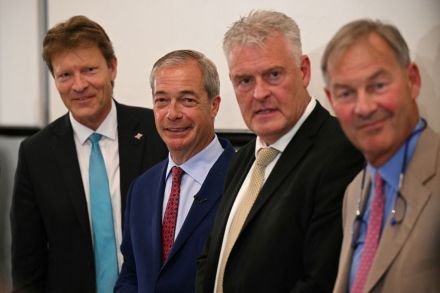
Reform MP Rupert Lowe has called for the death penalty to be re-established in the wake of the sentencing of the Southport killer Axel Rudakubana. With the Assisted Dying Bill still making its way through Parliament, it has been decades since the topic of death has been so hotly debated by MPs.  Katy Balls speaks to James Heale and Isabel Hardman about the political reaction to Rudakubana's sentencing. How popular is the death penalty with both MPs and the public? Should we even be debating the issue? And could Reform officially back its return soon? Produced by Patrick Gibbons and Natasha Feroze.

This was Badenoch’s best PMQs yet

From our UK edition

Kemi Badenoch had her best Prime Minister’s Questions yet today. She alighted on a topic that Keir Starmer really struggled to answer questions on and which should blow up as a row further in the coming weeks. The Tory leader devoted her six questions to the Children’s Wellbeing and Schools Bill, and specifically the reforms that legislation contains on academy freedoms, standards and teacher pay. She called it an ‘act of vandalism that is wrecking a cross party consensus’ by reversing the improvements that led to English school children topping the league tables.

Cooper announces Southport public inquiry

From our UK edition

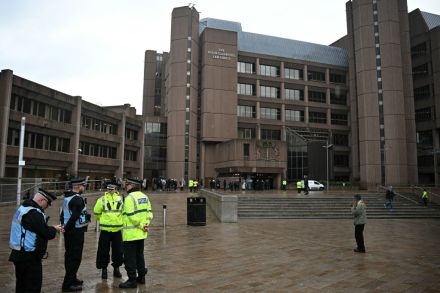
Yvette Cooper has this evening announced that the government will be setting up a public inquiry looking for ‘answers’ on how the Southport attack could have taken place, along with reforms to the Prevent programme. This comes after Axel Rudakubana changed his plea to guilty in his trial for murder and attempted murder. In fact, Cooper has revealed that the government had already commissioned work investigating the failures that allowed the attacker to become so dangerous, but had been unable to publicise it due to the active court proceedings. The Home Secretary’s statement followed Keir Starmer’s promise to ‘leave no stone unturned’ in the pursuit of answers, and includes a list of what the government is now trying to find out, and how.

Labour caves on grooming gangs

From our UK edition

14 min listen

There will be more inquiries into grooming gangs. After sustained pressure, the Home Secretary announced yesterday a series of local, government-backed inquiries, rather than a full public inquiry. Critics argue that this either doesn’t go far enough, or that Labour have been forced to go back on their word by certain figures on the right and are now making policy on the hoof. Will these new inquiries deliver an adequate resolution? Also on the podcast, Kemi Badenoch wasn't the only one giving a big speech yesterday, Ed Davey had an event of his own. He is pushing for a new customs union deal with the EU. Have they not learnt from their 2019 election pitch?  Oscar Edmondson speaks to Katy Balls and Isabel Hardman. Produced by Oscar Edmondson.

Yvette Cooper announces new local grooming gang inquiries

From our UK edition

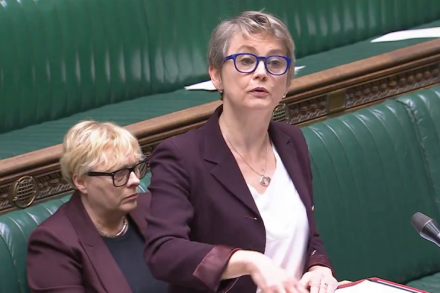
There will be more inquiries into grooming gangs after all – just not a full public inquiry. Yvette Cooper has just announced in the Commons that there will be five new local inquiries, including one in Oldham which triggered the most recent row on these crimes. The Home Secretary also announced that Louise Casey is going to conduct a rapid review into grooming gangs, looking at the data on these crimes, to see what can be learned at a national level. She told MPs: ‘As well as reviewing past cases we also need much stronger action to uncover the full scale and nature of these crimes... The data on ethnicity of both perpetrators and victims is still inadequate.

Starmer saved his favourite attack until the end at PMQs

From our UK edition

Kemi Badenoch continued with her theme of 'why can you trust anything the Prime Minister says' at Prime Minister's Questions today, covering the economy, the Chagos Islands, Tulip Siddiq and Gerry Adams. The Tory leader also claimed that Starmer was once again not answering the questions that she asked, which was true, but his replies were better than her questions.  Starmer said the Conservatives are 'economic vandals and fantasists' Starmer had obviously come armed with the surprisingly good inflation figures, but he also had a number of one liners and attacks that were more effective than those from Badenoch. These included the early description of the Conservatives as 'economic vandals and fantasists', which came in his first answer.

Is Westminster forgetting about the grooming gangs already?

From our UK edition

Remember grooming gangs? Last week’s big story has amazingly already been superseded by other political rows, but they came up again at Home Office questions in the Commons this afternoon. Shadow Home Secretary Chris Philp used his topical question to ask Yvette Cooper whether she now agreed with Greater Manchester Mayor Andy Burnham and Liverpool Walton MP Dan Carden that there should be a ‘proper national public inquiry’. Cooper did not agree in her response, but equally she didn’t rule out an inquiry, showing how far the government has had to shift from its initial adamant position that those calling for an inquiry were jumping on a ‘far-right bandwagon’.

What’s the point of public inquiries?

From our UK edition

21 min listen

This week, MPs voted against a new national inquiry into grooming gangs. The vote followed weeks of pressure on Labour after Elon Musk brought grooming gangs back into the spotlight, after safeguarding minister Jess Phillips rejected a new national inquiry. If we did have a national inquiry, what would it achieve? We’ve had many in recent years; Iraq, Grenfell Covid, the Post Office. Do they achieve meaningful justice for victims, or are they a drawn-out way to avoid knotty legislative change? Does parliament have the mechanisms to enact the recommendations – have politicians ever done this in the past, and is there an appetite to do so in the future?

Catherine Lafferty, Michael Simmons, Paul Wood, Philip Hensher, Isabel Hardman and Damian Thompson

From our UK edition

39 min listen

On this week’s Spectator Out Loud: Catherine Lafferty argues that the drive to reduce teenage pregnancies enabled grooming gangs (1:27); following Luke Littler’s world championship victory, Michael Simmons says that Gen Z is ruining darts (6:32); Paul Wood looks at the return of Isis, and America’s unlikely ally in its fight against the terrorist group (10:35); Philip Hensher reviews a new biography of the Brothers Grimm by Ann Schmiesing, and looks at how words can be as dangerous as war (17:57); Isabel Hardman highlights the new garden now open at the Natural History Museum (26:57); and, Damian Thompson reveals he watched videos of plane crashes to distract himself from the US election coverage – why? (31:40).  Produced and presented by Patrick Gibbons.