Isabel Hardman

Isabel Hardman

Isabel Hardman is assistant editor of The Spectator and author of Why We Get the Wrong Politicians. She also presents Radio 4’s Week in Westminster.

The assisted dying debate is not ‘Parliament at its best’

From our UK edition

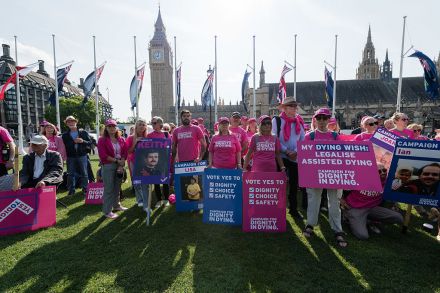
MPs are coming to the end of the assisted dying debate. The speeches can be roughly divided into the following camps: those who, like the Bill’s sponsor Kim Leadbeater, are very much in favour of the Bill and confident in its drafting; those who are in favour of the principle of assisted dying but who are so concerned about the drafting of the Bill that they are opposed to it; and the implacable opponents to the principle. The speeches from the latter two camps largely focused on the argument that today’s vote is not about the principle of assisted dying but about the Bill as it stands. The proponents of the legislation, though, have largely focused on the need to back assisted dying as a principle.

What you need to know ahead of the assisted dying vote

From our UK edition

14 min listen

It’s a historic day in Westminster, where MPs will vote on the assisted dying bill – the outcome of which could have huge repercussions for healthcare, politics and the courts. It’s such a significant day, in fact, that we’ll be recording another podcast just after the result is announced at around 2.30 p.m. Kim Leadbeater’s camp remains confident that the bill will pass, although many anticipate a much closer vote than at the second reading. This is in no small part due to high-profile members of the party being opposed to the legislation, and Keir Starmer remaining characteristically evasive on the issue. The backdrop, of course, is the resignation of a government whip, Vicky Foxcroft – though over a separate issue: Liz Kendall's plan to cut personal independence payments.

Labour whip resigns over disability benefit cuts

From our UK edition

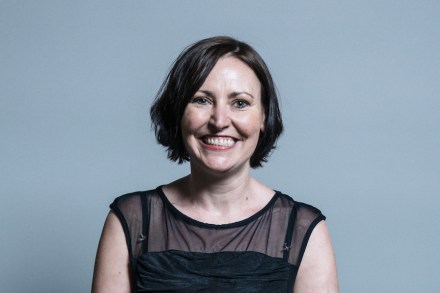
This evening, the Labour MP Vicky Foxcroft has resigned as a government whip over the disability benefit cuts. In a letter to Keir Starmer, she writes that she is quitting the frontbench 'with a heavy heart', adding: Foxcroft's resignation suggests that the rebellion over disability benefit cuts really is quite serious I have wrestled with whether I should resign or remain in the government and fight for change from within. Sadly it now seems that we are not going to get the changes I desperately wanted to see. I therefore tender my resignation as I know I will not be able to do the job that is required or me and whip – or indeed vote – for reforms which include cuts to disabled people's finances.

Rayner’s PMQs clash shows why Reform is doing so well

From our UK edition

Kemi Badenoch will have been irritated to miss today’s Prime Minister’s Questions, given it denied her the opportunity to accuse Labour of delaying the inevitable on a national inquiry into grooming gangs. Sadly for those watching, the fact that today’s session was a battle of the deputies did not mean that the rest of us were able to avoid hearing two parties who have both clearly failed to address grooming gangs properly over the years arguing about who cared more about the issue. That the parties are going round in circles on both topics underlines the failure of Labour and the Tories Chris Philp, the shadow home secretary, was standing in for Badenoch, and Angela Rayner, the deputy prime minister, was deputising for Keir Starmer, who is on his way back from the G7 meeting.

Will Labour actually act on the Casey grooming gang report?

From our UK edition

Has the government really U-turned on grooming gangs? Six months after resisting a national inquiry into the crimes committed against young girls by men of predominantly Asian heritage, ministers have announced one. But Yvette Cooper’s statement to MPs this afternoon about the exact nature of that inquiry suggested the government had executed something a little wobblier than a U-turn. The Home Secretary told the Commons that Louise Casey’s rapid review had recommended a national commission – with statutory inquiry powers – which will direct and oversee the local inquiries into grooming gangs that are already underway. It would not be ‘another overarching inquiry of the kind conducted by Professor Alexis Jay’, added Cooper.

Starmer agrees to grooming gangs inquiry

From our UK edition

This evening, Keir Starmer has announced he does want a national inquiry on grooming gangs after all. The Prime Minister had tasked Baroness Casey to conduct a rapid review of the evidence available on the scale of these crimes committed by gangs – and her review is expected to conclude on Monday that there needs to be a full public inquiry.  Starmer said today that Casey had also changed her mind on whether such an investigation was necessary, arguing: ‘She’s come to the view there should be a national inquiry on the basis of what she’s seen. I’ve read every single word of her report, and I’m going to accept her recommendation. I think that’s the right thing to do, on the basis of what she has put in her audit. I asked her to do that job, to double-check on this.

Starmer returns to his favourite PMQs subject: Liz Truss

From our UK edition

‘Mr Speaker, he loves talking about Liz Truss – why? Because he wants to hide from his economic record.’ Kemi Badenoch didn’t need to do much guesswork ahead of today’s Prime Minister’s Questions: she knew Starmer would bring up the former prime minister. Starmer always likes to mention Truss, as Badenoch pointed out, but today he was nailed on to do so as part of the groundwork for Rachel Reeves’ spending review speech. The Tory leader, though, wanted to prepare the ground for her party’s narrative about what Reeves was having to do. She opened by pointing out that: Since Labour took office, inflation has nearly doubled, growth has halved and unemployment has surged. Is this what the Prime Minister meant when he tweeted the economy is improving?

Kemi’s best PMQs yet

From our UK edition

Kemi Badenoch was on good, brutal form at Prime Minister’s Questions today. Keir Starmer had tried to spike her guns by using a planted question to tell the chamber at the start that as the economy improved, he wanted to see more pensioners eligible for winter fuel payment. But the Tory leader still managed to make Starmer – and his party – look uncomfortable. Her most potent line was a taunt: ‘He can’t see them, but they all look sick just hearing what it is he’s going to do.’ Enough Labour MPs have expressed worries about the government’s policies on benefits, immigration and aid that her accusation rang true, even though some of Starmer’s backbenchers theatrically laughed at her.

Winter fuel U-turn and a rift at the heart of government

From our UK edition

12 min listen

After sustained speculation and a local elections drubbing, Keir Starmer announced today at PMQs that the government will be softening their policy on winter fuel. Whilst it won’t come into effect for some time, they have agreed to ensure that ‘more pensioners are eligible for winter fuel payment.’  This comes hours after a memo was mysteriously leaked to the Telegraph. It contains an extensive list of recommendations from Deputy Prime Minister Angela Rayner to the Treasury, including a set of eight tax rises such as reinstating the pensions lifetime allowance and altering dividend taxes. This amounts to a direct challenge to Rachel Reeves’s fiscal approach and preference for spending cuts.

Starmer was in no mood to joke at PMQs

From our UK edition

Keir Starmer had a much more awkward Prime Minister’s Questions than he is accustomed to. This was largely because Kemi Badenoch was armed with the latest unemployment figures, but also because the Conservative leader was agile in dealing with the Prime Minister’s responses. However, the overall lesson from the session was that Starmer now wants to frame the next election as being a battle between Labour and Reform, with the Tories a ‘finished party’.  Badenoch opened by saying the attacks on Keir Starmer’s home were unacceptable, and an attack on democracy. She then asked him why unemployment was rising, to which he replied that she was talking the country down.

Is Badenoch getting better, or is Starmer getting worse?

From our UK edition

12 min listen

Prime Minister’s Questions today, and there was lots on the agenda. It is often a fool’s game to guess what the leader of the opposition will lead on, but today she had a wide choice of ammunition – from unemployment to welfare to the government’s new stance on migration to the war in Gaza. Kemi Badenoch looked assured when holding Keir Starmer to account on the Chancellor’s ‘jobs tax’ and on funding for children’s hospices. But can we attribute her performance to growing confidence in the role – or is the news just getting worse for Keir Starmer?

Are Labour ‘pandering’ to Nigel Farage?

From our UK edition

14 min listen

Keir Starmer has succeeded in keeping immigration at the top of the news agenda for another day – although he may not be happy with the headlines. After his set-piece announcement yesterday, the Prime Minister is caught between fire from both sides. On the left, he is accused of ‘pandering' to Nigel Farage and even echoing the rhetoric of Enoch Powell’s ‘Rivers of Blood’ speech – with regard to Starmer's statement about Britain becoming an ‘island of strangers’. Meanwhile, Farage has called the Prime Minister ‘insincere’ and ‘playing catch-up’. Within Labour, some backbench MPs have broken ranks. But it is the quiet, soft-left faction – already uneasy about winter fuel, foreign aid etc. – that will concern the PM most.

Neither Starmer nor Badenoch got what they wanted from PMQs

From our UK edition

Keir Starmer wanted to spend Prime Minister’s Questions talking about the UK’s trade deal with India, while Kemi Badenoch – and later SNP leader Stephen Flynn – wanted to attack the government’s energy and welfare policies. Neither side really succeeded in its aims: Starmer ended up shoehorning the trade deal into random answers, while Badenoch didn’t exactly get the prime minister on the ropes. But the session did show how many bruises Labour has available for its critics to punch. The Tory leader led on whether Starmer accepted that his government was wrong to have removed the winter fuel payment. He insisted that Labour had to fix the ‘black hole’ in the economy, and that it was committed to the triple lock on pensions.

Does Keir Starmer ‘get it’?

From our UK edition

16 min listen

As the parties regroup following the local elections, both Labour and the Conservatives have to face a miserable result. Lucy Dunn speaks to Isabel Hardman and pollster Luke Tryl about the anger and disillusionment amongst the electorate, and why Keir Starmer message 'we need to go further and faster' can't cut through.

Local elections: who had it worse?

From our UK edition

In normal political times, local election and by-election results would show a bad night for the government and a good night for the official opposition. Not so with this set of results in English councils and the Runcorn and Helsby by-election, where both Labour and the Conservatives have been given bloody noses and Nigel Farage is celebrating the best set of results for Reform in both its history and that of its predecessor party, Ukip.  There are a number of councils yet to declare, but what we know so far is that Reform beat Labour in Runcorn by just six votes (confirmed by a recount) and has picked up more than 500 council seats, as well as its first mayoral positions.

Local elections live: is Reform unstoppable?

From our UK edition

15 min listen

The word ‘unprecedented’ is often overused in politics, but these local elections have proved to be just that. The headline is: sweeping success for Reform.  Nigel Farage's 'teal tsunami' comes at the expense of the main parties – turning the two-party consensus on its head. The recriminations for Labour and the Tories have already begun. On the left, a number of MPs have broken cover and urged the government to shift its position on high-salience issues such as winter fuel. On the right, Kemi Badenoch’s leadership is looking increasingly shaky, with Tory MPs and staff warning that a step change is needed. Where do the main parties go from here? And can anyone stop Nigel?

‘The spring of discontent’

From our UK edition

11 min listen

Are we looking at a spring of discontent? It’s the final push ahead of this week’s local elections, and what Keir Starmer wants to talk about is expanding the NHS app – which he says will cut waiting lists and end the days of the health service living in the ‘dark ages’. However, what people are actually talking about is public sector pay. The independent pay review body has recommended pay rises of around 4 per cent for teachers and nurses. Will there be industrial action? Are Labour going to be pushed into another round of public sector pay increases? Meanwhile, after Ben Houchen’s comments this weekend, the murmurs of a Tory/Reform pact refuse to go away. Was his a helpful intervention? Lucy Dunn speaks to James Heale and Isabel Hardman. Produced by Oscar Edmondson.

Keir Starmer can’t explain his changing views on gender

From our UK edition

Keir Starmer was well aware that Kemi Badenoch would probably use Prime Minister’s Questions today to run a victory lap following the Supreme Court judgement on the definition of a woman. She has long been clear about the need to make biological sex the basis of such a definition, while Starmer has been on a journey over the matter. The Prime Minster came armed with plenty of defences and deflections, but still struggled.  In response to Badenoch’s first question, which was whether Starmer would accept he was wrong, he said ‘let me clear’, which is always a sign that someone is about to obfuscate. The Prime Minister continued: ‘I welcome the Supreme Court ruling on this issue. It brings clarity and it will give confidence to women and of course service providers.

What happened at the Liaison Committee?

From our UK edition

16 min listen

Parliament is about to go into recess for the Easter holiday and so – as is customary – Keir Starmer sat in front of the Liaison Committee this afternoon, where he was grilled on topics including tariffs, defence and welfare. This comes on the day when there has been a momentary reprieve in the markets, which experienced a modest bounce – most likely as a result of suggestions from Trump that he is willing to negotiate with China. Markets seem to have priced in that these tariffs could be negotiated down, but that is of course a big 'if'. The question remains for Keir Starmer: what more can he do to protect the UK against economic meltdown? And will he have to break his fiscal rules to do so? Oscar Edmondson speaks to Isabel Hardman and Michael Simmons.

Starmer and Badenoch played a childish blame game at PMQs

From our UK edition

Keir Starmer had a special point to make at the very outset of Prime Minister’s Questions about the threat of tariffs from the US. He told the Commons that ‘a trade war is in nobody’s interest and the country deserves, and we will take, a calm, pragmatic approach’. He added that the government ‘will rule nothing out’.  He is, though, largely in automated response mode at PMQs these days. This is the case not just when replying to Kemi Badenoch’s questions with the same answers he gives every week, but also when taking questions from his own side. Labour backbenchers were in loyalty mode today, asking some grotesquely sycophantic questions of their leader.