Isabel Hardman

Isabel Hardman

Isabel Hardman is assistant editor of The Spectator and author of Why We Get the Wrong Politicians. She also presents Radio 4’s Week in Westminster.

Does Kemi cause problems for Kemi?

From our UK edition

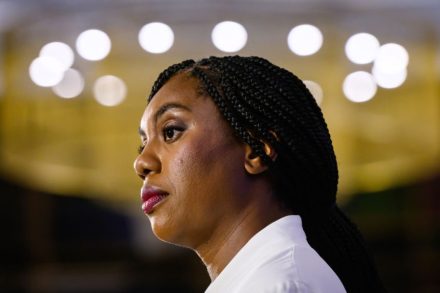
Kemi Badenoch is being followed around the Tory party conference by her own comments about maternity pay. She had to explain what she was on about again when she had her main stage interview in the Birmingham hall this afternoon, telling Chris Hope that ‘I think maternity pay is quite important’, and that she was ‘answering a different question’ about business regulation. She then compared the row to the way Margaret Thatcher’s Women’s Own magazine comments about ‘there is no such thing as society’ were ‘cut down into a soundbite that was used to attack her’. She added: When you are a leader, when you are a conservative, when you are making the argument for conservative principles, your opponents are going to try and turn it into something else.

Have the Tory leadership candidates got a Truss problem?

From our UK edition

Jeremy Hunt is one of the few Tories at Conservative Party Conference willing to take the fight to Labour. In the second day, he sat down for an on-stage interview where the former Chancellor spoke about the winter fuel allowance, freebies, but also made some polite suggestions about where the Conservative party shouldn't go, and dropped a few hints about the former Prime Minister, Liz Truss. Natasha Feroze speaks to Kate Andrews and Isabel Hardman about Hunt's speech and some of the best bits from Liz Truss's own interview at conference.

Did you know Tom Tugendhat was in the military?

From our UK edition

Tom Tugendhat may have the most interesting merchandise in this Tory leadership contest (including fake tan, for reasons no-one has yet explained), but he is not, as things stand, the frontrunner. He is also the least experienced of the contenders in government terms, though he decided today to compensate for that in his on-stage interview in the conference hall by talking about being a soldier. Just in case anyone there hadn’t picked up that Tugendhat has served his country, he made sure he slipped it into to any answer that was vaguely relevant, including that ‘I’m not going to hold against anybody their inexperience in combat or their inexperience in foreign affairs’.

Jeremy Hunt tells the Tory party some uncomfortable truths

From our UK edition

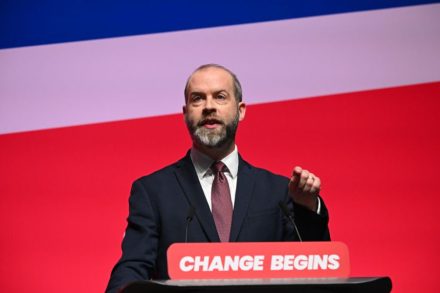
Jeremy Hunt is one of the few Tories willing to take the fight to Labour while the Conservative leadership contest drones on. The shadow chancellor gave an on-stage interview at party conference in Birmingham this morning where he continued to attack Chancellor Rachel Reeves' ‘£22 billion black hole’ narrative. Hunt suggested that not even Labour MPs and members believed that claim, which was why they were having such a big row over the winter fuel payment.

What Kemi Badenoch should learn from her maternity pay row

From our UK edition

The first row of Tory conference has, unsurprisingly, involved Kemi Badenoch. The leadership contender was on Times Radio this morning where she was making a point about business regulation and ended up suggesting that maternity pay in this country was ‘excessive’. Here is a transcript of her exchange with Kate McCann: KM: Do you think we’ve got the right levels of maternity pay at the moment? KB: So, maternity pay varies depending on who you work for, but it is a function, whereas statutory maternity pay, it is a function of tax, tax comes from people who are working, we are taking from one group of people and giving to another, this in my view is excessive.

Starmer tells Israel ‘no more excuses’ on Gaza aid

From our UK edition

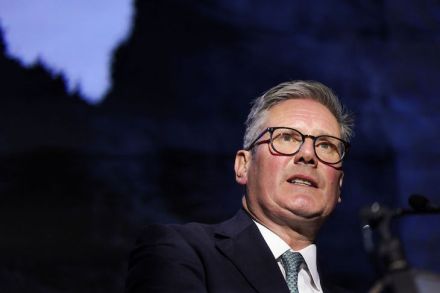
Keir Starmer has moved on rather quickly from Labour conference, pitching up in New York to tell Israel that it can use ‘no more excuses’ and must allow more aid into Gaza. In his speech to the UN General Assembly, the Prime Minister also called for an immediate ceasefire, and said there needed to be a ‘credible and irreversible path to a viable Palestinian state alongside a safe and secure state of Israel’. He added: ‘That is the only way to provide security and justice to both Israelis and Palestinians.’ He also turned on Russia, saying he didn’t know how the country could ‘show its face in the building’.

Liz Kendall’s difficult task of defending the winter fuel cut

From our UK edition

Arguably the most difficult speech of the whole of Labour conference came from Liz Kendall. The Work and Pensions secretary not only had the winter fuel payment cut to deal with, she is also responsible for welfare reform to get people off sickness benefits – one of the most fraught areas of policymaking – and will oversee what are likely to be cuts to benefits enforced by the Treasury in the next few months. Kendall’s aim was to argue to Labour members that the party is still staying true to its principles while doing all of this.  Kendall’s aim was to argue to Labour members that the party is still staying true to its principles She did not get a joyful cheer when she promised ‘the biggest reforms to employment support in a generation.

Wes Streeting is convincing, but where’s his plan?

From our UK edition

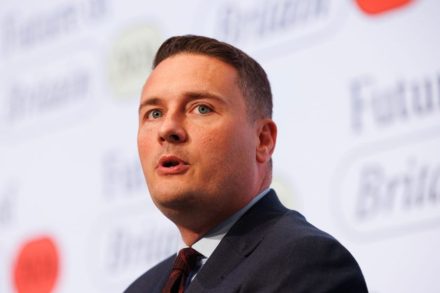
This Labour conference has largely been about Keir Starmer and his ministers making the argument for what they are doing, rather than giving any details of how they plan to achieve it. Wes Streeting’s speech to the hall in Liverpool this morning fitted that pattern. He didn’t announce anything new. Instead, he set out quite how big the challenge was, and made the argument for what Labour planned to do. He told members: We can only deliver recovery through reform. Without action on prevention, the NHS will be overwhelmed. Without reform to services, we’ll end up putting in more cash for poorer results. That’s the choice. Reform or die. We choose reform.

What did we learn from Keir Starmer’s speech?

From our UK edition

14 min listen

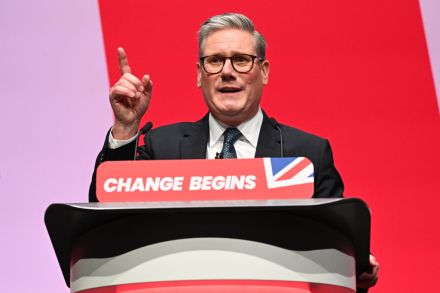
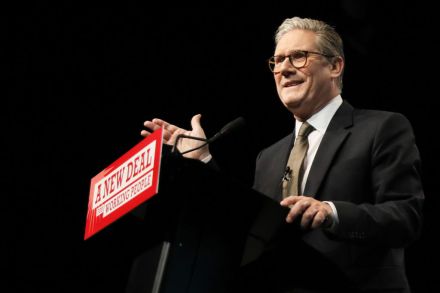
Sir Keir Starmer has declared 'change has begun' in Liverpool. He defended the cuts to the winter fuel payments, announced a Hillsborough Law, and saw off a heckler. But did we learn anything from the speech in terms of policy? Is he leaving conference in a better or worse position than he entered? Isabel Hardman is joined by James Heale and Katy Balls.

Keir Starmer needs to sell his government

From our UK edition

Keir Starmer has his big speech today at Labour conference and, like Rachel Reeves’s offering yesterday, the Prime Minister plans to strike an upbeat tone while warning he can’t offer ‘false hope’. He will tell the hall in Liverpool that there’s ‘light at the end of the tunnel’ if the government takes ‘tough decisions now’.  He will talk about his project of ‘national renewal’, saying: The politics of national renewal are collective. They involve a shared struggle. A project that says, to everyone, this will be tough in the short term, but in the long term, it’s the right thing to do for our country.

Has Labour got anything new to say at its party conference?

From our UK edition

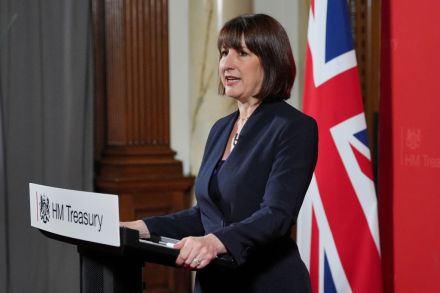
Have you learned anything about this Labour government from the conference speeches so far? Chancellor Rachel Reeves’ address to the hall in Liverpool this lunchtime was an announcement-free zone, and the same is true of all the other ministers who have got up to speak so far. All of them have followed the same format: attack the Tories and say things were so much worse when Labour came into office than expected, then move onto listing what the government is doing in very general terms, and then appeal to the party to work with the minister to get this done.

It’s no surprise nurses want a bigger pay rise

From our UK edition

Just as the Chancellor Rachel Reeves was talking in her conference speech about the importance of resolving public sector strikes, the Royal College of Nursing announced that its members had rejected their pay deal. Nurses have voted two thirds against the 5.5 per cent pay rise, and the College published a letter to Health Secretary Wes Streeting warning that ‘this outcome shows their expectations of government are far higher’. The timing was no accident. It was almost at the very same moment that Reeves was arguing that the government needed to make pay offers to stop the strikes so that public services could run properly again. The RCN’s ballot underlines that the nurses took a different message from the pay deals: they could, if they held out, get more.

Can Keir Starmer reverse his fortunes at Labour conference?

From our UK edition

What is Keir Starmer wearing, how much is it worth and who paid for it? That’s normally a question only asked of female politicians, or prime ministers’ wives, but thanks to the Labour leader’s love of a freebie, his own fashion choices are going to be one of the hot topics at Labour Party conference. Unlike the scrutiny of women’s clothes, though, which normally leads Reiss to sell out of whichever dress turned up on the conference stage that week, Starmer’s outfits are causing a rush to judgement, not a rush to the tills.  One of the opening questions from interviewers will surely be ‘where is your suit from and who paid for it?

Is Keir Starmer serious about reforming the NHS?

From our UK edition

Does Keir Starmer want to use Lord Darzi’s report on the NHS today merely as the latest ‘shocking’ piece of evidence of Tory mess, or will it actually lead to meaningful reform?  The Prime Minister suggested he wanted to do both in his speech this morning. Yes, he ran through how things were much worse than anyone, even Darzi, a renowned surgeon who has worked in the NHS for decades, imagined. But he also included several phrases designed to show that he is serious about changing the health service – and about the battles he will have to fight to get there.  He told the audience at the King’s Fund that ‘I haven’t come here just to set out this appalling inheritance, though it is really important that we know it and properly understand it in detail.

Keir Starmer: the NHS will get ‘no more money without reform’

From our UK edition

15 min listen

The Prime Minister has described the NHS as in 'critical condition' in a speech this morning after the release of Lord Darzi's damning independent report. Lord Darzi had only nine weeks to conduct his investigation into –and assessment of – the National Health Service. But this truncated timeline does not appear to have led to any watering down of his verdict. The independent peer has delivered a damning diagnosis of the state of the NHS, which is described as failing both its staff and its patients. The NHS clearly needs serious intervention, but are Labour the ones to do it? James Heale speaks to Kate Andrews and Isabel Hardman, author of Fighting for Life: The Twelve Battles that Made Our NHS, and the Struggle for Its Future. Produced by Oscar Edmondson.

Keir Starmer needs to answer the question

From our UK edition

Neither Keir Starmer nor Rishi Sunak were very good at Prime Minister’s Questions today. Though Starmer didn’t get his own job title wrong this time, he did still speak as though he was the leader of the opposition attacking the Conservatives in government, rather like he’s the guy in charge. Sunak decided to punch the bruise on the winter fuel payment and then make a handbrake turn to British farming, which left the Prime Minister a little discombobulated, as he clearly hadn’t prepared anything on that subject. But he was unable to talk about one of the biggest issues of the week, which was the mass early release of prisoners, because he knew that trying to scrutinise the government on this would just lead to the Conservatives being blamed all the more.

Does Starmer know what to do with the unions?

From our UK edition

Before coming into government, Keir Starmer would use his battles with the unions, particularly Unite, as a way of defining himself against the parts of the Labour movement resistant to change. His speech to the Trades Union Congress this morning was more about suggesting that the unions could be part of that change. I say ‘could’. Parts of the speech made it clear that Starmer still thinks some union bosses need to face up to reality. He told the hall in Brighton that ‘I do have to make clear from a place of respect that this government will not risk its mandate for economic stability under any circumstances. And with tough decisions on the horizon, pay will inevitably be shaped by that.

What Rachel Reeves told Labour MPs

From our UK edition

Who was Rachel Reeves more worried about tonight when she addressed the Parliamentary Labour party? The Labour MPs who will rebel against the government tomorrow in the vote on restricting winter fuel payment to those on pension credit – or the ones who are staying loyal? No one spoke out against the cut when the Chancellor spoke this evening, but others have made their displeasure clear in broadcasts, or by signing the early-day motion calling for the government to U-turn. Reeves told the party: ‘I understand the decision that this government have made on winter fuel is a difficult decision. I’m not immune to the arguments that many in this room have made. We considered those when the decision was made.

The Treasury holds the key to fixing the NHS

From our UK edition

The most interesting thing about Lord Ara Darzi’s report on the health service, expected to be published this Thursday, is how ministers decide to use it. The former health minister from the last Labour government was commissioned to carry out a rapid review of how well the NHS is functioning. He is expected to conclude that it really isn’t: yesterday, Keir Starmer said that Darzi was ‘really clear that the NHS is broken but not beaten’.  The Health Secretary is likely to call for higher capital funding in the next spending review A lot of the pre-briefing so far has been that Darzi will say that the NHS is going backwards for the first time in 50 years on waiting times and deaths from heart disease.

Grenfell report: why did it take so long?

From our UK edition

16 min listen

Seven years after the tragedy, the inquiry into the Grenfell fire has published its report. What did we learn from it and who bears responsibility? And, with thousands of buildings still believed to contain flammable cladding, what should happen next? With such important lessons to be learnt, why do British inquiries take so long? Also on the podcast, a look at the first PMQs following summer recess and the Tory leadership election. James Heale speaks to Isabel Hardman and Liam Halligan, Telegraph columnist and author of Home Truths. Produced by Patrick Gibbons.