Isabel Hardman

Isabel Hardman

Isabel Hardman is assistant editor of The Spectator and author of Why We Get the Wrong Politicians. She also presents Radio 4’s Week in Westminster.

The most appalling thing about the NHS maternity scandal

From our UK edition

By the end of this year, Britain will have had (at least) seven prime ministers in the past decade – and more than 700 recommendations on how to stop the ongoing scandal in NHS maternity services. None of which have – as yet – been implemented. The Ockenden review into maternity services at Nottingham University Hospitals NHS Trust, which was published on Wednesday, adds nearly 100 more. There are many harrowing stories in the report. But one of the most telling is about what was going on above the wards Its findings are appalling and yet familiar, which Donna Ockenden, a senior midwife, knows better than most, given this is the third review she has published on NHS hospitals failing mothers and babies.

Kemi Badenoch’s victory lap

From our UK edition

14 min listen

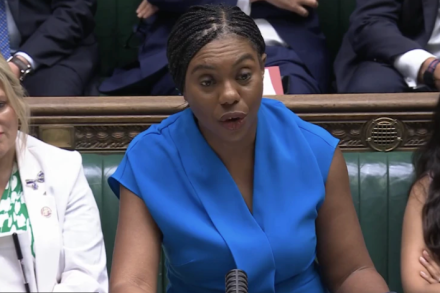
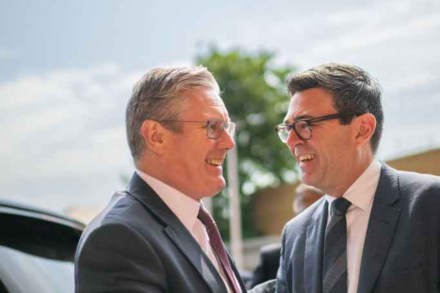
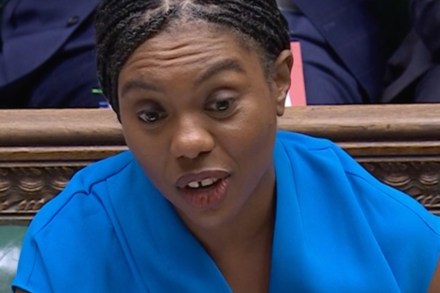
Supercharged by a by-election victory in Aberdeen South and Starmer’s resignation, Kemi Badenoch delivered a drive-by at PMQs today. She took aim at members of Starmer’s cabinet in succession: Rachel Reeves, Ed Miliband and Bridget Phillipson. Starmer’s line is that he is handing over the country in a better position than he found it; Badenoch’s is that, if it is all going so well, why is he resigning? She has a point. She also highlighted the spectacle of many in Starmer’s government posing for a photo with Andy Burnham on his return to Westminster yesterday. The Prime Minister should feel ‘betrayed’, she said. Again, she has a point. Is this Badenoch at her best? And how will she fare against Burnham? Oscar Edmondson speaks to Isabel Hardman and Noa Hoffman.

Kemi Badenoch’s victory lap

Did Kemi Badenoch take the personal jibes too far at PMQs?

From our UK edition

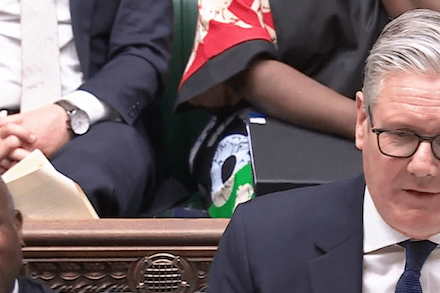
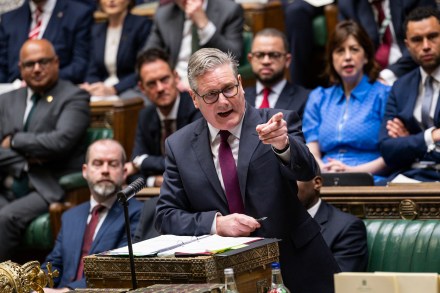
Keir Starmer came to PMQs wearing that look of post-resignation relief that we’ve grown all too used to seeing on a prime minister’s face over the past decade. He had to deal with a particularly brutal Kemi Badenoch today, though the full force of the Leader of the Opposition’s attacks was largely directed at Starmer’s cabinet, rather than him. Reeves appeared close to tears as Starmer replied with a full tribute to her Badenoch first congratulated the Prime Minister on his party’s by-election win, but then added jokingly that she suspected he would be less happy with his new MP than she was with hers.

Starmer’s tears show why he failed as PM

From our UK edition

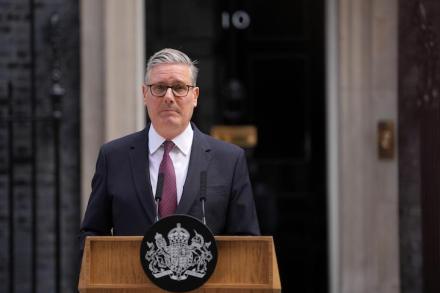
Keir Starmer looked visibly emotional as he walked up to the lectern in Downing Street this morning. The Prime Minister then held it together for the majority of his resignation speech – until the very end where he paid tribute to his ‘fantastic wife Vic’ and his ‘beautiful children who are my pride and joy’. It’s difficult for Starmer to say that he led with good grace It’s not unusual for anyone to grow emotional while talking about their family, but it was quite telling that this was the only point where Starmer visibly struggled: even those who have worked closely with him have struggled to work out what really animates him beyond family and football.

Was Brexit worth it – and can Burnham save Britain?

From our UK edition

55 min listen

For this week’s Edition, William Moore is joined by the Spectator’s assistant editor Isabel Hardman and the editor of The New Statesman Tom McTague. Plus, in a special episode this week, the Spectator’s economics editor Michael Simmons joins for the first half of the episode, before political editor Tim Shipman jumps in later on. This week: was Brexit worth it? As we approach the tenth anniversary of the vote to leave the European Union, the Spectator’s editor – and former prominent Vote Leave campaigner – Michael Gove makes the case that not only was Britain right to leave, but it has benefitted from leaving. The past decade however has been marked by domestic political chaos, so to what extent was Brexit a symptom or a cause of Britain’s structural problems?

Was Brexit worth it – and can Burnham save Britain?

How quickly could Starmer be deposed?

From our UK edition

16 min listen

Voters head to the polls tomorrow in Makerfield for what could be the most consequential by-election in modern British history. If Andy Burnham wins by a significant margin, he will be heralded as the man Labour need to beat Reform nationally – and Starmer could be forced out within days. Yet the Prime Minister has come out fighting, warning Burnham that now is not the time for a challenge. What should we expect from what promises to be a febrile 72 hours in British politics? Will Starmer’s deposition be conducted with decorum, or will it descend into a bloodbath? Plus: with Keir Starmer travelling back from the G7 today, parliament saw Deputy Prime Minister’s Questions.

How quickly could Starmer be deposed?

David Lammy’s heart wasn’t in DPMQs

From our UK edition

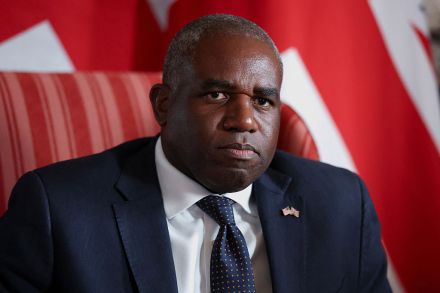
Claire Coutinho emerged as the Tory frontbencher taking deputy prime minister’s questions today, with the shadow energy secretary focusing on oil and gas licences and cabinet dysfunction. Those two topics are more closely related this week than usual: Coutinho wanted to exploit the report that Ed Miliband had ‘ghosted’ Keir Starmer when the Prime Minister was trying to get him to accept a cut to his departmental budget. She was also keen to talk about North Sea exploration, given tomorrow is the Aberdeen South by-election. Lammy had been well prepared for these questions, but didn’t seem particularly passionate or personally invested in them David Lammy, standing in for Starmer, was ready for the ghosting story, responding to it even before Coutinho had raised it.

Will Burnham avoid the Starmer trap?

From our UK edition

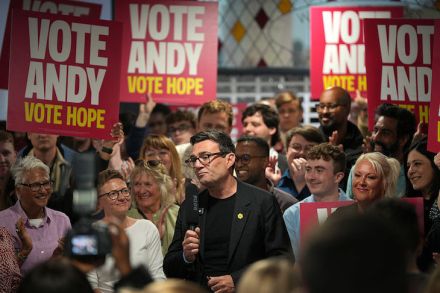
Voters in Makerfield haven’t even gone to the polling stations, but already the Labour leadership contest is well into a detailed exposition of what Andy Burnham – rather than any of the other contenders – might do. A few ‘star’ new MPs had been promoted straight into government, but the rest hadn’t had an invite to Downing Street Defence spending, welfare cuts, social care, immigration and the EU are all matters Burnham has pronounced on – and then changed his stance. The problem with WWAD (What Would Andy Do?), as the bracelets for Labour’s messiah might read, is that the answer really depends on the weather.

A&E is broken. Can anyone fix it?

From our UK edition

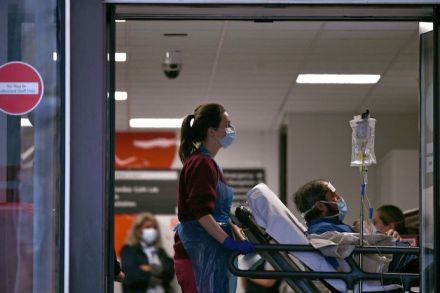
‘Corridor care’ should be an oxymoron, but is instead such a feature of the NHS now that nearly 3,000 people a day found themselves being treated in corridors, cupboards or even car parks last month. New figures show that 2,241 patients a day on average who had corridor care while in A&E, with a further 669 being cared for in cupboards, toilets and car parks. These are the latest official figures which show how the NHS isn’t working – but earlier in the week the Royal College of Emergency Medicine came up with its own estimate of how many people were dying unnecessarily as a result of long A&E waits: 1,300 a month.

Kemi Badenoch’s remarkable turnaround

From our UK edition

18 min listen

For the second week in a row, PMQs comes in light of a disturbing instance of violent crime. Last week, ministers were recoiling at the shocking bodycam footage from Henry Novak’s murder, and this week comes in the context of a knife attack by a Sudanese asylum seeker in Belfast. Kemi Badenoch was impressive again, not just in condemning the Belfast violence but also pressing the PM on the much-delayed defence investment plan. She seems to have completed a remarkable turnaround in her fortunes: she’s polling well, looks much more assured and is taking the fight to Labour and Reform. As she starts to win over the party and the commentariat, can she win over the country? Oscar Edmondson speaks to Tim Shipman and Isabel Hardman. Produced by Oscar Edmondson.

Kemi Badenoch's remarkable turnaround

Keir Starmer’s weakness was on display at PMQs

From our UK edition

Prime Minister’s Questions today was ostensibly about the Defence Investment Plan – or its absence. But Kemi Badenoch was really using the DIP in her six questions to build her narrative about Keir Starmer being unable to take any of the big decisions. He was, she said repeatedly, ‘paralysed’.  The Prime Minister, who loves to lecture other politicians on how they should conduct themselves, also very much enjoys telling the same politicians that he will be taking no lectures from them Given Starmer refused in all of those questions to give any further details about the DIP other than that it would be coming ‘before the Nato summit’ at the start of July, Badenoch could have ended up looking like she was just churning through the same question without making progress.

Starmer is in survival mode – but for what purpose?

From our UK edition

Keir Starmer is using this morning’s cabinet meeting to underline the message he has been sending to more junior ministers over the past few days: he’s not going without a fight. Part of his argument is that he’s got loads to do, which must come as a surprise to anyone who read the King’s Speech. One of the big things Starmer wants to show his party he can do is address the hot-button issue of children’s access to social media, first with his threat to tech firms yesterday that they have three months to stop children being able to send or see explicit content.

The irony of Keir Starmer’s plan to fund defence

From our UK edition

Where could the government possibly find the money to fund its defence investment plan (DIP)? That question has been the major factor behind the extraordinary delay in publishing it – and we now seem to have an answer, if not the plan itself. That answer is precisely the kind of thing that Keir Starmer and his Labour comrades would have railed against when in opposition: cutting capital spending. Around £6 billion-worth of projects are reportedly due for the chop in order to fund the DIP. That's potentially hospital rebuilding projects, transport infrastructure and housing improvements delayed or abandoned.

Burnham’s leadership ambitions have fooled no one

From our UK edition

Andy Burnham finally confirmed last night that he is indeed standing for the Labour leadership – just in case anyone was confused about what the Mayor of Greater Manchester is up to as he stands in the Makerfield by-election. Speaking on BBC Question Time, Burnham said: I'm not somebody who gets ahead of myself. I can't do anything unless I'm lucky enough to get the support of people here. But if I get your support, I would seek to represent you at the highest possible level and give this constituency maximum power and influence. I think Wes Streeting seems to have launched a leadership contest, so if that is running, I would seek to join it.

Emotional politicians create bad policies

From our UK edition

We have now reached the stage of political debate around Henry Nowak’s murder where politicians are talking more about tone policing than they are about actual policing. Keir Starmer has today condemned Elon Musk for ‘interfering in our politics in the last few days, trying to whip up division – that’s not who we are in Britain’. He added that: ‘When we have a terrible case like Henry’s case, Henry Nowak, we react calmly, as his family have done.’ It is important for politicians to push back against attempts to create further division in society: part of the role of a political leader is to lead on the standard of debate, as well as the content.

Starmer and Badenoch can’t avoid the politics of Henry Nowak’s death

From our UK edition

Kemi Badenoch clearly decided that it would be difficult to call for calm around the Henry Nowak case, and then to spend Prime Minister’s Questions talking about it at length. The format of the session rarely lends itself to calm, and she had rightly judged that others – including Nigel Farage – would bring the matter up themselves. Instead, the Tory leader did what Keir Starmer did when he answered his first question, which was to call for calm. And then she moved onto welfare spending, using Pat McFadden’s private message to Lord Mandelson as an opportunity to revisit Labour’s failure to reform benefits. But Nowak still dominated the session, and not just in the questions.

No one wants to be honest about social care

From our UK edition

It’s refreshing that social care has become a topic over which the putative Labour leadership contenders are prepared to scrap, given how neglected it has been for decades now. Both Andy. Burnham and Wes Streeting want to argue that they would be the leader who would take the radical step of legislating for a National Care Service – something Burnham first proposed back in 2009, just to give you an idea of how long it is taking for anyone to do anything meaningful on this matter. The babies born in the year Burnham unveiled his green paper on adult social care can now drive cars, but they still have no prospect of their grandparents, or indeed parents, being able to access a care system that actually works and is funded properly.

LIVE: The Net Zero Debate | Liam Halligan & Lord Lilley vs Bob Ward & Shahrar Ali

From our UK edition

22 min listen

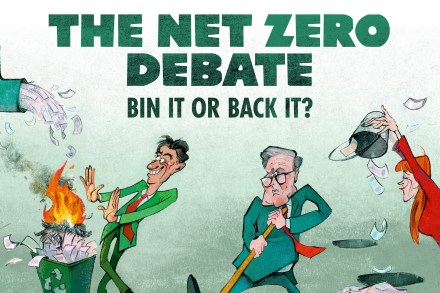
For nearly two decades, net zero has sat at the heart of Britain’s policy agenda. Once framed as a clear moral imperative, it saw political parties promising to slash carbon emissions and ministers racing to position the UK as a leader on the international stage. But as economic pressures and global instability mount, that consensus is beginning to fray. Recent shocks – from the pandemic to war-driven energy crises – have exposed the fragility of supply chains and the risks of overreliance on external energy sources. While renewables like wind and solar can supplement carbon fuels, they also raise questions around cost, subsidy and reliability. At the same time, drilling for oil in the North Sea is penalised. So where does this leave Britain?

Streeting has abandoned the NHS like everyone else

From our UK edition

As well as making noises about wealth taxes that sound suspiciously similar to the kind of thing Andy Burnham would normally say, Wes Streeting has also been opining this week about the lack of radical action from the government he’s just resigned from. When he quit as health secretary, he managed to overshadow the publication of his own legislation, leaving the task of getting yet another reorganisation of the NHS through parliament to his successor. Streeting told Nick Robinson that while the government had done ‘some important things’ on health and social care, it had fallen ‘well short of my ambition’, particularly on social care.  As it happens, that ambition is also something Streeting has long shared with Burnham: to legislate for a National Care Service.

The calm before Labour’s next storm

From our UK edition

15 min listen

After a turbulent few weeks, Westminster is in limbo. Keir Starmer appears safe – for now – after Wes Streeting’s underwhelming resignation speech, and all eyes are turning to the Makerfield by-election on 18 June. Until then, the drama seems to have temporarily gone out of Labour’s leadership turmoil. Isabel Hardman and Noa Hoffman join Megan McElroy to discuss Starmer’s ‘pompous’ tone at PMQs, what is really going on with Wes Streeting, and the Essex icon causing a storm on Twitter and inside the Department for Education.