If only Georges Simenon had been a bit more like Maigret
The pipe-smoking detective’s creator was a sex addict who died rich and lonely in a vast Swiss château
Ian Thomson is the author of books including Dante’s Divine Comedy: A Journey Without End.
The pipe-smoking detective’s creator was a sex addict who died rich and lonely in a vast Swiss château
From our UK edition
No nation’s defeat is ever quite straight-forward, and sometimes downfall can bring its own kind of posthumous victory. By the end of the American Civil War in 1865, for example, the Confederates had managed to recast themselves as Christ-like victims, exalted by the myth of a noble lost cause. The South had lost 20 per
From our UK edition
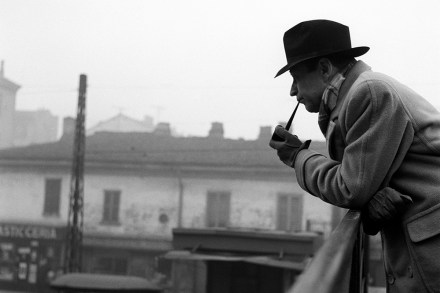
Georges Simenon, creator of the sombre, pipe-smoking Paris detective Jules Maigret, pursued sex, fame and money relentlessly. By the time he died in 1989, he had written nearly 200 novels, more than 150 novellas, several memoirs and countless short stories. His demonic productivity and the vast sales and fortune it brought him were matched by
From our UK edition
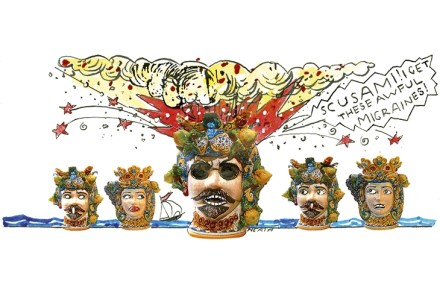
Northern Italians often speak of Sicily as a Saracenic darkness — the place where Europe ends. The Arabic influence remains strongest in the Mafia-infiltrated west of the island, where the sirocco blows in hot from the deserts of North Africa. When the Arabs invaded Sicily in 831 they introduced mosques and pink-domed cupolas, as well
From our UK edition
With public life increasingly a din of personalised ringtones and phone chatter, we crave silence. Acoustic ecologists speak of ‘ear cleaning’ exercises that might attune us beatifically to a hushed environment. Silence itself can be quite noisy, of course. Even in the countryside the thoughts in one’s head and the sound of one’s breathing can
From our UK edition
The Italian film director Federico Fellini was not known for his piety (far from it), yet towards the end of his life in around 1990 he determined to film Dante’s Inferno for national television. The brimstone poem appealed to Fellini for its comico-grotesque scenes of mass writhing human nudity amid firecracker detonations. He was not
From our UK edition
Ian Fleming’s voodoo extravaganza Live and Let Die finds James Bond in rapt consultation of The Traveller’s Tree by Patrick Leigh Fermor. ‘This, one of the great travel books, is published by John Murray at 25s’, proclaims a footnote in the first edition. Fleming was a friend of Leigh Fermor, so this is to be
From our UK edition
In the autumn of 1897, after two years in jail on a charge of ‘gross indecency’, Oscar Wilde absconded to Italy with the deplorable Lord Alfred Douglas. Sodomy, whether with man or beast, carried a sentence of servitude for life in Victorian Britain: prigs protested that Wilde had got off lightly. In Naples, ragamuffin capital
From our UK edition
The tricky term ‘Krautrock’ was first used by the British music press in the early 1970s to describe the drones and industrial kling-klang of difficult German bands such as Kraftwerk, Tangerine Dream, Popul Vuh, Faust and Can. A British fear and loathing of Germany and the Germans informed numerous New Musical Express Krautrock articles. (‘Kraftwerk:
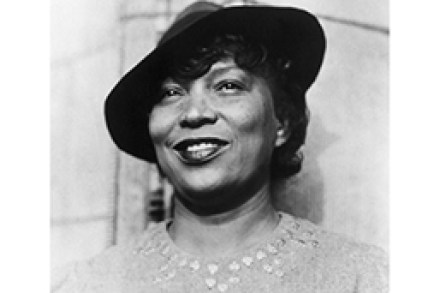
Zora Neale Hurston, the African-American novelist-ethnographer, was a luminary of the New Negro Movement, later renamed by American scholars the Harlem Renaissance. ‘Harlemania’ took off in jazz-age New York, as white thrill-seekers danced to Duke Ellington hothouse stomps and enthused over so-called primitive art. Hurston made a ‘black splash’ of her own in 1920s Harlem.
From our UK edition
In parts of Africa and the West Indies women are so anxious to ‘whiten up’ that they use skin-lightening creams. The British writer and broadcaster Afua Hirsch sees this as a regrettable consequence of the aristocracy of skin colour as instituted by British merchant-capitalists during slavery. (Skin must first be bleached before it can be
From our UK edition
With my friend Maurice, I have long frequented the Ironmonger Row baths behind Moorfields Eye Hospital. As married men, we appreciated the circumspect and respectful behaviour; for a few quid one felt properly laved and rejuvenated. Nakedness is a great leveller. City traders mingled with taxi drivers; a High Court judge might ‘testiculate’ (talk bollocks)
From our UK edition
These days it is fashionable to claim Mussolini as a fundamentally decent fellow led astray by an opportunist alliance with Hitler. Whether this revisionism is the song and dance of a minority, or something more widespread and daft, is hard to say. Italians understandably wish to view themselves as brava gente — good people —
From our UK edition
The Harder They Come, Jamaica’s first (and still finest) home-grown film, was released in 1972 with the local singer Jimmy Cliff as the country boy Ivan Martin, who becomes a Robin Hood-like criminal outlaw amid the ganja-yards and urban alleys of the Jamaican capital of Kingston. The film’s director Perry Henzell, a ganja-smoking white Jamaican
From our UK edition
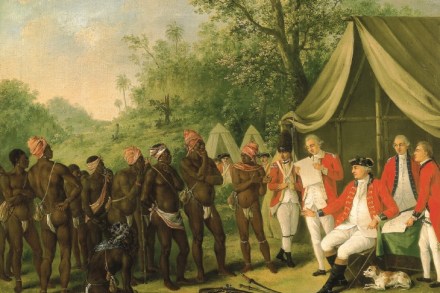
Much romantic nonsense has been written about the runaway slaves or Maroons of the West Indies. In 1970s Jamaica, during President Michael Manley’s socialist experiment, Maroons were hailed as forerunners of Black Power. Rastafari militants and back-to-Africa ideologues saw a nobility in Maroon descent. The Jamaican black nationalist Marcus Garvey had claimed Maroon ancestry for
From our UK edition
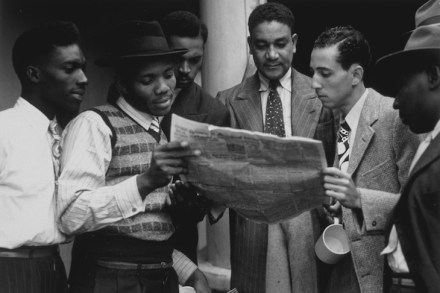
After years of estrangement in a foreign land, what can immigrants expect to find on their return home? The remembered warmth and blazing beauty of Jamaica have remained with some British West Indians for over half a century of exile. Yet 100 changes will have occurred since they left. Long brooding over the loss of
From our UK edition
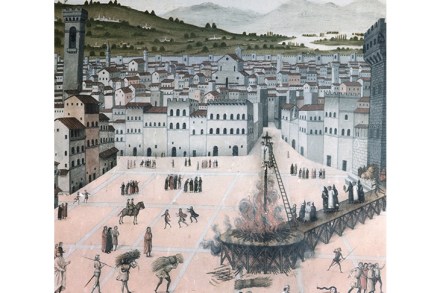
The business of banking (from the Italian word banco, meaning ‘counter’) was essentially Italian in origin. The Medici bank, founded in Florence in 1397, operated like a prototype mafia consortium: it rubbed out rivals and spread tentacles into what Niccolò Machiavelli called the alti luoghi (‘high places’) of local power interests. Undoubtedly, Medici money was
From our UK edition
As a child in fascist Italy, Clara Petacci (known as Claretta) was dutifully adoring of Benito Mussolini and the cult of ducismo. She gave the stiff-armed Roman salute while at school (the Duce had declared handshaking fey and unhygienic) and sang the fascist youth anthem ‘Giovinezza’. Her father, the Pope’s personal physician, was a convinced
From our UK edition
Blood, they say, is quick on the knife in Albania, where Balkan-style revenge killings, known as giakmarrje (‘blood-takings’), settle ancient scores and land disputes. The great engine of vengeance — the old idea of purification by blood — was explored by the Albanian novelist Ismail Kadare in his first novel, General of the Dead Army.
From our UK edition
In the cult Steve Martin film The Man With Two Brains, a doctor falls in love with a surgically removed brain. The object of his desire (fizzing, if I remember rightly, in a demijohn of formaldehyde) makes for an enduring gothic comedy of the mind. On the movie’s release in the early 1980s, neuroscience was