Ian O’Doherty

Ian O’Doherty is an Irish journalist.

Kneecap’s breathtaking Cuban hypocrisy

While most Cold War cultural battlegrounds have long been paved over or turned into a theme park, Cuba has retained a place in the hearts and minds of the West’s luxury leftists. Beautiful weather, sandy beaches, famous cigars and, of course, a long-standing enmity with the USA have all ensured the country remains perhaps the last stubborn redoubt of revolutionary, western hipsterism. So it made perfect sense that leading the charge in last weekend’s much trumpeted ‘aid flotilla’ to the island nation was the Irish language-speaking novelty rap act, Kneecap.  Much like their contemporary, Bob Vylan, they take delight in issuing inflammatory statements and then, when they receive the sought after reaction, pretending to be victims.


Official Ireland is embarrassed by St Patrick’s Day

Some readers may remember a particularly infamous episode of The Simpsons which saw the town of Springfield descend into anarchy during their annual St Patrick’s Day parade. As the crowds thronged Main Street, a drunken brawl erupted, prompting a shocked TV newsreader to declare: ‘What you are seeing is a total disregard for the things St Patrick stood for. All this drinking, violence and destruction of property. Are these the things we think of when we think of the Irish?’ With grim inevitably, this year’s St Patrick’s festivals around the country are no longer a celebration of Saint Patrick and Irish traditions At the time, that episode was far more controversial with Irish Americans than people who actually lived in Ireland, who thought it was hilarious.

Ireland is still in denial about trans rights

From our UK edition

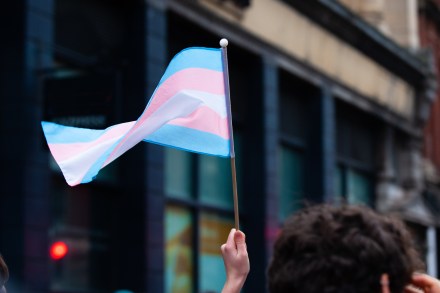
The reaction in Ireland to the UK Supreme Court’s decision on the meaning of ‘woman’ in the Equality Act has been revealing. The ruling, which found that women are defined by their biological sex and not a gender recognition certificate, has been watched carefully in Ireland, where trans people have been able to apply to change their gender since 2015. The Irish law making this possible was passed without much attention being paid to it at the time. But in the decade since, trans issues have become the most viciously fought front in the culture wars. Irish politicians and the media have been largely silent on the matter, preferring to stay out of a debate that has a nasty habit of leaving scars on anyone who gets involved.

Why does Ireland want hairdressers to lecture you about climate change?

From our UK edition

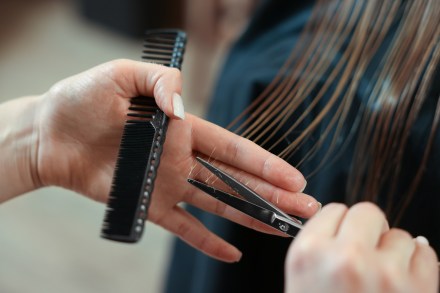
In their seemingly relentless drive to spend other people's money on initiatives they don't want and didn't ask for, the latest genius project from the Irish government is all about climate change. Of course it is. This is a government, after all, which has been accused of wanting to cull Ireland’s cows in an effort to reduce emissions. But even by the rather eccentric standards of Official Ireland's incessant attempts to socially engineer the population, the ‘A Brush With Climate’ scheme is truly a classic of its kind. The project is funded by the Department of Education, supported by the Research Ireland Discover Programme and overseen by University College Cork’s office of sustainability and climate action.

Ireland is looking terrifyingly vulnerable to Trump’s trade war

From our UK edition

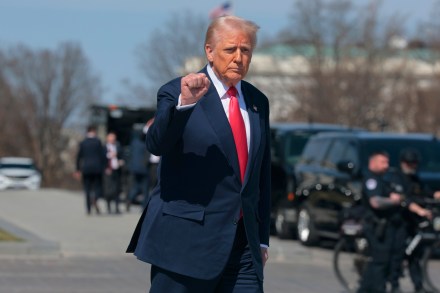
The Irish government has spent a lot of time trying to reassure voters that they have little to fear from any economic realignment with America. Now it is openly acknowledging the uncomfortable truth: that more than any other EU member state, Ireland is in a remarkably precarious position following Donald Trump’s imposition of tariffs. Internal government economic models have indicated that the Irish economy could lose 60,000 jobs in the next 12 months as a direct result of Trump's trade war – with many more losses expected to follow. The reasons for Ireland's unique and perilous exposure are varied. It is heavily reliant on US tech and pharmaceutical companies which have made Ireland their base.

The growing controversy over Ireland’s neutrality

From our UK edition

As the war of words between Donald Trump and the EU continues to escalate, European countries have become increasingly concerned about their military reliance on the United States. As a result, the need to increase defence spending has become a major issue. Germany has abandoned its 'debt lock' as it seeks to raise more funds for its military, while Macron has repeatedly spoken of the need to gain more 'strategic autonomy' away from America. Now the debate has even spread to Ireland, the country on the furthest western edge of the EU. Traditionally, Ireland has prided itself on its neutrality or 'military non-alignment', while also enjoying a long-standing record of serving with UN peacekeeping forces, most notably in the Congo and southern Lebanon.

Can Ireland prove that it isn’t a ‘tax scam’?

From our UK edition

Howard Lutnick, former CEO of the financial firm Cantor Fitzgerald, and now Secretary of Commerce in the Trump administration, has quickly attained the status of pantomime villain in Ireland. Last year, Lutnick criticised Ireland's tax arrangements, saying ‘It’s nonsense that Ireland of all places runs a trade surplus at our expense.’ He increased his pressure on Ireland last week when he appeared on the All-In business podcast and sarcastically referred to Ireland as his ‘favourite tax scam’ – the one he was most looking forward to ‘fixing’. This has prompted an increasingly nervous Irish government to make extra efforts to placate the Trump administration – which they previously treated with a degree of disdain.

How Conor McGregor humiliated the Irish government

From our UK edition

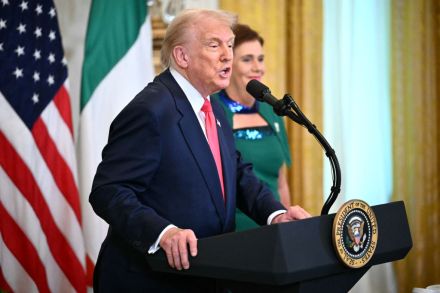
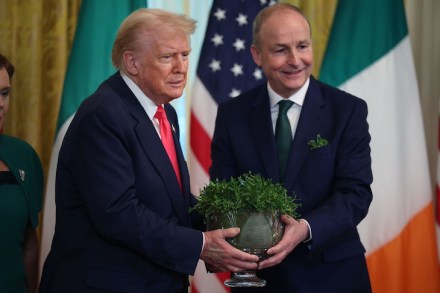
The Irish Taoiseach Micheal Martin will have felt some relief after his visit to the White House last week. While Trump criticised Ireland for poaching American pharmaceutical companies, the general consensus was that Martin had walked away pretty unscathed. In fact, the mood was so optimistic following the encounter that Tanaiste Simon Harris, also in America for the week, offered Trump a state visit to Ireland sometime next year.  But whatever warmth of feeling the Irish government may have had towards the American President will have plummeted into the freezing depths following Trump's decision to invite Conor McGregor to the White House to mark St Patrick's Day. It is perhaps not surprising that McGregor received an invitation.

Ireland isn’t out of Trump’s firing line just yet

From our UK edition

The Taoiseach Micheal Martin’s White House encounter with Donald Trump was controversial even before it was announced. Before any invitation had been extended, Sinn Fein said they were going to boycott the event in a show of solidarity with the people of Ukraine and Gaza and as a sign of their commitment ‘to humanity’. The People Before Profit party said Martin was endorsing America’s role in a genocide and Labour leader Ivana Bacik insisted the Taoiseach take the opportunity to publicly scold Trump on Ukraine, Gaza and his perceived failures to take action on climate change.

Do Brits really want to move to Ireland?

From our UK edition

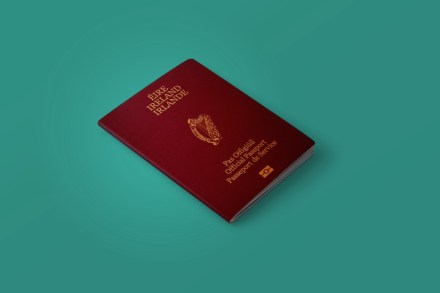
As restrictions continue to mount for Brits travelling to Europe post-Brexit, perhaps the least surprising news was that last year saw a record number of UK citizens applying for Irish citizenship. According to a Home Office report, shared with the Financial Times, 2024 saw a 15 per cent increase in citizenship applications, as 23,456 Brits decided to become Irish. This was the highest figure since records began in 2013, surpassing the previous annual peak in 2019, the year before the UK officially left the European bloc. The most popular route for Brits to attain Irish citizenship – and, perhaps more crucially, the passport that goes with it – is through the Foreign Births Register, which allows UK citizens with at least one Irish grandparent to apply.

Can Ireland win over Donald Trump?

From our UK edition

Would Donald Trump invite Irish politicians to the White House for the traditional St Patrick's Day visit this year? It’s a question that has been asked many times in Ireland in the past few weeks. It's a tradition which began in 1952 but in the decades since it has grown in stature to become the most important Irish diplomatic moment of the year. With the invitation normally extended by the second week of February and no sign of any offer arriving, it began to look increasingly likely this was going to be a rather pointed snub by the Trump administration. But to the relief of Taoiseach Micheál Martin and his staff, the longed-for letter arrived at the last minute on February 27.

Ireland is on a knife edge

From our UK edition

Is Ireland a powder keg of racist, anti-immigrant sentiment, ready to explode at any moment? That was certainly the dominant narrative after a night of rioting in Dublin city centre in November 2023 that left a trail of destruction along O’Connell Street. On that occasion, politicians and elements of the Irish media were quick to blame far-right provocateurs for stoking tension and this was used as a convenient pretext to stress the importance of introducing the strongest hate speech legislation in the EU. Yet when it emerged that many of the Dublin rioters may themselves have been from an immigrant background, the politicians swiftly moved on to other matters.

Why won’t Ireland take in Palestinian refugees?

From our UK edition

Oh, what a tangled web we weave. When Donald Trump made his rather provocative claim that the US would expel all Palestinians from Gaza and turn the region into the ‘Riviera of the Middle East’, international condemnation came thick and fast – matched only by the confusion of world leaders. Did the President of the United States really mean that he wanted to create his very own Mar-a-Gaza, complete with luxurious golf courses and tatty tourist shops, or was there a method to his madness?  Egypt has already insisted that it won't take a single Palestinian refugee, Jordan has warned the United States that it would consider any such plans an outright act of war. None of the other countries in the region have expressed any interest in welcoming 1.

Ireland has failed the victims of Storm Eowyn

From our UK edition

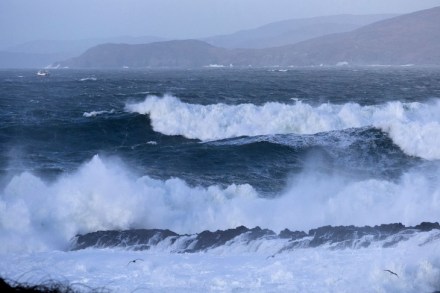
Roy Keane, one of Ireland's most famous sons, famously tried to live by the motto, 'fail to prepare, prepare to fail'. As Ireland still struggles to cope with the aftermath of Storm Eowyn, it has become abundantly clear that the Irish government failed to pay heed to Keane's sage advice. Storm Eowyn (named by the UK Met Office after a character in The Lord of the Rings, for some strange reason) was the fifth major weather event to batter Ireland's west coast in the 2024/2025 storm season. It arrived shortly after Storm Darragh, the cyclone which swept across Ireland and the UK in the first week of last December. Darragh was destructive enough itself and left 325,000 homes, business and farms without power.

How Ireland came crawling back to Trump

From our UK edition

Before the US election in November, there was unanimity among the Irish political classes that Kamala Harris would comfortably win. This support for Harris was matched by a casual disdain for Donald Trump. Before becoming Taoiseach, Simon Harris had dismissed Trump as nothing but ‘an awful gowl’, which essentially means someone is a moron. Ahead of the election, he posted a picture of a baseball cap from the Kamala Harris campaign, with the caption ‘If the cap fits…’ The future seemed rosy for Ireland: the Democrats would win, the Fine Gael/Fianna Fail coalition would continue as before, and the natural order would be maintained. Well, we all know what happened next.

Ireland’s President has gone completely rogue 

From our UK edition

As Ireland’s octogenarian President, Michael D Higgins, enters the last few months of his final term in office, a man who was always outspoken in his views seems to have dropped any presidential filter. Higgins spent much of last year on what seemed like a one-man mission against Israel, making a series of wild and frequently incorrect statements about the Jewish state. First he claimed that the Israeli embassy in Dublin leaked a letter of congratulations he had written to the incoming Iranian leader (they didn't). Then, at the height of the war in Gaza, he argued that Israel planned to annex parts of Egypt (they haven’t).

Ireland is not ready for Trump

From our UK edition

It will be an uncertain year for Ireland. The Irish economy has for a long time been artificially propped up by the billons it accrues in tax revenues from American tech companies based in the country. Many dread Donald Trump’s return, fearing he will force these firms to move back to the US. Those fears have been compounded by the Irish government's bizarre quest to stigmatise and sanction Israel – perhaps the only country in the world to be more popular in American minds than Ireland. In February, then-taoiseach Leo Varadkar and Spanish President Pedro Sanchez wrote to EU Commission President Ursula von der Leyen and asked her to conduct an ‘urgent review’ into the bloc’s trade relationship with Israel.

How Ireland declared diplomatic war on Israel

From our UK edition

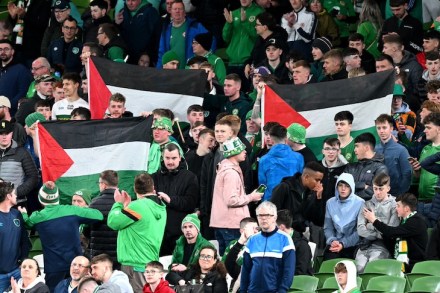
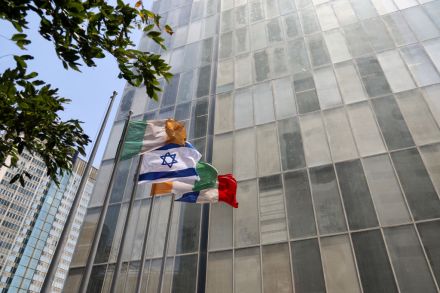
'Tis the season of goodwill to all men. Except for the Irish and Israelis, that is, who have seen their already frosty relationship plunged into positively freezing temperatures this weekend with Israel's decision to close its embassy in Dublin. Sunday's announcement was unusually stark in diplomatic terms, but it reflects the growing resentment and, at times, genuine confusion felt by many politicians and diplomats in Jerusalem and Dublin about what they see as Ireland’s unfairly pro-Palestinian position since October 7th.

How working-class Dublin turned on Conor McGregor

From our UK edition

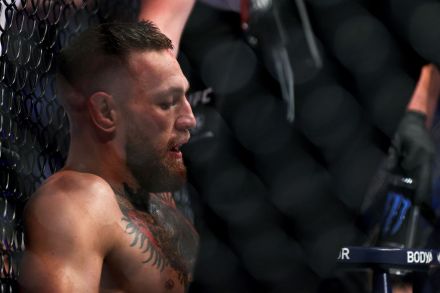
When Conor McGregor stood in the dock for his civil rape trial last week, the controversial MMA fighter was receiving the kind of global media attention he had always craved. Just not for the reasons he would have wanted. In court, the 12-person jury found him liable for the rape and sexual assault of Nikita Hand, and awarded her £208,000 in damages. This was the latest nail hammered into a career which has been marred by sporting controversies, sexual misbehaviour and appallingly thuggish behaviour. The circumstances which brought McGregor before the civil court were as tawdry as people had come to expect from the Dublin brawler. One Friday night in December 2018, McGregor had booked a hotel suite where he planned to finish the night.

Irish politics is stuck on a loop

From our UK edition

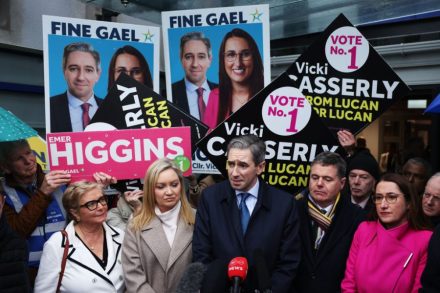
It's Green bin day! That was the general refrain of many Irish political wags as the country continues to tally the count from Friday's election. The first indicators from the exit polls were that the Green party who had been minority, but deeply unpopular, members of the governing coalition had just been hammered by the voters. Speaking at the main count centre in Dublin's RDS, an ashen faced party leader Roderic O'Gorman admitted that 'this has not been a good day for us'. On this point, he is certainly correct. They are now on course to lose eight of the twelve seats they had previously held and he ruefully admitted that, 'some very good colleagues, who have worked hard for the last four and half years are now very scared of losing their seats'. As well they might.