Iain MacGregor

Iain MacGregor is a Fellow of the Royal Historical Society and author of The Lighthouse of Stalingrad (Constable)

VJ Day taught us the fragility of peace

From our UK edition

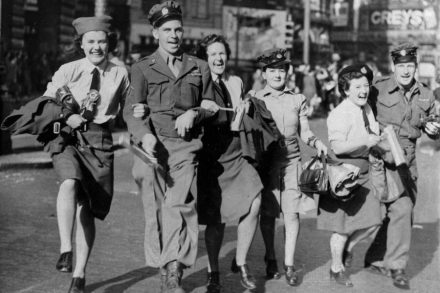
Victory over Japan Day – VJ Day – falls today, 15 August being the day in 1945 that Emperor Hirohito spoke to his people for the very first time to inform them of the country’s submission to the allies' Potsdam declaration of unconditional surrender. Eighty years on, it will be an occasion shrouded in both relief and reflection. It’s a day that marks not just the end of the Pacific theatre’s tumult but also a profound turning point that reshaped the entire landscape of international affairs, collective memory, and national identities. The echoes of those tumultuous years still reverberate through the corridors of history, shaping our understanding of what peace demands – and what it always risks losing.
How did the Enola Gay’s crew live with bombing Hiroshima?

From our UK edition

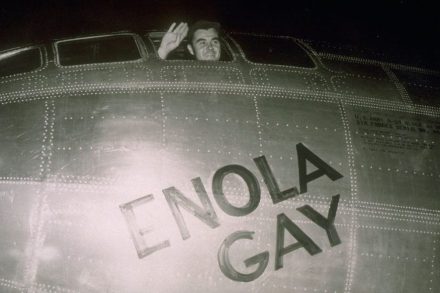
Eighty years on, the atomic bombing of Hiroshima continues to provoke fierce debate, reflection, and deep moral inquiry. How did the thirteen men aboard the Enola Gay – the US aircraft that delivered the bomb that killed at least 150,000 people – live with the knowledge of what they had done? The morning of 6 August 1945 began like any other on the Pacific island of Tinian. That was until the Boeing B-29 Superfortress lifted into the sky. Its destination: Japan. Its payload: 'Little Boy', the first atomic bomb ever used in warfare. Piloted by Colonel Paul W. Tibbets Jnr. and manned by a crew of twelve, the mission forever altered the course of history.

Max Jeffery, Melanie McDonagh, Matthew Parris, Iain MacGregor and Petronella Wyatt

From our UK edition

28 min listen

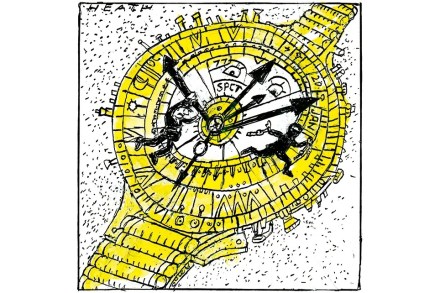
On this week’s Spectator Out Loud: Max Jeffery reports on the rise of luxury watch thefts in London (1:18); Melanie McDonagh discusses the collapse of religion in Scotland (5:51); reflecting on the longevity of Diane Abbott and what her selection row means for Labour, Matthew Parris argues that shrewd plans need faultless execution (10:44); Iain MacGregor reviews Giles Milton’s book ‘The Stalin Affair’ (17:30); and, Petronella Wyatt ponders her lack of luck with love (21:49). Presented and produced by Patrick Gibbons.

When Stalin was the lesser of two evils

From our UK edition

‘We are resolved to destroy Hitler and every vestige of the Nazi regime... Any man or state who fights against Nazism will have our aid.’ These words were spoken by Winston Churchill in a BBC radio broadcast to the nation from Chequers on the evening of 22 June 1941. Churchill detested Stalin – but he needed him to destroy Hitler That morning, Operation Barbarossa had begun, with Hitler’s armed forces launching the biggest invasion in modern history into the heart of a country whose very existence Churchill detested: the Soviet Union. This cataclysmic invasion by the Nazi regime, however, created an ally the British leader had never envisioned. For the previous 22 months, Great Britain’s war with Nazi Germany had not gone well.

Putin is resurrecting Russia’s ‘iron rogues’

From our UK edition

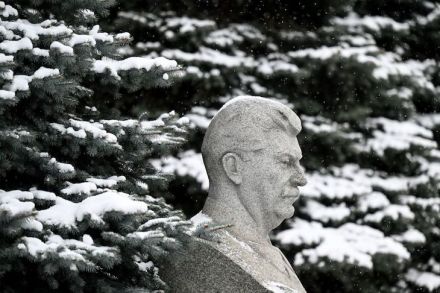
A year before Russia launched its brutal campaign to subjugate Ukraine, I visited a wintry Moscow. It was striking to see how far the capital had moved away from celebrating the cult of the old communist leadership that had dominated the then Soviet Union with an iron fist. The tomb of Lenin by the Kremlin was, of course, still doing good business with tourists. But the bust of Joseph Stalin, standing on guard outside his old boss’s gaudy vault, resembled a forgotten relic. The sorry state of these statues was no accident. After the failed coup by Kremlin hardliners in August 1991, First Secretary Mikhail Gorbachev’s power drained away. As a result, the USSR quickly disintegrated and Yeltsin’s rule as leader of the Russian Federation was established.

Putin’s obsession with Russia’s ‘Great Patriotic War’ could be his downfall

From our UK edition

Ukrainian and Russian forces have been locked in either dogged stalemate or vicious urban fighting for towns and cities in the Donbass and in the north of the country throughout winter. As the bitter Ukrainian winter thaws, the war will soon take on a more deadly momentum as the spring rains of the Rasputitsa give way to better weather for mobile units. This week marks a year since Vladimir Putin's invasion. The campaign has been calamitous for Russia: 86,000 soldiers have been killed and wounded. The death toll will rise in the coming weeks. Yet Putin’s regime still not only manages to keep a lid on internal dissent, but continues to enjoy a high-level of sustained support for the war.

Berliners were punished twice – by Hitler and by the Allies

From our UK edition

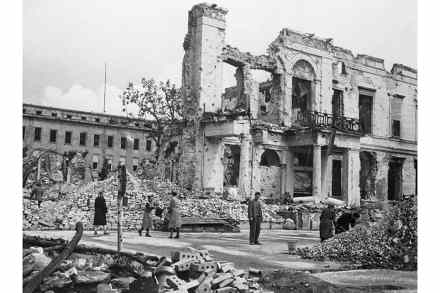
‘Nationalism is an infantile disease. It is the measles of mankind.’ Albert Einstein’s deft avoidance of the question put to him in 1929 – whether he considered himself a German or a Jew – was prophetic of what would happen to his country in the following decade. He was just one of the many stars of Berlin, Europe’s dazzling, decadent centre of the arts and culture, whose spark would be dimmed or extinguished by Adolf Hitler. Capturing the history, people and spirit of Berlin, arguably the beating heart of Europe, can be a tricky proposition, as I know. Sinclair McKay has wisely kept to analysing the city through the prism of the last century – or at least from the end of the Great War to the end of the Cold War.

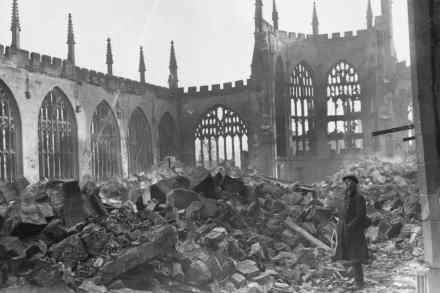
Coventry is wrong to cut ties with Volgograd

From our UK edition

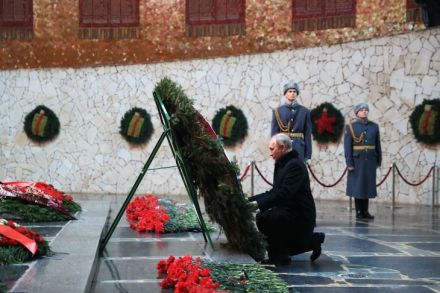
A faded mural on the streets of Coventry is meant to represent an unbreakable bond between itself and Russia. Volgograd twinned with Coventry in 1944, becoming the first city in the world to pair with a foreign counterpart. The mural was called ‘Volgograd Place’ and encapsulated the enduring friendship between East and West which had survived the distant Cold War and the more recent ‘Salisbury Poisonings’. But last week Coventry City Council voted unanimously to suspend relations ‘until such a time they can resume’ due to the ongoing war in the Ukraine. The voices of the local Ukrainian population, the national revulsion of Vladimir Putin’s destructive campaign, and pressure from MPs seemingly forced their hand to take this action.