Henry Hitchings

The rollercoaster ride of the world’s most reckless investor

From our UK edition

For a few days in February 2000, Masayoshi Son was the richest person in the world. A risk-taker and showman, universally known as Masa, he had long been disdainful of Japan’s staid ‘salaryman’ business culture and was riding the wave of dot-com mania. His company SoftBank, founded in 1981, had bet big on the growth

Spelling it out: the volunteers who made the dictionary

From our UK edition

‘Everything obscene comes from France,’ wrote James Dixon, an eye surgeon retired to Dorking, in 1888. He was provoked by learning of an item called a condom, and explained to his correspondent, James Murray, that this was ‘a contrivance used by fornicators, to save themselves from a well-deserved clap’. Surely the word had no place

No chocolate-box portrait: Bournville, by Jonathan Coe, reviewed

From our UK edition

British novelists love to diagnose the state of the nation. Few do it better than Jonathan Coe, who writes with warmth and subversive glee about social change and the comforting mundanities it imperils. Bournville, his 14th novel, lacks the caustic verve of What a Carve Up! (1994) or the wistful charm of The Rotters’ Club

What do Beethoven, D.H. Lawrence and George Best have in common?

From our UK edition

This is not a book about tennis. Roger Federer appears early on, trailed by the obligatory question ‘When will he retire?’ He figures more prominently in the final 80 pages – still looking, despite the imminence of hanging up his racquet, as if he moves ‘within a different, more accommodating dimension of time’. There are

An inspirational teacher: Elizabeth Finch, by Julian Barnes, reviewed

From our UK edition

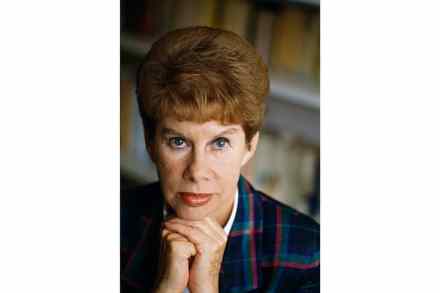
‘Whenever you see a character in a novel, let alone a biography or history book, reduced and neatened into three adjectives, always distrust that description.’ So says the protagonist of Julian Barnes’s latest novel, the poised, droll, epigrammatic Elizabeth Finch, who is loosely modelled on his late friend and fellow Booker Prize-winner Anita Brookner. A

Are the English exceptionally gullible?

From our UK edition

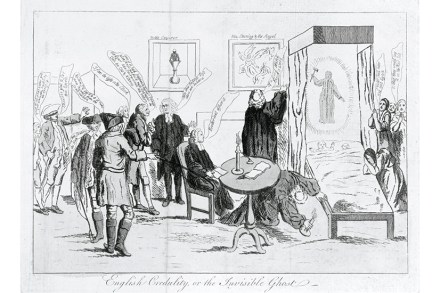
The word ‘hoax’ did not catch on till the early 19th century. Before that one spoke of a hum, a frump, a prat or a bilk. But 18th-century Britain, even if not rife with talk of ‘hoaxes’, was full of incautious souls at risk of being bilked. James Graham, a Scottish quack, was able to

Science and philanthropy meet in the Royal Society of Arts

From our UK edition

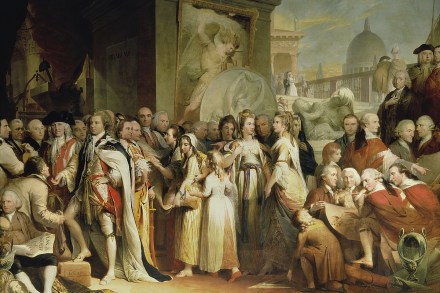
What does Jony Ive, the designer of Apple’s iPhone, have in common with Peter Perez Burdett, the first Englishman to produce aquatints, and Ann Williams, a postmistress who bred silkworms at her home in 18th-century Gravesend? The answer is that they all received awards from the institution known today as the Royal Society of Arts.

Can giving voice to the horrors of the past re-traumatise?

From our UK edition

It is 50 years since Ronald Blythe published Akenfield, his melancholy portrait of a Suffolk village on the cusp of dramatic change. Akenfield was actually a composite of two real villages, Charsfield and Debach, and Blythe’s oral history was a patchwork created from about 50 conversations — with figures including a pig-farming colonel, the over-stretched

Who’s who and what’s what

From our UK edition

Asked to name a reference book, you may well choose the Encyclopaedia Britannica or the 20-volume Oxford English Dictionary. But perhaps you’d pick something less elephantine — the Guinness Book of World Records, with its tributes to figures such as Smudge, holder of the record for most keys removed from a keyring by a parrot,

Down and out in Park Lane and Plaistow

From our UK edition

‘I was born in London,’ Ben Judah tells us early in this vivid portrait of Britain’s capital, ‘but I no longer recognise the city.’ London has become a building site where dirty money is converted into gleaming blocks of bullion. The smartest parts of town are lined with empty houses owned by foreign plutocrats, and

All the men and women merely players

From our UK edition

How many books are there about Shakespeare? A study published in the 1970s claimed a figure of 11,000, and today a search of the British Library catalogue yields 12,554 titles that contain the playwright’s name. But good short introductions to Shakespeare’s life and work are not exactly plentiful. Students and teachers are therefore likely to